When designing around drain lines, guarantee backwash discharge is routed through appropriately sized pipes with a gentle slope and clear of sharp bends to prevent backups. Install air gaps at least twice the pipe diameter above the flood level rim to prevent cross-contamination, and position overflow outlets above the maximum water level to divert excess safely. Proper placement and routing of these components help avoid system failures and health risks—keep going to discover how to perfect your setup.
Listen free for 30 days with Audible
Thousands of audiobooks and originals — cancel anytime.
As an affiliate, we earn on qualifying purchases.
Key Takeaways
- Route drain lines with gentle slopes (~1/8 inch per foot) to ensure smooth, gravity-driven wastewater flow and prevent backups.
- Position overflow pipes above the tank’s maximum water level to safely divert excess water and avoid flooding.
- Incorporate air gaps at least twice the pipe diameter above flood level rims to prevent siphoning and cross-contamination.
- Use dedicated, appropriately sized drain lines for backwash discharge to handle surge flows and prevent clogging.
- Avoid sharp bends and high points in piping to reduce stagnation, facilitate drainage, and improve system reliability.
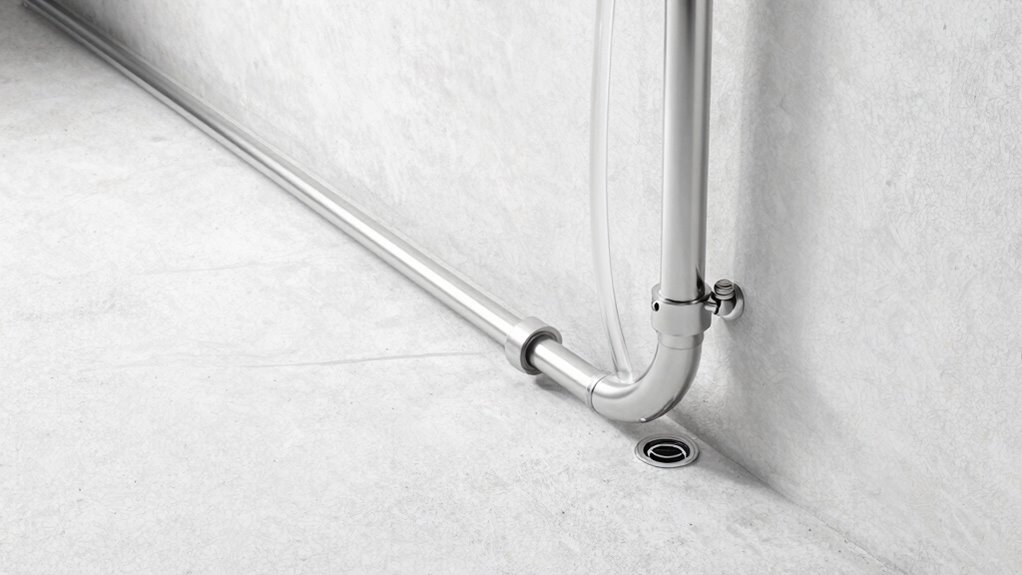
Have you ever wondered how a properly designed drain line guarantees efficient removal of wastewater? It all starts with thoughtful planning and precise placement. When designing your system, consider how the drain line connects to various components, especially the brine tank. This tank is essential in water softening systems, and its drain line must be carefully routed. Properly connecting the brine tank ensures that during regeneration, the wastewater flows smoothly into the drain without backups or leaks. An important feature here is the overflow pipe, which acts as a safeguard against overfilling or blockages. Positioning the overflow pipe correctly—above the maximum water level—prevents flooding and directs excess water safely away.
The placement of the drain line related to the brine tank and other equipment influences system effectiveness. You want the drain line to follow a gentle slope, typically about 1/8 inch per foot, to promote gravity-driven flow. Sharp bends or high points can cause stagnation or backups, so smooth, continuous piping is *crucial*. When connecting the drain line to the brine tank, make sure the overflow pipe is installed at an appropriate height. This way, if the tank overfills, wastewater is diverted without spilling into unintended areas. This design prevents potential water damage and contamination, which could compromise your system’s integrity.
Another *critical* aspect is the inclusion of backwash features. During backwashing, water flows in reverse to clean filters or media, producing a significant surge of wastewater. Your drain line must accommodate this increased volume without clogging or overflowing. Installing a dedicated drain line for backwash discharge, with an appropriately sized pipe, helps manage this flow efficiently. Also, ensure the drain line’s route avoids areas prone to freezing or physical damage, which could obstruct flow or cause leaks. Additionally, considering the use of high-quality materials for piping can enhance durability and reduce maintenance needs.
Air gaps are *vital* in preventing siphoning and cross-contamination between the wastewater and potable water supplies. Incorporate an air gap—an open space between the drain outlet and the receiving drain—to keep wastewater from being siphoned back into the system. Proper placement of the air gap, often at least twice the diameter of the drain pipe above the flood level rim, ensures safety and compliance with plumbing codes. This setup, combined with the correct positioning of the overflow pipe, guarantees wastewater is directed away effectively and reduces health risks.
drain line pipe sizing and slope kit
As an affiliate, we earn on qualifying purchases.
As an affiliate, we earn on qualifying purchases.
Frequently Asked Questions
How Do I Prevent Clogging in Drain Lines?
To prevent clogging in drain lines, you should regularly perform drain line maintenance and use clog prevention techniques. Avoid pouring grease, oil, or large debris down drains, and install screens or filters to catch particles. Regularly flushing the lines with hot water or a safe cleaning solution helps prevent buildup. Also, schedule periodic inspections to catch potential issues early, ensuring smooth flow and reducing the risk of clogs.
What Materials Are Best for Durable Drain Lines?
Choosing the right materials for your drain lines is like planting a sturdy oak—strength and durability matter. You should select PVC or ABS plastics, as they resist corrosion and handle high pressure well. Use proper installation techniques, like secure fittings and correct slope, to guarantee longevity. These choices will keep your drain lines resilient against wear and tear, giving you peace of mind and a reliable plumbing system for years to come.
How Often Should Drain Lines Be Inspected?
You should schedule drain line inspections at least once a year to guarantee proper maintenance. Use visual inspections and leak detection methods to identify potential issues early. Regular maintenance scheduling helps prevent clogs, leaks, and damage, saving you money and hassle down the line. If you notice slow drainage or foul odors, perform inspections more frequently. Staying proactive with inspection methods keeps your drain lines functioning efficiently and extends their lifespan.
Can Drain Lines Be Hidden Inside Walls?
Yes, drain lines can be concealed inside walls through wall integration, creating a neat finish. You can hide concealed piping behind wall panels or within wall cavities, but guarantee easy access for inspections and maintenance. Proper planning during installation is essential to prevent leaks and allow for future repairs. Use durable, moisture-resistant materials to protect the piping and maintain the wall’s structural integrity over time.
What Regulations Govern Drain Line Installation?
Did you know that over 90% of plumbing failures are due to improper drain line installation? Regulatory standards and installation codes, like the International Plumbing Code (IPC) and local building codes, govern drain line installation to guarantee safety and efficiency. You must follow these standards to prevent leaks and backups. Always check with local authorities before installing drain lines to ensure compliance and avoid costly repairs later.
air gap installation for drain lines
As an affiliate, we earn on qualifying purchases.
As an affiliate, we earn on qualifying purchases.
Conclusion
By carefully designing your drain lines with proper backwash, air gaps, and placement, you guarantee efficient and safe operation of your system. Did you know that poor drain line placement can increase system failures by up to 30%? Taking the time to plan now can save you costly repairs later. Remember, a well-designed drain line not only boosts performance but also prolongs the lifespan of your equipment. Stay proactive, and your system will thank you.
overflow pipe for water softener
As an affiliate, we earn on qualifying purchases.
As an affiliate, we earn on qualifying purchases.
As an affiliate, we earn on qualifying purchases.
Flea & tick season Picks
flea and tick prevention
As an affiliate, we earn on qualifying purchases.