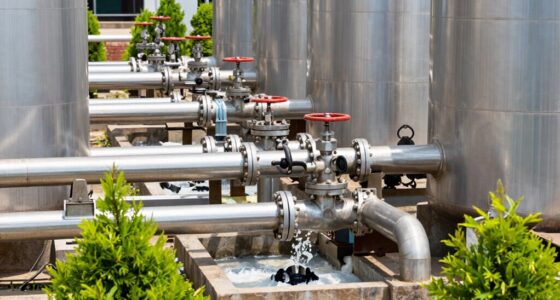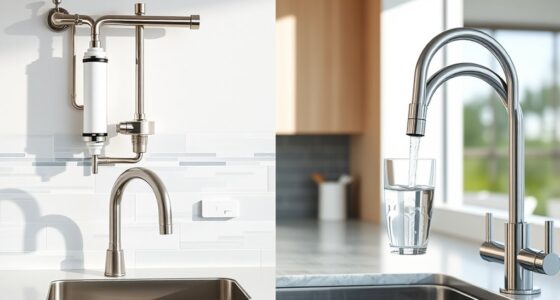
To combine a water softener with a carbon filter effectively, install the softener first to handle minerals, then position the carbon filter downstream to remove chemicals and odors. Guarantee both units are on a level surface and connected with high-quality fittings, with bypass valves for maintenance. Regularly check salt levels, replace filters every 6 to 12 months, and sanitize the system as needed. Following these best practices will help maximize water quality and system longevity; discover more tips ahead.

Get home appliances delivered free with Prime
- Fast, free delivery on millions of items
- Prime Video, Amazon Music and more included
- Member-only deals all year
Key Takeaways
- Install the water softener before the carbon filter to optimize mineral removal and chemical filtration.
- Ensure both units are on a level, stable surface with secure, high-quality fittings to prevent leaks.
- Maintain proper flow rates and pressure as per manufacturer guidelines to ensure system efficiency.
- Regularly check and replenish salt in the softener and replace carbon filters every 6 to 12 months.
- Incorporate bypass valves for easy maintenance and system longevity, following correct installation procedures.

If you’re looking to improve your home’s water quality, combining a water softener with a carbon filter is an effective solution. This setup tackles hard water issues while removing contaminants like chlorine, chloramines, and organic compounds, giving you cleaner, better-tasting water. To get the most out of this combination, it’s essential to follow proper installation guidelines. Start by determining the right placement—usually, the softener should come first in the flow, followed by the carbon filter. This ensures the softener handles mineral buildup, while the filter addresses chemicals and odors. Make sure your plumbing setup allows for easy access for future maintenance and that the units are installed on a level, stable surface to prevent leaks. When connecting the units, use high-quality fittings and guarantee all connections are tight to avoid water loss. Don’t forget to install bypass valves so you can easily shut off water to each unit during maintenance or repairs. It’s also important to follow the manufacturer’s instructions carefully during installation, especially regarding the flow rate and pressure requirements, to optimize performance and longevity. Proper system sizing is crucial to ensure your units can handle your household’s water demand without undue stress.
Once installed, maintaining your water softener and carbon filter is just as essential as the initial setup. Regular maintenance tips include checking salt levels in the softener’s brine tank monthly and replenishing as needed to keep the resin bed functioning effectively. It’s also wise to clean the brine tank annually to prevent salt bridging or buildup. For the carbon filter, replacement is typically required every 6 to 12 months, depending on your water usage and the level of contaminants. Keep an eye out for signs of reduced flow rate or taste and odor changes, which indicate it’s time for a new filter cartridge. Additionally, sanitize your system periodically to prevent bacterial growth, following the manufacturer’s recommended procedures. Maintaining proper water pressure and flow rate helps prevent stress on the units, extending their lifespan. Always use high-quality replacement filters and salts, as inferior products can compromise water quality and damage your system.
water softener with carbon filter system
As an affiliate, we earn on qualifying purchases.
As an affiliate, we earn on qualifying purchases.
Frequently Asked Questions
Can I Install Both Systems in the Same Water Line?
Yes, you can install both systems in the same water line, but you need to consider installation sequence and system compatibility. Generally, install the water softener first to remove hardness minerals, then the carbon filter to eliminate chlorine and odors. This sequence guarantees ideal performance. Always check manufacturer guidelines to confirm compatibility, and ensure your plumbing setup allows proper flow and maintenance access for both systems.
How Often Should I Replace the Carbon Filter?
You should replace your carbon filter every 6 to 12 months, depending on your water quality and usage. Many people underestimate how quickly filter lifespan can decline, risking reduced water quality. Regular replacement guarantees peak filtration, preventing contaminants from passing through. Keep an eye on your filter’s condition, and follow the manufacturer’s recommendations for replacement frequency to maintain clean, fresh-tasting water every day.
Will a Water Softener Remove All Contaminants?
A water softener doesn’t remove all contaminants, as its main role is to reduce hardness minerals like calcium and magnesium. For effective contaminant removal, especially chemicals, you need a carbon filter that boosts filtration efficiency. Combining both systems ensures you get softer water and better contaminant removal, but remember, no single system does everything flawlessly. Regular maintenance and proper system selection are key for ideal water quality.
Is There a Specific Order for Installing the Systems?
Imagine your water flowing smoothly through a well-orchestrated system. You should install the water softener first, followed by the carbon filter, to guarantee system compatibility. This installation sequence allows the softener to remove minerals, preventing scale buildup, while the filter captures organic contaminants. Proper order assures peak performance, prolongs system lifespan, and provides you with clean, soft water. Follow this sequence for the best results.
Do Combined Systems Require Special Maintenance Routines?
Yes, combined systems do require special maintenance routines. You should schedule regular maintenance to guarantee system compatibility and peak performance. Check filters and resin beds periodically, replacing or regenerating them as needed. Keep an eye on pressure levels and flow rates, and follow the manufacturer’s guidelines. Proper maintenance ensures the softener and carbon filter work efficiently together, extending their lifespan and maintaining water quality.
install bypass valve for water softener and carbon filter
As an affiliate, we earn on qualifying purchases.
As an affiliate, we earn on qualifying purchases.
Conclusion
By combining a water softener with a carbon filter, you effectively remove both hard minerals and harmful contaminants, ensuring cleaner, better-tasting water. Did you know that over 85% of households in the US have some level of water impurities? This combo not only improves water quality but also extends the lifespan of your appliances. Make sure to follow best practices for maintenance, and you’ll enjoy safer, clearer water for years to come.
replacement carbon filter for water filtration
As an affiliate, we earn on qualifying purchases.
As an affiliate, we earn on qualifying purchases.
water softener salt and filter maintenance kit
As an affiliate, we earn on qualifying purchases.
As an affiliate, we earn on qualifying purchases.
NFL season / tailgating Picks
team gear
As an affiliate, we earn on qualifying purchases.