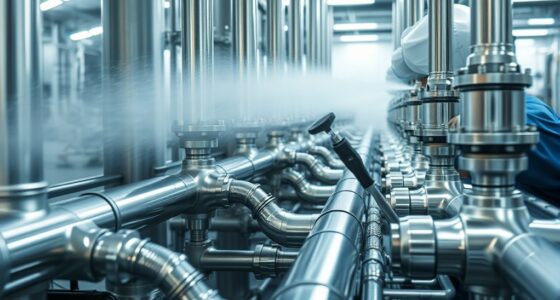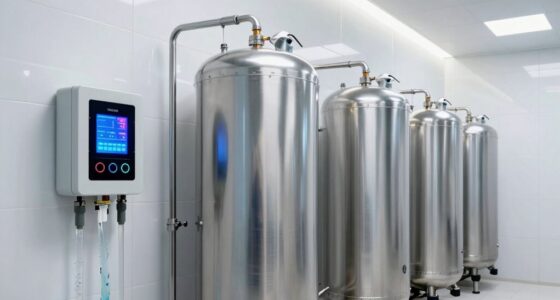
Tankless water heaters heat water on demand at higher temperatures, which speeds up mineral deposit formation. Because they operate continuously at these high temps, minerals like calcium and magnesium settle onto heating elements faster than in traditional tanks. This buildup insulates the heating surface, making the unit work harder and reducing efficiency. If you want to understand how to manage this issue and keep your heater running smoothly, there’s more to discover below.
Prime for Young Adults — start your free trial
Fast free delivery, streaming and member deals for eligible 18–24 year olds.
As an affiliate, we earn on qualifying purchases.
Key Takeaways
- Tankless heaters heat water on demand, increasing mineral deposit formation due to continuous high-temperature exposure.
- Higher operating temperatures accelerate mineral buildup on heating elements compared to traditional tanks.
- Inconsistent flow rates and improper installation promote uneven heating and faster scale accumulation.
- Lack of water treatment or filtration allows minerals like calcium and magnesium to deposit more quickly.
- Regular maintenance delays scale buildup but is often neglected, leading to rapid performance decline.
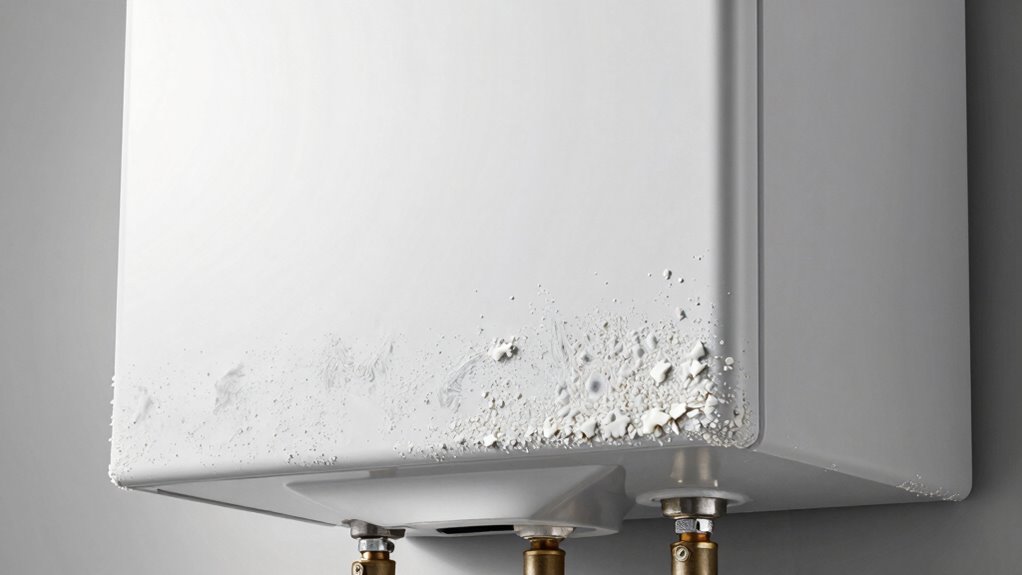
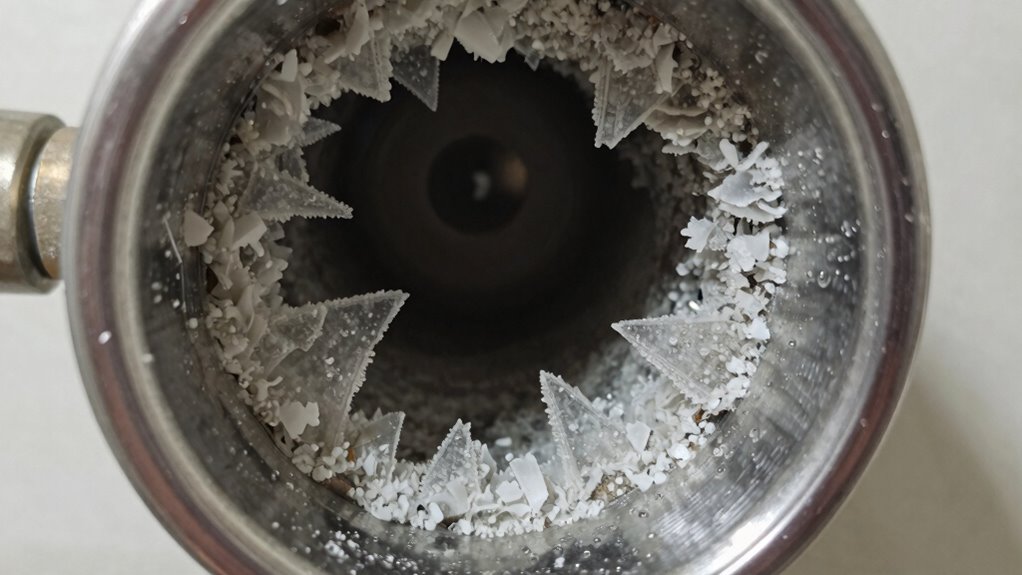
Tankless water heaters are popular for their energy efficiency and on-demand hot water, but they can face a common challenge: scale buildup. This issue occurs because these units heat water only when needed, which makes them more efficient than traditional tank models. However, the very design that boosts their energy efficiency can also accelerate scale accumulation. When minerals like calcium and magnesium are present in your water, they tend to settle on the heating elements, forming deposits that impede heat transfer. Since tankless heaters operate at high temperatures, mineral particles are more likely to stick and build up quickly, especially if your water is hard. This means you’ll notice the effects of scale faster than with conventional tanks, leading to decreased efficiency and potential system failures.
Tankless heaters heat water on demand, but hard water minerals can cause rapid scale buildup, reducing efficiency and lifespan.
Understanding why these heaters are more susceptible to scale problems requires an appreciation of their installation challenges. Proper installation is *essential* to prevent or mitigate scale buildup, but it’s often overlooked or mishandled. For example, installing a water softener or filtration system can *considerably* reduce mineral content, but neglecting this step means your heater faces more mineral-laden water. Additionally, incorrect sizing or placement can cause uneven heating or flow issues, which further promote mineral deposits. If your heater isn’t correctly integrated into your plumbing system, it may experience frequent temperature fluctuations or inconsistent flow rates. These conditions create hot spots and cold spots within the unit, making scale accumulation even more aggressive in certain areas. Using appropriate water treatment can significantly reduce these risks by lowering mineral levels before they reach the heater. Proper maintenance routines, such as regular flushing, also play a crucial role in extending the lifespan of your unit and maintaining efficiency. Moreover, monitoring water quality can help identify potential problems early on and prevent costly repairs. Implementing a regular inspection routine can help catch early signs of scale buildup and address them before they cause major issues.
Another installation challenge is maintaining the right flow rate. If water flows too slowly, it stays in contact with the heating element longer, increasing the likelihood of mineral deposits forming. Conversely, if the flow is too fast, the heater may struggle to reach the desired temperature, prompting it to work harder and generate more scale. Properly balancing flow rate and ensuring adequate maintenance can help delay scale buildup, but many users aren’t aware of these nuances during installation. As a result, they face more rapid scale development, which compromises the energy efficiency advantages of their tankless system. Regular inspection and adjustments can help prevent these issues from escalating, ensuring your heater operates at peak performance for longer.
Ultimately, the faster scale problems develop in tankless water heaters, the more your energy efficiency suffers. Mineral deposits act as insulators, forcing the unit to work harder to produce hot water, increasing energy consumption and reducing lifespan. To combat this, you need a thoughtful installation process combined with ongoing maintenance, like flushing and water treatment, to preserve the efficiency benefits and prevent scale from undermining your unit’s performance. Recognizing the importance of water quality management is essential for long-term operation and cost savings. Proper water quality management, including the use of water treatment systems, can greatly mitigate the rapid buildup of scale and enhance the durability of your heater.
tankless water heater scale remover
As an affiliate, we earn on qualifying purchases.
As an affiliate, we earn on qualifying purchases.
Frequently Asked Questions
Can Scale Buildup Harm a Tankless Heater’s Efficiency Long-Term?
Yes, scale buildup can harm your tankless heater’s efficiency long-term. As minerals accumulate, they insulate heating elements, reducing heat transfer and increasing energy use. To prevent damage, you should focus on corrosion prevention and implement mineral filtration to remove scale-forming minerals before they settle. Regular maintenance, including flushing and using water softeners, helps keep your heater running efficiently and prolongs its lifespan.
What Water Qualities Most Accelerate Scale Formation in Tankless Heaters?
You might not realize it, but water hardness and mineral content secretly sabotage your tankless heater’s efficiency. When water is hard, rich in minerals like calcium and magnesium, scale formation accelerates. These minerals cling to the heater’s surfaces, building up faster and blocking heat transfer. The more mineral-laden your water, the quicker the scale issues emerge, threatening long-term performance and demanding more frequent maintenance.
Are There Specific Brands Less Prone to Scale Problems?
Some brands are less prone to scale problems because they prioritize brand reliability and product durability. Brands like Rinnai and Navien are known for their high-quality materials and innovative scale reduction features. You’ll find they perform better in hard water conditions, reducing scale buildup and extending the heater’s lifespan. Choosing a reputable brand guarantees you get a product designed to handle mineral-rich water, saving you maintenance costs over time.
How Often Should I Flush My Tankless Heater for Optimal Performance?
Think of your tankless heater as a race car that needs regular tune-ups. To keep it running smoothly, you should flush it every 12 to 18 months, depending on your water quality and usage. Incorporate maintenance schedules and consider water filtration to reduce mineral buildup. This proactive approach prevents scale problems, extends your heater’s lifespan, and guarantees you enjoy hot water without unexpected breakdowns.
Does Water Temperature Setting Affect Scale Accumulation Rate?
Yes, your water temperature setting affects how quickly scale accumulates, especially considering water hardness and temperature fluctuations. Higher temperatures cause minerals in hard water to precipitate more rapidly, leading to faster scale buildup. When you adjust the temperature, keep in mind that frequent fluctuations can also promote mineral deposition. To minimize scale issues, set your heater to a moderate temperature and monitor water hardness levels regularly.
water softener for tankless heater
As an affiliate, we earn on qualifying purchases.
As an affiliate, we earn on qualifying purchases.
Conclusion
Just as Icarus flew too close to the sun, tankless heaters venture into the danger zone of scale buildup faster than traditional models. Without proper maintenance, you risk compromising their efficiency and lifespan, much like Icarus’s wings melting mid-flight. Stay vigilant, regularly flush your system, and treat your heater with the respect it deserves. In doing so, you’ll keep your own voyage smooth, avoiding the tragic fall into costly repairs and premature replacement.
tankless water heater maintenance kit
As an affiliate, we earn on qualifying purchases.
As an affiliate, we earn on qualifying purchases.
As an affiliate, we earn on qualifying purchases.
Fall yard work Picks
leaf blowers
As an affiliate, we earn on qualifying purchases.