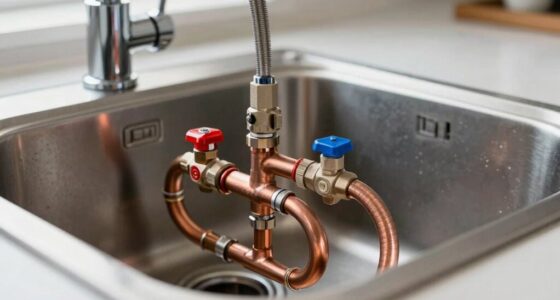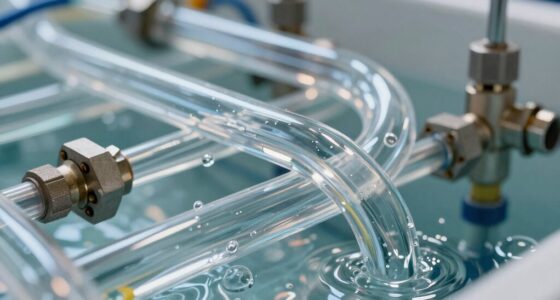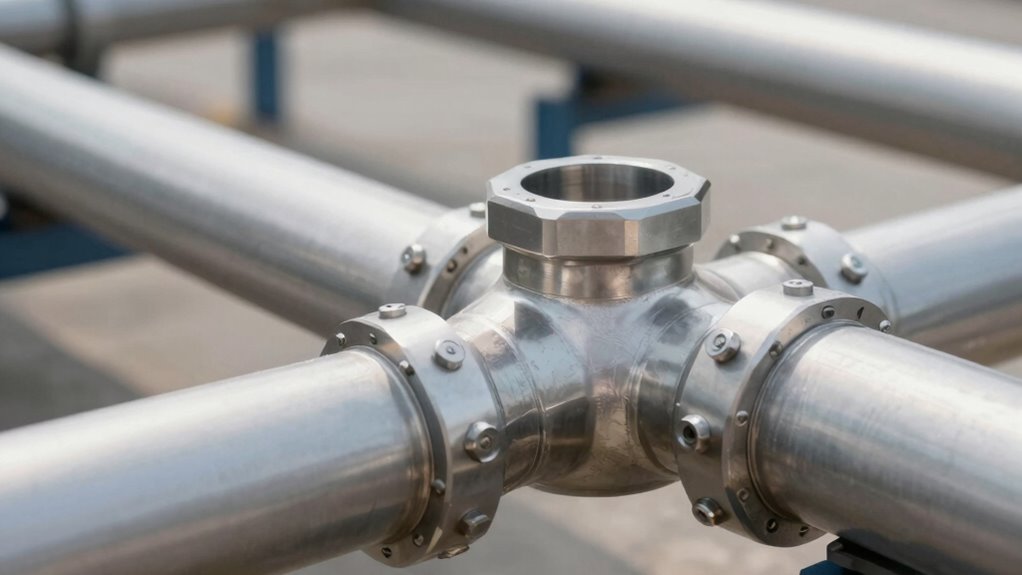
To reduce restrictions across stages when designing for low pressure, focus on optimizing flow paths by avoiding sharp bends and sudden diameter changes. Choose materials with low friction and guarantee pipe sizes are appropriate—neither too small nor too large. Incorporate properly sized valves and control devices to prevent unnecessary restrictions. Maintain a simple layout with fewer crossings and keep systems clean to avoid buildup. Continuing with these strategies will help you achieve more efficient, low-pressure flow.

Get home appliances delivered free — and shop member deals
- Fast, free delivery on millions of items
- Access to Prime Big Deal Days deals on October 6–7
- Prime Video, Amazon Music and more included
Key Takeaways
- Use smooth, gradual transitions and gentle curves to minimize turbulence and flow resistance across stages.
- Select appropriate pipe diameters to balance velocity and reduce pressure drops without oversizing.
- Incorporate properly sized valves and flow control devices to prevent restrictions and optimize flow.
- Simplify system layout by reducing the number of transitions and stages to lower cumulative restrictions.
- Perform regular maintenance to prevent debris, corrosion, and sediment buildup that increase flow resistance.
Have you ever wondered how to guarantee systems operate efficiently under low-pressure conditions? When working with low-pressure systems, managing pressure drop becomes critical. A significant pressure drop across components or stages can severely reduce flow rates, leading to inefficiencies and potential system failures. To optimize flow and minimize restrictions, you need to focus on designing components and layouts that promote smooth, unobstructed movement of fluids or gases. Flow optimization is essential in this setting, ensuring that even at low pressures, the system maintains adequate throughput without excessive energy input or component stress.
One of the first steps is to scrutinize the entire flow path, identifying areas where resistance might build up. Sharp bends, sudden contractions, or restrictions like filters or valves can cause unnecessary pressure drops. By designing more streamlined pathways—using gentle curves instead of sharp turns and gradually changing diameters—you reduce flow turbulence and resistance. This approach helps maintain a steady pressure profile, ensuring that the system’s entire stage operates efficiently. When considering flow optimization, material selection also matters; surfaces with lower friction coefficients reduce energy loss and help sustain pressure levels throughout the system.
Streamlining flow paths with gentle curves and gradual diameter changes reduces turbulence and maintains steady pressure profiles.
Choosing appropriate pipe diameters plays an essential role. Undersized pipes increase velocity but also create higher pressure drops, which can compromise flow. Oversized pipes, on the other hand, may be inefficient and costly. Striking the right balance ensures that the flow remains steady and pressure remains consistent across all stages. Incorporating flow control devices, such as properly sized valves and regulators, allows you to fine-tune flow rates and pressure levels, preventing unnecessary restrictions that could cause pressure drops. These devices, when correctly selected and positioned, contribute to overall flow optimization.
Another key factor is to minimize the number of stages or transitions that fluid or gas must pass through. Each transition adds a potential restriction, increasing the pressure drop. Simplifying system layouts reduces the number of these obstacles, helping maintain uniform pressure. Regular maintenance also plays a critical role; debris, corrosion, or sediment buildup can increase restrictions over time, leading to higher pressure drops. Implementing routine inspections and cleaning ensures that the system remains free of blockages, supporting consistent flow and low-pressure operation. Additionally, utilizing high-quality components designed for low-pressure conditions can further reduce resistance and improve overall system performance.
Ultimately, designing for low pressure requires a thoughtful approach that emphasizes reducing restrictions at every stage. By focusing on flow optimization—through streamlined pathways, appropriate sizing, and proper component selection—you can keep pressure drops minimal, ensuring your system remains efficient and reliable even under low-pressure conditions. This proactive strategy not only enhances performance but also extends the lifespan of your equipment, saving you time and costs in the long run.
low pressure pipe flow restrictors
As an affiliate, we earn on qualifying purchases.
As an affiliate, we earn on qualifying purchases.
Frequently Asked Questions
How Do Material Choices Impact Pressure Restrictions?
Your material choices directly impact pressure restrictions because compatible materials guarantee smooth flow and minimize blockages. Selecting materials that match your system’s flow rate helps reduce restrictions, preventing pressure drops. When you choose the right materials, you avoid increased resistance and potential damage, keeping your system efficient. Always consider material compatibility and flow rate to optimize performance and maintain low pressure restrictions across stages.
What Tools Are Best for Measuring Pressure Drops?
Think of pressure sensors and flow meters as your trusty navigational tools on a journey. They’re best for measuring pressure drops accurately across stages, helping you identify restrictions. Pressure sensors provide real-time data on pressure changes, while flow meters track flow rate variations. Together, they give you a clear map of where restrictions occur, so you can adjust your design to optimize flow and reduce pressure loss effectively.
Can Design Modifications Improve Low-Pressure Performance?
Yes, your design modifications can improve low-pressure performance. Focus on flow optimization by reducing restrictions and enhancing smoothness in pathways. Integrate components seamlessly to minimize turbulence and pressure drops. Consider using larger or streamlined fittings, adjusting pipe diameters, and ensuring proper alignment. These adjustments help maintain consistent pressure, improve efficiency, and optimize system performance, ensuring your setup effectively handles low-pressure conditions without sacrificing flow rates.
How Does Temperature Affect Pressure Restriction Strategies?
You might think temperature effects are minor, but they actually play a vital role in pressure optimization. As temperature rises, gases expand, decreasing pressure restrictions and improving flow across stages. Conversely, cooler temperatures increase density and resistance, which can hinder performance. Adjusting your design to account for temperature fluctuations helps you maintain ideal pressure levels, ensuring efficient operation and reducing restrictions regardless of environmental changes.
Are There Industry Standards for Low-Pressure System Design?
Yes, industry standards for low-pressure system design exist to guarantee safety and compliance. You should follow guidelines from organizations like ASME, API, and OSHA, which set criteria for pressure limits, material selection, and installation practices. Adhering to these safety regulations helps you minimize risks, optimize system performance, and meet legal requirements. Always consult the relevant standards before designing or modifying low-pressure systems to ensure full compliance.
flow control valves for low pressure systems
As an affiliate, we earn on qualifying purchases.
As an affiliate, we earn on qualifying purchases.
Conclusion
By reducing restrictions across stages, you open the floodgates of efficiency, allowing pressure to flow smoothly like a gentle river unwinding through a valley. Picture each streamlined component as a refreshing gust, easing the journey and preventing turbulence. Remember, designing for low pressure isn’t just about technical tweaks—it’s about shaping a seamless flow, where every restriction you eliminate becomes a clear path. Embrace this approach, and watch your system breathe easier, flowing effortlessly toward ideal performance.
As an affiliate, we earn on qualifying purchases.
pressure drop reduction components
As an affiliate, we earn on qualifying purchases.
As an affiliate, we earn on qualifying purchases.
NFL season / tailgating Picks
team gear
As an affiliate, we earn on qualifying purchases.