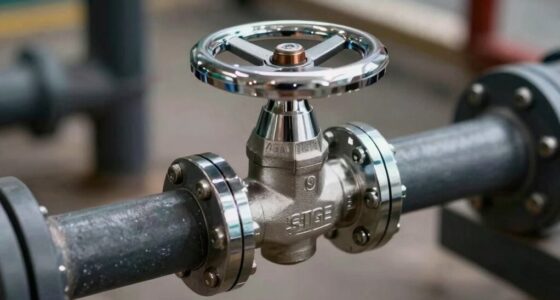
Polyphosphate feeders protect your equipment by forming a protective film on metal surfaces, preventing corrosion caused by oxygen and chlorides. They sequester calcium and magnesium ions, stopping mineral deposits and scale buildup without removing essential minerals from your water. This helps maintain system efficiency, reduce maintenance costs, and extend equipment lifespan. If you want to discover how these benefits work together to keep your system running smoothly, keep exploring the details.
Prime for Young Adults — start your free trial
Fast free delivery, streaming and member deals for eligible 18–24 year olds.
As an affiliate, we earn on qualifying purchases.
Key Takeaways
- Polyphosphate feeders form a protective film on metal surfaces, preventing corrosion without removing minerals.
- They sequester calcium and magnesium ions, inhibiting scale buildup while maintaining mineral content.
- They create a barrier against oxygen and chlorides, reducing corrosion without softening water.
- They preserve essential minerals for industrial processes, avoiding the need for water softening.
- They enhance system longevity and reduce maintenance costs by preventing scale and corrosion.

Polyphosphate feeders play a crucial role in safeguarding your equipment by controlling corrosion and scale buildup. Unlike water softening systems that remove calcium and magnesium ions, these feeders work by adding polyphosphates directly into your water supply. This method provides effective corrosion prevention and scale inhibition without altering the water’s hardness, making it ideal for applications where maintaining mineral content is important.
Polyphosphate feeders prevent corrosion and scale without removing essential minerals from your water supply.
When polyphosphates are introduced into the water, they form a protective film on the metal surfaces inside pipes and equipment. This film acts as a barrier, preventing corrosive elements like oxygen and chlorides from attacking the metal. As a result, your equipment experiences less corrosion, extending its lifespan and reducing maintenance costs. Because polyphosphates do not remove the hardness minerals, your water remains suitable for processes that depend on mineral stability, such as certain industrial applications and boiler operations. Additionally, the stability of mineral content is essential for maintaining consistent process performance. Proper water treatment methods can further optimize your system’s performance and extend equipment life. Furthermore, these methods help in reducing maintenance expenses by minimizing corrosion-related damage over time.
Scale buildup is a common problem in water systems, especially when high mineral content is present. Instead of removing these minerals, polyphosphate feeders work by sequestering calcium and magnesium ions, preventing them from forming deposits. This process, known as scale inhibition, keeps pipes and heat exchangers free from mineral deposits that can reduce efficiency and cause system failures. By preventing scale formation, you maintain ideal heat transfer, reduce energy consumption, and avoid costly downtime. Additionally, sequestering minerals helps ensure the water’s chemical balance remains stable over time, which is important for sensitive equipment. An important advantage of this approach is that it helps avoid water softening, preserving the mineral content crucial for specific applications.
As an affiliate, we earn on qualifying purchases.
Frequently Asked Questions
Can Polyphosphate Feeders Be Used With Untreated Well Water?
Yes, you can use polyphosphate feeders with untreated well water. They help control mineral content, such as iron and manganese, which are common in well water. The polyphosphate forms a film on pipe surfaces, preventing mineral buildup and corrosion. This process doesn’t soften water but effectively protects your equipment from scale and deposits caused by mineral content. Just ensure your water’s mineral levels are within recommended ranges for maximum results.
How Often Should Polyphosphate Levels Be Checked?
Think of polyphosphate levels like a garden’s watering schedule—you need to check them regularly to keep everything healthy. You should check polyphosphate monitoring at least once a month to guarantee chemical stability. This frequent monitoring prevents fluctuations that could compromise protection. Staying consistent helps maintain ideal levels, safeguarding your equipment effectively. Regular checks keep your system balanced, just like a well-tended garden stays lush and vibrant.
Are Polyphosphate Feeders Suitable for Industrial-Scale Systems?
Yes, polyphosphate feeders are suitable for industrial-scale systems, provided you consider chemical compatibility and equipment compatibility. Confirm the feeder’s materials are compatible with the polyphosphate chemicals used, preventing corrosion or damage. Properly sizing the feeder for your system’s flow and water volume is essential. Regular maintenance and monitoring help maintain effectiveness, guaranteeing your industrial equipment stays protected from scale buildup without compromising system integrity.
What Maintenance Is Required for Polyphosphate Feeders?
Think of polyphosphate feeders as the steady heartbeat of your water system. You’ll need to check chemical compatibility regularly to prevent corrosion or damage. Follow a consistent maintenance schedule, including refilling the feeder with the appropriate polyphosphate solution and inspecting for clogs or leaks. Keeping these tasks on track guarantees your equipment stays protected and runs smoothly, much like a well-tuned orchestra.
Do Polyphosphate Feeders Affect Water Taste or Odor?
Polyphosphate feeders typically don’t affect water taste or odor considerably, but they can cause slight taste alterations depending on your water chemistry. You might notice a faint difference if your water has high mineral content or specific organic materials. However, these changes are usually minimal and not noticeable to most people. Regular monitoring helps guarantee the water’s taste remains consistent, and adjustments can be made if you notice any undesirable taste or odor.
scale inhibition water treatment
As an affiliate, we earn on qualifying purchases.
As an affiliate, we earn on qualifying purchases.
Conclusion
Think of polyphosphate feeders as guardians shielding your equipment like a sturdy umbrella in a storm. Just as the umbrella keeps you dry without changing the rain, these feeders protect your pipes from scale buildup without softening the water. One plant saw a 30% reduction in maintenance costs after installing polyphosphate feeders, proving their power. With them, you’re not just preventing damage—you’re creating a reliable shield that keeps your equipment running smoothly, rain or shine.
corrosion protection polyphosphate
As an affiliate, we earn on qualifying purchases.
As an affiliate, we earn on qualifying purchases.
water mineral sequestering system
As an affiliate, we earn on qualifying purchases.
As an affiliate, we earn on qualifying purchases.
Fall Picks
fall essentials
As an affiliate, we earn on qualifying purchases.