Many water plans overlook moisture barriers as a vital part of basement protection. These barriers act as frontline defense against hidden dampness, mold, and vapor that can seep through foundation walls. Proper installation and maintenance are essential, as they prevent water vapor from bypassing other waterproofing measures. Without these barriers, your basement remains vulnerable to long-term damage and health issues. Keep exploring to discover how moisture barriers can save your space and peace of mind.
Key Takeaways
- Many plans overlook the importance of proper foundation drainage systems like French drains and weeping tiles.
- Moisture barriers are often neglected, despite being crucial to block vapor transmission and prevent indoor dampness.
- Surface sealants alone are insufficient; layered waterproofing strategies are essential for comprehensive protection.
- Regular maintenance of drainage and moisture barriers is frequently forgotten, risking long-term damage.
- Addressing water management from yard grading to interior barriers creates a holistic defense most plans ignore.
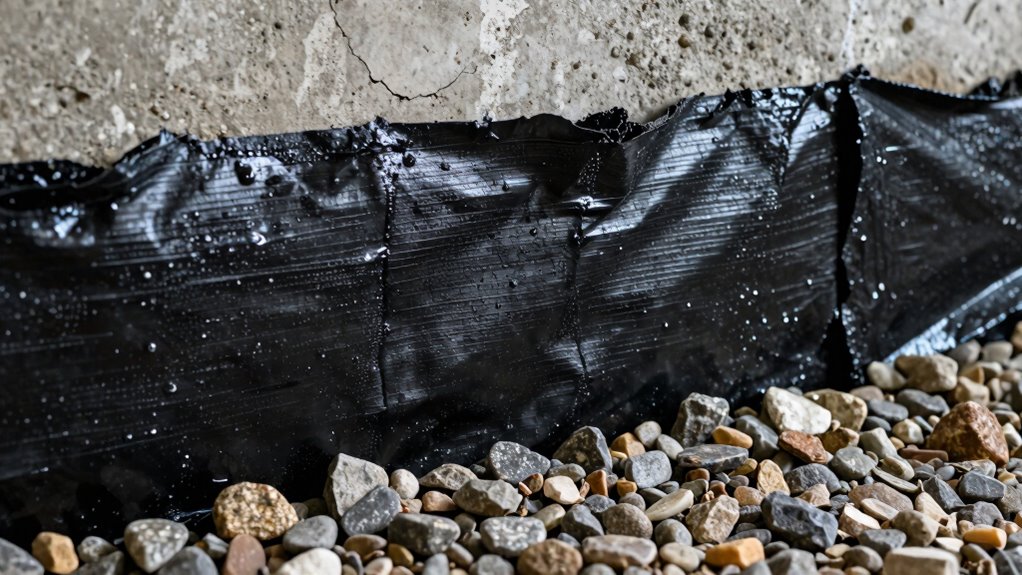
Have you ever wondered how to keep your basement safe from water damage and moisture? Many homeowners focus on fixing leaks or installing sump pumps, but the real key lies beneath the surface—literally. The most overlooked protection layer is often the one right at the foundation level, where foundation drainage and moisture barriers play a vital role. Proper foundation drainage ensures water doesn’t accumulate around your basement walls, reducing pressure that can lead to cracks and leaks. If you neglect this, water can seep in through tiny gaps or cracks, causing long-term damage and mold growth. Installing effective drainage systems involves grading your yard to direct water away from your house and adding weeping tiles or French drains around the foundation. These measures help channel water out before it reaches vulnerable areas, making a significant difference in moisture control.
Proper foundation drainage prevents water buildup, protecting your basement from cracks, leaks, and mold growth.
Alongside drainage, moisture barriers act as a frontline defense against dampness and water vapor that naturally migrate through concrete walls. These barriers, typically made of plastic or specialized membranes, are installed on the interior or exterior of your foundation walls. They prevent moisture from passing through the concrete and condensing on interior surfaces, which can lead to mold, musty odors, and structural deterioration. Many homeowners overlook the importance of installing or maintaining these barriers, assuming basic waterproofing suffices. In reality, without a high-quality moisture barrier, water vapor can bypass other defenses and settle inside your basement, creating an unhealthy environment and compromising your foundation’s integrity. Proper installation and regular maintenance of these barriers are crucial to ensure long-term effectiveness building science principles. Understanding how moisture movement occurs through structures can help homeowners better appreciate how moisture moves through structures and how best to prevent it. Additionally, incorporating proper ventilation can further reduce indoor humidity and enhance moisture control strategies.
It’s tempting to think that waterproofing paint or sealants alone can handle basement moisture, but these only provide surface-level protection. The real work happens at the foundation level, where proper drainage and moisture barriers work together to create a holistic defense system. Foundation drainage removes bulk water, while moisture barriers block vapor transmission and prevent dampness from seeping through. These layered defenses are essential because water pressure can force water through even small cracks if not properly managed, emphasizing the importance of comprehensive protection. Together, they form a layered shield that stops water before it becomes a problem. Remember, investing in these essential elements can save you money and headaches in the long run by avoiding costly repairs and health issues caused by mold and mildew.
In the end, the most effective basement protection plan isn’t just about quick fixes or superficial solutions. It’s about creating a solid foundation—literally and figuratively—by prioritizing foundation drainage and moisture barriers. When you do, you’re building a resilient barrier that keeps your basement dry, healthy, and protected for years to come.
basement moisture barrier
As an affiliate, we earn on qualifying purchases.
As an affiliate, we earn on qualifying purchases.
Frequently Asked Questions
How Long Does a Basement Protection Layer Typically Last?
A basement protection layer, like a waterproof coating combined with a drainage system, usually lasts between 10 to 20 years, depending on quality and maintenance. You should regularly inspect and reapply the waterproof coating as needed to prevent leaks. Proper drainage systems also help prolong the protection layer’s lifespan by directing water away from your basement, reducing wear and tear over time. Staying proactive guarantees your basement remains dry and protected longer.
Can I Install the Protective Layer Myself?
Yes, you can attempt a DIY installation of the basement protection layer, but it’s wise to start with thorough research and proper tools. However, consulting a professional is highly recommended to guarantee the layer’s effectiveness and proper application. DIY projects can save money, but expert guidance reduces risks of errors, leaks, or future damage, making sure your basement stays protected long-term.
What Are the Signs of a Failing Basement Protection Layer?
Did you know that over 60% of basement moisture issues go unnoticed until significant damage occurs? You’ll notice signs like musty odors, peeling paint, or efflorescence on walls, indicating your waterproofing materials might be failing. Cracks or damp spots also signal a compromised basement protection layer. Regularly inspecting for these signs helps catch problems early, preventing costly repairs and keeping your basement dry and protected.
Does Climate Affect the Protection Layer’s Effectiveness?
Yes, climate impact and weather variations considerably influence your basement protection layer’s effectiveness. Heavy rain, rapid temperature changes, and humidity fluctuations can weaken seals, cause cracks, or promote mold growth. You need to regularly inspect and maintain your barrier to adapt to these climate conditions. Proper drainage, insulation, and waterproofing materials help mitigate climate effects, ensuring your basement stays dry and protected despite changing weather patterns.
Are There Eco-Friendly Options for Basement Protection Layers?
You can use eco-friendly materials like recycled rubber or cellulose-based barriers for basement protection layers. Imagine a homeowner choosing sustainable options, reducing environmental impact while protecting their home from moisture. These materials are not only effective but also promote sustainability. By opting for eco-friendly options, you contribute to environmental preservation, and your basement remains protected with a greener, more sustainable approach.

VEVOR Trench Drain System Channel Drain 5.9×5.1-Inch HDPE Drainage Trench
Low-profile Drain System: Dimensions of each channel: 5.9" W x 5.1" H x 39.4" L. Commercial water drainage…
As an affiliate, we earn on qualifying purchases.
As an affiliate, we earn on qualifying purchases.
Conclusion
Don’t overlook the basement protection layer—it’s the silent guardian your home needs. Without it, water seeps in like a thief in the night, risking damage before you even realize. Think of this layer as your home’s armor, standing guard against unseen threats. Protecting your basement isn’t just about avoiding repairs; it’s about safeguarding your sanctuary from water’s silent invasion. Remember, a strong defense today keeps costly repairs at bay tomorrow.

AMES Blue Max White Liquid Rubber Waterproofer,1 Gal
Ames Blue Max White is a strong and highly adhesive elastomeric liquid rubber waterproofer with 900% elongation that…
As an affiliate, we earn on qualifying purchases.
As an affiliate, we earn on qualifying purchases.

11 WET BASEMENT WATERPROOFING SECRETS: THE WATERPROOFING BUSINESS IS WITHOUT AN UNDERSTANDING OF HOW IT WORKS, AND WITH LIMITED KNOWLEDGE
As an affiliate, we earn on qualifying purchases.
As an affiliate, we earn on qualifying purchases.


![Bukit Bintang Hicks Flat: DBKL Orders Cleanup After Viral Video Exposes Dirty Conditions [WATCH] - NST Online](https://wholehousewaterlab.com/wp-content/uploads/2026/07/bukit-bintang-hicks-flat-dbkl-orders-cleanup-after-viral-video-exposes-dirty-con-featured-260x140.jpg)