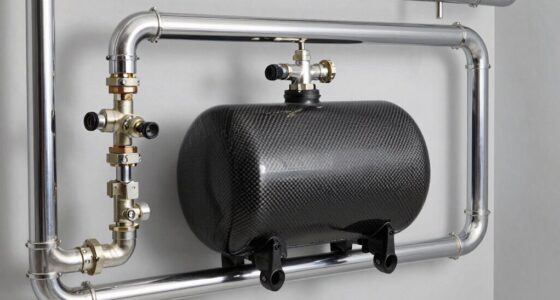

Understanding micron ratings helps you choose the right filter for your needs by showing the particle size it can trap. Lower ratings mean smaller pores, capturing finer contaminants, but may clog faster. Don’t fall for myths, like bigger ratings always being better—effectiveness depends on your specific application. To make smarter choices and avoid mistakes, explore how micron sizes impact filtration performance and discover practical tips for selecting the best filters.

Get home appliances delivered free — and shop member deals
- Fast, free delivery on millions of items
- Access to Prime Big Deal Days deals on October 6–7
- Prime Video, Amazon Music and more included
Key Takeaways
- Micron ratings indicate particle size filtration capability but are estimates influenced by manufacturing variations.
- Smaller microns mean finer filtration but can reduce flow rate and increase filter clogging.
- Larger micron ratings trap larger debris but may allow tiny contaminants like bacteria or viruses to pass.
- Effectiveness depends on matching micron size to specific contaminants rather than relying solely on rating number.
- Proper understanding prevents myths, ensuring appropriate filter selection for optimal water quality and system performance.
Understanding Micron Ratings: The Basics

Micron ratings measure the size of particles that a filter can trap, serving as a key indicator of its filtering capability. The lower the micron rating, the smaller the particles it can capture, which directly impacts filtering efficiency. When you choose a filter with an appropriate micron rating, you improve water clarity by removing more debris, algae, and contaminants. For example, a 1-micron filter will trap tiny particles that a 20-micron filter might miss, leading to clearer water. Understanding micron ratings helps you select the right filter for your needs, whether it’s for swimming pools, aquariums, or water purification systems. Basically, a better micron rating means cleaner water and more effective filtration, ensuring your water remains clear and safe. Additionally, knowing the particle size that a filter can trap allows you to match it precisely to your specific filtration requirements, maximizing its effectiveness.
Common Myths About Micron Sizes Debunked

Many people believe that bigger micron sizes always mean better filtration, but that’s not true. Micron ratings are precise and depend on the specific application, so bigger isn’t necessarily better. Understanding these myths helps you choose the right filter for your needs. For example, pressure relief solutions often require specific micron ratings to ensure proper functioning without compromising safety.
Micron Size Misconceptions
Despite common beliefs, not all micron sizes are created equal, and misconceptions can lead to confusion about filtration effectiveness. Many assume that smaller micron ratings always mean better water purity, but particle size varies widely, and filtration needs differ. A filter rated at 1 micron may remove bacteria but not viruses, which are smaller. Conversely, a 0.5-micron filter might block larger sediment but miss finer contaminants. Understanding the relationship between micron size and particle size is key for choosing the right filter for your needs. Additionally, knowing about filtration standards can help clarify what different ratings actually achieve.
Larger Isn’t Always Better
While it’s common to assume that a larger micron rating means better filtration, this isn’t always the case. In fact, a bigger filter size or pore dimension can allow larger particles to pass through, reducing the effectiveness of your filtration system. Larger pores may trap bigger debris but often miss smaller contaminants, compromising water quality. Conversely, a smaller micron rating indicates finer pore dimensions, providing more precise filtration. It’s tempting to think that bigger filters catch more dirt, but in reality, overly large filters can cause channeling or bypass, letting contaminants slip by. The key is to choose a filter size that balances filtration efficiency with flow rate, ensuring your system captures what it needs without sacrificing performance. Bigger isn’t always better—accuracy matters. Understanding the importance of micron ratings can help you select filters that truly meet your needs for optimal filtration.
Micron Ratings Are Precise
Micron ratings are often thought to be exact measurements, but in reality, they are more like estimates than precise figures. While they help you understand filtering accuracy, they shouldn’t be taken as exact particle measurements. Variations in manufacturing, testing methods, and even the type of particles can influence the actual filtration performance. For example, a filter labeled as 5 microns may perform differently depending on particle shape or material. This means that micron ratings provide a general idea rather than a definitive cutoff point. Relying solely on these ratings can lead to misunderstandings about a filter’s effectiveness. Additionally, manufacturing tolerances can cause slight differences in filter performance even within the same micron rating. Instead, consider testing and real-world performance data to better gauge how well a filter will perform in capturing particles of different sizes.
How Micron Ratings Affect Filtration Performance
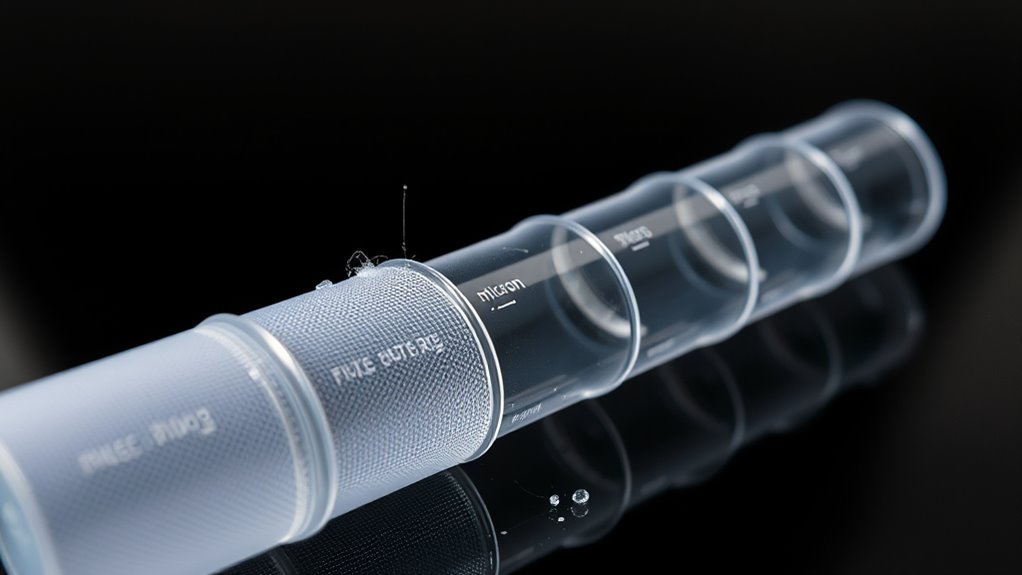
Micron ratings directly influence how well a filter can capture particles of various sizes. A lower micron rating means the filter can trap smaller particles, improving water purity. However, this also means the filter may clog faster, reducing its longevity. Conversely, higher micron ratings allow larger particles to pass through, which might extend filter life but could compromise water quality. Understanding this balance helps you choose the right filter for your needs. If you prioritize cleaner water, opt for a lower micron rating, but be prepared for more frequent replacements. If longevity and less maintenance matter more, a higher micron rating might suit your setup. Ultimately, selecting the correct micron rating guarantees ideal filtration performance tailored to your water quality goals. Additionally, knowing the benefits of wood-burning stoves can help you choose energy-efficient heating options that contribute to sustainability and cost savings.
The Science Behind Micron Measurement

Understanding the science behind how micron measurements work can clarify how filters capture particles of different sizes. Microns measure the tiny particle size, often compared to a water molecule, which is about 0.00027 microns. This scale helps you understand what your filter can block. Smaller particles, like bacteria, are often less than 1 micron, while dirt and debris can be several microns wide.
| Particle Type | Typical Particle Size (Microns) |
|---|---|
| Water molecule | 0.00027 |
| Bacteria | 0.2 – 10 |
| Dust particles | 1 – 100 |
| Sand grains | 100 – 1000 |
Knowing these sizes reveals how filters of different micron ratings target specific contaminants effectively.
Choosing the Right Micron Rating for Your Needs

Choosing the right micron rating depends on understanding what size particles you need to filter out. You should assess your filtration needs carefully to match the micron rating with the contaminants you’re targeting. By matching micron ratings to your specific requirements, you can guarantee ideal filtration performance. For specific applications like automotive air intake systems, selecting the appropriate micron rating ensures optimal engine protection and efficiency.
Understanding Micron Sizes
Selecting the right micron rating for your filtration needs depends on knowing what size particles you want to remove. Micron sizes determine the pore size of your filter, directly affecting filtering efficiency. Smaller micron ratings mean finer filters, capturing tiny particles, while larger ratings let through larger contaminants. To better understand this:
- Micron ratings like 1-5 microns are perfect for removing bacteria and sediment.
- Ratings around 10-20 microns target larger debris and dirt.
- Higher ratings, such as 50 microns or more, focus on coarse particles and sediment.
Your choice impacts filtering efficiency and how well your system protects your equipment or health. By understanding micron sizes and pore size, you ensure ideal filtration suited to your specific needs without sacrificing flow rate or effectiveness.
Assessing Filtration Needs
To determine the right micron rating for your filtration system, you need to evaluate what contaminants you want to remove and how clean the water or fluid must be. Consider the level of water purity required for your application—whether removing large particles or tiny microorganisms. A lower micron rating filters out smaller contaminants but may clog more quickly, increasing filter maintenance. Conversely, a higher micron rating allows for longer intervals between replacements but may leave finer particles behind. Think about your specific needs—food processing, laboratory use, or household filtration—and choose a micron size that balances water purity with manageable filter maintenance. Selecting the appropriate micron rating ensures effective filtration without unnecessary costs or frequent replacements.
Matching Micron Ratings
Matching the right micron rating to your specific needs involves understanding the types of contaminants you want to remove and the level of purity required. Your chosen filter media’s pore size determines its effectiveness—smaller pores catch finer particles, but may slow water flow. To select the correct micron rating, consider these points:
- For removing sediment and larger debris, choose a filter with a higher micron rating (e.g., 20-50 microns).
- For clarity and removing smaller particles, opt for a medium rating (e.g., 5-10 microns).
- For ultra-fine filtration, like removing bacteria or cysts, select a low micron rating (e.g., 1 micron or less).
- Understanding the safety of water filtration also involves knowing about the filtration materials and their effectiveness, which relate to the micron size and the contaminants they target.
Understanding pore size helps you balance filtration efficiency with flow rate, ensuring you meet your purity goals.
Practical Tips for Interpreting Filter Labels
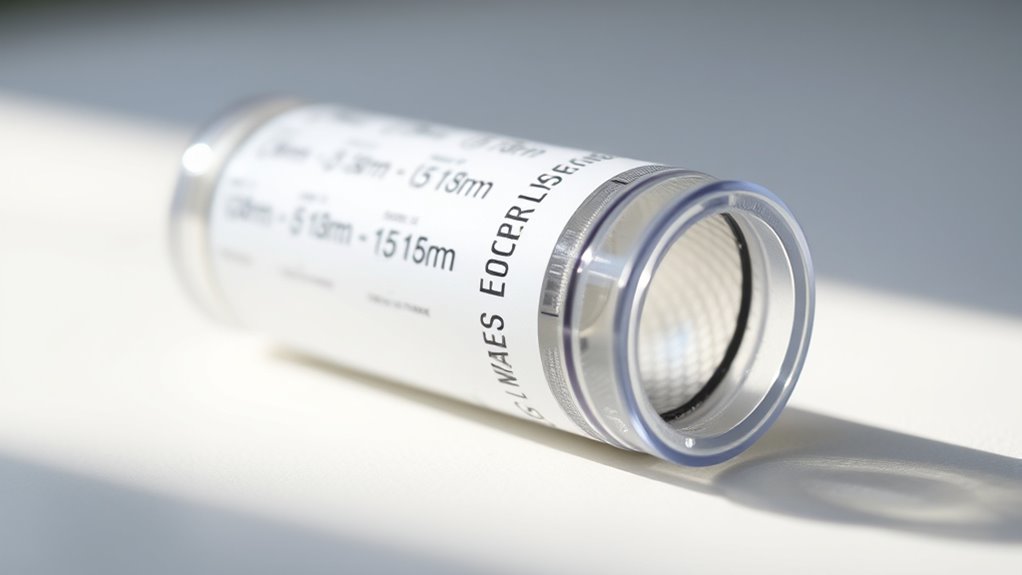
Understanding filter labels is essential for choosing the right product for your needs. Proper label interpretation helps you select filters that match your application, ensuring effective filter maintenance and longevity. Look for clear micron ratings, which indicate the size of particles the filter can trap. Check if the label specifies compatibility with your system. Pay attention to the flow rate and filter lifespan. Use the table below to decode common label symbols:
| Symbol | Meaning | Tips |
|---|---|---|
| Micron size | Particle size retained | Match to your needs |
| Flow rate | Max recommended flow | Avoid overloading |
| Compatibility | System or fluid compatibility | Prevent damage |
| Filter type | Material or technology used | Choose suited for environment |
| Maintenance | Recommended service interval | Keep filter functioning at its best |
Additionally, selecting a vetted home theatre projector ensures you get reliable performance tailored to your space and needs.
Real-World Examples: Micron Ratings in Action

Ever wonder how micron ratings influence real-world filtration performance? They play a vital role in determining water quality and suitability for industrial applications. Here are three examples:
- In municipal water treatment, filters with 1-micron ratings remove bacteria and sediment, ensuring safe drinking water.
- Industrial applications like manufacturing use 5-micron filters to protect equipment from larger debris, improving system longevity.
- In pharmaceutical manufacturing, ultra-fine filters with sub-micron ratings maintain high water purity essential for product safety.
- Filtration efficiency depends heavily on micron ratings, impacting the effectiveness of water treatment processes in various industries.
Frequently Asked Questions
How Do Micron Ratings Relate to Filter Lifespan and Maintenance?
Micron ratings directly impact your filter’s durability and maintenance scheduling. A lower micron rating means smaller particles are captured, which can clog the filter faster, reducing its lifespan. To keep it working efficiently, you should schedule regular maintenance based on the micron rating and your usage. By doing so, you guarantee maximum filtration, prevent damage, and extend the life of your filter, saving you time and money.
Can Micron Ratings Be Standardized Across Different Filter Manufacturers?
You can’t fully standardize micron ratings across different filter manufacturers because manufacturing consistency varies, affecting performance variability. While micron ratings aim to measure pore size, different brands may interpret and test these ratings differently. This means a filter with a specific micron rating from one manufacturer might not perform identically to another. Always compare specifications and test data, rather than relying solely on micron ratings, to guarantee you’re getting the expected filtration performance.
What Are the Limitations of Using Micron Ratings Alone for Filter Selection?
Using micron ratings alone for filter selection has limitations because it doesn’t account for filter efficiency or pore size variability. You might see a filter labeled as 5 microns, but its actual ability to trap particles depends on how well it performs at that size. Factors like material quality and design influence effectiveness, so relying solely on micron ratings can lead to choosing a filter that doesn’t meet your specific needs.
How Do Environmental Conditions Influence Effective Micron Filtration?
Environmental conditions greatly impact effective micron filtration. Poor air quality introduces more pollutants, making filters work harder. Moisture effects, like humidity or condensation, can clog filters faster or cause microbial growth, reducing efficiency. You need to take these factors into account because micron ratings alone don’t account for environmental influences. By understanding these conditions, you can select filters that perform reliably in your specific environment, ensuring cleaner air and better protection.
Are There Any Emerging Technologies Improving Micron Filtration Accuracy?
Imagine a lighthouse guiding ships through fog—that’s what nanotechnology advancements do for micron filtration. You’ll find smart filtration systems emerging, using sensors and AI to adjust filtering precision in real-time. These innovations dramatically improve accuracy, ensuring contaminants are caught efficiently. By harnessing nanotech and intelligent controls, you get sharper, more reliable filtration, making your systems smarter, safer, and more adaptable to changing environmental conditions.
Conclusion
Understanding micron ratings helps you make smarter filtration choices, ensuring cleaner water or air. Did you know that a typical home filter removes particles as small as 0.3 microns, yet bacteria can be as tiny as 0.2 microns? This shows why selecting the right micron rating is essential. By knowing the facts, you can confidently choose filters that meet your needs and avoid common myths, keeping your environment safer and healthier.
NFL season / tailgating Picks
team gear
As an affiliate, we earn on qualifying purchases.