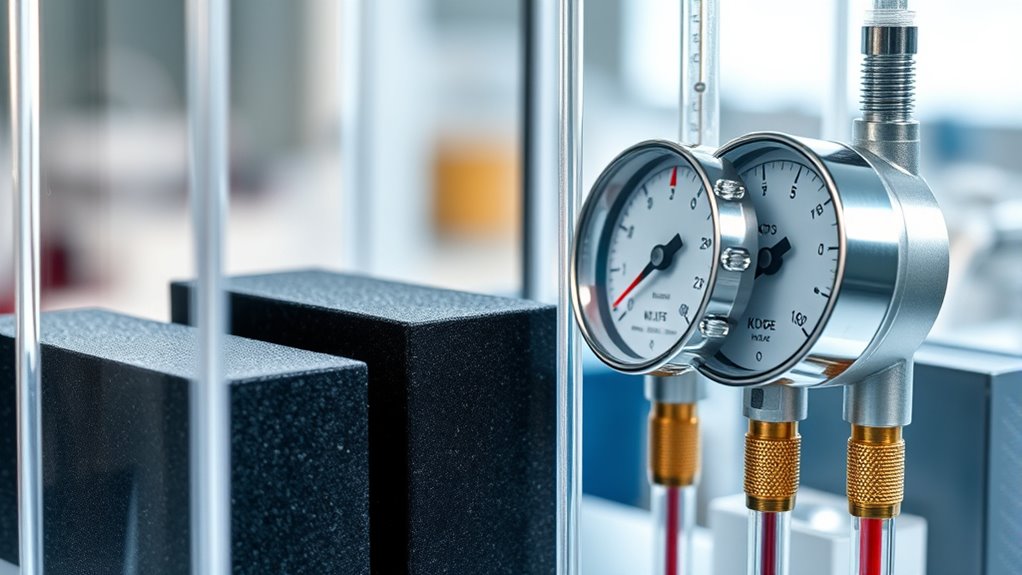

To forecast pressure drop across carbon blocks and KDF media, consider media porosity and how contaminants or particles decrease it over time. As porosity drops due to clogging, resistance increases, raising pressure drop, especially with higher flow rates. Monitoring flow rate and pressure changes helps identify media degradation early. Maintaining ideal flow and media condition ensures consistent performance. Stick around to discover more about accurately estimating pressure drops for perfect system operation.

Get home appliances delivered free — and shop member deals
- Fast, free delivery on millions of items
- Access to Prime Big Deal Days deals on October 6–7
- Prime Video, Amazon Music and more included
Key Takeaways
- Monitoring flow rate changes helps predict increasing pressure drops due to media clogging or reduced porosity.
- Regular pressure drop measurements indicate media performance and early signs of clogging or contamination.
- Understanding media porosity and contaminant buildup allows for accurate pressure drop forecasting.
- Adjusting flow rates can mitigate pressure increases and extend media lifespan.
- Consistent pressure drop patterns suggest stable media, while fluctuations signal potential degradation.
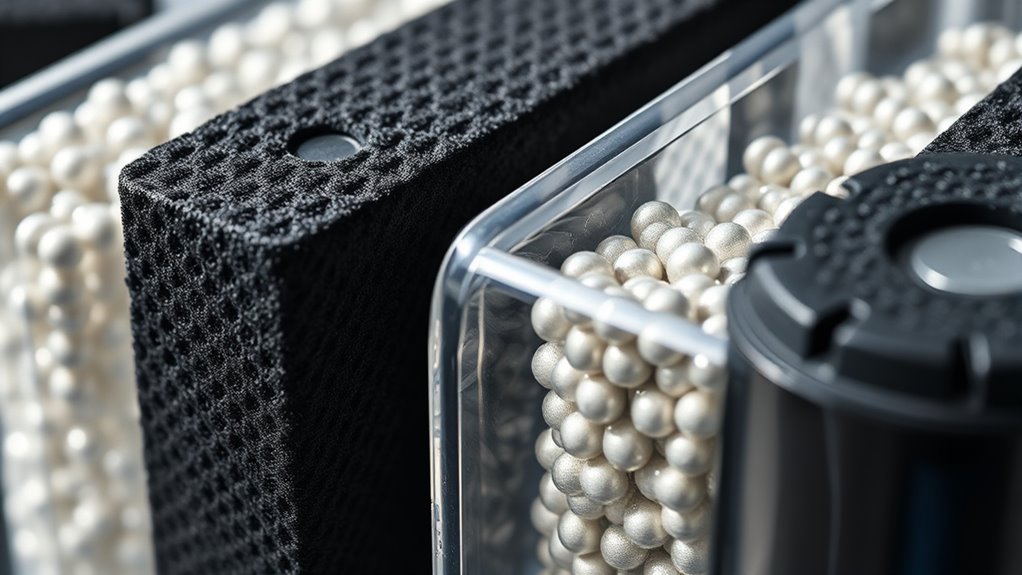
Understanding how media porosity interacts with flow rate helps you predict how the pressure drop will behave over time. For example, as the media becomes clogged with particulates or contaminants, the effective porosity decreases, increasing resistance to flow. This results in a higher pressure drop, signaling the need for maintenance or media replacement. Monitoring how pressure changes with flow rate adjustments allows you to anticipate when the system might need servicing, preventing unexpected failures or reduced water quality. Additionally, media stability plays a crucial role in maintaining consistent pressure drops over the lifespan of the filtration system.
As an affiliate, we earn on qualifying purchases.
Frequently Asked Questions
How Does Temperature Affect Pressure Drop Predictions?
Temperature affects pressure drop predictions because of temperature sensitivity and thermal effects on the media. When temperatures rise, materials expand slightly, reducing pore size and increasing resistance, which raises pressure drop. Conversely, cooler temperatures can cause contraction, lowering resistance. You should consider these thermal effects in your models, as they directly influence flow resistance and accuracy of pressure drop predictions across carbon blocks and KDF media.
Can Pressure Drop Vary With Different Flow Rates?
Imagine water rushing through a maze of channels, where flow rate variability changes the pressure drop like shifting currents. Yes, pressure drop varies with different flow rates, especially when you alter block configuration. Higher flow rates increase resistance, making the water struggle more. Adjusting flow rate or block setup directly impacts the pressure, so understanding this relationship helps you optimize your filtration system for efficiency and longevity.
What Are Common Measurement Errors in Pressure Drop Testing?
You might encounter common measurement errors in pressure drop testing due to uncalibrated instruments or inconsistent flow. If your instrument isn’t properly calibrated, readings can be inaccurate, leading to errors. Additionally, poor flow uniformity across the media causes inconsistent pressure measurements. To prevent these issues, regularly calibrate your instruments and ensure your flow is steady and evenly distributed. Proper setup and maintenance help you obtain reliable pressure drop data.
How Do Block Size and Shape Influence Pressure Loss?
Imagine a block shape that’s 50% more streamlined, reducing pressure flow resistance remarkably. You’ll find that larger or irregularly shaped blocks cause more pressure loss because they disrupt fluid movement. The block shape influences how smoothly water passes through, with uniform, compact shapes offering less resistance. So, choosing the right size and shape minimizes pressure loss, ensuring efficient filtration and ideal flow across your media.
Are There Software Tools for Real-Time Pressure Drop Monitoring?
Yes, you can use software tools for real-time pressure drop monitoring. These tools often include sensor calibration features to guarantee accurate readings and data visualization dashboards that display pressure trends dynamically. You simply install the sensors, calibrate them regularly, and access the software to monitor pressure levels instantly, helping you identify issues quickly and optimize system performance efficiently.
As an affiliate, we earn on qualifying purchases.
Conclusion
Understanding how pressure drops across carbon blocks and KDF media is like steering a river’s flow—you need to know the currents to prevent a flood. By accurately predicting these drops, you can optimize your filtration system’s performance and longevity. Remember, a small change can cause a ripple effect. Stay vigilant, fine-tune your calculations, and keep the flow smooth, so your system runs efficiently like a well-oiled machine, ensuring clean water every time.
pressure drop water filter monitor
As an affiliate, we earn on qualifying purchases.
As an affiliate, we earn on qualifying purchases.
As an affiliate, we earn on qualifying purchases.
NFL season / tailgating Picks
team gear
As an affiliate, we earn on qualifying purchases.