To stop guessing, start by understanding your water quality report’s purpose and the key contaminants it lists, like bacteria, lead, or nitrates. Learn the measurement units used and how to compare your results to EPA standards for safe levels. Recognize when contaminants exceed safe limits, and take appropriate steps if needed, such as treatment or more testing. Keep informed about your water’s condition—continue on to discover how to interpret your results accurately.
Key Takeaways
- Familiarize yourself with measurement units (ppm, ppb, mg/L) to accurately interpret contaminant levels.
- Compare test results against EPA standards to determine water safety and identify potential health risks.
- Understand common contaminants and their sources to assess possible causes of water quality issues.
- Look for trends over multiple reports to spot increasing levels or emerging problems.
- Know which actions to take if contaminants exceed safe limits, such as treatment options or plumbing inspections.

Bestprod All-New 21 in 1 Drinking Water Testing Kit Strips, Home Tap and Well Water Test Kit for Hardness, Lead, Iron, Copper, Chlorine, Fluoride
- Clear, Easy-to-Read Results: Provides clear results for all substances
- Simple to Use: Add water, set timer, read results
- User-Friendly Guide: Includes clear instructions for interpretation
As an affiliate, we earn on qualifying purchases.
As an affiliate, we earn on qualifying purchases.
Understanding the Purpose of Your Water Quality Report

Understanding the purpose of your water quality report is essential because it helps you stay informed about the safety and cleanliness of your water supply. When you review the report, you can see how water sampling was conducted and whether the results accurately reflect your water’s condition. Report accuracy is vital because it ensures you trust the information provided. Knowing this, you can identify potential issues early and take appropriate action if necessary. The report gives you a clear picture of your water’s quality, making you a more proactive consumer. By understanding its purpose, you’ll better grasp the significance of the data and feel confident in making decisions that impact your health and safety. Additionally, understanding testing procedures can help you interpret results more effectively.

Brita XL 27 Cup Water Pitcher Dispenser, Includes 1 Elite Filter, Black
- Lead and Contaminant Reduction: Removes 99% of lead and 30+ contaminants
- Large Capacity: 27-cup dispenser with 6-month filter life
- BPA-Free Design: Made without BPA, space-efficient for countertops
As an affiliate, we earn on qualifying purchases.
As an affiliate, we earn on qualifying purchases.
Identifying Key Water Contaminants and Their Significance

Have you ever wondered which contaminants in your water pose the greatest health risks? Knowing the key water contaminants helps you understand potential dangers and their sources. Common contaminant sources include industrial runoff, agricultural activities, and aging pipes. These contaminants can include bacteria, nitrates, lead, pesticides, and disinfection byproducts. Understanding their health impacts is vital—bacteria can cause gastrointestinal illnesses, lead may harm neurological development, and nitrates are especially risky for infants. Recognizing these contaminants and their sources allows you to assess whether your water needs treatment or additional testing. Being aware of home improvement strategies can also help you improve your water quality. By identifying the key contaminants in your water, you take an essential step toward safeguarding your health and ensuring your water is safe to drink.

2025 All-New 4 in 1 Tds Meter Digital Water Tester – Accurate and Reliable TDS EC & Temp(°C,°F) Meter – 0-9999ppm – Professional Testing for Drinking Water, RO/DI System, Aquariums etc
- Brand Commitment: Reliable and high-quality water testing
- Accurate Results: High-precision chip and titanium probe
- Multifunctional 4-in-1: TDS, EC, °C, °F measurements
As an affiliate, we earn on qualifying purchases.
As an affiliate, we earn on qualifying purchases.
Deciphering Measurement Units and Standards
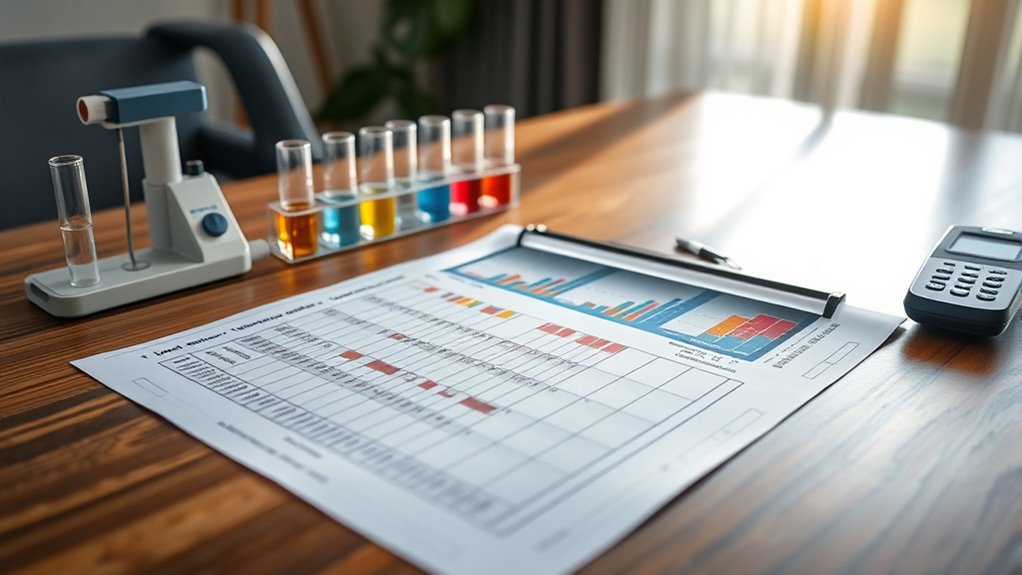
To effectively interpret water quality reports, you need to familiarize yourself with the measurement units and standards used to evaluate contaminants. Understanding these units helps you grasp the safety levels and compare data accurately. Measurement units vary depending on the contaminant and the reporting agency, such as parts per million (ppm), parts per billion (ppb), or milligrams per liter (mg/L). Standards set by agencies like the EPA specify safe limits for various pollutants, guiding your assessment. Keep in mind: Net+ certification benefits can enhance your understanding of technical standards and improve your ability to interpret complex data. Knowing these details allows you to decode reports confidently and determine water safety.

Express Water Whole House Water Filter System, Ultimate Protection, 3-Stage
- Whole House Water Filtration: 3-stage process for entire home
- Comprehensive Contaminant Reduction: Reduces chlorine, heavy metals, and scale
- Durable Deluxe Filter System: Includes stainless steel bracket and stand
As an affiliate, we earn on qualifying purchases.
As an affiliate, we earn on qualifying purchases.
Recognizing Safe vs. Unsafe Levels of Contaminants
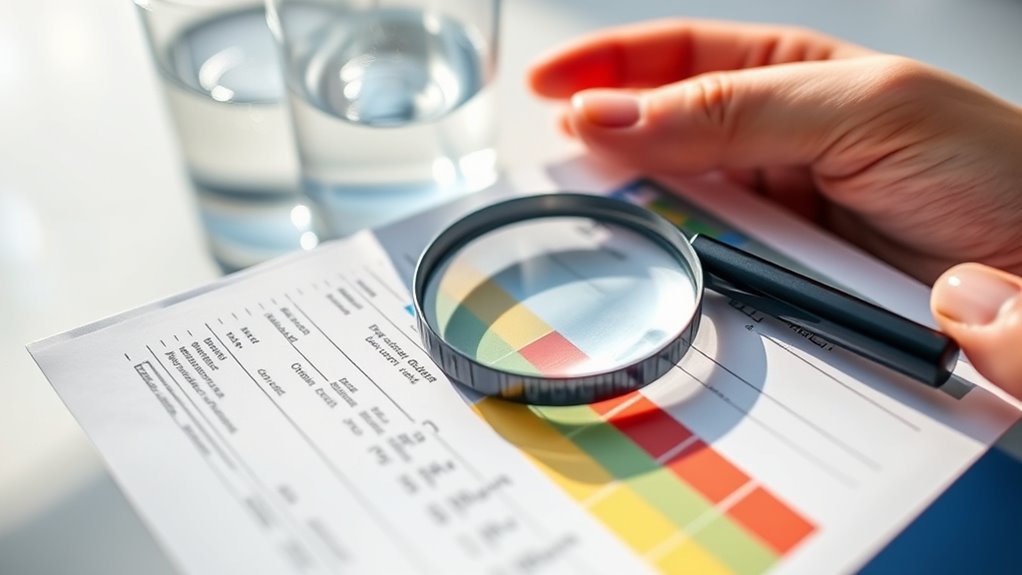
Recognizing safe versus unsafe levels of contaminants is essential for evaluating water quality effectively. You need to know which levels pose health risks. For example, pesticide levels should stay below set thresholds, and lead detection must be minimal to guarantee safety. Here’s a quick reference:
| Contaminant Type | Safe Level | Unsafe Level |
|---|---|---|
| Pesticide Levels | Below MCL | Exceeds MCL |
| Lead Detection | Below AL | Above AL |
| Bacteria | Zero presence | Present in water |
| Nitrate | Below MCL | Exceeds MCL |
Stay alert to these indicators, and always compare your water report’s results with EPA standards to determine water safety. Incorporating rustic lighting and vintage decor can also help create a cozy atmosphere while ensuring a safe and healthy environment.
Interpreting Your Water Test Results Effectively

Interpreting your water test results correctly is essential for ensuring safe drinking water. Proper report interpretation helps you understand what contaminants are present and whether they pose health risks. To make sense of your water testing results, focus on these key points:
- Compare contaminant levels to EPA or local standards
- Recognize when results exceed safe limits
- Understand units of measurement used in the report
- Identify trends or patterns over time
- Be aware of soulmate angel numbers that could indicate spiritual guidance related to health and well-being.
Taking Action Based on Your Report Findings

Once you understand your water test results, taking appropriate action is vital to safeguard your health. If contaminants are present, consider implementing water conservation measures to reduce exposure and protect your plumbing system. You might also need to schedule plumbing inspections to identify and fix issues like leaks or corrosion that could worsen water quality problems. Installing water treatment devices, such as filters or reverse osmosis systems, can further improve water safety. Regular maintenance and monitoring ensure these solutions remain effective. Staying proactive helps prevent long-term health risks and conserves water resources. Understanding water quality factors can help you make more informed decisions about your water safety. Remember, addressing issues promptly not only keeps your water safe but also extends the lifespan of your plumbing infrastructure. Taking these steps puts you in control of your water quality and health.
Tips for Maintaining Water Quality and Staying Informed

After taking steps to address water quality issues, maintaining those improvements requires ongoing effort and awareness. To stay informed, prioritize regular plumbing maintenance to prevent leaks and buildup that can compromise water quality. Practicing water conservation helps reduce strain on your system and minimizes contaminant risks. Keep an eye on your water bills and report any sudden changes, which could signal problems. Regularly test your water quality and review your local water authority reports for updates. Additionally, consider installing filters or water treatment devices if needed. Understanding water pollutants and their sources can help you make informed decisions about filtration options and other protective measures.
- Schedule annual plumbing inspections
- Fix leaks promptly
- Use water-efficient fixtures
- Stay updated with local water quality reports
Frequently Asked Questions
How Often Should I Review My Water Quality Report?
You should review your water quality report annually to stay informed about water testing results and any potential health implications. Regularly checking helps you catch changes or contaminants early, ensuring your water remains safe. If you notice any issues or if your water source has recent updates, consider reviewing reports more often. Staying proactive safeguards your health and ensures you’re aware of any necessary actions for safe drinking water.
Can I Compare Reports From Different Water Providers?
Comparing water quality reports is like comparing apples and oranges—you need to consider different water testing methods and contamination sources. While it’s tempting, don’t assume all reports are directly comparable because each provider may have unique testing standards and local contamination issues. To get a true picture, review the details, understand the testing procedures, and take into account regional factors before drawing conclusions about your water’s safety.
What Should I Do if My Water Quality Changes Unexpectedly?
If your water quality changes unexpectedly, you should conduct water testing immediately to identify potential contamination. Contact your water provider to report the issue and request a detailed water quality report. Meanwhile, avoid using the water for drinking or cooking. Take steps for contamination prevention, like installing a certified water filter, and consider consulting a professional for further testing and advice to guarantee your water remains safe.
Are There Any Hidden Contaminants Not Listed in the Report?
Don’t assume the report shows everything—there could be undisclosed contaminants lurking that aren’t listed due to report limitations. Some pollutants might be undetectable with standard testing or intentionally left out. To stay safe, consider additional testing or contact your local health department for more detailed info. It’s better to be cautious than to find out the hard way that hidden contaminants are in your water.
How Do Seasonal Changes Affect Water Quality Readings?
Seasonal fluctuations can considerably impact water quality readings, as contamination patterns often change with the seasons. During warmer months, higher temperatures may promote bacterial growth, while winter can lead to increased runoff containing pollutants. These variations mean you should interpret water test results with seasonal context in mind. Regular testing during different times of the year helps identify trends, ensuring you fully understand how contamination patterns evolve and affect your water safety.
Conclusion
Now that you know how to read your water quality report, you hold the key to safe, clean water—your own personal compass in a sea of data. Don’t let confusion be your anchor; instead, navigate confidently by understanding the details and taking action. Remember, your water’s quality is the story it tells—one you’re now equipped to interpret and protect. Plunge in with confidence, and keep your water pure and safe.