Testing your water pH is essential because it affects aquatic life health and water quality. It helps you identify if the water is too acidic or alkaline, allowing you to make adjustments before problems arise. Regular testing and gradual corrections ensure stable pH levels, which reduce stress on your aquatic environment. If you want to learn simple methods to measure and adjust pH properly, keep exploring—there’s valuable advice ahead to help you succeed.

Get home appliances delivered free with Prime
- Fast, free delivery on millions of items
- Prime Video, Amazon Music and more included
- Member-only deals all year
Key Takeaways
- Testing water pH ensures safety and stability for aquatic life and specific water uses.
- Regular pH testing detects fluctuations early, preventing stress and health issues in aquatic environments.
- Use test kits or digital meters for accurate pH measurement, following instructions carefully.
- Adjust pH gradually using appropriate additives like crushed coral to raise or acids to lower levels.
- Maintaining stable pH prevents sudden changes that can harm aquatic inhabitants and promotes healthier water conditions.

Have you ever wondered how to determine if your water is safe or suitable for a particular use? Testing water pH is a essential step in ensuring ideal conditions, especially when it comes to aquarium safety and water quality. The pH level indicates how acidic or alkaline your water is, and maintaining it within the right range can prevent stress or health issues for aquatic life. If your water’s pH is too high or too low, it can harm fish, plants, and other organisms, making it indispensable to test regularly and adjust as needed.
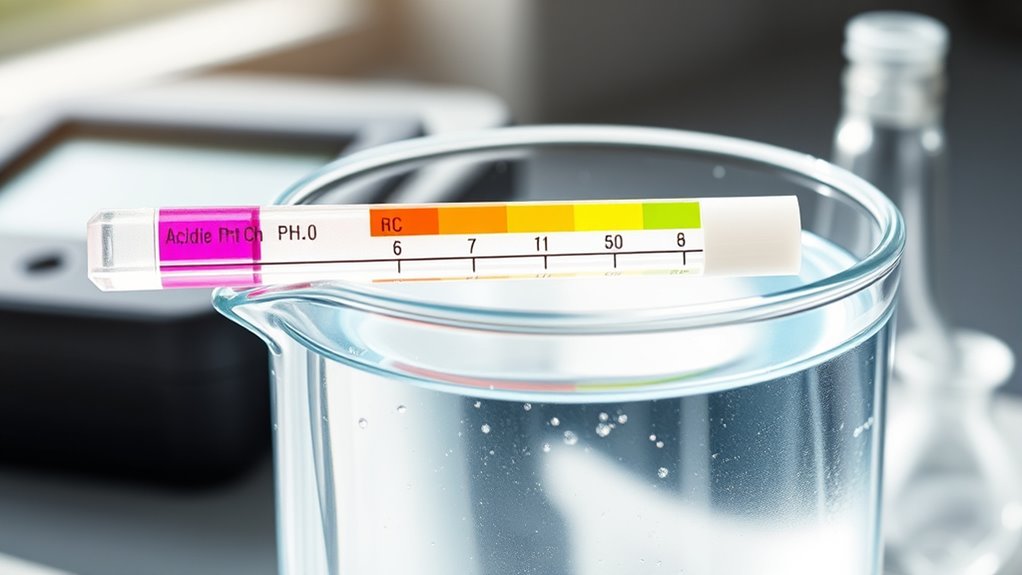
Knowing how to test water pH is straightforward. You can use simple test kits or digital meters designed specifically for water analysis. Test kits usually involve adding a small sample of water to a test tube or container, then adding a chemical reagent that changes color based on the pH level. Digital meters provide a direct reading and are often more precise. Whichever method you choose, ensure you follow the instructions carefully for the most accurate results. Regular testing allows you to catch fluctuations early and maintain consistent water quality, which is essential for a stable aquatic environment. Additionally, understanding the importance of HEPA filtration can help you improve air quality in your home, especially if you suffer from allergies or asthma.
Adjusting water pH is equally important. If your test results show that the pH is outside the ideal range—usually between 6.5 and 7.5 for most freshwater aquariums—you’ll need to take action. To raise pH, you might add substances like crushed coral or limestone, which release calcium carbonate into the water. For lowering pH, products containing acids like phosphoric or citric acid can be used, but always do so gradually. Sudden changes can stress or kill your aquatic inhabitants. It’s best to make small adjustments over several days, testing frequently to monitor the changes. Remember, maintaining stable pH levels is more important than hitting a perfect number immediately.
In addition to using chemical additives, you can also influence pH through water changes. Using conditioned, aged water with a stable pH helps maintain water quality and prevents sudden shifts. Be cautious about overcorrecting, as large swings can compromise aquarium safety and the health of your aquatic life. Keep in mind that pH isn’t the only factor affecting water quality; alkalinity and hardness also play roles. Regular testing and thoughtful adjustments ensure your water remains within the safe and suitable range for your specific aquatic needs. Ultimately, understanding and managing water pH creates a healthier environment, promotes the well-being of your aquatic creatures, and makes caring for your aquarium more manageable and enjoyable.
Products Worth Considering

Philips Hue Bridge Pro Starter Kit with 4 A19 E26 Color Smart Bulbs

DREAME D20 Air Plus Robot Vacuum and Mop with Auto-Empty Dock

Philips Hue Play Gradient Light Tube, Large, Black
As an affiliate, we earn on qualifying purchases.
Frequently Asked Questions
How Often Should I Test My Water Ph?
You should test your water pH at least once a week to keep your aquarium or pool in ideal condition. Regular testing helps you monitor and maintain proper pool chemistry and ensures your aquatic life stays healthy. During aquarium maintenance, checking pH more frequently is wise, especially if you notice changes. Consistent testing allows you to adjust pH promptly, preventing issues caused by imbalanced water chemistry.
Can Natural Remedies Balance Water Ph?
Natural remedies for pH balancing are like gentle whispers to your water, helping it stay in harmony. You can try adding baking soda to raise pH or vinegar to lower it, both natural options that work well without harsh chemicals. These methods promote a more balanced water pH naturally, making it safer for your plants, fish, or household use. Just remember to test frequently to keep everything in perfect harmony.
What Are the Signs of Improper Ph in Water?
You’ll notice signs of improper pH in water through a sour taste or a metallic smell, indicating a pH imbalance. You might see water causing corrosion in pipes and fixtures, which can lead to leaks or discolored water. Additionally, cloudy or slimy water suggests pH issues. Maintaining proper pH levels prevents water corrosion and guarantees safe, clean water for your home. Regular testing helps catch these signs early.
How Does Ph Affect Water Treatment Processes?
You need to know that pH influences water chemistry, directly impacting your treatment efficiency. If the pH is too high or low, it can cause scale buildup or corrosion, making treatment less effective. By maintaining proper pH levels, you guarantee your processes work smoothly, preventing damage to equipment and ensuring safe, clean water. Regular testing and adjustments help keep your water chemistry balanced for ideal treatment results.
Are There Eco-Friendly Ph Adjustment Options?
Yes, eco-friendly alternatives for pH adjustment do exist. You can use natural balancing methods like adding organic materials such as peat moss or limestone, which gently shift pH levels without harmful chemicals. These options are safe for the environment and help maintain water quality naturally. While some may worry about effectiveness, these natural solutions offer sustainable, effective ways to keep your water pH balanced without compromising ecological health.
Conclusion
Testing your water pH is like tuning a fine instrument—every note must be just right to guarantee harmony. When you monitor and adjust the pH levels, you’re safeguarding your plants, aquatic life, or household systems from unseen damage. Don’t let imbalances sneak up on you; instead, stay proactive. With a little effort, you’ll keep your water’s chemistry balanced, turning a simple test into a symphony of well-being and stability.