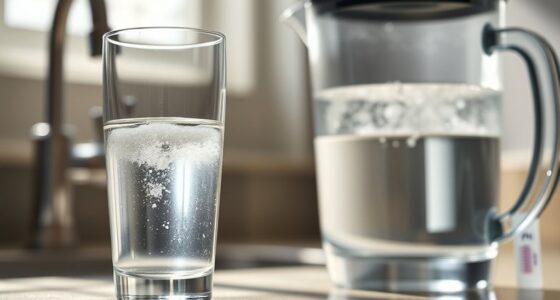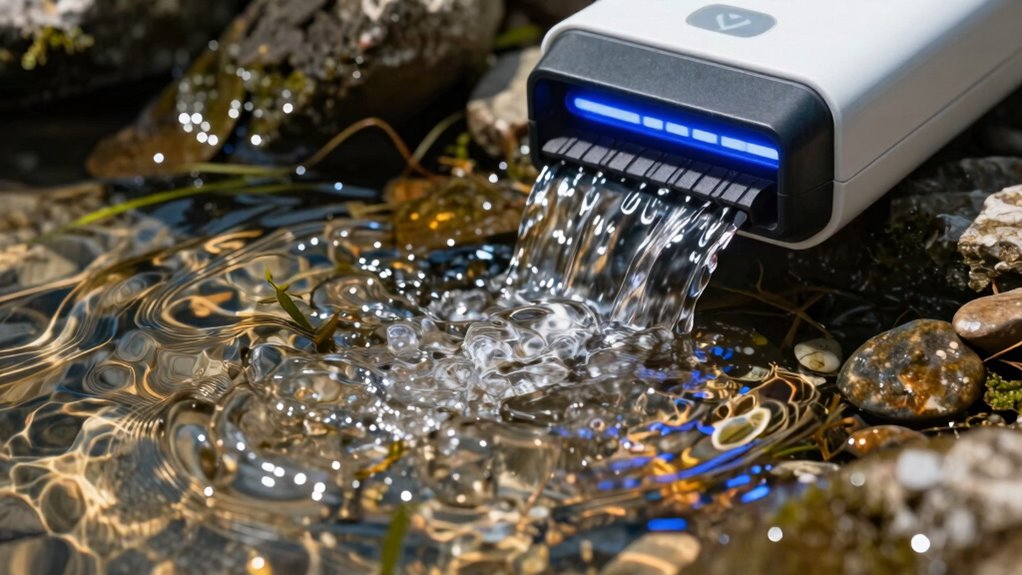

UV disinfects water by targeting bacteria, viruses, and other microorganisms, but it doesn’t physically remove dirt, rust, or sediment. As a result, UV systems won’t improve water clarity or remove physical debris. If you want clear, particle-free water, you need a sediment filter first. Understanding this difference helps you choose the right components for safe, clean water. Keep exploring to learn how combining filtration methods can give you the best results.

Get home appliances delivered free with Prime
- Fast, free delivery on millions of items
- Prime Video, Amazon Music and more included
- Member-only deals all year
Key Takeaways
- UV systems target microorganisms biologically, not physical particles like dirt or sediment.
- Sediment filters physically trap particles; UV does not remove physical debris.
- UV cannot eliminate sediments or chemical pollutants from water.
- Proper water treatment requires initial physical filtration before UV disinfection.
- UV’s role is specifically for biological safety, not physical removal of sediments.
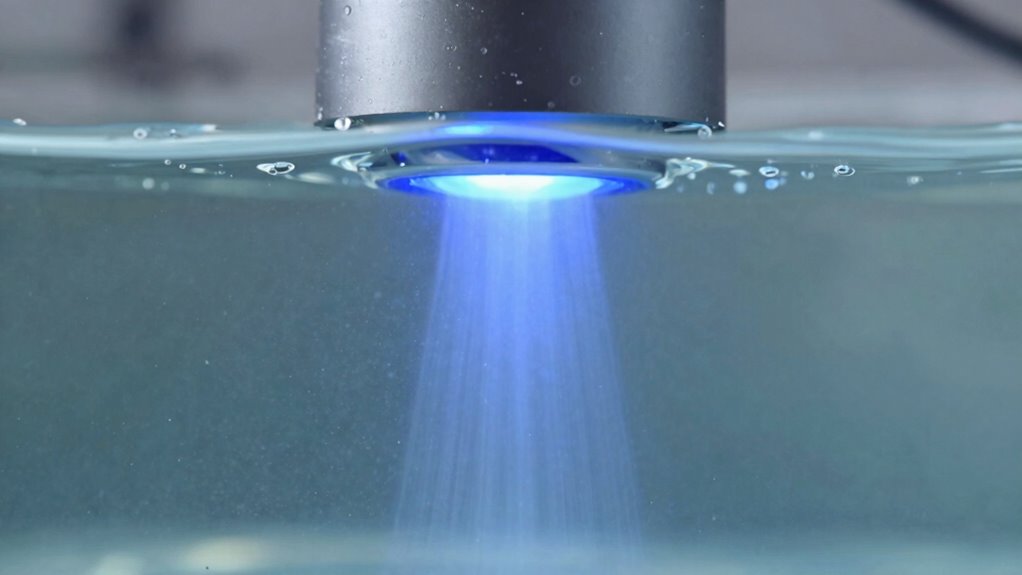
Many people mistakenly assume that ultraviolet (UV) water purification works like a sediment filter, but in reality, it serves a very different purpose. Sediment filters physically trap particles like dirt, sand, and rust, so the water appears clearer. UV systems, however, don’t remove these particles. Instead, they target microorganisms and biological contaminants by disrupting their DNA, preventing them from reproducing. This process is known as biological reduction, making UV an effective tool against bacteria, viruses, and other pathogens. But it’s important to understand that UV doesn’t act as a filter for chemical substances or sediments. Since UV is designed specifically for biological reduction, it’s essential to understand its limitations in filtration.
UV water purification targets microorganisms, not sediments or chemicals, offering biological safety as part of a multi-stage system.
Understanding why UV isn’t a sediment filter helps you see its true role in water treatment. While sediment filters clear out physical debris, UV’s strength lies in biological reduction. It’s an essential complement but not a substitute for physical or chemical filtration. If your water has chemical pollutants, you need to install appropriate chemical filtration solutions prior to UV to achieve thorough purification. Recognizing the specific functions of UV helps you better design a comprehensive water treatment system that addresses all potential contaminants. Additionally, knowing the differences between filtration types can help prevent misuse of UV systems that may lead to inadequate water purification.
In essence, UV water purification offers a targeted approach: it’s excellent at neutralizing biological threats but doesn’t replace physical or chemical filtration. It’s not designed to remove sediments, chemicals, or dissolved substances. Instead, it works best as part of a multi-stage filtration system. You might use a sediment filter first to clear out particles, then follow with chemical filtration for contaminants, and finish with UV for biological safety. Recognizing these distinctions helps you select the right combination of treatments for your water, ensuring it’s safe, clean, and tastes good. UV is a powerful tool, but it’s important to understand what it can and can’t do to avoid relying on it incorrectly.
As an affiliate, we earn on qualifying purchases.
Frequently Asked Questions
Can UV Light Remove Chemical Contaminants From Water?
UV light can’t remove chemical contaminants from water because it’s designed for contaminant filtration through germicidal effects, targeting bacteria and viruses. For chemical removal, you need specific filtration methods like activated carbon filters or reverse osmosis systems. UV treatment is effective for microbial control but doesn’t alter or filter out chemicals, so you should combine it with other filtration systems to guarantee thorough water purification.
How Long Does a UV Sterilizer Bulb Typically Last?
A UV sterilizer bulb typically lasts about 9 to 12 months, depending on usage and water quality. You need to replace the bulb regularly to maintain sterilizer durability and guarantee effective disinfection. Over time, UV bulb lifespan decreases as the bulb’s output diminishes. To keep your system working efficiently, follow the manufacturer’s recommendations and change the bulb annually, or sooner if you notice reduced water clarity or flow.
Is UV Treatment Effective Against Viruses?
You can rely on UV treatment to effectively inactivate many viruses, such as the Norovirus outbreak in a cruise ship, where UV was vital. However, UV has limitations; it may not deactivate all viruses if water flow is too fast or the bulb isn’t strong enough. Some viruses show viral resistance, meaning UV may not work 100%. Proper design and maintenance are essential for maximum virus inactivation.
Do UV Systems Require Regular Maintenance?
Yes, UV systems require regular maintenance to stay effective. You need to check the UV system installation periodically to guarantee everything’s functioning properly. Replacing the UV bulb is essential, typically once a year, as its effectiveness diminishes over time. Regular maintenance keeps your UV system working efficiently, making sure it continues to disinfect water properly and provides safe, clean water for your home.
Can UV Improve Water Taste and Odor?
Think of UV light as a magic wand for your water’s taste and odor. It doesn’t directly improve water clarity, but it works behind the scenes to reduce microbes that can cause unpleasant smells and tastes. By eliminating bacteria and viruses, UV treatment guarantees your water smells fresher and tastes cleaner. While it doesn’t target sediments, it’s a powerful tool for enhancing microbial reduction and overall water quality.
As an affiliate, we earn on qualifying purchases.
Conclusion
So, while UV light can be a gentle guardian for your water’s clarity, it’s not the magic wand for sediment. Think of it as a trusted sentinel that keeps things shining, but doesn’t sift through the gritty bits. For true removal of sediments, you’ll want a dedicated filter. Remember, combining the right tools guarantees your water stays not just clear, but truly pure—like a quiet promise kept beneath the surface.
multi-stage water filtration system
As an affiliate, we earn on qualifying purchases.
As an affiliate, we earn on qualifying purchases.
chemical water filter for contaminants
As an affiliate, we earn on qualifying purchases.
As an affiliate, we earn on qualifying purchases.
NFL season / tailgating Picks
team gear
As an affiliate, we earn on qualifying purchases.