
Choosing a whole house RO system is a bigger commitment than most expect because it requires a large upfront investment, complex installation, and regular maintenance. You’ll need to manage wastewater, which can be high, and guarantee proper filtration across every tap and appliance. Plus, ongoing costs for filters and repairs can add up over time. If you’re curious about the full scope of what’s involved, keep exploring to learn more.

Get home appliances delivered free with Prime
- Fast, free delivery on millions of items
- Prime Video, Amazon Music and more included
- Member-only deals all year
Key Takeaways
- Whole house RO systems require significant upfront investment and complex plumbing installation, making them more costly than point-of-use units.
- They produce substantial wastewater, increasing water bills and raising environmental concerns.
- Regular maintenance and filter replacements are essential, adding ongoing costs and effort.
- Installation often needs professional help due to system size and complexity, unlike simpler DIY solutions.
- Long-term commitment involves managing wastewater, conserving water, and maintaining system efficiency over time.
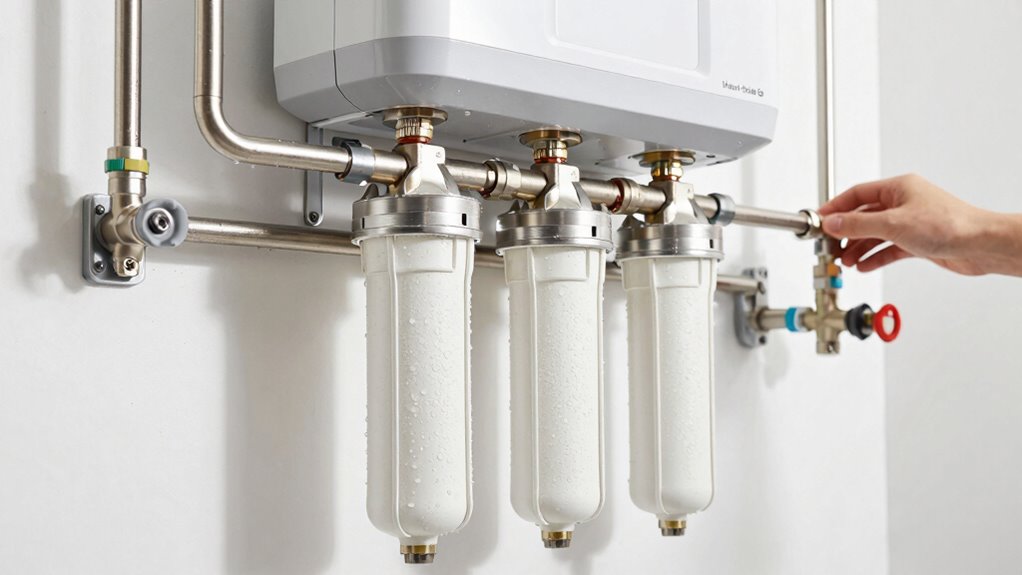
Have you ever wondered if a whole house reverse osmosis (RO) system is worth the investment? It’s a significant decision, and understanding what it entails helps you determine if it’s right for your home. Unlike point-of-use systems, a whole house RO setup filters water for every tap, shower, and appliance. This means you get consistently pure water throughout your home, but it also means taking on a bigger commitment—financially, practically, and environmentally.
Water conservation is a vital factor to contemplate. RO systems aren’t 100% efficient; they produce a substantial amount of wastewater during the filtration process. For a whole house setup, this can translate into a high volume of rejected water, which adds to your water bill and raises questions about efficiency. If you’re eco-conscious or have limited water resources, this aspect might make you pause. You’ll need to plan for how to manage this wastewater or explore systems that incorporate water-saving features. Without proper management, you might find that the system’s water conservation benefits don’t align with your household’s sustainability goals.
Maintenance costs are another essential component that often catches people off guard. A whole house RO system requires regular filter and membrane replacements, which can be costly over time. The larger the system, the more frequent and expensive these replacements become. Additionally, you’ll need to stay on top of system sanitization and occasional repairs. Neglecting maintenance can lead to system inefficiency, poor water quality, or even damage. This ongoing commitment can stretch your budget and time, especially if you’re unfamiliar with plumbing or filtration systems. Moreover, understanding the water quality in your area can influence how often you need to perform maintenance or replace parts.
Furthermore, installing a whole house RO system isn’t a simple DIY project. It demands a significant initial investment—not just in equipment but also in professional installation and ongoing upkeep. You should consider whether your household’s water needs justify such a detailed setup. For some, the convenience of having pure water at every tap outweighs the costs and maintenance efforts. For others, a point-of-use RO or alternative filtration methods may be more practical and cost-effective.
In essence, a whole house RO system is a bigger commitment than most expect. It involves more than just the upfront expense; you have to weigh water conservation challenges and the ongoing maintenance costs. Before making your decision, assess your household’s water quality, usage patterns, and environmental priorities. Only then can you determine if the benefits of pure, filtered water justify the larger, long-term commitment.
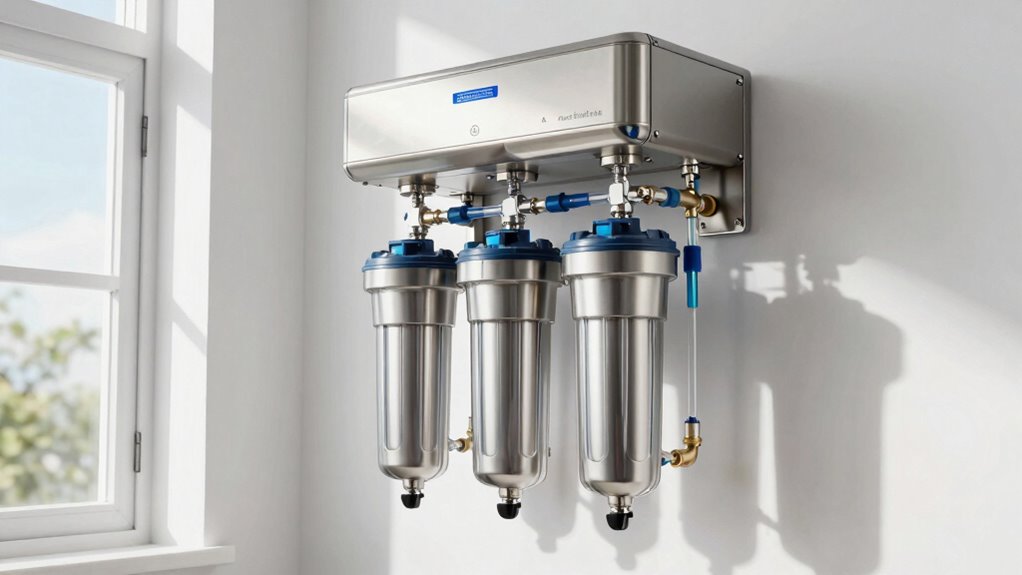
whole house reverse osmosis water filtration system
As an affiliate, we earn on qualifying purchases.
As an affiliate, we earn on qualifying purchases.
Frequently Asked Questions
How Much Does a Whole House RO System Typically Cost?
A whole house RO system typically costs between $3,000 and $8,000, depending on size and features. You should consider water filtration needs and system durability when choosing one. Investing in a durable system guarantees long-term performance and fewer repairs, but it requires a higher upfront cost. Be prepared for ongoing maintenance and filter replacements, which are essential for maintaining water quality throughout your home.
How Long Does Installation of a Whole House RO Take?
Imagine turning on your tap, knowing water flows through a durable, expertly installed system. Whole house RO installation typically takes 1 to 3 days, depending on your home’s size and water filtration needs. During that time, technicians carefully connect pipes, check system durability, and guarantee every faucet delivers pure, clean water. You’ll want patience, but the result is a seamless, long-lasting filtration system that enhances your entire home’s water quality.
What Maintenance Is Required for a Whole House RO System?
You need to regularly check your system’s durability and perform filter replacements to keep your whole house RO system running smoothly. Typically, filters should be replaced every 6 to 12 months, depending on usage and water quality. Keep an eye on the system’s performance, and clean or service it as recommended by the manufacturer. Proper maintenance guarantees peak water quality and prolongs the lifespan of your RO system.
Can a Whole House RO System Remove All Contaminants?
A whole house RO system can remove many contaminant types, including bacteria, viruses, heavy metals, and chemicals, but it might not eliminate all. Its system efficiency depends on proper maintenance and filter quality. Some contaminants, like volatile organic compounds or dissolved gases, may require additional filtration methods. Regular upkeep ensures maximum performance, but understanding its limits helps you know when supplementary treatment is necessary for thorough water purity.
How Does a Whole House RO Impact Water Pressure?
Think of your home’s water pressure like a garden hose—when you install a whole house RO system, water flow can slow down considerably. The system causes pressure reduction, meaning you might notice reduced water flow at faucets and showers. This impact varies depending on your home’s plumbing and the system’s size. You may need to boost pressure or upgrade components to maintain consistent water flow throughout your house.
professional installation of whole house RO system
As an affiliate, we earn on qualifying purchases.
As an affiliate, we earn on qualifying purchases.
Conclusion
Investing in a whole house RO system is a serious commitment, much like installing a custom plumbing setup. Envision this: a family in a suburban home suddenly realizing that their new system requires ongoing maintenance and careful monitoring to keep water pure. It’s not just about clean water—it’s about dedication to guarantee everything runs smoothly. Before you decide, consider if you’re ready for that level of responsibility, because it’s more than just a quick upgrade.
RO system water wastewater management solutions
As an affiliate, we earn on qualifying purchases.
As an affiliate, we earn on qualifying purchases.
high capacity home water filtration system
As an affiliate, we earn on qualifying purchases.
As an affiliate, we earn on qualifying purchases.
NFL season / tailgating Picks
team gear
As an affiliate, we earn on qualifying purchases.