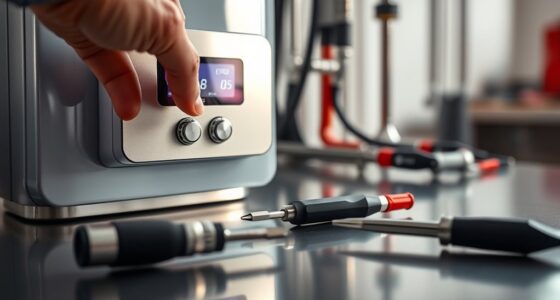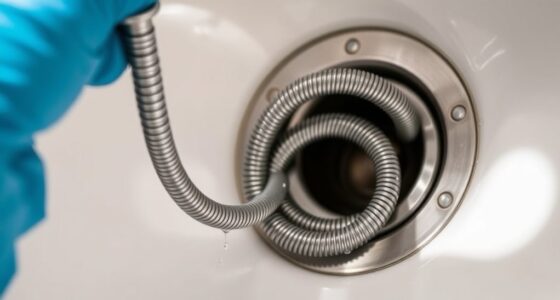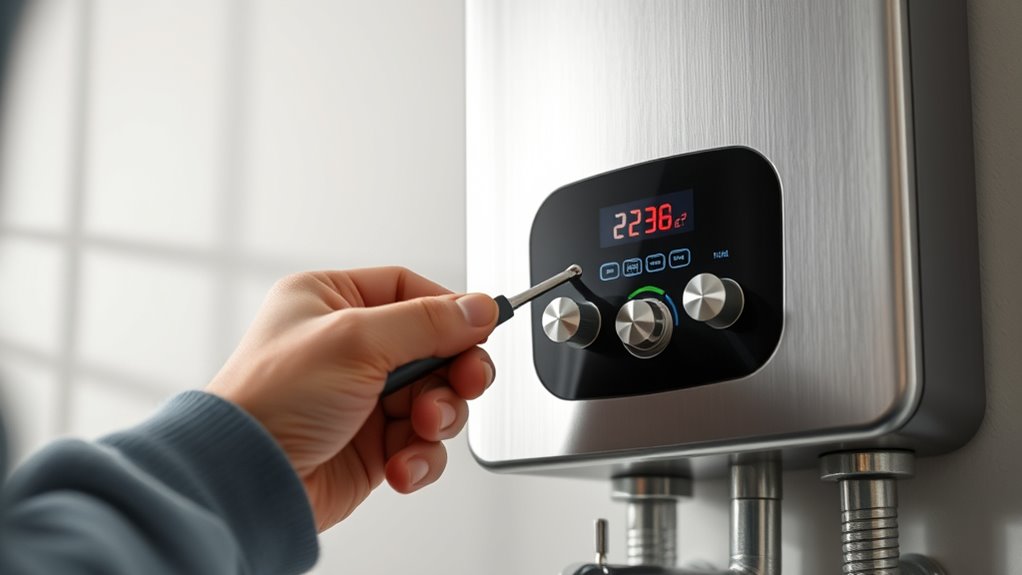

To troubleshoot scale control in your tankless heater, recognize early signs like reduced water flow, noises, or longer heats. Keep an eye on mineral buildup from hard water and regularly flush the system with descaling solutions. Installing a water softener or filtration system helps prevent future deposits, while routine maintenance boosts efficiency. If problems persist, professional help guarantees proper cleanup and repairs. Continue exploring for detailed steps to keep your heater running smoothly.

Get home appliances delivered free — and shop member deals
- Fast, free delivery on millions of items
- Access to Prime Big Deal Days deals on October 6–7
- Prime Video, Amazon Music and more included
Key Takeaways
- Recognize signs of scale buildup, such as reduced water flow, noises, and longer hot water wait times.
- Use water softeners and filtration systems to reduce mineral content and prevent scale formation.
- Regularly flush and descale your tankless heater with manufacturer-approved solutions to remove mineral deposits.
- Maintain optimal water pH levels to prevent corrosion and scale acceleration, combining pH balancing with filtration.
- Seek professional help if you notice persistent performance issues, unusual noises, or significant mineral buildup.
tankless water heater descaling kit
As an affiliate, we earn on qualifying purchases.
As an affiliate, we earn on qualifying purchases.
Understanding Scale Buildup in Tankless Water Heaters

Scale buildup occurs when minerals like calcium and magnesium in hard water deposit on the heating elements of your tankless water heater. This process is rooted in scale chemistry, where mineral deposits form as these dissolved minerals crystallize out of the water under heat. Over time, these mineral deposits accumulate, creating a coating that insulates the heating elements. This reduces heat transfer efficiency, forcing your heater to work harder to maintain water temperature. As a result, energy consumption rises, and the heater’s lifespan shortens. Understanding how mineral deposits develop helps you grasp why scale buildup occurs and the importance of controlling it. Recognizing these underlying processes allows you to better anticipate and manage potential issues before they lead to costly repairs. Additionally, knowing the effects of mineral deposits can guide you in implementing preventive maintenance strategies to extend your heater’s efficiency and lifespan.
As an affiliate, we earn on qualifying purchases.
Recognizing the Signs of Scale Accumulation
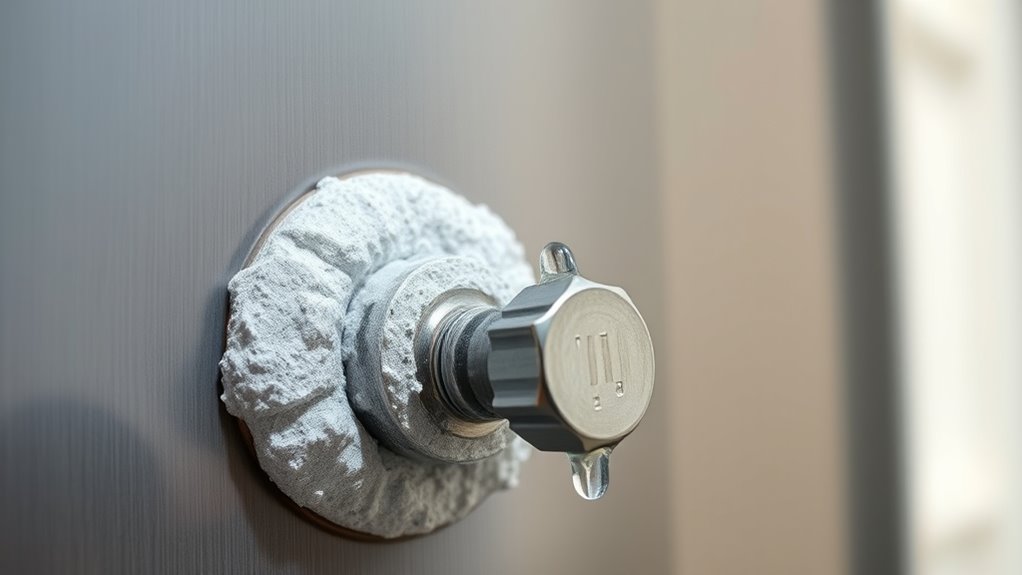
As mineral deposits build up inside your tankless water heater, you’ll notice several telltale signs that indicate scale accumulation. High water mineral content leads to sediment accumulation, which can affect performance. Using a professional voiceover can help explain these signs effectively to customers. Here are key signs to watch for:
- Reduced hot water flow or pressure, especially during peak times.
- Unusual noises like banging or knocking from sediment moving inside the heater.
- Longer wait times for hot water, signaling diminished efficiency.
These issues often stem from mineral deposits forming on heat exchangers, impairing heat transfer. Recognizing these signs early helps prevent further damage and keeps your heater running smoothly longer. Keep an eye on water flow, sounds, and temperature consistency to catch scale buildup before it worsens.
tankless heater mineral scale remover
As an affiliate, we earn on qualifying purchases.
As an affiliate, we earn on qualifying purchases.
Why Scale Control Matters for Your Heater’s Efficiency
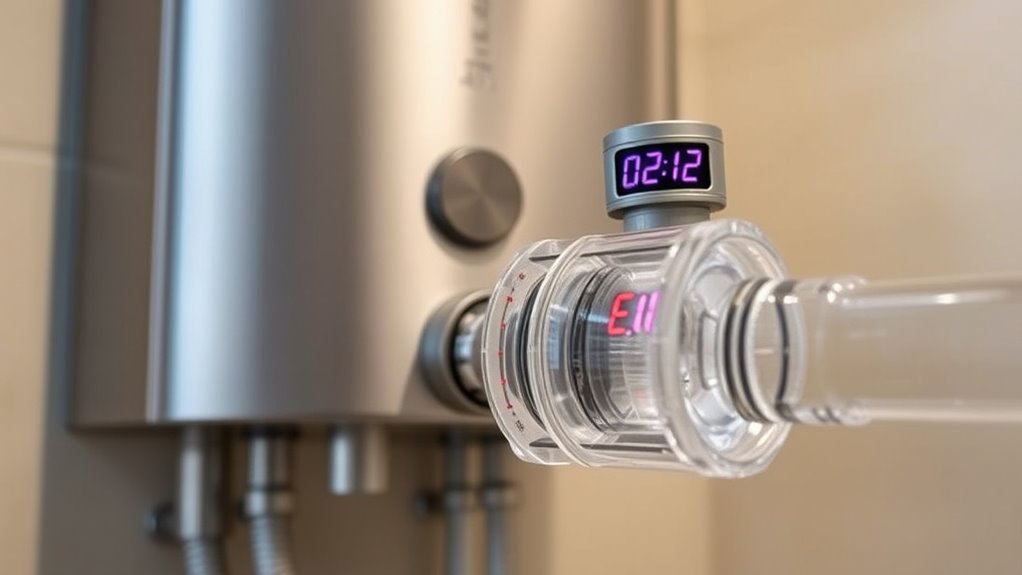
Maintaining proper scale control is vital because mineral buildup can substantially reduce your heater’s efficiency. Scale deposits form when minerals in water accumulate on heating elements and internal components. This mineral accumulation creates a layer that insulates heat, forcing your heater to work harder to deliver hot water. As a result, your energy consumption increases, and your system’s lifespan shortens. Without effective scale control, your heater’s performance drops, leading to inconsistent hot water supply and higher utility bills. Regularly managing mineral buildup ensures your heater operates smoothly and efficiently. By preventing excessive scale deposits, you extend the life of your unit, save money on energy, and maintain reliable hot water. Proper scale control is indispensable for keeping your tankless heater running at peak performance. Additionally, understanding the Power of Imagination can inspire innovative solutions to common maintenance challenges, ensuring your system stays in optimal condition.
As an affiliate, we earn on qualifying purchases.
How Hard Water Contributes to Scale Formation

Hard water contains high levels of dissolved minerals like calcium and magnesium, which directly contribute to scale buildup in your tankless heater. This process, known as water mineralization, leads to mineral deposits forming on heating elements, reducing efficiency and increasing energy costs. To understand how water mineralization impacts your system, consider these points:
- Excess mineral content accelerates scale formation, making it harder for your heater to operate smoothly.
- Hard water promotes the accumulation of calcium carbonate, a common scale contributor.
- Effective scale prevention involves managing mineral levels to reduce buildup and maintain heater performance.
- Incorporating lifestyle adjustments such as water softening methods can help minimize mineral content and extend the lifespan of your heater.
Simple Techniques for Preventing Scale Deposits

To keep scale deposits at bay, consider using water softeners to treat your water supply. Regularly flushing your tankless heater helps remove buildup before it becomes a problem. These simple steps can extend the life of your system and improve its efficiency.
Use Water Softeners
Using water softeners is a simple yet effective way to prevent scale deposits in your tankless heater. They improve water quality by reducing minerals that cause buildup, offering clear water softener benefits. Mineral removal methods like ion exchange or salt-based systems are common and efficient. To maximize their effectiveness, consider: 1. Installing a water softener before the heater to reduce mineral content in incoming water. 2. Choosing a system with adequate capacity for your household’s water usage. 3. Regularly maintaining and replenishing the softener to guarantee consistent performance. Additionally, ensuring proper installation and venting helps prevent dangerous gas buildup and improves safety.
Regular System Flushing
Regular system flushing is a straightforward way to prevent scale buildup in your tankless heater. Over time, mineral deposits from hard water can accumulate, reducing efficiency and damaging the unit. Flushing helps remove these deposits, maintaining peak performance. To enhance this process, consider water filtration systems that reduce mineral content before water enters your heater. Regularly flushing your system with a descaling solution dissolves existing deposits and prevents new ones from forming. This simple maintenance step prolongs the lifespan of your heater and keeps it running smoothly. Schedule flushing sessions every one to two years, especially if you live in areas with hard water. Keeping your system clean ensures consistent hot water flow and avoids costly repairs caused by scale buildup. Additionally, using modern heat pumps can contribute to quieter operation and improved overall efficiency.
Step-by-Step Guide to Descaling Your Tankless Unit
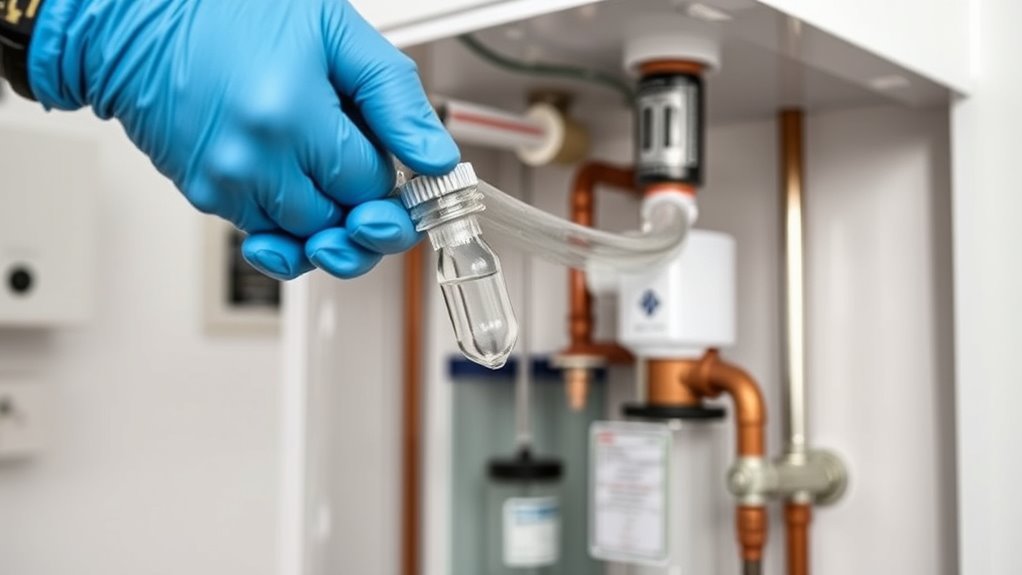
Descaling your tankless unit is essential for maintaining its efficiency and preventing mineral buildup. Many people believe scaling myths that frequent descaling shortens your heater’s lifespan, but regular maintenance actually extends it. Here’s a simple step-by-step guide:
Regular descaling keeps your tankless heater efficient and prolongs its lifespan.
- Turn off the power and water supply to your heater.
- Connect a descaling solution (like vinegar or a commercial descaler) to the cold water inlet, and run the solution through the unit for about 45 minutes.
- Flush the system with clean water to remove any remaining residue, then turn everything back on. Proper system calibration can also improve overall performance and longevity.
Choosing the Right Water Treatment Options
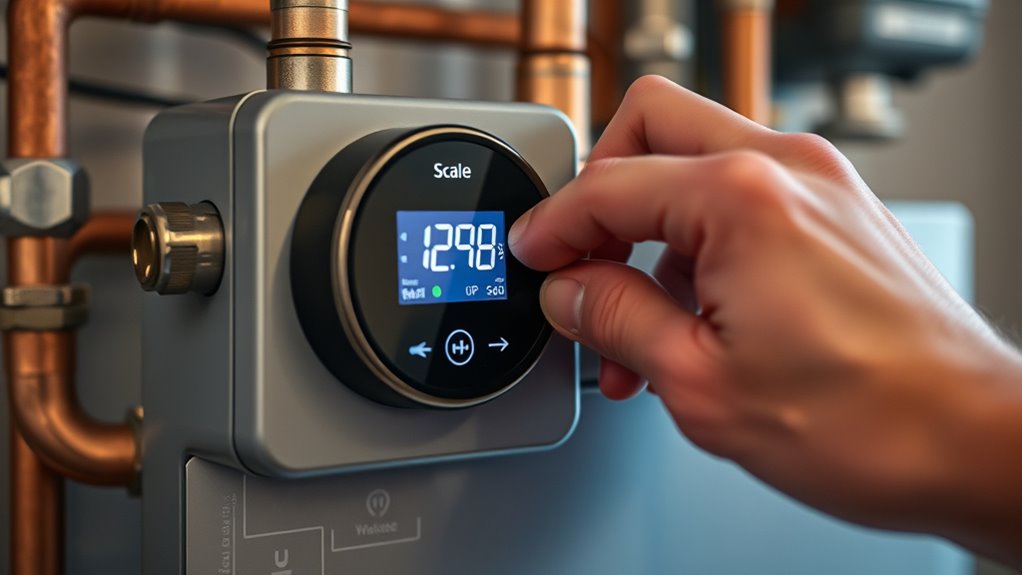
Choosing the right water treatment options can substantially reduce mineral buildup and extend the lifespan of your tankless heater. Water filtration systems help remove sediments and dissolved minerals that cause scale, improving water quality and protecting your unit. Look for filters specifically designed for your water hardness level. Additionally, pH balancing is essential; water that’s too acidic or alkaline can accelerate corrosion or scale formation. Installing a pH neutralizer or conditioner can help maintain ideal pH levels, reducing mineral precipitation. Combining water filtration with pH balancing creates a thorough approach to water treatment, actively preventing scale buildup. Regularly evaluating your water quality and adjusting your treatment options ensures your tankless heater operates efficiently for years to come. Choosing the best inverter generator for your needs can further support powering water treatment systems during outages or remote use.
Routine Maintenance Tips to Keep Scale at Bay
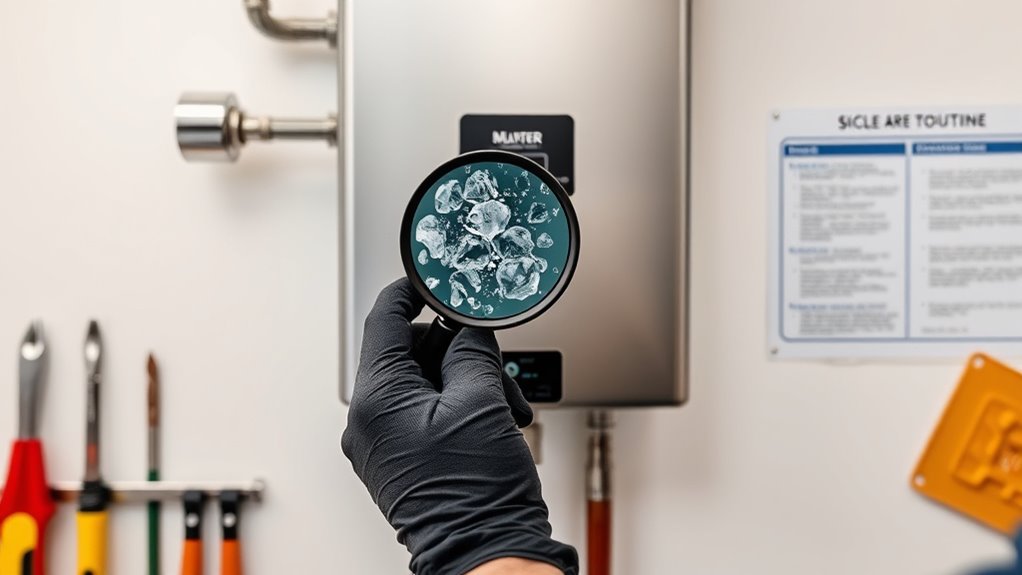
Keeping scale at bay requires consistent maintenance practices that prevent mineral buildup before it becomes a problem. Regular upkeep ensures your tankless heater runs efficiently, saving you money and energy. To maintain ideal performance:
Prevent mineral buildup with regular maintenance to keep your tankless heater running efficiently and cost-effectively.
- Flush your heater annually to remove mineral deposits, boosting energy efficiency and prolonging its lifespan.
- Use a descaling solution as recommended by the manufacturer to prevent scale formation and maintain peak operation.
- Install a water softener if you have hard water, reducing mineral content and minimizing scale buildup.
- Proper maintenance also helps prevent ineffective purification, ensuring your heater functions correctly and efficiently.
When to Seek Professional Help for Scale Issues

If you notice persistent mineral buildup or your heater isn’t performing as expected, it’s time to call in a professional. Unusual heater performance, like inconsistent hot water or strange noises, can also signal scale problems beyond your DIY reach. Don’t wait too long—expert help can prevent costly damage and restore your system’s efficiency.
Persistent Mineral Buildup
Persistent mineral buildup can become a serious problem when it starts to substantially reduce your tankless heater’s efficiency or cause frequent malfunctions. If you notice reduced hot water flow, frequent error codes, or inconsistent temperatures, it’s time to seek professional help.
Consider these signs:
- Excessive mineral deposits visible around the unit, indicating sediment filtration isn’t enough.
- Corrosion prevention measures seem ineffective, and rust or scaling appear inside the heater.
- Regular maintenance doesn’t improve performance, despite descaling attempts.
- Vetted professionals can assess the overall condition of your heater and recommend the most effective solutions.
A professional can thoroughly clean your heater, optimize sediment filtration, and recommend improved corrosion prevention strategies. Addressing persistent buildup early can save you costly repairs and extend your unit’s lifespan.
Unusual Heater Performance
Unusual heater performance, such as inconsistent hot water temperatures, frequent cycling, or unexpected error codes, often signals scale buildup that’s gone beyond simple maintenance. When you notice these issues, it’s a sign that your tankless heater may be experiencing corrosion or reduced energy efficiency due to mineral deposits. If basic troubleshooting doesn’t resolve the problem, it’s time to seek professional help. A technician can perform thorough descaling and ensure proper corrosion prevention measures are in place. Addressing these issues promptly helps maintain peak energy efficiency and prolongs your heater’s lifespan. Ignoring unusual performance can lead to further damage and costly repairs, so don’t hesitate to consult an expert when scale-related problems persist or worsen.
Frequently Asked Questions
How Often Should I Flush My Tankless Heater for Optimal Performance?
You should flush your tankless heater at least once a year to maintain ideal performance. Your maintenance schedule depends on your water hardness; if you have hard water, consider flushing every 6 to 12 months. Regular flushing helps prevent scale buildup, ensuring efficient operation and prolonging your heater’s lifespan. Keep an eye on your system’s performance, and don’t wait too long to schedule a flush if you notice reduced hot water flow.
Can I Use Commercial Descaling Products Safely on My Heater?
You might wonder if commercial chemicals are safe for your heater, and the answer is: it depends. While some descaling safety products are designed for appliances, not all commercial descaling products are suitable for tankless heaters. Always check the label and manufacturer instructions before use. Using the wrong chemicals can damage your unit, so stick with products specifically formulated for your heater to guarantee safe and effective descaling.
What Are the Long-Term Effects of Untreated Scale Buildup?
If you ignore scale buildup, mineral deposits will cause scale deterioration over time, damaging your heater’s components. This buildup reduces efficiency, making your unit work harder and increasing energy bills. Long-term, untreated scale can lead to costly repairs or replacements. Regular maintenance prevents mineral deposits from accumulating, ensuring your tankless heater stays efficient and lasts longer, saving you money and stress down the line.
Are There Eco-Friendly Methods to Control Scale Formation?
Yes, you can use eco-friendly methods like biodegradable solutions to control scale formation. These solutions often utilize natural acids or minerals that reduce scale without harming the environment. Additionally, integrating renewable energy sources, such as solar-powered water heaters, helps minimize overall scale buildup by maintaining consistent, moderate temperatures. Combining biodegradable solutions with renewable energy not only keeps your system efficient but also supports eco-conscious practices.
How Do I Identify the Right Water Softening System for My Needs?
You need to do some water testing first to understand your water’s hardness level. Once you know that, you can choose from softening options like salt-based or salt-free systems. Think of it as finding the right tool for the job; your choice depends on your water quality and household needs. By matching the system to your water test results, you’ll guarantee the softener works efficiently and keeps your tankless heater running smoothly.
Conclusion
Think of your tankless heater as a delicate garden that needs your care. By understanding scale buildup and taking simple steps to prevent and remove it, you’re watering and nurturing this garden. Regular maintenance keeps your heater running smoothly, preventing costly damage. Stay vigilant, address issues early, and your system will flourish like a vibrant bloom—beautifully efficient and reliable, ready to serve you whenever you turn the tap.
Fall yard work Picks
leaf blowers
As an affiliate, we earn on qualifying purchases.