
Home iron tests are simple kits you can use at home to check your blood iron levels quickly and easily. They usually involve pricking your finger, collecting a small blood sample, and following the instructions to get results. While they can be helpful for monitoring your iron status, their accuracy varies, and results should be discussed with a healthcare professional. If you want to learn more about how these tests work, keep exploring these FAQs.

Get home appliances delivered free — and shop member deals
- Fast, free delivery on millions of items
- Access to Prime Big Deal Days deals on October 6–7
- Prime Video, Amazon Music and more included
Key Takeaways
- Home iron tests involve a simple finger prick to measure blood iron levels at home.
- Results indicate iron status but should be interpreted with healthcare advice for accuracy.
- Costs range from $30 to $150, and regular testing helps monitor iron health over time.
- Low iron levels can cause fatigue and pale skin; high levels may indicate iron overload risks.
- Proper sample collection and following instructions improve test reliability and early detection.
As an affiliate, we earn on qualifying purchases.
What Are Home Iron Tests and How Do They Work?
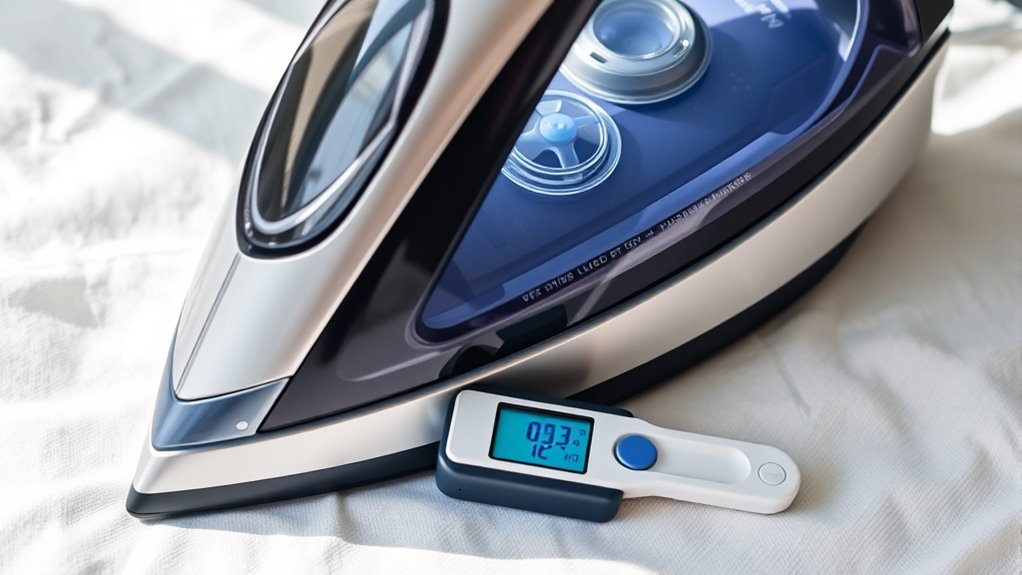
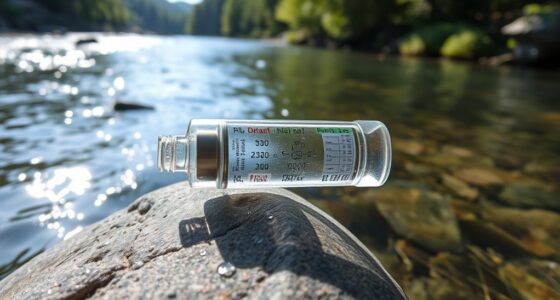
Have you ever wondered how you can check your iron levels from the comfort of your home? Home iron tests are simple kits designed to measure blood iron levels, helping you identify iron deficiency early. These tests usually involve a small blood sample, often obtained through a finger prick, which you then send to a lab or use with a device at home. The results indicate your blood iron levels, giving you valuable insight into your iron status. While these tests don’t diagnose iron deficiency on their own, they can alert you if your blood iron is low, prompting you to consult a healthcare professional. Home iron tests are convenient tools for monitoring your iron levels without visiting a clinic. Additionally, understanding the role of data privacy challenges in health technology can help ensure your personal information remains secure during testing.
As an affiliate, we earn on qualifying purchases.
Are At-Home Iron Tests Accurate?

While at-home iron tests offer a convenient way to monitor your iron levels, their accuracy can vary depending on the brand and method used. These tests can help identify iron deficiency or blood anemia, but they aren’t foolproof. Factors like improper sample collection, device calibration, and user error can affect results. Keep in mind that at-home tests are often less precise than lab-based blood tests. They’re helpful for tracking trends but shouldn’t replace professional diagnosis. To improve reliability, follow instructions carefully and consider retesting if results are borderline or unexpected. Always consult a healthcare provider if you suspect blood anemia or iron deficiency. Remember, at-home tests are a useful tool, but they’re part of a bigger picture for your health. Additionally, understanding industry trends can help you make better-informed decisions about your health monitoring options.
finger prick blood test for iron
As an affiliate, we earn on qualifying purchases.
As an affiliate, we earn on qualifying purchases.
How Do I Use a Home Iron Test Kit?

Using a home iron test kit is straightforward if you follow the instructions carefully. First, collect your blood sample as directed—usually by pricking your finger with the provided lancet. Then, place the sample on the test strip or device. Wait for the designated time for the result to appear. Here’s a quick guide:
| Step | Action |
|---|---|
| 1 | Prepare your materials and wash hands. |
| 2 | Collect blood sample using lancet. |
| 3 | Read results within the recommended time. |
If your test indicates iron deficiency, consult a healthcare professional for supplement guidance and further testing. Always follow the specific instructions included with your kit for the most accurate results.
As an affiliate, we earn on qualifying purchases.
What Do My Results Mean?

Understanding your home iron test results is essential for identifying whether you have an iron deficiency or normal iron levels. If your results show low iron, it indicates an iron deficiency, which can cause fatigue, weakness, and pale skin. Conversely, high iron levels may suggest iron overload, increasing the risk of organ damage and other health issues. To interpret your results accurately, consider these points:
- Low iron levels might require dietary changes or supplements.
- Elevated iron could mean your body is storing too much, risking iron overload.
- Normal levels typically indicate balanced iron stores.
- Symptoms don’t always match test results, so consult a healthcare professional.
- Regular testing helps monitor your iron status and prevent complications.
- Maintaining proper iron balance through diet and monitoring is key to overall health.
Knowing what your results mean guides your next steps toward better health.
How Much Do Home Iron Tests Cost?

Home iron test prices typically range from $50 to $150, depending on the provider and test type. Several factors, like whether you choose a quick result option or include additional testing, can affect the overall cost. It’s also worth checking if your insurance covers part of the expense or if there are affordable payment plans available. Additionally, understanding cost factors can help you better compare options and choose the best value for your needs.
Average Price Range
The cost of performing iron tests at home typically ranges between $30 and $100, depending on the brand and the type of kit you choose. Higher-priced kits often feature enhanced test accuracy, giving you more reliable results for detecting iron deficiency. Cheaper options may save money but could compromise test precision, so it’s essential to contemplate quality. Factors influencing the price include the number of tests included, ease of use, and whether follow-up support is provided. Some kits come with digital readouts or lab analysis options that can slightly increase costs. Remember, investing in a more accurate test can help you better understand your iron levels and avoid unnecessary treatments. Understanding testing accuracy can help you make an informed choice when selecting a home iron test kit. Always compare options to find the best balance of cost and reliability for your needs.
Factors Affecting Cost
Several factors influence how much you’ll pay for an iron test kit. Cost variability depends on the brand, the number of tests included, and the complexity of the kit. Some kits are basic and inexpensive, while others offer more thorough analysis, increasing testing expenses. The type of test—whether it’s a simple finger-prick or a more detailed blood sample—also impacts the price. Additionally, where you buy the kit matters; purchasing online may be cheaper than in-store. Shipping fees and potential discounts or bulk purchase options can further affect overall costs. Keep in mind that higher-priced kits often feature enhanced accuracy or convenience, but it’s crucial to balance cost with your specific needs. Understanding testing methods and these factors helps you find a test kit that fits your budget and health goals.
Insurance Coverage Options
Are you wondering how insurance can help cover the cost of at-home iron tests? Your options depend on your coverage plan and whether the test is recommended by your doctor for iron deficiency or related issues like blood donation preparation. Some insurance plans may cover part or all of the test if it’s medically necessary. To find out, check with your provider and ask if at-home testing qualifies under your policy. Keep in mind that coverage varies widely and may require a prescription. Additionally, some health savings accounts (HSAs) or flexible spending accounts (FSAs) can help offset costs. Understanding your insurance options guarantees you get the testing you need without unexpected expenses.
- Coverage for blood donation-related tests
- Requirements for doctor’s prescription
- Differences between in-network and out-of-network providers
- Reimbursement procedures for at-home tests
- Impact of having a chronic condition like iron deficiency
When Should I Consider Taking an Iron Test at Home?
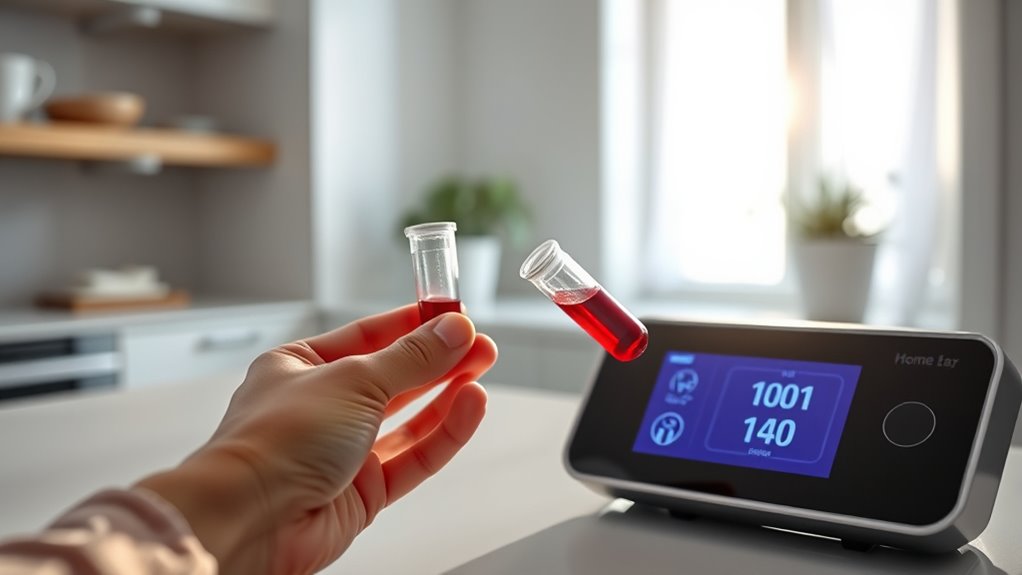
You should consider taking an iron test at home if you notice symptoms like fatigue, weakness, pale skin, or dizziness, which could indicate iron deficiency. Recognizing these signs early is essential for symptom awareness and addressing underlying issues promptly. If your daily energy feels low or you experience frequent headaches, these may also be linked to low iron levels. Taking an iron test at home can help you determine if iron deficiency is the cause and whether you need to seek further medical advice. It’s especially helpful if you have risk factors such as a vegetarian diet, heavy periods, or a history of anemia. Being proactive with symptom awareness allows you to catch potential problems early and manage your health effectively. Additionally, understanding how iron tests at home are conducted can empower you to monitor your health more effectively.
What Should I Do if My Results Are Concerning?
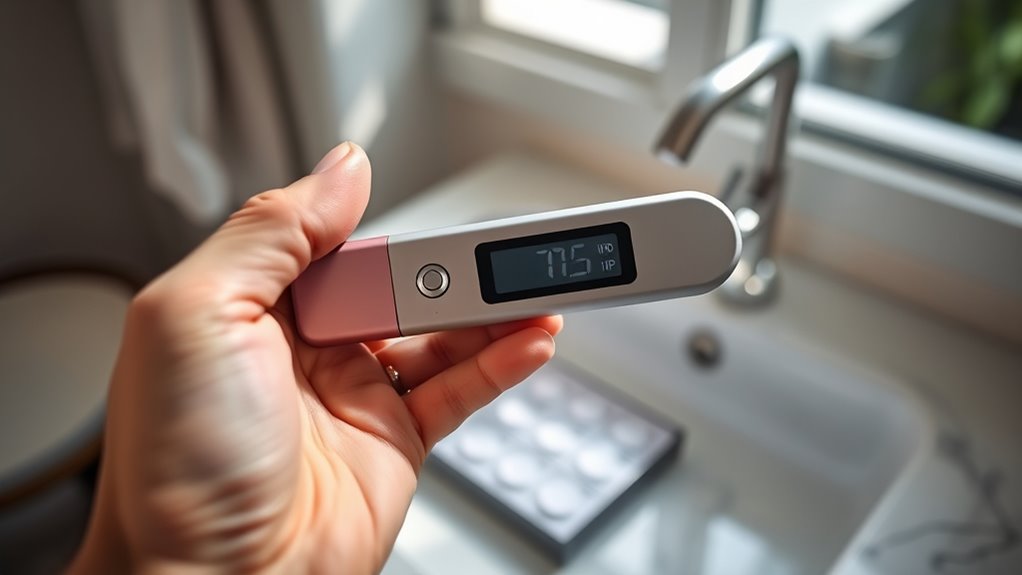
If your home iron test results indicate low or concerning levels, the best step is to consult a healthcare professional promptly. They can confirm your results and recommend appropriate treatment. Meanwhile, focus on symptom management and lifestyle adjustments to support your health. You might consider:
- Increasing iron-rich foods like spinach, red meat, and legumes
- Taking iron supplements as prescribed
- Managing symptoms like fatigue with rest and proper nutrition
- Avoiding inhibitors of iron absorption, such as tea or coffee during meals
- Monitoring your symptoms and test results regularly
- Being aware of symptoms of underlying conditions such as breast cancer, which can sometimes cause fatigue or other health issues
Making these changes can help improve your iron levels while you seek professional guidance. Remember, early intervention is key to preventing complications and restoring your energy and well-being.
Frequently Asked Questions
Can At-Home Iron Tests Detect Specific Iron Deficiency Types?
At-home iron tests mainly detect general iron deficiency detection but can’t identify specific deficiency types like iron deficiency anemia or related conditions. Test accuracy varies depending on the brand and method used, so they might not be as precise as lab tests. If you’re concerned about specific deficiency types, it’s best to consult a healthcare professional for exhaustive testing. Relying solely on at-home tests might lead to incomplete or inaccurate results.
Are There Any Risks Associated With Using Home Iron Test Kits?
Using home iron test kits generally poses minimal risks, but there are some concerns. You should guarantee test accuracy because inaccurate results could lead to unnecessary worry or missed diagnoses. Also, prioritize user safety by carefully following instructions to avoid contamination or incorrect sampling. While most kits are safe when used correctly, if you experience any adverse reactions or uncertainties, consult a healthcare professional for confirmation and guidance.
How Often Should I Retake an Iron Test at Home?
If you’re monitoring iron deficiency, retake the test every 3 to 6 months to stay updated. For example, a woman diagnosed with anemia might test quarterly to track her progress. Testing frequency depends on your health condition and doctor’s advice. Regular testing helps catch changes early, so you can adjust your diet or treatment plan promptly. Always consult your healthcare provider for personalized recommendations on iron deficiency monitoring.
Can Home Iron Tests Replace Regular Doctor Visits?
Home iron tests can’t fully replace regular doctor visits and medical consultations. While they’re convenient for initial screenings or tracking your iron levels between appointments, they lack the extensive analysis a healthcare professional provides. You should continue seeing your doctor for detailed assessments, diagnosis, and personalized advice. Use home testing as a helpful supplement, but not as a substitute for professional medical care and guidance.
Do Home Iron Tests Work for Children or Pregnant Women?
Home iron tests can be used for children and pregnant women, but they aren’t a substitute for medical advice. If you notice iron deficiency symptoms, like fatigue or pale skin, it’s best to consult a healthcare professional. These tests can help monitor iron supplement safety, but they may not be as accurate as lab results. Always follow your doctor’s guidance to ensure safe and effective management of iron levels.
Conclusion
Taking a home iron test is like having a trusted friend by your side, helping you navigate your health with ease. While they’re convenient and simple, remember they’re just a starting point. If your results raise concerns, don’t ignore them—think of it as your body’s way of waving a flag. Always follow up with your healthcare provider for clarity. Your health is your treasure, so handle it with care and expert guidance.
NFL season / tailgating Picks
team gear
As an affiliate, we earn on qualifying purchases.