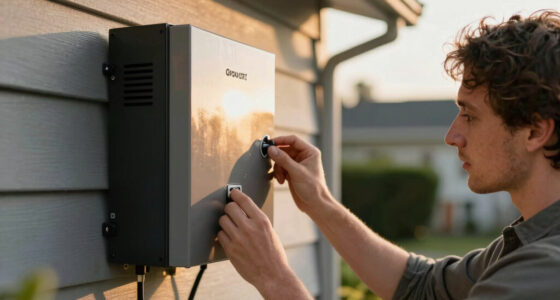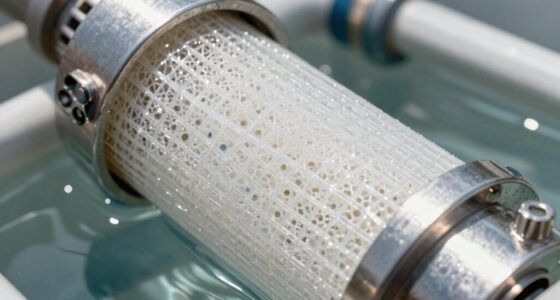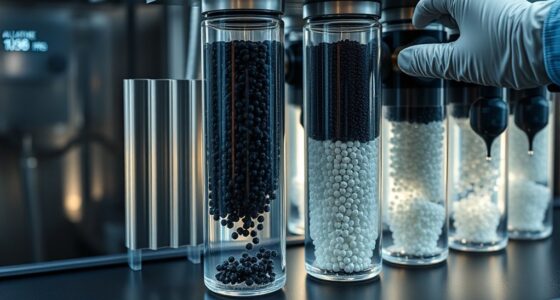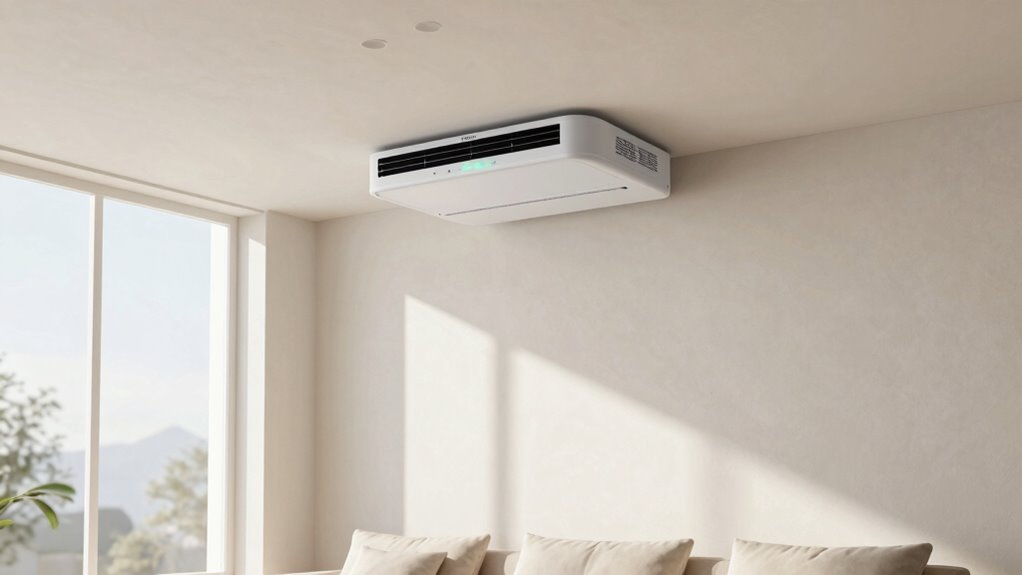

You place whole-house UV systems as a last barrier because they target remaining microbes after your primary filters do their job. UV relies on exposure to deactivate bacteria, viruses, and mold spores, but it can be impeded by dust or chemicals if installed too early. Proper placement after filtration ensures maximum effectiveness. By understanding this layered approach, you’ll see how UV enhances your system’s safety—there’s more to discover about how it all works together.

Get home appliances delivered free — and shop member deals
- Fast, free delivery on millions of items
- Access to Prime Big Deal Days deals on October 6–7
- Prime Video, Amazon Music and more included
Key Takeaways
- UV systems rely on exposure to deactivate microbes, which is more effective after particles are already filtered out.
- Placing UV before filters can cause dust and debris to block UV rays, reducing microbial inactivation.
- UV does not remove particles, odors, or chemical contaminants, so primary filtration is needed first.
- Proper placement after filtration ensures UV can effectively target remaining microbes.
- UV acts as a finishing touch, enhancing safety without replacing the primary role of filters.
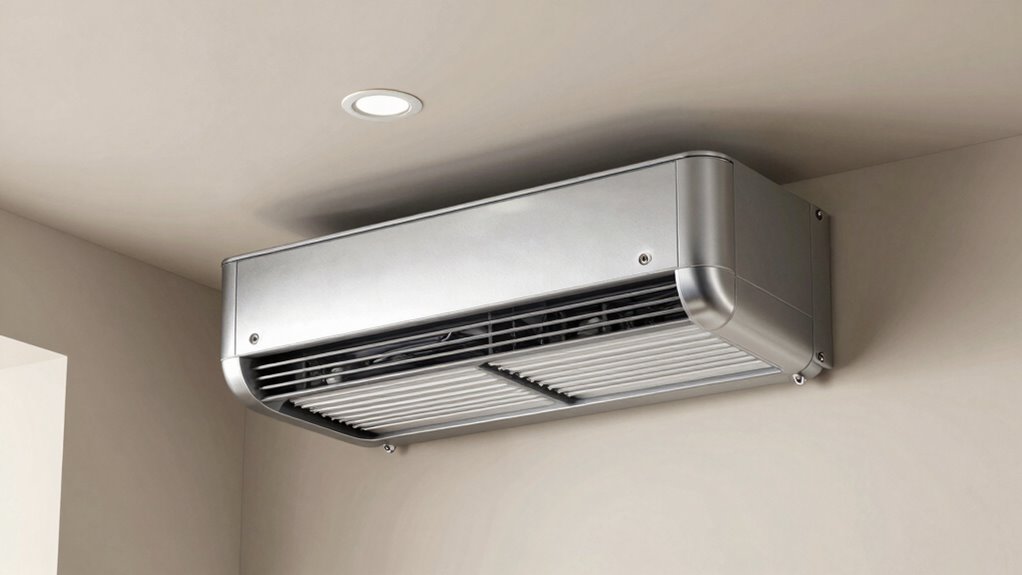
Have you ever wondered if your home’s air purification system is truly the last line of defense against airborne contaminants? Many people assume that installing a whole-house UV system at the start of their ventilation process is the best way to prevent germs and pollutants. But in reality, whole-house UV is designed to be a final safeguard, not the initial barrier. It’s not meant to replace air purification filters or other filtration methods. Instead, it acts as a last barrier, targeting what’s left after other systems have done their job.
Typically, air purification systems, like HEPA filters, catch large particles, dust, and some bacteria, but they aren’t perfect at eliminating all microbes or viruses. Water sterilization processes in your home, such as UV sterilizers in your water supply, serve a similar purpose—they reduce microbial presence but don’t remove every pollutant or contaminant. If you installed UV lights at the water source, you’d still want a *thorough* filtration system to handle physical debris and chemical contaminants. The same logic applies to your home’s air system. UV sterilization in your ventilation acts as a finishing touch, neutralizing any remaining bacteria, viruses, or mold spores that bypass filters. Proper system placement is essential to maximize effectiveness and ensure each component functions optimally. Additionally, understanding the layered approach to filtration helps clarify why UV is best positioned as the final step.
UV sterilization in your home’s water and air systems acts as a final safeguard, not the primary filter.
Placing UV as the first stage would be ineffective because it relies on exposure to UV light to deactivate microbes. If dust, allergens, or chemical particles clog the UV unit or block its rays, the UV sterilization becomes less effective. Also, UV light doesn’t remove particles or odors—its role is microbial inactivation. That’s why your primary focus should be on high-quality air purification and filtration before UV treatment. These filters physically trap most pollutants, creating a cleaner environment. Then, the UV system can step in to inactivate microbes that evade the filters, ensuring a final layer of protection. Additionally, knowing how UV light interacts with different pollutants helps in understanding its optimal placement within your system. Proper maintenance of UV systems is also crucial to ensure they continue functioning at peak efficiency.
Think of UV as the finishing touch—like the last brushstroke in a painting. It’s not the foundation; it’s the detail that ensures microbes aren’t lingering in your air or water. Installing UV as a last barrier makes sense because it enhances your home’s safety without relying solely on it to do all the work. It complements your existing filtration systems, providing peace of mind that what’s left behind is rendered harmless. This layered approach ensures that your home stays healthier, with each system working in harmony to eliminate pollutants, bacteria, and viruses efficiently. Utilizing proper system placement enhances the overall effectiveness of your home’s air and water safety measures.
As an affiliate, we earn on qualifying purchases.
Frequently Asked Questions
How Does Whole-House UV Compare to Point-Of-Use UV Systems?
Whole-house UV systems provide thorough protection by treating water at the point of entry, ensuring consistent UV exposure and improving water quality throughout your home. In contrast, point-of-use UV systems target specific taps, offering localized treatment. Whole-house UV installation is ideal if water quality issues are widespread, while point-of-use systems work well for targeted needs. Both protect against pathogens, but a whole-house system offers broader, more reliable UV protection.
Can Whole-House UV Eliminate All Types of Water Contaminants?
Think of whole-house UV as the final brushstroke on your water canvas. It’s excellent for water purification, especially against bacteria, viruses, and protozoa, but it can’t tackle every contaminant alone. Filtration technology is crucial to remove sediments, chemicals, and heavy metals. So, while whole-house UV considerably improves water quality, it’s best used as a last barrier, complementing other filtration methods to ensure your water’s safety thoroughly.
What Maintenance Is Required for a Whole-House UV System?
You need to regularly check your whole-house UV system’s UV bulb lifespan, which typically lasts about a year, and replace it accordingly to maintain effectiveness. It’s also essential to perform system cleaning, including cleaning the quartz sleeve to prevent mineral buildup that can reduce UV efficiency. Proper maintenance guarantees your UV system continues to effectively disinfect water, providing you with safe, clean water throughout your home.
Is Whole-House UV Effective Against Viruses and Bacteria?
Think of your whole-house UV system as a final shield in a medieval castle. It’s highly effective against viruses and bacteria, but UV safety is essential—overexposure can harm you. While UV light fights off resistant bacteria, it’s not a standalone solution; some microbes may resist or hide. That’s why it’s best as a last barrier, complementing filtration, rather than the first line of defense against germs.
How Long Does a Whole-House UV System Typically Last?
A whole-house UV system typically lasts 9 to 12 months, depending on usage and water quality. Regular maintenance, like replacing the UV bulb, is crucial for peak performance. Water filtration before the UV stage helps extend the system’s lifespan by reducing debris and contaminants that can wear out components faster. You should monitor system performance and follow manufacturer guidelines to guarantee your water stays safe and clean.
As an affiliate, we earn on qualifying purchases.
Conclusion
You see, choosing whole-house UV as the last barrier means you’re prioritizing initial filtration, relying on earlier stages to remove the bulk of contaminants, and reserving UV for final sterilization. It’s about layering protection, trusting in the process, and understanding the sequence. When you position UV last, you maximize its effectiveness, reinforce your defenses, and guarantee cleaner air and water. Ultimately, it’s about creating an all-encompassing system, where each stage plays its essential role, culminating in true purity.
As an affiliate, we earn on qualifying purchases.
whole house UV filtration system
As an affiliate, we earn on qualifying purchases.
As an affiliate, we earn on qualifying purchases.
Fall yard work Picks
leaf blowers
As an affiliate, we earn on qualifying purchases.