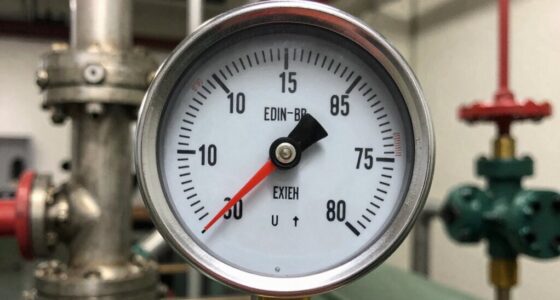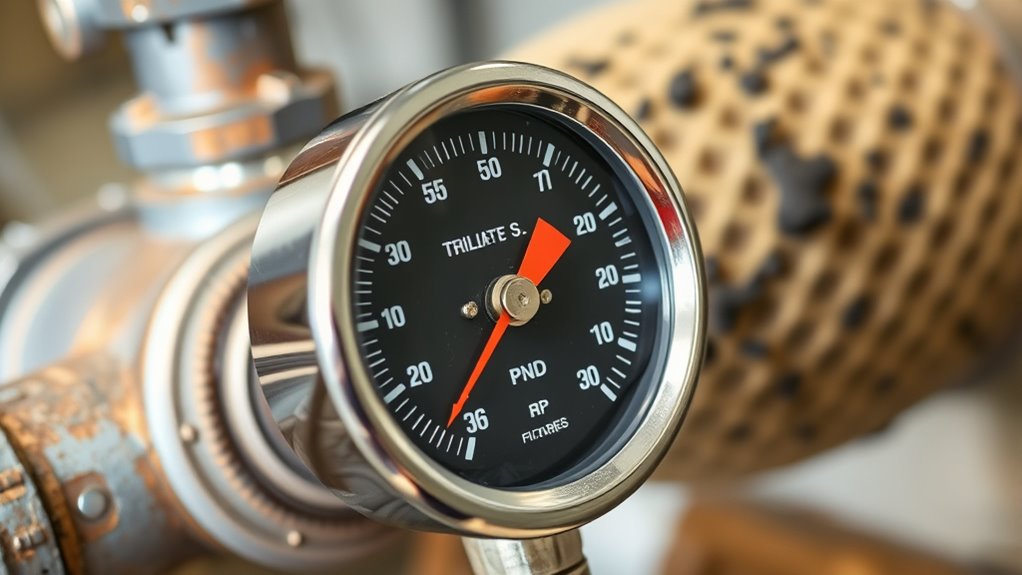
To spot clogged filters using pressure gauges, keep an eye on pressure levels; a steady increase typically indicates resistance caused by buildup. When filters clog, pressure rises upstream, signaling the need for maintenance. Sudden spikes or drops can also suggest issues like leaks or faulty gauges. Regularly monitor these readings and compare them to your system’s standard ranges. If you’d like to learn more about accurately interpreting pressure signals, keep exploring these key signs.

Get home appliances delivered free — and shop member deals
- Fast, free delivery on millions of items
- Access to Prime Big Deal Days deals on October 6–7
- Prime Video, Amazon Music and more included
Key Takeaways
- An increase in upstream pressure indicates filter clogging, as resistance causes pressure buildup before the filter.
- Regularly monitor pressure readings against manufacturer specifications to identify abnormal increases.
- Sudden pressure spikes are common signs of clogged filters requiring maintenance.
- Consistent upward pressure trends over time suggest gradual filter blockage.
- Properly calibrated gauges ensure accurate detection of pressure changes caused by filter issues.
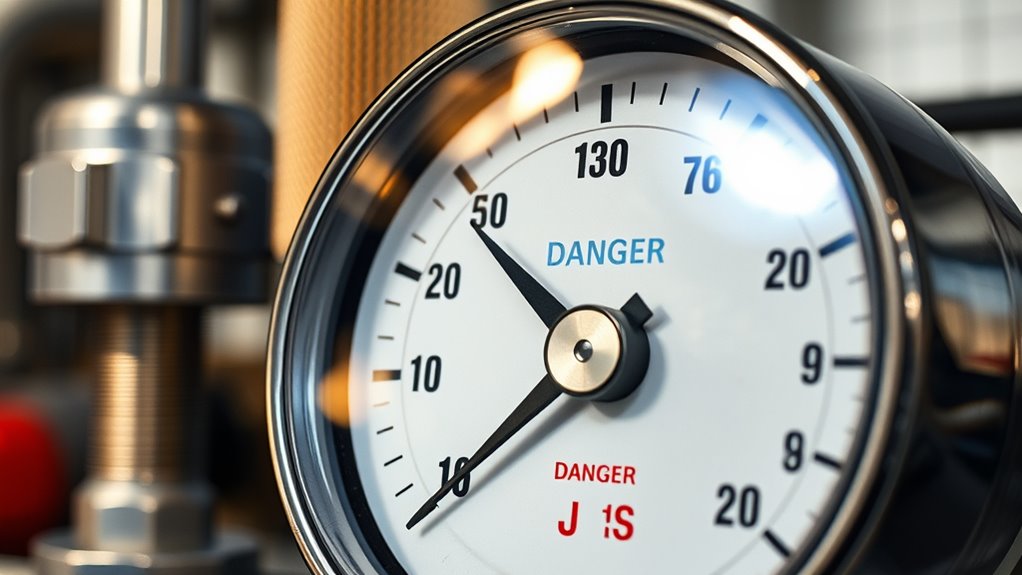
Have you ever wondered how pressure gauges measure the force of liquids or gases? It’s a common question, especially when you’re trying to guarantee your systems operate smoothly. Understanding pressure measurement is vital because it helps you identify issues like clogged filters before they cause major problems. When a filter becomes clogged, it can cause a rise in pressure upstream, which the gauge detects. Recognizing these pressure changes allows you to act promptly, preventing equipment damage or system failure.
Gauge calibration plays a fundamental role in accurate pressure measurement. Over time, gauges can drift out of calibration, giving false readings that might mask a clogged filter or suggest an issue where there isn’t one. Regular calibration guarantees your pressure gauges provide precise data. When you calibrate a gauge, you’re adjusting it to match a known standard, which helps maintain measurement accuracy over its lifespan. If you notice inconsistent or unexpected readings, it might be time to check whether your gauges are properly calibrated. This step is vital because relying on uncalibrated gauges can lead you astray, causing you to overlook real problems or react unnecessarily to false alarms.
Monitoring pressure levels consistently is your best strategy for spotting clogged filters. Normally, a system operates within a specific pressure range, which you should be familiar with through manufacturer specifications or system documentation. When a filter begins to clog, the resistance to flow increases. As a result, you’ll see a gradual rise in pressure on the gauge. The key is to understand what normal readings look like and to recognize deviations. If the pressure suddenly spikes beyond normal levels, it’s a strong sign that the filter needs attention. Conversely, if pressure drops unexpectedly, it might indicate a different issue, such as a leak or a faulty gauge.
It’s also helpful to keep track of pressure readings over time. Recording these measurements allows you to spot trends rather than reacting to isolated readings. If you notice a steady increase in pressure, it’s probably time to replace or clean the filter. Regular inspections and maintenance based on pressure data help you avoid unscheduled downtime and costly repairs. Remember, a well-calibrated pressure gauge and vigilant monitoring are your best tools for early detection of clogged filters. By understanding how pressure measurement works and guaranteeing your gauges stay accurate through proper calibration, you can keep your systems running efficiently and extend their lifespan.
Additionally, advancements in on-device AI capabilities are enhancing the precision and functionality of modern pressure gauges, allowing for smarter diagnostics and maintenance alerts.
As an affiliate, we earn on qualifying purchases.
Frequently Asked Questions
How Often Should Pressure Gauges Be Calibrated?
You should calibrate pressure gauges at least once a year, but the calibration frequency depends on your maintenance schedule and how critical accurate readings are. Regular calibration guarantees gauges stay reliable and prevents costly errors. If your gauges are used in demanding environments, consider more frequent checks, such as every six months. Always follow manufacturer recommendations and your maintenance plan to keep your pressure gauges functioning correctly.
Can Pressure Gauges Fail Without Warning?
Did you know that up to 15% of pressure gauges can fail without warning? Yes, gauges can lose accuracy suddenly, making it tricky to trust readings. That’s why regular calibration is essential. Without proper calibration frequency, gauge accuracy can decline unnoticed, leading to potential system issues or safety hazards. Always monitor your gauges closely and schedule maintenance to prevent unexpected failures and guarantee reliable performance.
What Are Signs of a Leaking Pressure Gauge?
If you notice fluid or air around the pressure gauge or find it vibrating excessively, it’s a sign of a leak. Conduct leak detection by inspecting connections and seals closely. If a leak persists, consider gauge replacement to prevent inaccurate readings or system damage. Regular checks and maintenance help catch leaks early, ensuring your system runs smoothly and preventing costly repairs down the line.
Are Digital Gauges More Reliable Than Analog?
Digital gauges are generally more reliable than analog because they offer better digital accuracy, providing precise readings quickly. However, analog gauges tend to have greater durability, especially in harsh environments, making them less prone to damage over time. You should choose based on your needs: for precision, go digital; for ruggedness, stick with analog. Both types serve well, but understanding their strengths helps you make the right choice.
How Do Temperature Changes Affect Gauge Readings?
Imagine you’re in a vintage spaceship, and sudden temperature fluctuations can skew your gauge readings. Temperature changes can cause gauge inaccuracies by expanding or contracting internal components, leading to false readings. When temperatures rise or fall unexpectedly, it affects the gauge’s accuracy, making it tricky to interpret pressure levels correctly. You should regularly calibrate your gauges and consider environmental factors to maintain reliable readings despite temperature fluctuations.
As an affiliate, we earn on qualifying purchases.
Conclusion
By regularly checking your pressure gauges, you gain a clear view of your system’s health. Just as a healthy flow indicates proper function, a sudden spike or drop reveals clogged filters or potential issues. Ignoring these signs is like missing the warning lights on your dashboard—you’re risking costly damage. Stay attentive, interpret the readings wisely, and you’ll keep your system running smoothly. After all, awareness is the key between efficient operation and unexpected breakdowns.
As an affiliate, we earn on qualifying purchases.
As an affiliate, we earn on qualifying purchases.
Fall Picks
fall essentials
As an affiliate, we earn on qualifying purchases.