TL;DR
Family Handyman’s Domestic Disasters column recounts how homeowner Ethan replaced his rusted-out 21-year-old water heater himself after a leak flooded his utility closet floor. Plumbers say his response was mostly correct but he missed a key safety step: shutting off gas or electricity before touching the unit.
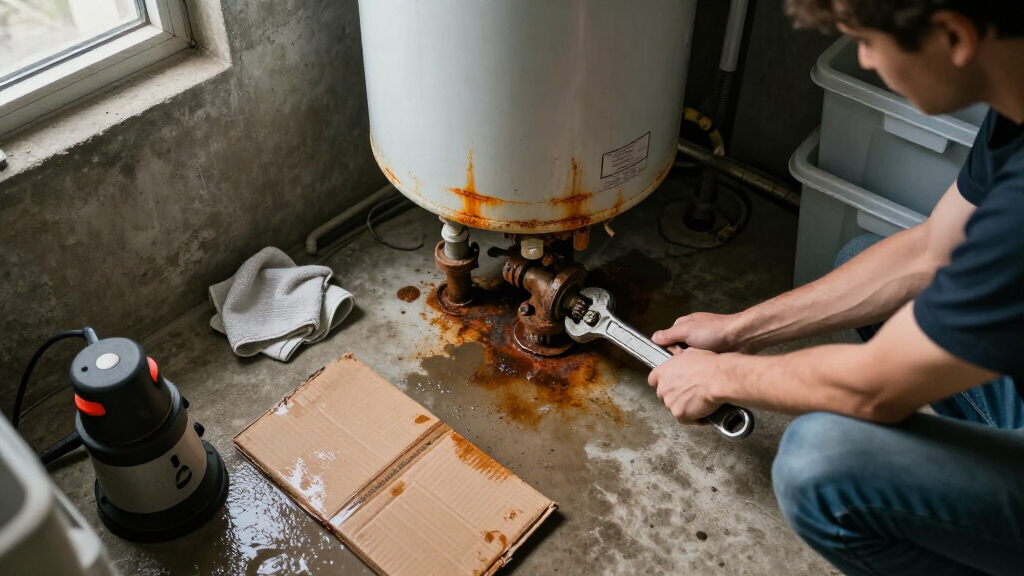
A homeowner identified only as Ethan discovered his 21-year-old water heater had rusted through, leaking water across the floor of his utility closet after he filled a bathtub for his daughter and found the water cold, according to a Family Handyman Domestic Disasters case study. Ethan replaced the tank himself the next morning, and while plumbers consulted by the publication said he handled most of the emergency correctly, they identified one significant safety step he skipped and a prevention measure he wished he had taken.

Get home appliances delivered free with Prime
- Fast, free delivery on millions of items
- Prime Video, Amazon Music and more included
- Member-only deals all year
According to the report, Ethan’s first move was to close the supply line valve to stop the tank from refilling, then connect a hose to the drain spigot at the bottom of the tank before heading to a home improvement store. When he returned, water was still draining — the supply valve had failed to seal. His only remaining option was to shut off the main water supply to the house, which stopped the flow.
The next morning, Ethan installed a new water heater and enlisted his father-in-law to haul the old unit up the stairs. The old tank weighed more than 120 pounds, which Ethan described as the most challenging part of the job, and it leaked water along the way despite a plastic bag improvised to contain it. “If there’s a silver lining here, it’s that we were home when this happened,” Ethan told Family Handyman.
Plumbers consulted by the publication said the failure itself was predictable. Gas and propane water heaters typically last 10 to 15 years before corrosion ends their service life, and Ethan’s tank was 21 years old. His home’s Minnesota location likely compounded the wear, since cold climates force water heaters to work harder. The stuck supply valve, plumber Travis Hargrave said, is “actually pretty common on water heaters that are older than ten years,” usually caused by rotted gaskets or buildup in the line.
Why Aging Tanks and Faulty Valves Matter
The case illustrates a widespread household risk: water heaters that fail without warning can cause flood damage running into the thousands or tens of thousands of dollars once water damage and mold remediation are factored in, according to the report’s cost estimates. Ethan’s experience shows how a single failure can cascade — a corroded tank paired with a stuck supply valve left the main shutoff as his only option.
It also highlights how older homes carry extra vulnerability. Plumber Kolby Barnes noted that Ethan’s 1940s bungalow likely uses a gate valve rather than a ball valve for the main shutoff, and gate valves are prone to the same buildup that can prevent them from closing. Ethan, in other words, was fortunate his main valve worked at all. Barnes also pointed to newer smart leak-detection devices that can shut off water automatically, calling them worth installing to prevent both catastrophic leaks and slow, hidden ones.
Products Worth Considering

Levoit Vital 100S-P Air Purifier with Washable Pre-Filter

Levoit Core 600S-P Smart Air Purifier for Large Rooms up to 2933 ft²

Shark PowerDetect Robot Vacuum and Mop Combo with 60-Day Self-Emptying Base (AV2800ZE)
As an affiliate, we earn on qualifying purchases.
The Domestic Disasters Format and Costs
The account appeared in Family Handyman’s Domestic Disasters series, which presents readers’ household mishaps and takes them to professional tradespeople for assessment of severity, correct procedure and repair cost. The series rates incidents on a four-point scale from “Do It Yourself” to “SOS.”
On cost, the report estimates that replacing a water heater’s internal anode rod — a part that slows corrosion and can extend tank life — runs $20 to $50 as a DIY job or $150 to $600 with a pro. A full tank replacement cost Ethan roughly $700 doing it himself, versus $1,500 to $3,500 for professional installation, according to the report.
There was also disagreement on whether DIY replacement is advisable. Plumber Brendan Tonks said he does not recommend it “because water heaters involve gas and electrical components that can be dangerous if not handled correctly.” Ethan countered that it is a manageable task with a helper and push-fit (shark bite) connections, estimating a two to two-and-a-half-hour job, half of which is cleanup.
“If there’s a silver lining here, it’s that we were home when this happened.”
— Ethan, the homeowner, to Family Handyman
Where Experts Diverged With the Homeowner
Every plumber consulted by Family Handyman flagged one step Ethan missed: shutting off the gas or electricity to the water heater before touching anything. Skipping this step risks electrocution and fire, and in extreme cases an empty tank that keeps heating can explode. Whether Ethan’s DIY replacement met code or required a permit and inspection was not addressed in the report.
The experts also disagreed with Ethan on the wisdom of DIY replacement in general — Tonks explicitly advised against it due to gas and electrical hazards, while Ethan described the job as straightforward. The report does not state whether any part of Ethan’s cleanup involved professional water damage restoration, or whether the leak caused damage beyond the utility closet floor.
Prevention Steps for Older Water Heaters
For readers with aging tanks, the report’s guidance is to act before failure: replace the anode rod every few years to slow corrosion, test shut-off valves on units older than ten years, and consider installing a smart leak monitor that can shut off water automatically. Before any water heater work, the recommended sequence is to turn off power or gas to the unit first, then shut off the water supply, then drain the tank. Homeowners unsure about gas or electrical connections should hire a licensed plumber rather than attempt the replacement themselves, and should check local permit requirements for water heater installation.
Key Questions
How long do water heaters typically last?
Gas and propane water heaters typically last 10 to 15 years before corrosion ends their service life, according to the plumbers cited by Family Handyman. Tanks in cold climates like Minnesota may wear faster because they work harder.
What should you do first when a water heater leaks?
Turn off the gas or electricity to the unit before touching anything, then shut off the water supply and drain the tank. If the supply valve is stuck, shut off the home’s main water supply — hesitation can mean hundreds of gallons on the floor.
How much does water heater replacement cost?
According to the report, a DIY replacement runs around $700, while professional installation costs $1,500 to $3,500. Ignoring a leak can add thousands to tens of thousands in water damage and mold remediation costs.
Can a water heater’s life be extended?
Yes. Replacing the internal anode rod, which slows corrosion, every few years typically costs $20 to $50 as a DIY job or $150 to $600 with a professional.
Is DIY water heater replacement advisable?
Experts disagree. Plumber Brendan Tonks advises against it because of gas and electrical hazards; the homeowner in the case completed it in roughly two to two-and-a-half hours with a helper. Because gas and electrical work carries safety and code risks, hiring a licensed plumber is the safer route for most homeowners.
Source: rss