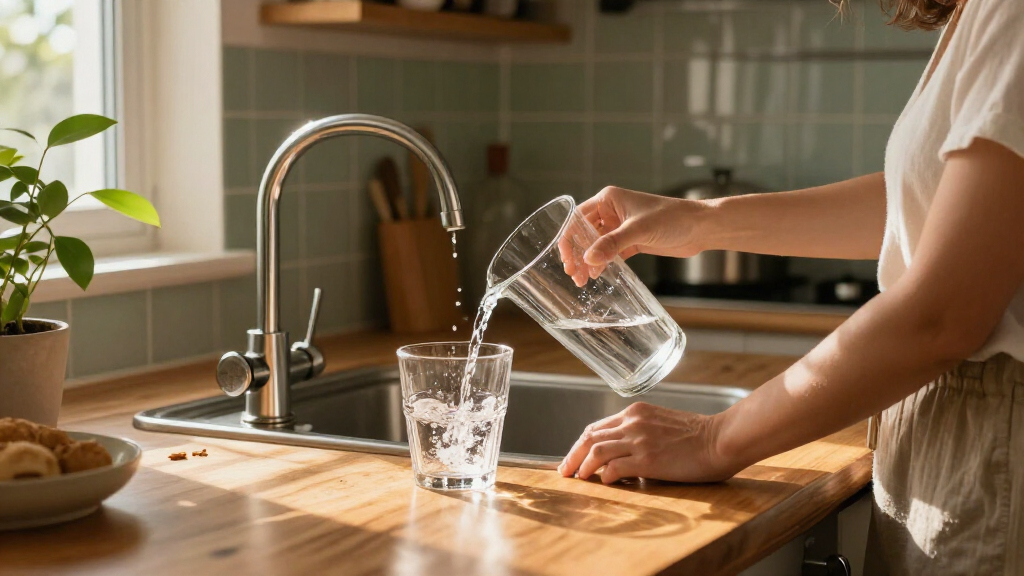
The best water filters depend on what you want to remove, how much water your household uses, and how much space you can spare. For a strong balance of filtration capacity and everyday convenience, I’d start with the Waterdrop T3-C Tankless Reverse Osmosis System; the ZeroWater 10-Cup Pitcher suits buyers who want a portable pitcher with a TDS meter, while the Brita UltraMax 27-Cup Dispenser prioritizes family-sized capacity. The main tradeoffs are filtration approach, installation, refill frequency, and ongoing filter care. Read on for how these 14 options compare and which type of buyer each one suits.

Get home appliances delivered free with Prime
- Fast, free delivery on millions of items
- Prime Video, Amazon Music and more included
- Member-only deals all year
Complete the kit



Key Takeaways
- Reverse osmosis separates the high-capacity picks from simple pitchers: the Waterdrop T3-C and G3P600 are under-sink systems, while the DREO adds a countertop format with autofill pitchers.
- Capacity changes the daily routine: Brita’s 27-cup dispensers and Waterdrop’s 35-cup dispenser reduce refill interruptions, while the 6-cup Metro favors smaller households and limited counter space.
- Portability comes with a narrower use case: ZeroWater’s pitcher and the Lormandy and Practical Survival straws avoid fixed installation, but they do not serve the same household-volume needs as dispensers or installed systems.
- Similar-looking Brita models differ by filter and format: standard, BritaPlus, and Elite filter versions are not interchangeable buying decisions; check the exact filter included and its replacement compatibility.
- Emergency filtration is not the same as everyday municipal-water treatment: the two straw multipacks are aimed at portable or contingency use, not as direct substitutes for a kitchen pitcher or an RO system.
| Waterdrop T3-C Tankless Reverse Osmosis Water Filtration System, 450 GPD |  | Best for Under-Sink Reverse Osmosis | Filtration: 8-stage reverse osmosis | RO membrane pore size: 0.0001 μm | Flow rate: 450 GPD | VIEW LATEST PRICE | See Our Full Breakdown |
| ZeroWater 10-Cup 5-Stage Ready-Pour Water Filter Pitcher with TDS Meter |  | Best Pitcher for Dissolved Solids | Capacity: 10 cups | Filtration method: 5-stage ion exchange | TDS meter: Included | VIEW LATEST PRICE | See Our Full Breakdown |
| Purewell 2.25-Gallon Gravity Water Filter System with Water Level Window |  | Best Non-Electric Gravity Filter | Capacity: 2.25 gallons | Filtration stages: 3 | Filter pore size: 0.01 microns | VIEW LATEST PRICE | See Our Full Breakdown |
| DREO Countertop Reverse Osmosis Water Filter with Two Autofill Pitchers |  | Best Install-Free Reverse Osmosis | Purification method: Reverse osmosis | Pure-to-drain ratio: 3:1 | Capacity: 5 liters | VIEW LATEST PRICE | See Our Full Breakdown |
| Brita UltraMax 27-Cup Water Filter Dispenser with BritaPlus Filter, Black | 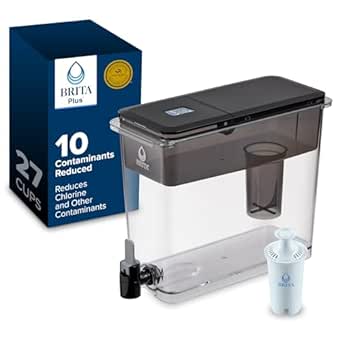 | Best Large-Capacity Dispenser | Capacity: 27 cups | Filter type: BritaPlus carbon block | Filter life: 40 gallons or approximately 60 days | VIEW LATEST PRICE | See Our Full Breakdown |
| Brita 10-Cup Water Filter Pitcher with 1 Filter, White |  | Best Everyday Pitcher | Capacity: 10 cups | Material and color: Plastic; white | Filtration method: Granular activated carbon | VIEW LATEST PRICE | See Our Full Breakdown |
| Lormandy Straw Water Filter, 5-Pack |  | Best for Group Outdoor Kits | Pack size: 5 filters | Filter type: 0.1-micron hollow fiber membrane | Material: BPA-free, food-grade ABS | VIEW LATEST PRICE | See Our Full Breakdown |
| Brita Metro 6-Cup Water Filter Pitcher with 1 Standard Filter, White | 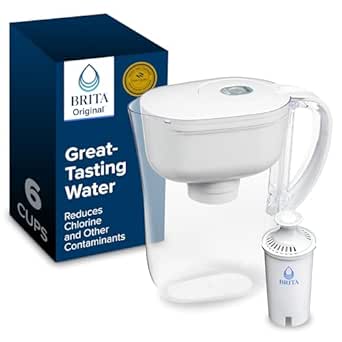 | Best Compact Pitcher | Capacity: 6 cups | Included filter: 1 Standard filter | Filter life: 40 gallons or about 2 months | VIEW LATEST PRICE | See Our Full Breakdown |
| Waterdrop G3P600 Tankless Reverse Osmosis Water Filter System with Smart Faucet |  | Best Under-Sink Upgrade | Filtration: 8-stage reverse osmosis | Certifications: NSF/ANSI 58, 372, and 42; FCC certified; meets EU and UKCA standards | Capacity: 600 gallons per day | VIEW LATEST PRICE | See Our Full Breakdown |
| Practical Survival Reusable Emergency Water Filter Straws, 5-Pack |  | Best for Long-Term Emergency Storage | Pack size: 5 filters | Filtration method: Hollow fiber membrane | Filter capacity: Up to 1,800 gallons per filter | VIEW LATEST PRICE | See Our Full Breakdown |
| Waterdrop WFD-40L Water Filter Dispenser, 35-Cup, Black |  | Best Slim High-Capacity Dispenser | Capacity: 35 cups stated; 19 cups in dispenser body | Dimensions: 14.4 × 5.5 × 10.2 inches | Filtration method: Gravity filtration with activated carbon | VIEW LATEST PRICE | See Our Full Breakdown |
| Brita UltraMax 27-Cup Water Dispenser with Standard Filter, Black |  | Best for Brita Filter Flexibility | Capacity: 27 cups | Dimensions: 18 × 5.67 × 10.47 inches | Weight: 3 pounds | VIEW LATEST PRICE | See Our Full Breakdown |
| Brita Large 10-Cup Water Filter Pitcher with BritaPlus Filter, Black |  | Best Pitcher for Broader Listed Contaminant Reduction | Capacity: 10 cups | Filter type: BritaPlus high-density activated carbon | Filter life: 40 gallons or approximately two months | VIEW LATEST PRICE | See Our Full Breakdown |
| Brita 10-Cup Elite Water Filter Pitcher with 1 Filter, White |  | Best for Longer Filter Life and Lead Reduction | Capacity: 10 cups | Filter type: Brita Elite activated carbon | Filter life: 120 gallons or approximately six months | VIEW LATEST PRICE | See Our Full Breakdown |
| water filter | Capacity | Filter life | Dimensions |
|---|---|---|---|
| Waterdrop T3-C Tankless Revers | — | CF: 6 months; CB: 12 months; RO: 24 months | 13.39 × 6.22 × 17.95 in |
| ZeroWater 10-Cup 5-Stage Ready | 10 cups | — | 11.63 × 5.93 × 11 in |
| Purewell 2.25-Gallon Gravity W | 2.25 gallons | Up to 3,000 gallons per filter; recommended replacement every 6 months | 8.8 × 8.8 × 20 in |
| DREO Countertop Reverse Osmosi | 5 liters | — | 15.7 × 6.7 × 13.4 in |
| Brita UltraMax 27-Cup Water Fi | 27 cups | 40 gallons or approximately 60 days | 11.18 × 14.57 × 5.63 in |
| Brita 10-Cup Water Filter Pitc | 10 cups | — | — |
| Lormandy Straw Water Filter | 1320 gallons | 5 years | — |
| Brita Metro 6-Cup Water Filter | 6 cups | 40 gallons or about 2 months | — |
| Waterdrop G3P600 Tankless Reve | 600 gallons per day | — | — |
| Practical Survival Reusable Em | — | Up to 10 years | — |
| Waterdrop WFD-40L Water Filter | 35 cups stated; 19 cups in dispenser body | Up to 200 gallons or two months | 14.4 × 5.5 × 10.2 inches |
| Brita UltraMax 27-Cup Water Di | 27 cups | — | 18 × 5.67 × 10.47 inches |
| Brita Large 10-Cup Water Filte | 10 cups | 40 gallons or approximately two months | — |
| Brita 10-Cup Elite Water Filte | 10 cups | 120 gallons or approximately six months | 10.94 × 5.59 × 10.47 inches |
More Details on Our Top Picks
Waterdrop T3-C Tankless Reverse Osmosis Water Filtration System, 450 GPD
I’d choose the Waterdrop T3-C for a household seeking under-sink reverse osmosis without a storage tank taking up cabinet space. Its eight-stage process and 0.0001 μm membrane are specified to reduce heavy metals, chlorine, PFOA, and PFOS, while the 450 GPD rating supports a steady supply for everyday use. Automatic flushing and filter alerts also reduce the guesswork of routine upkeep. Compared with the DREO Countertop Reverse Osmosis Water Filter, the T3-C keeps the filtration equipment out of sight, but it requires a more involved installation and an electrical connection. The 2:1 pure-to-drain ratio is a practical compromise for an RO system, not a no-waste design. I’d skip it if drilling for the faucet or connecting power is not workable in your kitchen.
Pros:- Eight-stage reverse osmosis filtration is specified to reduce heavy metals, chlorine, PFOA, and PFOS.
- Tankless design saves cabinet space and can be mounted under the sink or on a wall.
- Automatic flushing and filter replacement alerts support routine maintenance.
- A 2:1 pure-to-drain ratio limits wastewater compared with less efficient RO setups.
Cons:- Requires an electrical connection.
- Faucet installation requires drilling a countertop hole.
- Filter replacement schedules range from six to 24 months, so upkeep involves tracking several filters.
Best for: Homeowners who want under-sink reverse osmosis, a tankless setup, and alerts for filter replacement.
Not ideal for: Renters or anyone unable to drill a countertop faucet hole, connect power, or accommodate an under-sink installation.
- Filtration:8-stage reverse osmosis
- RO membrane pore size:0.0001 μm
- Flow rate:450 GPD
- Pure-to-drain ratio:2:1
- Installation:Under sink or wall mounted
- Electrical connection:Required
- Filter life:CF: 6 months; CB: 12 months; RO: 24 months
- Dimensions:13.39 × 6.22 × 17.95 in
- Certification:NSF/ANSI 372
Our verdict“Choose the T3-C if you want space-saving under-sink RO and can handle its powered, drilled-faucet installation.”
ZeroWater 10-Cup 5-Stage Ready-Pour Water Filter Pitcher with TDS Meter
The ZeroWater 10-Cup Pitcher suits buyers who want a portable, non-powered filter and a way to check dissolved solids as the filter ages. Its five-stage ion-exchange filter is certified to reduce lead, PFOA/PFOS, chromium, and mercury, while the included TDS meter gives a useful indication of water readings and filter condition. That makes it a more measurement-focused pitcher than the Brita UltraMax 27-Cup Dispenser, which prioritizes larger batch capacity and a convenient spigot. ZeroWater’s smaller 10-cup capacity is easier to fit in a refrigerator, but it means more frequent refills for families. The meter is a guide to TDS, not a test for every contaminant, and filter replacement remains part of ownership. I’d pick this for smaller households that value the included meter over high-volume storage.
Pros:- Five-stage ion-exchange filtration is certified to reduce lead, PFOA/PFOS, chromium, and mercury.
- Included TDS meter helps track readings and gives a signal to check filter condition.
- Non-powered design needs no outlet or plumbing.
- 10-cup size and quick-fill spigot suit refrigerator storage and everyday refills.
Cons:- Its 10-cup capacity requires frequent refilling in busy households.
- The TDS meter does not identify every possible contaminant.
- Dispensing is manual rather than powered.
Best for: Small households or individuals who want a refrigerator-friendly pitcher, certified reductions for specified contaminants, and a TDS meter.
Not ideal for: Large households that need a substantial ready-to-dispense supply or buyers who do not want to monitor and replace pitcher filters.
- Capacity:10 cups
- Filtration method:5-stage ion exchange
- TDS meter:Included
- Certified reductions:Lead, PFOA/PFOS, chromium, and mercury
- Material:BPA-free plastic
- Dimensions:11.63 × 5.93 × 11 in
- Power source:Non-powered
- Compatibility:ZeroWater and Culligan ZeroWater systems and filters
Our verdict“Pick this pitcher if you want a compact, non-powered filter with a TDS meter and can manage regular refills.”
Purewell 2.25-Gallon Gravity Water Filter System with Water Level Window
The Purewell 2.25-Gallon Gravity System is a practical choice when you want a large countertop reservoir without a power connection. Its three-stage setup combines a 0.01-micron hollow-fiber membrane, silver ion membrane, and activated carbon block; the transparent window makes it easier to see how much water remains. Unlike the Waterdrop T3-C, it needs no electricity or under-sink plumbing, so it can suit cabins or kitchens where installation is not an option. The tradeoff is slower dispensing: its maximum flow rate is 0.06 gpm, and it does not reduce TDS. The upper chamber also needs careful filling when the lower chamber is full, since overflow can cause leakage. I’d choose it for gravity-fed convenience, not for fast service or dissolved-solids reduction.
Pros:- Gravity operation works without electricity.
- Three-stage filtration includes a 0.01-micron hollow-fiber membrane and activated carbon block.
- Water-level window makes it easy to check the reservoir at a glance.
- Includes two replaceable filters and a stand.
Cons:- Does not reduce TDS.
- Maximum flow rate is 0.06 gpm, slower than powered reverse osmosis options such as the DREO countertop system.
- Filling the upper chamber while the lower chamber is full can cause leakage.
Best for: Households, cabins, and users seeking a high-capacity countertop filter that works without electricity or plumbing.
Not ideal for: Buyers who need fast dispensing, want lower TDS, or cannot spare space for a 20-inch-tall countertop unit.
- Capacity:2.25 gallons
- Filtration stages:3
- Filter pore size:0.01 microns
- Included filters:2
- Filter life:Up to 3,000 gallons per filter; recommended replacement every 6 months
- Maximum flow rate:0.06 gpm
- Installation and power:Countertop; gravity powered
- Dimensions:8.8 × 8.8 × 20 in
- TDS reduction:Does not lower TDS
Our verdict“Choose Purewell for a large, power-free gravity system, but skip it if you need fast flow or TDS reduction.”
DREO Countertop Reverse Osmosis Water Filter with Two Autofill Pitchers
The DREO Countertop Reverse Osmosis Filter brings RO filtration to buyers who do not want to modify a sink or install an under-counter system. It is described as filtering out 99.9% of possible contaminants, including PFOA, PFOS, chlorine, and fluoride, and includes two autofill pitchers for collecting filtered water. Touch controls, a TDS meter, filter-life indicator, and self-cleaning feature add useful feedback without requiring a separate faucet. Compared with the Waterdrop T3-C, DREO is easier to set up, but it occupies visible counter space and its stated filter life is six months. Its 3:1 pure-to-drain ratio is more water-efficient than the T3-C’s 2:1 ratio, though both need a drain-water plan. I’d favor DREO for renters or kitchens where under-sink installation is impractical.
Pros:- Countertop setup avoids under-sink plumbing and faucet installation.
- Reverse osmosis is specified to filter out 99.9% of possible contaminants, including PFOA, PFOS, chlorine, and fluoride.
- Two autofill pitchers provide ready containers for filtered water.
- Built-in TDS meter, filter-life indicator, touch controls, and self-cleaning feature add operating feedback.
Cons:- Requires dedicated countertop space.
- The stated filter life cycle is six months.
- Reverse osmosis produces drain water despite its 3:1 pure-to-drain ratio.
Best for: Renters and homeowners who want countertop reverse osmosis with no plumbing installation and prefer pitchers for collecting filtered water.
Not ideal for: People with limited counter space or buyers who want a system tucked away under the sink with longer stated filter intervals.
- Purification method:Reverse osmosis
- Pure-to-drain ratio:3:1
- Capacity:5 liters
- Dimensions:15.7 × 6.7 × 13.4 in
- Weight:10.8 lb
- Filter life cycle:6 months
- Installation type:Countertop
- Included components:Water filter body, RO filter, two autofill water pitchers
Our verdict“Choose DREO for countertop RO without installation work, provided you have room for the unit and its pitchers.”
Brita UltraMax 27-Cup Water Filter Dispenser with BritaPlus Filter, Black
The Brita UltraMax 27-Cup Dispenser is a straightforward pick for households that want a large supply of filtered water ready in the refrigerator or on a counter. Its spigot makes serving easier than lifting and pouring a full pitcher, and the BritaPlus carbon block filter is certified to reduce chlorine, mercury, cadmium, copper, and zinc while helping retain minerals and electrolytes. Compared with the ZeroWater 10-Cup Pitcher, this model holds far more water and better suits family use, but it does not include a TDS meter or the same stated set of reductions for lead and PFOA/PFOS. The filter is rated for 40 gallons or about 60 days, so replacement is more frequent than the longer intervals listed for some under-sink systems. Choose it for capacity and simple dispensing, not RO-level filtration.
Pros:- 27-cup capacity reduces the need for frequent refills compared with the ZeroWater 10-Cup Pitcher.
- Spigot allows dispensing without lifting a full container.
- WQA and NSF/ANSI certification covers reductions for chlorine, mercury, cadmium, copper, and zinc.
- BritaPlus filter is designed to help retain minerals and electrolytes.
Cons:- Filter replacement is specified every 40 gallons or about 60 days.
- The large reservoir takes up more refrigerator or counter space than a standard pitcher.
- Reduced substances and mineral retention may vary with the source water.
Best for: Families and shared households that want a large chilled supply with a spigot for easy, frequent dispensing.
Not ideal for: Buyers seeking reverse osmosis, TDS monitoring, or a compact refrigerator-friendly pitcher with a smaller footprint.
- Capacity:27 cups
- Filter type:BritaPlus carbon block
- Filter life:40 gallons or approximately 60 days
- Certified reductions:Chlorine, mercury, cadmium, copper, and zinc
- Certification:WQA and NSF/ANSI certified
- Material:BPA-free plastic
- Dimensions:11.18 × 14.57 × 5.63 in
- Installation and operation:Countertop; manual
- Maximum supported water TDS:1500 ppm
Our verdict“Pick the UltraMax if serving a household from one large reservoir matters more than RO filtration or a compact footprint.”
Brita 10-Cup Water Filter Pitcher with 1 Filter, White
The 10-cup capacity makes this a more practical shared-kitchen choice than Brita’s Metro 6-Cup pitcher: it holds more between refills while still fitting on refrigerator shelves. Its activated carbon filter reduces chlorine taste and odor, along with copper, mercury, and cadmium in potable water, so it suits households focused on improving everyday tap water rather than treating outdoor sources or using reverse osmosis. The locking, easy-fill lid keeps refilling simple, and buyers can choose compatible Standard or Longlast replacements. The tradeoff is upkeep: the included Standard filter is rated for about 40 gallons or two months, while the pitcher itself does not have the Metro’s SmartLight replacement indicator. I’d choose the Waterdrop G3P600 instead when broader reverse-osmosis filtration and under-sink installation make sense.
Pros:- 10-cup capacity offers more water per refill than the Brita Metro 6-Cup.
- Reduces chlorine taste and odor, copper, mercury, and cadmium in potable water.
- Locking, easy-fill lid and refrigerator-shelf-friendly design.
- Compatible with Brita Standard and Longlast replacement filters.
Cons:- The included Standard filter is rated for replacement about every two months.
- Does not provide the Metro’s SmartLight filter-change reminder.
- Pitcher reservoir and lid may vary.
Best for: Households that want a refrigerator-friendly pitcher with more capacity than a compact mini-fridge model and straightforward taste improvement for potable tap water.
Not ideal for: Buyers seeking reverse-osmosis treatment, a filter-change indicator, or a pitcher that does not need regular cartridge replacement.
- Capacity:10 cups
- Material and color:Plastic; white
- Filtration method:Granular activated carbon
- Included filter:1
- Filter compatibility:Brita Standard and Longlast
- Standard filter life:40 gallons or approximately 2 months
- Longlast filter life:120 gallons or approximately 6 months
- Dimensions and weight:10.7 × 5.4 × 10.1 in; 2.29 lb
- Maximum supported TDS:500 ppm
Our verdict“Choose this Brita for a simple, larger-capacity fridge pitcher, but pick the Metro for a smaller footprint and a replacement reminder.”
Lormandy Straw Water Filter, 5-Pack
For hikers or emergency planners equipping several people, the five-filter pack offers a different kind of coverage from household pitchers such as the Brita 10-Cup: each lightweight straw is meant for personal use with outdoor water, not a shared supply of filtered tap water. Its 0.1-micron hollow fiber membrane physically filters sediment and particles, and the package adds a water pouch, silicone tubing, clips, and syringes for different ways to collect or clean water. At 50 g per filter, it is easy to carry, but the stated maximum flow rate of 0.2 gpm can make filling or drinking feel slow. The description does not claim chemical or dissolved-contaminant reduction, so I would not treat it as a substitute for the Waterdrop G3P600’s reverse-osmosis system or use it beyond its stated outdoor purpose.
Pros:- Five filters equip a group or allow spares for an emergency kit.
- Compact, 50 g design is suited to pockets and daypacks.
- 0.1-micron hollow fiber membrane physically filters sediment and particles.
- Includes a water pouch, silicone tubing, syringes, and rope clips.
Cons:- Maximum flow rate of 0.2 gpm may slow drinking or water collection.
- Designed for outdoor water sources rather than general household filtration.
- The listed filtration description does not specify reduction of dissolved contaminants or chemicals.
Best for: Hiking groups and emergency-kit planners who want several compact, personal filters plus accessories for outdoor water collection.
Not ideal for: Households wanting better-tasting tap water or buyers who need stated treatment for chemicals, dissolved contaminants, or fast water production.
- Pack size:5 filters
- Filter type:0.1-micron hollow fiber membrane
- Material:BPA-free, food-grade ABS
- Capacity:1320 gallons
- Maximum flow rate:0.2 gpm
- Filter life:5 years
- Dimensions and weight:8 × 1.2 × 1.2 in; 50 g
- Maximum supported TDS:3000 ppm
- Included components:5 filters, 5 syringes, 5 rope clips, 1 water pouch, 1 m silicone tubing
Our verdict“Pick this pack for portable, personal outdoor filtration across a group, not for routine kitchen water treatment.”
Brita Metro 6-Cup Water Filter Pitcher with 1 Standard Filter, White
The 6-cup Metro is the space-saving Brita pick for a mini-fridge, office, or small household. It takes up less room than the Brita 10-Cup pitcher, while its SmartLight indicator gives a clear filter-change prompt that the larger pitcher lacks. The included Standard filter is intended for potable water and reduces chlorine taste and odor, copper, mercury, and cadmium; this is everyday tap-water filtration, not a replacement for the Waterdrop G3P600’s reverse-osmosis approach. An easy-fill lid means you can top it up without removing the lid, but its smaller reservoir calls for more frequent refills, especially in a busy kitchen. The Standard cartridge is rated for about 40 gallons or two months, and it is not compatible with Brita Stream pitchers and dispensers.
Pros:- Compact size fits most mini-fridges.
- SmartLight signals when the included Standard filter needs replacement.
- Easy-fill lid allows refilling without removing the lid.
- Reduces chlorine taste and odor, copper, mercury, and cadmium in potable water.
Cons:- Six-cup capacity means more frequent refills than the Brita 10-Cup pitcher.
- The Standard filter is rated for about 40 gallons or two months.
- Standard filters are not compatible with Brita Stream pitchers and dispensers.
Best for: Apartment dwellers, students, and office users who need a compact pitcher that fits most mini-fridges and signals when its filter needs replacing.
Not ideal for: Large households that would refill a 6-cup pitcher often, or buyers looking for reverse osmosis or compatibility with Brita Stream products.
- Capacity:6 cups
- Included filter:1 Standard filter
- Filter life:40 gallons or about 2 months
- Filtration:Reduces chlorine taste and odor, copper, mercury, and cadmium
- Material:BPA-free polystyrene
- Dimensions and weight:9.1 × 4.6 × 9.7 in; 451.78 g
- Maximum flow rate:9.7 milliliters per second
- Maximum supported TDS:500 ppm
- Power source:None
Our verdict“Choose the Metro when fridge space and a filter reminder matter more than the larger capacity of Brita’s 10-cup pitcher.”
Waterdrop G3P600 Tankless Reverse Osmosis Water Filter System with Smart Faucet
Among these five options, the Waterdrop G3P600 makes the biggest shift from simple taste-focused pitcher filtration: its eight-stage reverse-osmosis system is designed to reduce TDS and listed contaminants such as chlorine, fluoride, and lead. The tankless unit produces up to 600 gallons per day, while its smart faucet displays TDS and tracks filter life, giving buyers more information than either Brita pitcher provides. A stated 2:1 pure-water-to-drain ratio and 8-ounce cup fill time of eight seconds add useful context for daily use. The tradeoff is installation: it needs under-sink space, an electrical connection, and 87 psi operating pressure. At 31 pounds, it is a substantial fixed system, unlike the portable straws or fridge-ready pitchers, and it is a poor fit for renters who cannot accommodate the setup.
Pros:- Eight-stage reverse osmosis reduces TDS and listed contaminants including chlorine, fluoride, and lead.
- Smart faucet displays TDS and tracks filter life.
- Tankless system produces up to 600 gallons per day with a stated 2:1 pure-to-drain ratio.
- Tool-free filter changes simplify cartridge replacement.
Cons:- Requires under-sink electricity and sufficient cabinet space.
- At 31 pounds, it is a fixed installation rather than a portable filter.
- Requires operating pressure of 87 psi.
Best for: Homeowners who want under-sink reverse-osmosis filtration, high daily output, and faucet-based TDS and filter-life information.
Not ideal for: Renters, people without an under-sink electrical connection or sufficient cabinet space, and buyers who want a portable or no-installation filter.
- Filtration:8-stage reverse osmosis
- Certifications:NSF/ANSI 58, 372, and 42; FCC certified; meets EU and UKCA standards
- Capacity:600 gallons per day
- Pure-to-drain ratio:2:1
- Maximum flow rate:0.42 gpm
- Water production rate:Fills an 8 oz cup in 8 seconds
- Installation and power:Under sink; corded electric
- Operating pressure:87 psi
- Dimensions and weight:18.12 × 5.67 × 17.72 inches; 31 pounds
Our verdict“Choose the G3P600 for high-output under-sink reverse osmosis and built-in monitoring, provided your kitchen can support its installation.”
Practical Survival Reusable Emergency Water Filter Straws, 5-Pack
This five-pack is aimed at emergency supplies and outdoor use, with a stated capacity of up to 1,800 gallons per filter and a six-year product shelf life. Its hollow fiber membrane captures particles down to 0.1 micron and is described as reducing waterborne bacteria and parasites, a more specific claim than the Lormandy straws’ stated sediment and particle filtration. Each straw also includes a backflushing plunger, which gives owners a way to clean the filter rather than treating it as a disposable one. That longevity comes with limits: water moves through suction or gravity, not powered dispensing, so it is not as convenient as the Waterdrop G3P600 for regular kitchen use. The rated capacity and shelf life also make it a storage-oriented choice, not a pitcher for routine improvements to tap-water taste.
Pros:- Five filters provide separate units for a group or emergency kits.
- Hollow fiber membrane captures particles down to 0.1 micron and is described as reducing bacteria and parasites.
- Each filter is rated for up to 1,800 gallons.
- Includes a backflushing plunger for each filter.
Cons:- Requires suction or gravity to move water through the filter.
- The listed product shelf life is six years.
- The description does not specify reduction of dissolved contaminants or improvement of tap-water taste.
Best for: Campers and emergency-preparedness buyers who want multiple personal filters with high stated capacity and a cleaning plunger for each unit.
Not ideal for: People seeking convenient household tap-water filtration, fast dispensing, or a system intended to reduce dissolved contaminants.
- Pack size:5 filters
- Filtration method:Hollow fiber membrane
- Filter capacity:Up to 1,800 gallons per filter
- Filter life:Up to 10 years
- Product shelf life:6 years
- Dimensions and weight:8 × 1.5 × 1.5 inches; 56.7 g
- Maximum supported TDS:500 ppm
- Included components:1 flushing plunger per filter
- Model:PS12
Our verdict“Choose this pack for portable emergency or camping filtration with reusable cleaning tools, not as a substitute for a household pitcher or under-sink system.”
Waterdrop WFD-40L Water Filter Dispenser, 35-Cup, Black
The Waterdrop WFD-40L pairs a 35-cup stated capacity with a narrow 5.5-inch width, making it a better fit for crowded refrigerator shelves than the wider Brita UltraMax 27-Cup dispenser. Its activated carbon filter is listed to reduce chlorine and odors, and NSF 42 and NSF 372 certifications add useful standards-based context. A replacement indicator and sliding refill cover make routine use simpler, while the included filter is rated for up to 200 gallons or two months. The tradeoff is that the stated capacity does not mean 35 cups sit in the dispenser body at once: that section holds 19 cups. It also does not lower TDS, so buyers seeking dissolved-solids reduction should look at a reverse-osmosis option such as the Waterdrop T3-C instead. Measure your refrigerator before choosing it.
Pros:- Narrow 5.5-inch width helps conserve refrigerator shelf space.
- 35-cup stated capacity, with 19 cups held in the dispenser body.
- Filter replacement indicator and sliding refill cover support convenient upkeep.
- NSF 42 and NSF 372 certifications; filter is listed for chlorine reduction.
Cons:- Does not reduce TDS.
- Filter replacement is listed every two months or up to 200 gallons.
- The larger stated capacity requires refilling beyond the 19 cups held in the body.
Best for: Households that want a narrow refrigerator dispenser, high stated capacity, and a built-in filter-change reminder.
Not ideal for: Buyers who need lower TDS or who cannot verify that the dispenser’s 14.4-inch height and 10.2-inch depth fit their refrigerator.
- Capacity:35 cups stated; 19 cups in dispenser body
- Dimensions:14.4 × 5.5 × 10.2 inches
- Filtration method:Gravity filtration with activated carbon
- Filter life:Up to 200 gallons or two months
- Certifications:NSF 42 and NSF 372
- Materials:Lead-free, food-grade, BPA-free
- Maximum supported water TDS:600 ppm
- Included components:Dispenser system, one replacement filter, and user manual
Our verdict“Choose the Waterdrop WFD-40L for a slim, high-capacity refrigerator dispenser, but skip it if TDS reduction is a priority.”
Brita UltraMax 27-Cup Water Dispenser with Standard Filter, Black
The Brita UltraMax 27-Cup is a practical choice for households that want a large gravity-fed dispenser without moving to an under-sink system. Its precision-pour spigot makes serving easier than lifting and tipping a full pitcher, and the locking lid helps keep the top secure during refrigerator use. Unlike the Waterdrop WFD-40L, this model offers a clear upgrade path between Brita Standard and Elite filters: the included Standard filter is rated for 40 gallons or about two months, while an Elite filter is listed for 120 gallons or about six months. That flexibility is useful, but the Standard filter needs more frequent replacement than the Waterdrop filter’s stated 200-gallon limit. The 18-inch length also takes substantial shelf space, so the slimmer Waterdrop is a better fit for tight refrigerators.
Pros:- 27-cup capacity serves multiple people without relying on a small pitcher.
- Precision-pour spigot avoids lifting and tipping the full dispenser.
- Compatible with Brita Standard and Elite filters.
- Locking lid and filter-change indicator add convenience for refrigerator storage.
Cons:- The 18-inch length can take up substantial refrigerator shelf space.
- Included Standard filter is rated for 40 gallons or approximately two months.
- The Elite filter’s longer rated life requires purchasing a different compatible filter.
Best for: Families and shared households that want a refrigerator dispenser with an easy-pour spigot and a choice of Brita Standard or Elite filters.
Not ideal for: People with short or narrow refrigerator shelves, or buyers who want the included filter to last longer than about two months.
- Capacity:27 cups
- Dimensions:18 × 5.67 × 10.47 inches
- Weight:3 pounds
- Purification method:Gravity-fed carbon block
- Included filter:One Brita Standard filter
- Standard filter life:40 gallons or approximately two months
- Compatible filter life:Brita Elite: 120 gallons or approximately six months
- Features:Filter change indicator, easy-locking lid, precision-pour spigot
Our verdict“Pick the Brita UltraMax if serving a household and having two compatible filter choices matter more than compact refrigerator storage.”
Brita Large 10-Cup Water Filter Pitcher with BritaPlus Filter, Black
This Brita Large 10-Cup pitcher suits buyers who want a conventional refrigerator pitcher but prefer the BritaPlus filter over the Standard filter included with the Brita UltraMax dispenser. The supplied BritaPlus filter is listed to reduce chlorine, mercury, cadmium, copper, zinc, and other contaminants, and the product description says it reduces twice as many contaminants as Brita’s Standard filter. It is also designed to help retain beneficial minerals and electrolytes, a distinction from the lead-focused Brita Elite pitcher. The 10-cup format is easier to place in many fridge doors than a dispenser, and SmartLight provides a replacement reminder. Its main limitation is upkeep: the filter is rated for 40 gallons or about two months, much shorter than the Elite filter’s 120-gallon rating. It is for potable water only and does not fit Brita Stream products.
Pros:- BritaPlus filter is listed to reduce chlorine, mercury, cadmium, copper, and zinc.
- Product description says it reduces twice as many contaminants as Brita Standard.
- Designed to help retain beneficial minerals and electrolytes.
- SmartLight reminder and easy-fill lid support routine use.
Cons:- Filter is rated for 40 gallons or approximately two months.
- Not compatible with Brita Stream pitchers or dispensers.
- For use with potable water only.
Best for: People who want a 10-cup refrigerator pitcher with a filter listed for a wider range of contaminant reductions than Brita Standard.
Not ideal for: Brita Stream owners, or households seeking long filter life and less frequent replacements.
- Capacity:10 cups
- Filter type:BritaPlus high-density activated carbon
- Filter life:40 gallons or approximately two months
- Filter change indicator:SmartLight
- Certifications:WQA and NSF/ANSI
- Maximum supported TDS level:1,000 ppm
- Materials:BPA-free pitcher
- Included components:One filter
Our verdict“Choose this BritaPlus pitcher for broader listed contaminant reduction in a fridge-friendly format, not for extended filter life.”
Brita 10-Cup Elite Water Filter Pitcher with 1 Filter, White
The Brita 10-Cup Elite pitcher stands apart from the BritaPlus 10-Cup model mainly through its longer-rated filter life and stated lead reduction. The included Elite activated-carbon filter is listed to reduce 99% of lead and lasts up to 120 gallons or about six months—three times the BritaPlus filter’s stated 40-gallon life. That means fewer scheduled replacements for buyers who want a familiar pitcher format. Its 10-cup capacity, easy-fill lid, and SmartLight reminder keep the setup straightforward, though the reminder does not change the filter’s rated limit. The tradeoff is that this is still a countertop pitcher, not a high-capacity dispenser like the Brita UltraMax, and the Elite filter is not compatible with Brita Stream pitchers or dispensers. Choose it for its specific lead-reduction claim and longer filter interval, rather than for larger-volume serving.
Pros:- Elite filter is listed to reduce 99% of lead.
- 120-gallon or approximately six-month filter life is longer than BritaPlus’s 40-gallon rating.
- 10-cup capacity with an easy-fill lid suits everyday refrigerator use.
- SmartLight indicator reminds users when to replace the filter.
Cons:- 10-cup pitcher capacity is smaller than the Brita UltraMax dispenser.
- Not compatible with Brita Stream pitchers or dispensers.
- Maximum flow rate is listed as 0.05 gallons per minute.
Best for: People who want a refrigerator-friendly pitcher with a filter listed to reduce lead and a longer replacement interval than BritaPlus.
Not ideal for: Large households that need dispenser-scale capacity, or Brita Stream owners who need cross-compatible filters.
- Capacity:10 cups
- Filter type:Brita Elite activated carbon
- Filter life:120 gallons or approximately six months
- Filter replacement indicator:SmartLight
- Dimensions:10.94 × 5.59 × 10.47 inches
- Weight:1.3 pounds
- Maximum flow rate:0.05 gallons per minute
- Maximum supported TDS:500 ppm
Our verdict“Choose the Brita Elite pitcher if lead reduction and fewer filter changes matter more than dispenser-sized capacity.”
How We Picked
I compared the 14 products by the jobs they are designed to do: everyday drinking water at home, higher-volume serving, compact use, or emergency portability. The ranking favors options whose format and stated features align clearly with a common buyer need, while accounting for practical factors such as installation, capacity, ease of dispensing, refill frequency, and filter replacement requirements. A tankless under-sink system can rank ahead of a pitcher for households seeking an installed filtration setup, but its installation and maintenance burden make it a poor fit for every buyer.
I also separated products that may look similar but serve different purposes. The Brita pitchers and dispensers are judged by size and filter type, not treated as interchangeable; the Waterdrop RO systems are distinguished from gravity and pitcher options; and the straw multipacks are assessed as portable tools rather than whole-household solutions. I did not treat a TDS reading as proof that water is safe or that every unwanted contaminant has been removed. Buyers should verify the exact contaminant claims, certifications, source-water limits, and replacement schedule for the specific model they choose.
Factors to Consider When Choosing Best Water Filters
Before choosing a filter, match the product to your water source and routine rather than starting with the largest feature list. These broad checks can help prevent a mismatch between filtration claims, household demand, and the upkeep you are willing to handle.
Start With the Contaminant You Want to Reduce
Water filters do not all target the same substances, so begin with a water report or a clear concern rather than a broad promise of cleaner water. If you use municipal water, your supplier’s report can identify regulated contaminants and guide what to check on a filter’s performance documentation. For private wells, a lab test is a better starting point because conditions can vary by property and season. Compare the exact contaminant claims and any independent certifications for the specific filter model, not just the brand or filter family. A TDS meter measures dissolved solids broadly; it does not identify which substances are present or prove that water is safe. Choosing by a verified need can keep you from paying for a filtration method that does not address your concern.
Match Capacity to Your Household’s Actual Routine
Capacity affects how often you refill, but a large reservoir only helps if it fits your kitchen and gets used before water sits longer than you prefer. Estimate your household’s daily filtered-water use, including cooking, bottles, and guests, then compare that with the usable capacity rather than relying on a product name alone. A pitcher can suit one or two people who can refill it routinely; a dispenser may be more convenient for a busy household or shared space. Countertop RO models add a different constraint: they need room for the unit and its pitchers, while under-sink systems move the equipment out of sight. Do not assume that the biggest listed capacity means the fastest access or least maintenance. Consider where the water will be stored and who will refill it.
Choose a Setup You Can Install and Maintain
Installation requirements often decide whether an advanced system is practical. An under-sink RO unit may need a compatible water connection, drain access, and room for plumbing components, so renters or people avoiding modifications may prefer a countertop or pitcher format. Countertop systems avoid some plumbing work but still take up workspace and may require regular filling or pitcher handling. Before buying, check replacement-filter availability, the stated replacement interval, and whether the system signals a change or leaves you to track it. Replacement schedules can depend on water quality and usage, so a filter’s advertised lifespan is not a guarantee for every home. A simpler filter that you replace on schedule can be a better fit than a more involved system whose upkeep you are likely to postpone.
Compare Filter Claims, Not Just Filter Names
Terms such as standard, Elite, BritaPlus, and reverse osmosis describe different products or filtration approaches; they should not be treated as a single performance ranking. Look up the exact replacement cartridge that fits the unit and the manufacturer’s stated reduction claims for that cartridge. Check whether a certification applies to the complete system and the specific contaminant you care about. A feature such as a TDS meter can help track dissolved-solids readings, but it does not replace contaminant-specific testing or certification. Also confirm that replacement cartridges are easy to source before committing to a less common format. This check is especially useful when two pitchers or dispensers appear nearly identical but ship with different filters.
Decide Whether Portability or Home Volume Matters More
Portable straws, pitchers, and installed systems answer different questions, so avoid comparing them only by the word “filter.” A straw is designed for individual use in portable or emergency situations and is not a convenient way to supply filtered water for cooking or a family meal. A pitcher offers ready access at home without installation, but its batch size and refill pace can limit a high-demand household. A dispenser eases serving from a larger reservoir, while an RO system may suit buyers who want a fixed drinking-water station and accept more setup. If you need preparedness equipment, verify the product’s stated use conditions and limitations rather than assuming it treats every water source. The right format follows where and how you need water, not just how much filtration a product claims.
Account for Waste, Space, and the Full Ownership Routine
Some systems involve more than replacing a cartridge: they may need counter or cabinet space, power, plumbing access, or a separate pitcher for storage. For RO products, check the manufacturer’s information about wastewater and operating requirements, as these can affect suitability in a water-conscious home. For pitchers and dispensers, measure the shelf or refrigerator space before buying, including clearance for filling and pouring. Think through how often you will clean the reservoir and whether every household member can operate the dispenser or refill the unit. The lowest-effort option is not always the smallest or most advanced one; it is the system whose routine fits your kitchen and habits. These practical costs can matter as much as the initial filtration method.
Frequently Asked Questions
Should I choose a reverse osmosis system or a pitcher?
Choose based on the contaminants you need to address, your water use, and your willingness to install and maintain a system. An RO unit such as the Waterdrop T3-C or G3P600 is a fixed kitchen setup, while the DREO offers a countertop RO format; each has more setup and equipment than a simple pitcher. A pitcher is easier to move and needs no plumbing connection, but it is a batch-based option that may need frequent refilling. Compare exact contaminant claims and certifications before deciding, since the filtration method alone does not confirm a specific reduction. If you rent or want minimal setup, a pitcher may suit you better even if an RO system offers a more involved filtration approach.
Does a TDS meter tell me whether my water is safe?
No. A TDS meter reports a broad measure of dissolved solids and does not identify which substances make up that reading. It cannot confirm the presence or absence of a particular contaminant, and a low reading is not a general safety guarantee. The ZeroWater pitcher includes a TDS meter, which can be useful for tracking changes in readings over time, but it should not replace a water report or lab test. Check the filter’s documented reduction claims for the substances relevant to your water source. For a specific health or well-water concern, use appropriate testing and follow local guidance.
Is a 27-cup dispenser better than a 10-cup pitcher?
A larger dispenser can reduce refill interruptions for a household that drinks a lot of filtered water, but it also needs more storage and counter space. A 10-cup pitcher is easier to lift, move, or fit in a refrigerator, though frequent use may mean frequent refills. Capacity labels do not describe how much room the unit occupies or how convenient it is to pour, so check dimensions and the intended serving setup. The Brita UltraMax dispensers and Waterdrop 35-cup dispenser suit buyers prioritizing volume, while the 10-cup Brita models offer a smaller format. Pick the size that matches your daily use rather than buying extra capacity that makes the unit awkward to store.
Can I use a water-filter straw as my household’s main filter?
Usually, a straw is a poor match for routine household use because it serves one person at a time and does not provide a stored supply for cooking or shared drinking. The Lormandy and Practical Survival multipacks are better understood as portable or contingency options, subject to each product’s stated limits. Do not assume a straw is suitable for every water source or contaminant; check its claims and directions carefully. For daily home use, a pitcher, dispenser, countertop system, or installed filter is generally easier to share. If you want emergency equipment, keep it as a separate tool rather than treating it as a replacement for your regular kitchen filter.
How do I choose between similar Brita pitchers and dispensers?
First compare capacity and shape: a compact pitcher, a 10-cup pitcher, and a large dispenser fit different kitchens and drinking routines. Then check which filter is included—standard, BritaPlus, or Elite—and confirm which replacement cartridge fits the exact model. Do not assume that filters with different names have identical reduction claims or replacement schedules; consult the product documentation for the specific cartridge. Also measure refrigerator and counter space, since a large dispenser may be inconvenient even if its capacity is appealing. The best match is the format you can store and maintain, paired with the filter whose documented claims address your water concerns.
Conclusion
For most buyers seeking an installed home system, I’d choose the Waterdrop T3-C as the best overall in this lineup for its tankless RO format and stated 450 GPD capacity, while keeping installation and filter upkeep in mind. The best value-style fit depends on whether you want a basic, portable pitcher or a large-volume dispenser: the Brita 10-Cup models keep the setup simple, while the Brita UltraMax 27-Cup is better for households that serve more water. For a premium countertop option, the DREO stands apart with two autofill pitchers; buyers who prefer an under-sink setup can compare the Waterdrop G3P600. Beginners who want a straightforward, no-install routine can start with a Brita pitcher, while buyers focused on compact use can look at the 6-cup Metro. For emergency portability, consider the Lormandy or Practical Survival straws only for their stated use, not as household replacements. Before choosing any model, match its documented contaminant claims and maintenance needs to your water and kitchen.