
The best home water purification systems match the water problem and household routine, rather than relying on one filtration method for every home. My best overall pick is the iSpring RCC7AK-BN, which pairs under-sink reverse osmosis with a remineralization stage; the Waterdrop G3P600 is a strong alternative for buyers who want a tankless design, while the Aquasana Rhino suits households seeking whole-house treatment with UV and salt-free scale control. The main tradeoffs are point-of-use versus whole-home coverage, installation and maintenance, and whether you want reverse osmosis, gravity filtration, or a simpler sediment-and-carbon system. Keep reading for the full breakdown and guidance on choosing a system that fits your water source and daily use.

Get home appliances delivered free with Prime
- Fast, free delivery on millions of items
- Prime Video, Amazon Music and more included
- Member-only deals all year
Complete the kit



Key Takeaways
- Under-sink reverse osmosis offers the strongest treatment focus among these picks: the iSpring RCC7AK-BN adds a remineralization stage, while the APEC ROES-50 is a simpler five-stage option and the Waterdrop G3P600 trades a storage tank for a tankless setup.
- Whole-house systems solve a different problem from drinking-water filters: the Aquasana Rhino adds UV and salt-free scale control, while the HQUA WF3-01 and Waterdrop Whole House center on multi-stage filtration without the same listed treatment combination.
- Countertop systems reduce plumbing work, but their tradeoffs include counter space and a smaller supply than a whole-house setup; the Bluevua and DREO use countertop reverse osmosis, while the two Purewell models use gravity-fed filtration.
- Gravity-fed designs do not depend on a water connection, making the Purewell models and Nano two-bucket system distinct options, but they require manual filling and fit buyers who can manage water by batch rather than tap.
- Filter supply and upkeep change the value equation: the 3-Stage Whole House system includes a two-year filter supply, while buyers comparing other systems should verify replacement schedules, compatible filters, and installation requirements before choosing.
| iSpring US31 3-Stage Under Sink Water Filter System with Faucet |  | Best for Everyday Under-Sink Filtration | Filtration stages: 3: PP, GAC, and CTO | Capacity: 10,000 gallons | Filter life: 12 months | VIEW LATEST PRICE | See Our Full Breakdown |
| Purewell 2.25-Gallon Gravity Water Filter System with Water Level Window |  | Best for Off-Grid and No-Power Use | Capacity: 2.25 gallons | Filtration stages: 3 | Filter pore size: 0.01 microns | VIEW LATEST PRICE | See Our Full Breakdown |
| Ninja HydraSense Intelligent Water Filtration System, WF1001 |  | Best for Convenient Countertop Dispensing | Filtration method: Specialized ultrafine carbon paper filter | Contaminants reduced: 80+; up to 99% reduction stated | Certifications: NSF/ANSI 42, 53, and 401 | VIEW LATEST PRICE | See Our Full Breakdown |
| HQUA WF3-01 3-Stage Whole House Water Filtration System | 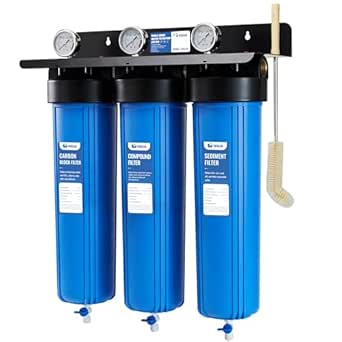 | Best for Whole-Home Flow | Filtration stages: 3 | Filter size: 20 × 5.5 inches | Maximum flow rate: 15 GPM | VIEW LATEST PRICE | See Our Full Breakdown |
| Bluevua RO100ROPOT-UV Countertop Reverse Osmosis Water Filter System |  | Best Countertop Reverse Osmosis Pick | Filtration stages: 6 | Purification method: Reverse osmosis with UV light and remineralization | Container: Borosilicate glass carafe | VIEW LATEST PRICE | See Our Full Breakdown |
| Aquasana Rhino Whole House Water Filter System with UV and Salt-Free Scale Control |  | Best Whole-House Pick for Multi-Stage Treatment | Model: WH-1000-CS-UVS-B | Installation: Whole house | Maximum flow rate: 14.6 gpm | VIEW LATEST PRICE | See Our Full Breakdown |
| DREO Countertop Reverse Osmosis Water Filter with Autofill Pitcher |  | Best Countertop RO for Easy Setup | Purification method: Reverse osmosis | Filtration: 7-in-1 | Testing: SGS tested to meet NSF/ANSI 58 standards | VIEW LATEST PRICE | See Our Full Breakdown |
| Waterdrop G3P600 Tankless Reverse Osmosis Water Filter System with Silver Faucet |  | Best High-Capacity Tankless Under-Sink RO | Filtration stages: 8 | Certifications: NSF/ANSI 42, 58, and 372 | Daily capacity: 600 gallons | VIEW LATEST PRICE | See Our Full Breakdown |
| Purewell 3-Stage Gravity Water Filter System, 2.25-Gallon Stainless Steel Countertop, with 2 Filters and Stand |  | Best Non-Electric Gravity System | Filtration stages: 3 | Filter pore size: 0.01 microns | Purification method: Activated carbon, silver ion, and hollow-fiber UF membrane | VIEW LATEST PRICE | See Our Full Breakdown |
| APEC Water ROES-50 5-Stage Under-Sink Reverse Osmosis System, 50 GPD |  | Best Conventional Under-Sink RO | Model: ROES-50 | Filtration stages: 5 | Maximum capacity: 50 gallons per day | VIEW LATEST PRICE | See Our Full Breakdown |
| 3-Stage Whole House Water Filter System with 2-Year Filter Supply |  | Best for Low-Maintenance Whole-House Filtration | Filtration stages: 3 | Filter types: PP, GAC, CTO | Maximum flow rate: 15 gpm | VIEW LATEST PRICE | See Our Full Breakdown |
| iSpring RCC7AK-BN 6-Stage Alkaline Reverse Osmosis Water Filtration System, 75 GPD |  | Best for TDS Reduction with Remineralization | Filtration stages: 6 | Purification methods: Reverse osmosis, alkaline, activated carbon, carbon block | Daily production capacity: 75 GPD | VIEW LATEST PRICE | See Our Full Breakdown |
| Nano Gravity-Fed Water Purification System with Two 5-Gallon Buckets | 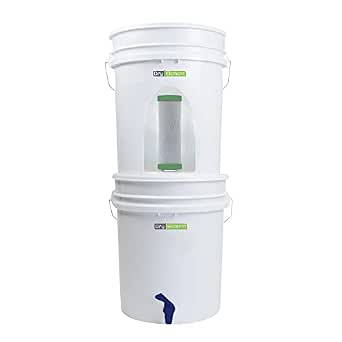 | Best for Emergency and Off-Grid Use | Filtration methods: Activated carbon, nanofiltration | Power source: Gravity | Maximum flow rate: 12 gallons per hour | VIEW LATEST PRICE | See Our Full Breakdown |
| Waterdrop Whole House Water Filter System with Carbon and Sediment Filters |  | Best for High-Capacity Whole-House Filtration | Filtration stages: 5-stage | Filter types: PP sediment and GAC activated carbon | Maximum flow rate: 15 gpm | VIEW LATEST PRICE | See Our Full Breakdown |
| home water purification system | Dimensions | Filtration stages | Capacity |
|---|---|---|---|
| iSpring US31 3-Stage Under Sin | 13 × 5.3 × 14.2 inches | 3: PP, GAC, and CTO | 10,000 gallons |
| Purewell 2.25-Gallon Gravity W | 8.8 × 8.8 × 20 inches | 3 | 2.25 gallons |
| Ninja HydraSense Intelligent W | 14.37 × 5.07 × 5.07 inches | — | — |
| HQUA WF3-01 3-Stage Whole Hous | 31 inches high × 23 inches wide × 8 inches deep | 3 | 100,000 gallons |
| Bluevua RO100ROPOT-UV Countert | — | 6 | 1,700 ml |
| Aquasana Rhino Whole House Wat | 46 × 9 × 69 in | — | — |
| DREO Countertop Reverse Osmosi | 14.5 × 6.7 × 13.4 in | — | 3 liters |
| Waterdrop G3P600 Tankless Reve | 18.12 × 5.67 × 17.72 in | 8 | — |
| Purewell 3-Stage Gravity Water | — | 3 | 2.25 gallons |
| APEC Water ROES-50 5-Stage Und | — | 5 | — |
| 3-Stage Whole House Water Filt | 14 × 13 × 10 inches | 3 | 10,000 gallons |
| iSpring RCC7AK-BN 6-Stage Alka | 15.5 × 16 × 18 inches | 6 | — |
| Nano Gravity-Fed Water Purific | 14 × 14 × 28 inches | — | — |
| Waterdrop Whole House Water Fi | 14.37 × 7.48 × 15.55 inches | 5-stage | 50,000 gallons |
More Details on Our Top Picks
iSpring US31 3-Stage Under Sink Water Filter System with Faucet
The iSpring US31 is a practical choice for households that want better-tasting tap water without adding a tank or electrical components. Its sediment, GAC, and CTO stages target chlorine, rust, sediment, and odors while retaining natural minerals; unlike the Bluevua RO100ROPOT-UV, it does not use reverse osmosis or lower TDS. That makes the US31 a simpler fit when the goal is routine filtration rather than broader dissolved-solids reduction. Its 10,000-gallon capacity and transparent first-stage housing help make upkeep easier to plan, while the faucet’s above-counter installation mechanism may simplify setup. The tradeoff is a 1 GPM flow rate, slower than a standard tap, and cartridge changes remain part of ownership. Skip it if you need scale reduction or TDS removal.
Pros:- Three NSF/ANSI-certified filter stages target sediment, chlorine, rust, and odors.
- 10,000-gallon capacity supports longer use between filter changes than many smaller-capacity systems.
- Transparent first-stage housing makes visible sediment buildup easier to monitor.
- Above-counter faucet installation mechanism can simplify faucet setup.
Cons:- Does not reduce TDS or remove hard-water scale.
- The 1 GPM flow rate is slower than ordinary tap flow.
- Filter cartridges need periodic replacement to maintain performance.
Best for: Households seeking an under-sink filter for chlorine taste, sediment, rust, and odors while keeping natural minerals in the water.
Not ideal for: Buyers who need reverse-osmosis-level dissolved-solids reduction, hard-water scale treatment, or full tap-speed dispensing.
- Filtration stages:3: PP, GAC, and CTO
- Capacity:10,000 gallons
- Filter life:12 months
- Flow rate:1 GPM
- Installation:Under sink
- Faucet finish:Brushed nickel
- Dimensions:13 × 5.3 × 14.2 inches
- Certification:NSF/ANSI certified filters
Our verdict“Choose the US31 for straightforward under-sink filtration of common taste and particulate issues, but choose a reverse-osmosis system if TDS reduction is a priority.”
Purewell 2.25-Gallon Gravity Water Filter System with Water Level Window
The Purewell is the most self-reliant option in this group: its gravity-fed design needs no electricity or plumbing, making it useful in cabins, power outages, or kitchens where installation is not wanted. Its 0.01-micron hollow-fiber membrane, silver-ion membrane, and carbon block target particulates, organic matter, chlorine, and heavy metals. Compared with the Ninja HydraSense, it offers a larger 2.25-gallon stored-water capacity and does not depend on a powered dispenser, but its 0.06 GPM maximum flow is much slower. A window lets you check the water level without opening the housing, though the upper chamber can leak if it is refilled while the lower chamber is full. Like the iSpring US31, it does not reduce TDS, so it is not a substitute for reverse osmosis when dissolved solids are the concern.
Pros:- Gravity operation requires no electricity or plumbing.
- 0.01-micron membrane and three-stage filtration target several particulate and chemical categories.
- 2.25-gallon capacity provides stored water for household use.
- Water-level window allows a quick level check without opening the system.
Cons:- Maximum flow rate of 0.06 GPM makes dispensing slow.
- Does not lower TDS.
- Refilling the upper chamber while the lower chamber is full can cause leakage.
Best for: Cabin owners, households preparing for power interruptions, and renters who want countertop filtration without plumbing.
Not ideal for: People who need fast, continuous dispensing or TDS reduction, or who cannot manage the two-chamber fill-and-drain routine.
- Capacity:2.25 gallons
- Filtration stages:3
- Filter pore size:0.01 microns
- Included filters:2
- Filter life:Up to 3,000 gallons per filter; replace every 6 months
- Maximum flow rate:0.06 GPM
- Dimensions:8.8 × 8.8 × 20 inches
- Power source:Gravity; no electricity required
Our verdict“Pick the Purewell for no-power countertop filtration and stored capacity, not for fast dispensing or dissolved-solids reduction.”
Ninja HydraSense Intelligent Water Filtration System, WF1001
The Ninja HydraSense is the convenience-focused countertop pick for households that want one-touch dispensing and visible filter tracking without plumbing work. Its filter is described as reducing more than 80 contaminants, including PFAS and microplastics, while retaining natural minerals; the stated NSF/ANSI 42, 53, and 401 certifications give buyers specific standards to check against their water concerns. Compared with the Purewell gravity system, the Ninja makes portioned dispensing and filter-status checks easier, but it needs power and its 96-ounce reservoir must be refilled. The Bluevua RO100ROPOT-UV is the stronger match for buyers seeking reverse-osmosis filtration, while the Ninja avoids that system’s heavier footprint and glass carafe. Its main ongoing tradeoff is filter replacement at 120 gallons or about six months, which may arrive sooner in a busy household.
Pros:- Reduces more than 80 listed contaminants, including PFAS and microplastics, while retaining natural minerals.
- One-touch dispensing offers customizable fill volumes.
- Interactive display tracks usage and filter status.
- Countertop setup requires no plumbing or installation.
Cons:- The 96-ounce reservoir needs regular refilling.
- Filter replacement is specified at 120 gallons or about six months.
- Requires a powered countertop location.
Best for: Busy households that want a countertop dispenser with measured fills, filter-life tracking, and no plumbing installation.
Not ideal for: Buyers seeking reverse-osmosis TDS reduction, large stored capacity, or a system that works without electricity.
- Filtration method:Specialized ultrafine carbon paper filter
- Contaminants reduced:80+; up to 99% reduction stated
- Certifications:NSF/ANSI 42, 53, and 401
- Reservoir capacity:96 oz
- Filter life:120 gallons or 6 months
- Installation:Countertop; no plumbing required
- Dimensions:14.37 × 5.07 × 5.07 inches
- Features:One-touch dispensing, usage tracking, filter status indicator, and recirculate cycle
Our verdict“Choose the Ninja for simple, tracked countertop dispensing, but look to the Bluevua if reverse-osmosis treatment is your priority.”
HQUA WF3-01 3-Stage Whole House Water Filtration System
The HQUA WF3-01 serves a different purpose from the countertop and under-sink picks: it is built to treat water for a whole-home supply, with a stated maximum flow rate of 15 GPM and three large-format filter stages. Sediment, carbon block, and GAC+KDF media target particles, chlorine, odors, and heavy metals before water reaches household fixtures. Compared with the iSpring US31, the HQUA addresses more than a single drinking-water faucet, but its 44-pound body and listed 31-by-23-inch dimensions call for more space and a more involved installation. Pressure gauges, service valves, and 180-day timers help with maintenance, though they do not eliminate cartridge replacement or housing cleaning. This is not the choice for reverse-osmosis TDS reduction; the Bluevua is a better fit when the priority is treating drinking water in a countertop unit.
Pros:- Three large-format stages target sediment, chlorine, odors, heavy metals, and other listed chemicals.
- Maximum flow rate of 15 GPM is suited to whole-home use.
- Pressure gauges and 180-day timers help track system condition and service intervals.
- Included valves, brush, and pipe adapters support maintenance and installation.
Cons:- Large dimensions and 44-pound weight require substantial installation space.
- Cartridges need periodic replacement and housings require cleaning.
- Does not provide reverse-osmosis treatment or stated TDS reduction.
Best for: Homeowners seeking high-flow filtration for multiple fixtures who have room for a large system and can manage plumbing installation.
Not ideal for: Renters, households with limited installation space, or buyers whose main goal is reverse-osmosis treatment of drinking water.
- Filtration stages:3
- Filter size:20 × 5.5 inches
- Maximum flow rate:15 GPM
- Capacity:100,000 gallons
- Dimensions:31 inches high × 23 inches wide × 8 inches deep
- Weight:44 pounds
- Filter timer:180 days
- Pipe adapters:3/4-inch NPT or 1-inch NPT
Our verdict“Choose the HQUA when you want high-flow filtration across household fixtures and have the space for a larger installed system.”
Bluevua RO100ROPOT-UV Countertop Reverse Osmosis Water Filter System
The Bluevua is the strongest fit here for buyers who want reverse-osmosis filtration without modifying plumbing. Its six-stage process combines RO, UV light, and remineralization, while the borosilicate glass carafe gives it a different water-storage approach from the Ninja HydraSense’s reservoir. The built-in display tracks filter life and water quality, and a stated 2:1 pure-to-drain ratio helps limit water waste compared with less efficient RO setups. Those capabilities come with real compromises: the unit weighs 17.8 pounds, needs a corded outlet, and dispenses at 0.26 liters per minute. The Ninja is the more convenient choice for quick, mineral-retaining dispensing without RO; the Bluevua makes more sense when RO treatment is the deciding factor. Its 1.7-liter carafe also means batch capacity is limited.
Pros:- Six-stage filtration combines reverse osmosis, UV light, and remineralization.
- Countertop setup avoids plumbing installation.
- Borosilicate glass carafe provides a non-plastic water container.
- Display reports filter life and water quality; standby mode supports power saving.
Cons:- Requires a corded electrical outlet.
- At 17.8 pounds, it is heavy for frequent relocation.
- The 1.7-liter carafe and 0.26-liter-per-minute flow limit batch size and dispensing speed.
Best for: Households wanting countertop reverse-osmosis treatment, UV, and remineralization without connecting a system to plumbing.
Not ideal for: Buyers who need a lightweight portable unit, high-volume rapid dispensing, or filtration that works without electricity.
- Filtration stages:6
- Purification method:Reverse osmosis with UV light and remineralization
- Container:Borosilicate glass carafe
- Capacity:1,700 ml
- Flow rate:0.26 liters per minute
- Installation:Countertop; no plumbing required
- Filter life:12 months
- Water TDS level maximum:500 ppm
- Weight:17.8 pounds
Our verdict“Choose the Bluevua for countertop reverse osmosis with UV and remineralization, provided its weight, power needs, and measured output suit your kitchen.”
Aquasana Rhino Whole House Water Filter System with UV and Salt-Free Scale Control
I’d choose the Aquasana Rhino when the goal is to treat water throughout the home rather than purify a single drinking-water tap. Its sediment, carbon and KDF stages, salt-free scale conditioning, post-filter, and UV treatment cover more household needs than an under-sink unit such as the APEC ROES-50, which focuses on drinking water. The million-gallon rated capacity also means this system is designed for long service under rated conditions, not frequent cartridge changes. The tradeoff is that it does not soften or demineralize water, and its scale control has specific water-chemistry limits: hardness up to 15 gpg, alkalinity below 250 mg/L, and pH below 8.3. I’d also plan for a nearby electrical outlet to run the UV stage.
Pros:- Combines multiple filtration stages with UV treatment for whole-home use.
- Salt-free scale conditioning avoids salt bags, backwashing, and cleaning.
- Rated for up to 1,000,000 gallons or 10 years under stated conditions.
- Does not soften or demineralize water.
Cons:- Scale control is limited to water hardness up to 15 gpg and has alkalinity and pH limits.
- UV treatment requires a corded electrical connection.
- Its whole-house installation is a larger project than countertop or under-sink systems.
Best for: Households seeking whole-home treatment for sediment, chlorine, scale, and microbial concerns, whose water chemistry falls within the system’s stated limits.
Not ideal for: Homes with harder water than the scale-control limit, water chemistry outside the stated range, or no practical way to supply power near the installation point.
- Model:WH-1000-CS-UVS-B
- Installation:Whole house
- Maximum flow rate:14.6 gpm
- Filtration media:Carbon and copper-zinc KDF
- UV certification:NSF/ANSI Standard 55, Class B
- Scale-control hardness limit:15 gpg
- Dimensions:46 × 9 × 69 in
- Warranty:10-year limited warranty
Our verdict“Choose the Aquasana Rhino for broad, whole-home treatment if your water chemistry fits its limits and you can provide power for UV.”
DREO Countertop Reverse Osmosis Water Filter with Autofill Pitcher
The DREO countertop RO suits renters and anyone who wants reverse-osmosis treatment without plumbing work. Its installation-free design, touch controls, self-cleaning function, and included autofill pitcher make daily use more straightforward than the under-sink Waterdrop G3P600, which needs cabinet space and an electrical connection. DREO also lists reduction of contaminants including PFOA, PFOS, chlorine, and fluoride, with SGS testing to meet NSF/ANSI 58 standards. The tradeoff is capacity: the pitcher holds 3 liters, so larger households may need frequent refills, unlike a whole-house system such as the Aquasana Rhino. Filters have a six-month cycle, and the 9.5-pound body is portable in principle but not especially light to move repeatedly.
Pros:- Countertop setup needs no plumbing installation.
- Seven-in-one reverse osmosis filtration lists reduction of PFOA, PFOS, chlorine, and fluoride.
- Built-in TDS meter and filter-life indicator make system status easier to monitor.
- Autofill pitcher and self-cleaning function simplify routine use.
Cons:- The 3-liter capacity can mean frequent refills for households with high water use.
- Filters have a six-month replacement cycle.
- At 9.5 pounds, it is less convenient to move than a lightweight pitcher.
Best for: Renters, apartment dwellers, and small households who want countertop reverse osmosis with no permanent installation and a ready-to-use pitcher.
Not ideal for: Large families or high-volume users who want continuous filtered water, fewer filter changes, or a system that treats water at multiple taps.
- Purification method:Reverse osmosis
- Filtration:7-in-1
- Testing:SGS tested to meet NSF/ANSI 58 standards
- Contaminant reduction:Up to 99.9% of possible contaminants
- Pure-to-drain ratio:3:1
- Maximum supported water TDS:1,200 ppm
- Capacity:3 liters
- Filter life cycle:6 months
- Dimensions:14.5 × 6.7 × 13.4 in
Our verdict“Pick DREO if you want countertop RO with minimal setup and your household can work within a 3-liter pitcher capacity.”
Waterdrop G3P600 Tankless Reverse Osmosis Water Filter System with Silver Faucet
I’d rank the Waterdrop G3P600 for households that want a steady supply of reverse-osmosis water without storing it in a separate tank. Its 600-gallon-per-day rated capacity and smart faucet display make it a more capable under-sink choice than the APEC ROES-50, whose rated output is 50 gallons per day and whose design includes a tank. Waterdrop also has a 2:1 pure-to-drain ratio and tool-free filter replacement, which can reduce routine maintenance hassle. Those advantages come with installation demands: the system needs power under the sink, operates at 87 psi, and still occupies cabinet space. I’d skip it if the sink cabinet cannot accommodate its dimensions or if you want a no-install option like the DREO countertop RO.
Pros:- Tankless design avoids a separate storage tank.
- Rated for up to 600 gallons per day, far above the APEC ROES-50’s 50-gallon-per-day rating.
- Smart faucet displays TDS and filter life.
- Tool-free filter replacement and a 2:1 pure-to-drain ratio support convenient upkeep.
Cons:- Requires a corded electrical connection under the sink.
- Its cabinet footprint may not fit smaller sink bases.
- Installation is more involved than an installation-free countertop system.
Best for: Households with under-sink space and power who want tankless RO, a high stated daily capacity, and faucet-based TDS and filter-life monitoring.
Not ideal for: Renters or homeowners who cannot modify plumbing, lack under-sink power, or have limited cabinet room.
- Filtration stages:8
- Certifications:NSF/ANSI 42, 58, and 372
- Daily capacity:600 gallons
- Flow rate:0.42 gpm
- Pure-to-drain ratio:2:1
- Maximum supported TDS:1,500 ppm
- Installation:Under sink
- Power source:Corded electric
- Dimensions:18.12 × 5.67 × 17.72 in
Our verdict“Choose the Waterdrop G3P600 if you want high-capacity, tankless under-sink RO and have the cabinet space, power, and plumbing access.”
Purewell 3-Stage Gravity Water Filter System, 2.25-Gallon Stainless Steel Countertop, with 2 Filters and Stand
The Purewell 3-Stage Gravity system is a straightforward choice for buyers who want countertop filtration without electricity, plumbing, or a reverse-osmosis membrane. Its hollow-fiber UF membrane, silver-ion membrane, and activated carbon block are aimed at chlorine, rust, sediment, organic matter, and some heavy metals; unlike the DREO countertop RO, it does not lower TDS. That distinction matters if reducing dissolved solids is a priority. The 2.25-gallon stainless steel body and rated flow of up to 4 gallons per hour suit shared countertop use, while two included filters are rated for up to 3,000 gallons each. I’d leave room for careful filling: the listing warns that the unit may leak if the upper chamber is filled while the lower chamber is full.
Pros:- Gravity filtration runs without electricity or plumbing.
- Three-stage filtration uses a 0.01-micron hollow-fiber UF membrane, silver-ion membrane, and activated carbon block.
- 2.25-gallon capacity and rated flow up to 4 gallons per hour support shared household use.
- 304 stainless steel chambers and spigot, with two filters and a stand included.
Cons:- Does not lower TDS, unlike the DREO and Waterdrop reverse-osmosis systems.
- May leak if the upper chamber is filled while the lower chamber is full.
- Filter life varies with water quality, so actual replacement timing may differ.
Best for: Households seeking non-electric countertop filtration for chlorine, sediment, and related concerns, without needing TDS reduction.
Not ideal for: Buyers who specifically want reverse osmosis or lower TDS, or anyone unwilling to monitor chamber levels and filter condition.
- Filtration stages:3
- Filter pore size:0.01 microns
- Purification method:Activated carbon, silver ion, and hollow-fiber UF membrane
- Capacity:2.25 gallons
- Flow rate:Up to 4 gallons per hour
- Filter life:Up to 3,000 gallons per filter; replace every 6 months
- Material:304 stainless steel and polypropylene
- Power source:Non-electric, gravity filtration
- Maximum supported TDS:500 ppm
Our verdict“Choose Purewell for simple, non-electric countertop filtration if you do not need reverse osmosis or TDS reduction.”
APEC Water ROES-50 5-Stage Under-Sink Reverse Osmosis System, 50 GPD
The APEC Water ROES-50 is a conventional, tank-based under-sink RO setup for buyers who want a dedicated drinking-water faucet and a complete installation kit. Its five filtration stages combine activated carbon and reverse osmosis, while the included tank means purified water is stored for use rather than made available through Waterdrop’s tankless design. APEC’s rated output is 50 gallons per day, so it is a more modest-capacity option than the Waterdrop G3P600, but its included color-coded tubing and quick-connect fittings are aimed at making setup and filter servicing more manageable. It requires under-sink installation, and replacement timing varies: the listed cycle ranges from six months to 24 months depending on incoming water quality. I’d choose it for a standard RO configuration, not for whole-home treatment or countertop portability.
Pros:- Five-stage filtration combines reverse osmosis and activated carbon.
- Includes a storage tank, brushed nickel faucet, filter set, and installation kit.
- Quick-connect fittings and color-coded tubing support setup and maintenance.
- Supports incoming water TDS up to 2,000 ppm.
Cons:- Under-sink installation is required, unlike the DREO countertop system.
- Rated capacity of 50 gallons per day is much lower than the Waterdrop G3P600.
- Filter replacement timing depends on incoming water quality and can range from six to 24 months.
Best for: Homeowners who want a traditional under-sink RO system with a storage tank, dedicated faucet, and included installation components.
Not ideal for: Renters seeking a no-install system, households needing whole-house treatment, or buyers who prefer a tankless unit with high stated daily capacity.
- Model:ROES-50
- Filtration stages:5
- Maximum capacity:50 gallons per day
- Purification methods:Activated carbon and reverse osmosis
- Installation:Under sink
- Operating pressure:40–85 psi
- Maximum supported water TDS:2,000 ppm
- Filter replacement interval:6–24 months, depending on incoming water quality
- Included components:RO system, tank, filter set, brushed nickel faucet, installation kit, and instructions
Our verdict“Choose the APEC ROES-50 if you want a complete, tank-based under-sink RO setup and do not need a tankless system’s higher rated output.”
3-Stage Whole House Water Filter System with 2-Year Filter Supply
For households wanting to reduce sediment, chlorine, and odors at multiple taps, this Ziwshom system offers a practical whole-house approach without removing naturally occurring minerals. Its three included cartridge sets provide up to 1.5–2 years of replacements, while the built-in shut-off and bypass valves make cartridge changes easier than a setup without those controls. Compared with the Waterdrop Whole House Water Filter, this model includes more replacement sets, but Waterdrop specifies a larger 50,000-gallon capacity and testing details for its filtration components. The main limitation is that this system does not reduce TDS, so it is not a substitute for reverse osmosis when dissolved solids are the concern. Its listed six-month cartridge cycle also means ongoing maintenance even with the extra supply.
Pros:- Includes nine cartridges, or three complete replacement sets.
- Built-in shut-off and bypass valves simplify filter changes.
- Designed for well or city water and standard 3/4-inch plumbing.
- Compact 14 × 13 × 10-inch housing can fit under a sink or in a utility area.
Cons:- Does not reduce TDS.
- Cartridges are listed for replacement about every six months.
- Listed capacity is 10,000 gallons, below the Waterdrop whole-house system’s stated 50,000 gallons.
Best for: Households on well or city water that want sediment, chlorine, and odor reduction across the home, plus replacement cartridges included.
Not ideal for: Buyers trying to reduce TDS or seeking a system with a stated capacity above 10,000 gallons; consider an RO option or compare the Waterdrop whole-house system instead.
- Filtration stages:3
- Filter types:PP, GAC, CTO
- Maximum flow rate:15 gpm
- Capacity:10,000 gallons
- Included filters:9 total (3 sets)
- Filter life cycle:6 months
- Plumbing size:3/4 inch
- Dimensions:14 × 13 × 10 inches
Our verdict“Choose this Ziwshom system for mineral-preserving whole-house sediment and chlorine filtration with replacement cartridges on hand, but not for TDS reduction.”
iSpring RCC7AK-BN 6-Stage Alkaline Reverse Osmosis Water Filtration System, 75 GPD
The iSpring RCC7AK-BN is the strongest fit here for buyers who want under-sink reverse osmosis rather than whole-house treatment. Its six stages include alkaline remineralization, so the system pairs TDS reduction with a final stage intended to add minerals back. That sets it apart from the Ziwshom whole-house system, which preserves minerals but does not lower TDS. The system is NSF/ANSI 58 certified and produces up to 75 gallons per day, with a storage tank for access to filtered water. Its brushed-nickel faucet and top-mounted fastener help with installation, though the tank and filter assembly need dedicated cabinet space. Compared with countertop RO systems such as Bluevua RO100ROPOT-UV, this is a fixed plumbing installation, not a portable option.
Pros:- Six-stage treatment includes reverse osmosis and alkaline remineralization.
- Full system is certified to NSF/ANSI 58.
- Produces up to 75 gallons per day and includes a storage tank.
- Top-mounted faucet fastener and quick-fitting connections can simplify installation.
Cons:- Requires under-sink installation and cabinet space for the system and tank.
- Filter replacement is part of ongoing maintenance, with a listed six-month cycle.
- Fixed installation is less flexible than the countertop Bluevua RO100ROPOT-UV.
Best for: Homeowners who want under-sink TDS reduction, remineralization, and a dedicated faucet, and have room for a storage tank.
Not ideal for: Renters or people with limited under-sink space, or buyers who want portable countertop filtration without plumbing installation.
- Filtration stages:6
- Purification methods:Reverse osmosis, alkaline, activated carbon, carbon block
- Daily production capacity:75 GPD
- Certification:NSF/ANSI 58
- Operating pressure:70 psi
- Supported maximum TDS:750 ppm
- Dimensions:15.5 × 16 × 18 inches
- Warranty:1-year manufacturer limited warranty
Our verdict“Pick the RCC7AK-BN if you want certified under-sink RO with remineralization and can accommodate its tank and plumbing.”
Nano Gravity-Fed Water Purification System with Two 5-Gallon Buckets
This Dry Element system suits households that value electricity-free filtration and a large water reserve over a compact countertop footprint. Gravity drives filtration, and the kit includes two 5-gallon buckets, spigots, a pre-filtration screen, and a nano filter; setup requires no tools or priming. The manufacturer states a flow rate of up to 12 gallons per hour, although actual output depends on source water and pre-screening. Compared with the Purewell 2.25-Gallon Gravity Water Filter, the two-bucket setup offers substantially more container capacity, but it is much taller at 28 inches and takes more space. This is a useful backup or camping system, not a discreet everyday dispenser. The provided specifications also do not establish a specific reduction level for individual contaminants.
Pros:- Gravity-powered filtration requires no electricity.
- Includes two food-grade 5-gallon buckets and two spigots.
- Setup requires no tools or filter priming.
- Portable design can serve home, camping, and emergency-preparation needs.
Cons:- The 28-inch-tall two-bucket assembly needs substantial counter or storage space.
- Stated flow rate and performance depend on source water and pre-screening.
- Product data does not specify individual contaminant-reduction levels.
Best for: Campers and households preparing for water interruptions who need a gravity-powered system with a large stored-water capacity.
Not ideal for: People with limited counter or storage space, or buyers who need documented contaminant-reduction performance for a specific water concern.
- Filtration methods:Activated carbon, nanofiltration
- Power source:Gravity
- Maximum flow rate:12 gallons per hour
- Container capacity:Two 5-gallon buckets
- Maximum supported TDS:1000 ppm
- Dimensions:14 × 14 × 28 inches
- Weight:8 lb
- Included components:Two buckets, two lids, two spigots, nano gravity filter, pre-filtration screen insert, storage solution, instruction pamphlet
Our verdict“Choose this system for off-grid or emergency water preparation when bucket capacity matters more than a compact, everyday countertop design.”
Waterdrop Whole House Water Filter System with Carbon and Sediment Filters
For buyers prioritizing a stated high capacity and a straightforward sediment-and-carbon setup, the Waterdrop WD-WHF21-PG is the more capacity-focused whole-house pick. Its PP sediment filter and coconut-shell GAC filter target particles, chlorine, and unwanted taste and odor, with a listed 50,000-gallon capacity and flow up to 15 gpm. Compared with the Ziwshom three-stage system, Waterdrop lists a much higher capacity and gives replacement intervals for each cartridge; Ziwshom, by contrast, includes three full filter sets and built-in bypass valves. Waterdrop’s PP filter may need replacement every 3–6 months, and its manufacturer recommends municipal water to extend service life. The system has testing and component standards listed, but it is not reverse osmosis and should not be chosen for TDS reduction.
Pros:- Listed capacity is 50,000 gallons with flow up to 15 gpm.
- PP sediment and coconut-shell GAC filters address particles, chlorine, taste, and odor.
- SGS tested to NSF/ANSI 42; components meet NSF/ANSI 372 lead-free standards.
- Operates without electricity.
Cons:- PP filter replacement is listed at 3–6 months and GAC replacement at six months.
- Manufacturer recommends municipal water to extend filter service life.
- Does not provide reverse osmosis or stated TDS reduction.
Best for: Households on municipal water seeking whole-house sediment and chlorine filtration with a stated 50,000-gallon capacity and 15 gpm flow.
Not ideal for: Well-water households seeking longer cartridge life, or buyers who need TDS reduction; this is a sediment-and-carbon system, not RO.
- Filtration stages:5-stage
- Filter types:PP sediment and GAC activated carbon
- Maximum flow rate:15 gpm
- Capacity:50,000 gallons
- Operating pressure range:25–90 psi
- Filter life:GAC: 6 months; PP: 3–6 months
- Inlet/outlet:1 inch
- Dimensions:14.37 × 7.48 × 15.55 inches
Our verdict“Choose Waterdrop for high-capacity whole-house sediment and carbon filtration on municipal water, but choose an RO system if TDS reduction is your goal.”
How We Picked
I compared these 14 systems by the job they are designed to do: treat water at a single drinking-water tap, supply filtered water at the counter, or treat water entering the home. I considered the stated filtration approach, system format, installation demands, capacity or flow information where provided, maintenance implications, and features that change day-to-day use, such as a faucet, tankless design, water-level window, or included filter supply. I also treated reverse osmosis, gravity filtration, and carbon-and-sediment filtration as different approaches rather than assuming one is automatically best for every household.
The ranking favors systems with a clear fit, useful treatment features, and a practical balance of performance and upkeep for their intended role. The iSpring RCC7AK-BN leads as a versatile drinking-water choice; the Waterdrop G3P600 stands out for a tankless under-sink setup, and the Aquasana Rhino earns a distinct place for whole-house treatment features. I ranked narrower or more setup-dependent options lower for general buyers, not because they have no use, but because their advantages depend on a specific water concern, installation preference, or willingness to manage water and filter changes.
Factors to Consider When Choosing Best Home Water Purification Systems
Before choosing a system, I would start with the water you need to treat and where you need it. These options range from a single drinking-water faucet to whole-house treatment and gravity-fed water stored in batches, so comparing them by filter stages alone can lead to the wrong choice.
Match the System to the Point of Use
A whole-house unit treats water as it enters the home, which can make sense when the concern affects showers, laundry, and multiple taps as well as drinking water. An under-sink or countertop system focuses treatment on water used for drinking and cooking, usually with less plumbing coverage and less equipment distributed through the home. A common mistake is buying a whole-house filter when the goal is only to improve water at one faucet, or expecting a drinking-water unit to address every tap. Check where the system connects and which fixtures receive treated water before comparing filtration claims. If you rent or cannot modify plumbing, countertop or gravity-fed formats may be more practical than installed systems.
Identify the Water Problem Before Choosing a Filter Type
Different filter methods target different concerns, so first review a current water-quality report or arrange testing if you rely on a private well. Municipal water reports can help identify known treatment and monitored contaminants, but they do not describe every home plumbing issue. Reverse osmosis, carbon, sediment filtration, UV treatment, and scale control are not interchangeable functions. A multi-stage label alone does not prove that a system addresses the particular substance you care about. Match the product’s stated reduction claims and certification documentation to test results, rather than choosing by stage count or broad wording. If a concern is unclear, a qualified water-treatment professional can help interpret results before you purchase equipment.
Check Certifications and Reduction Claims
Look for independently verified certifications or test documentation that names the exact model and the specific contaminants reduced. A certification for one function does not mean a system is certified for every claim made about it. Verify the standard, the tested substances, and any conditions tied to the claim, such as flow rate or cartridge life. Avoid assuming that phrases like “purification” or “multi-stage” establish a particular level of treatment. This check matters especially when comparing systems built around different methods, since a reverse osmosis unit and a carbon filter may have different verified claims. If you cannot find model-specific evidence for a concern, treat that claim as unconfirmed.
Account for Installation, Space, and Water Use
Under-sink reverse osmosis systems may need a dedicated faucet, room for components, and a drain connection; tankless models change the storage layout but still require a compatible installation. Countertop units avoid much of that plumbing work but occupy visible counter space and need access to power or regular manual filling, depending on the design. Whole-house filters require an appropriate connection point and enough room for service access. Gravity-fed units are less dependent on plumbing, yet they need space for the unit and a routine for refilling and dispensing. Measure cabinets, counters, and installation clearances before buying, and check whether your plumbing and water pressure meet the product’s requirements.
Plan for Replacement Filters and Ongoing Care
Replacement cartridges, cleaning, and service access shape the long-term convenience of a system as much as its initial setup. Before purchasing, confirm the filter-change intervals, the exact replacement parts, and whether the manufacturer provides clear instructions for your model. An included filter supply, such as the two-year supply listed with one whole-house option, can simplify planning, but it does not remove the need to follow the maintenance schedule. Gravity systems also call for regular attention to their filter elements and storage components. A neglected filter can undermine the system’s intended performance, so choose a maintenance routine you can realistically keep. If a system uses proprietary cartridges, check ongoing availability before committing.
Choose Capacity for Your Household Routine
Think about how much treated water your household uses for drinking, cooking, and filling bottles, and whether demand arrives steadily or in bursts. A countertop pitcher-style design or gravity reservoir may suit one or two people who can refill it regularly, while a household with frequent cooking and multiple users may prefer a plumbed system. Reverse osmosis output and storage arrangements affect how quickly water is available, so compare the stated production capacity with your daily pattern rather than relying on the number alone. Whole-house flow needs are different from drinking-water capacity and should be checked against the home’s use. Do not pay for capacity you will not use, but avoid a small reservoir if frequent refilling would become a nuisance.
Frequently Asked Questions
Should I choose a whole-house filter or a drinking-water system?
Choose based on where the water problem matters. A whole-house system treats water entering the home and can serve multiple fixtures, while an under-sink or countertop unit focuses on drinking and cooking water. If your concern is limited to water at the kitchen tap, a point-of-use system may avoid the installation and service demands of whole-house equipment. If you want treatment at showers and other taps too, check that a whole-house model’s stated functions address your concern. Water testing and the product’s model-specific claims should guide the decision.
Is reverse osmosis a better choice than gravity filtration?
Neither method is automatically better for every home; they suit different routines and should be compared by verified reduction claims. Reverse osmosis systems often require plumbing or counter space and regular filter care, while gravity systems can operate without a water-line connection but need manual refilling. A gravity unit may fit a renter or a household wanting a standalone option, whereas an installed RO system may better suit someone seeking a dedicated drinking-water tap. Check the exact contaminants each model is certified or tested to reduce. Your water report, installation limits, and willingness to maintain the system matter more than the method’s name alone.
Can a countertop reverse osmosis system work in a rental?
It can be a useful rental-friendly choice when you cannot alter plumbing, but confirm the model’s setup before buying. Countertop systems may need electrical power, room beside the sink, and a way to handle feed water and reject water. They still need regular filter replacement and cleaning, and their output may not suit a household that needs large amounts of water at once. Compare the unit’s size and operating steps with your counter layout and daily use. If you need water at several taps, a countertop unit will not provide whole-house coverage.
What should I verify before buying a system for well water?
Start with a recent test of the well water, since private wells can vary by location and over time. Use the results to identify which contaminants or other concerns need treatment, then look for model-specific test data or certifications for those exact issues. Do not assume that a whole-house label, UV feature, or multiple filter stages address every well-water concern. Check whether the system’s rated flow and maintenance requirements suit the home, and ask a qualified professional about treatment needs that fall outside the product’s stated claims. Retest as recommended for your well and local guidance.
How do I compare filter replacement needs across these systems?
Compare the replacement schedule for every cartridge or treatment component, not just the main filter. Confirm the replacement part numbers, whether parts are easy to source, and whether the system needs cleaning or service beyond cartridge changes. Follow the manufacturer’s schedule and any water-volume limits, since household use and incoming water quality can affect how often service is needed. An included supply can reduce early restocking but does not show what ongoing upkeep will be like after that supply runs out. A system with a manageable routine for your household may be a better fit than one with more features but harder-to-track maintenance.
Conclusion
For the broadest fit among these picks, I recommend the iSpring RCC7AK-BN as best overall: its under-sink reverse osmosis setup includes a remineralization stage, though it requires installation and ongoing filter care. The best value depends on your setup; the APEC ROES-50 is a straightforward under-sink RO alternative, while the 3-Stage Whole House system is worth a closer look if its included two-year filter supply matches your needs. For a best premium whole-house direction, consider the Aquasana Rhino for its combination of UV and salt-free scale control. Beginners who want to avoid plumbing work may prefer a Bluevua or DREO countertop RO unit, while households needing water without a connection can compare the Purewell gravity models and the Nano two-bucket system. For tankless under-sink convenience, choose the Waterdrop G3P600; for whole-home treatment with a simpler carbon-and-sediment focus, compare the Waterdrop Whole House and HQUA WF3-01. Before ordering, match the exact model’s verified claims to your water test and confirm that its installation and maintenance fit your home.