
To measure and cut PEX tubing for filtration systems, start by carefully measuring the distance between connections, adding a little extra for flexibility. Mark the spots precisely with a marker or pencil, then double-check your measurements before cutting. Use a sharp PEX cutter or utility knife for a smooth, straight cut, and make certain the end is free of burrs. Properly fitting and securing connectors will help prevent leaks—continue below to learn detailed steps for perfect results.

Get home appliances delivered free — and shop member deals
- Fast, free delivery on millions of items
- Access to Prime Big Deal Days deals on October 6–7
- Prime Video, Amazon Music and more included
Key Takeaways
- Measure tubing accurately with a tape measure, marking the desired length clearly before cutting.
- Double-check measurements to prevent errors and ensure the tubing fits the filtration system properly.
- Use a sharp PEX cutter or utility knife to make clean, straight cuts, avoiding jagged edges.
- Smooth any burrs or rough edges on the cut end with a deburring tool for proper fitting.
- Fully insert the cut tubing into fittings and secure with appropriate tools to prevent leaks.
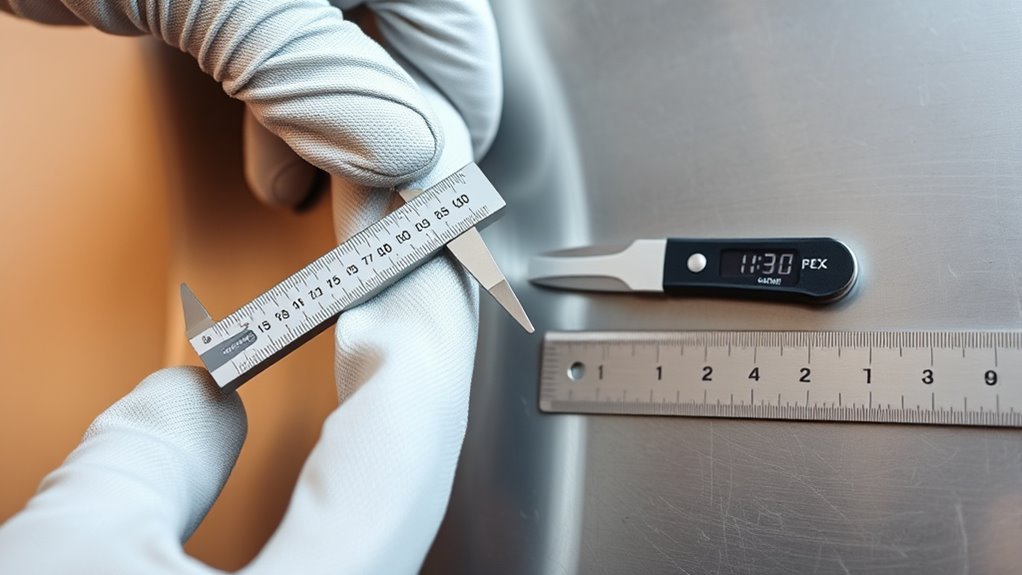
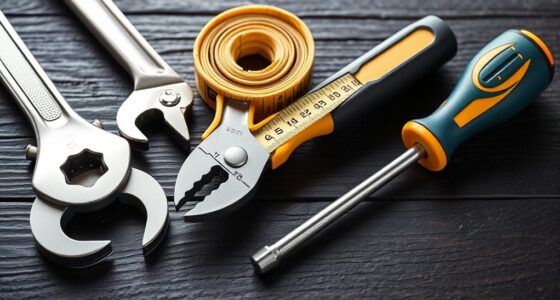
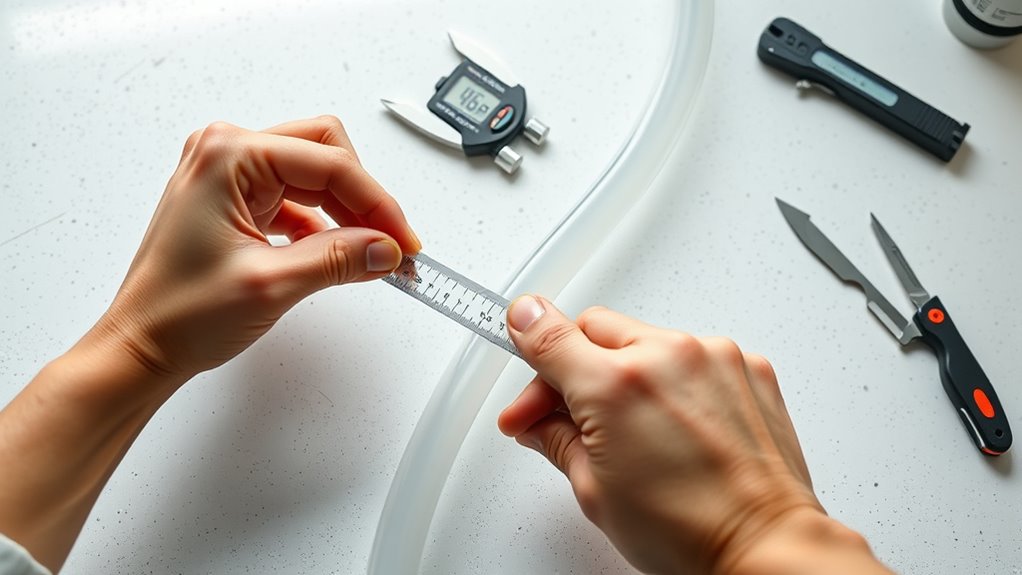
Measuring and cutting PEX tubing accurately is essential for a successful plumbing project. When working with PEX, precise measurements ensure your filtration system functions correctly and prevents leaks or failures down the line. Before you start, gather the necessary tools, including a measuring tape, a sharp utility knife or PEX cutter, and the appropriate pipe fittings and tubing connectors needed for your setup. Properly measuring your tubing length is critical; too long and it may cause unnecessary slack, too short and it won’t reach the fittings or installation points. Take your time to measure carefully, marking the tubing with a marker or pencil at the desired cut location.
Once you’ve determined the correct length, it’s time to cut the PEX tubing. Use a sharp PEX cutter or utility knife to make a clean, straight cut. A clean cut is crucial because it creates a smooth edge that makes it easier to fit the tubing into pipe fittings and tubing connectors. Avoid using dull blades or twisting the tubing while cutting, as this can lead to jagged edges or uneven cuts, complicating the connection process. After cutting, inspect the end of the tubing for any burrs or rough edges. If necessary, use a deburring tool or gently sand the edge to ensure it’s smooth, which helps in forming a tight seal with fittings. Additionally, proper measurement and cutting are key to preventing leaks and ensuring your system operates efficiently.
When connecting PEX tubing to pipe fittings or tubing connectors, ensure you use the correct fitting type for your system—such as crimp, clamp, or push-fit fittings. These fittings are designed to create leak-proof connections when properly installed. Before inserting the tubing into the fitting, measure and confirm that the cut end is flush and free of debris. Carefully push or slide the tubing into the fitting, making sure it seats fully. For crimp or clamp fittings, you’ll need to use a crimping tool or clamp pliers to secure the connection tightly. Properly secured fittings prevent leaks and ensure the longevity of your filtration system.
As an affiliate, we earn on qualifying purchases.
Frequently Asked Questions
What Tools Are Best for Cutting PEX Tubing?
You should use a PEX tubing cutter for clean, precise cuts, making installation easier. These cutters are designed specifically for PEX and help avoid damaging the tubing. When cutting, consider the PEX tubing color coding to ensure proper connections with the right PEX connector options. A sharp cutter provides smooth edges, reducing leaks, and guaranteeing your filtration system functions correctly. Always double-check your measurements before cutting.
How Do I Prevent Kinks When Bending PEX?
To prevent kinks during PEX bending, you should use a PEX bending spring or elbow fittings. These tools help maintain the pipe’s shape and prevent sharp bends that cause kinks. Always bend slowly and gradually, avoiding tight angles. Keep the tubing supported and secured as you bend, and don’t force it into a bend if resistance occurs. Proper PEX bending techniques guarantee smooth, kink-free curves for reliable filtration system connections.
Can PEX Tubing Be Reused After Cutting?
Think of PEX tubing like a favorite reusable mug—you can often rinse and reuse it, but after cutting, its integrity might be compromised. PEX recycling and tubing reuse are possible in some cases, but typically, once cut, the tubing’s structural strength decreases, making it less reliable for future use. For safety and performance, it’s best to replace sections rather than try to reuse cut PEX tubing.
What Temperature Ranges Are Safe for PEX Installation?
You should keep PEX tubing within a temperature range of 33°F to 200°F (1°C to 93°C) for safe installation. Staying within this temperature safety range helps maintain PEX durability and prevents damage. Avoid exposing PEX to extreme heat or freezing temperatures, as it can weaken or crack the material. Properly regulated temperatures guarantee your filtration system performs effectively and prolongs the lifespan of your PEX piping.
How Long Does PEX Tubing Typically Last?
Think of your PEX tubing as a reliable partner in your filtration system’s journey. With proper care, its durability shines, often lasting 25 to 50 years, depending on installation and water quality. While exposure to extreme temperatures or UV light can shorten its lifespan, regular inspections and correct installation maximize longevity. Trust in PEX’s resilience, and your system will serve smoothly through many seasons.
As an affiliate, we earn on qualifying purchases.
Conclusion
Now that you know how to measure and cut PEX tubing precisely, you’re ready to tackle your filtration project with confidence. Think of it as forging your own path like theseus maneuvering the labyrinth—careful measurements and clean cuts lead to success. With patience and attention to detail, you’ll create a system that’s both efficient and reliable. Just remember, even Daedalus needed his wings to soar—so trust your skills and take pride in your craftsmanship.
As an affiliate, we earn on qualifying purchases.
As an affiliate, we earn on qualifying purchases.
NFL season / tailgating Picks
team gear
As an affiliate, we earn on qualifying purchases.