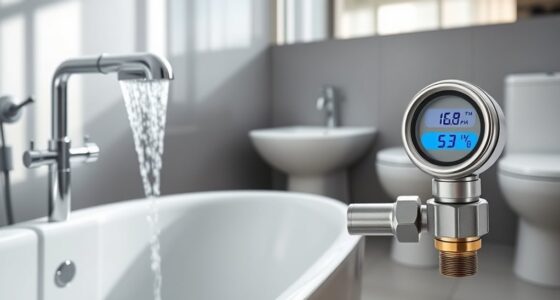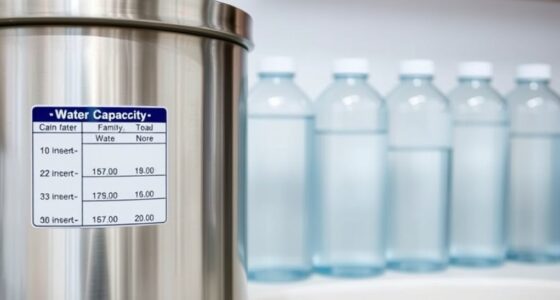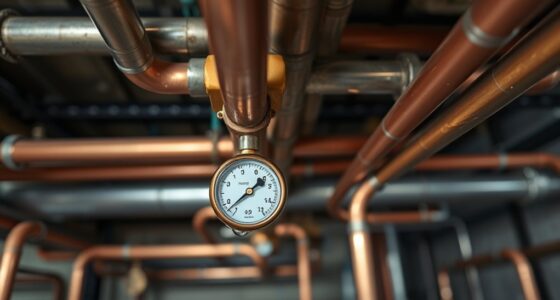
To size your pre-filters and sediment filters effectively, match their micron ratings and flow capacities to your water’s sediment load and your system’s demand. Choose filters with slightly higher flow rates than your maximum usage to prevent pressure drops. Opt for a micron rating that captures the smallest particles typical of your water source without restricting flow excessively. Properly sizing filters guarantees steady flow and reduces clogging, and if you want to know more, there are key tips to optimize your system’s longevity.

Get home appliances delivered free with Prime
- Fast, free delivery on millions of items
- Prime Video, Amazon Music and more included
- Member-only deals all year
Key Takeaways
- Calculate the system’s maximum flow demand and select filters with micron ratings slightly above this to prevent clogging.
- Match filter micron ratings to sediment levels; finer filters for high sediment loads, coarser for lower levels.
- Use flow rate calculations to choose filters that support desired water volume without causing excessive pressure drops.
- Regularly monitor pressure gauges and replace filters as needed to maintain optimal flow and reduce pressure loss.
- Balance pore size and flow capacity to ensure effective sediment removal while minimizing pressure drops and prolonging filter life.

Choosing the right pre-filters and sediment filters is vital to guarantee your water filtration system works effectively and lasts longer. One key factor in selecting these filters is understanding filter micron ratings, which determine the size of particles they can trap. A lower micron rating, such as 1 or 5 microns, means the filter can catch finer particles like sand, silt, and rust, providing cleaner water downstream. Conversely, higher micron ratings, like 20 or 50, are suitable for removing larger debris but may allow smaller particles to pass through. Picking the appropriate micron rating depends on your water source and the level of sediment it carries. If your water contains a lot of fine particles, opting for a filter with a lower micron rating helps prevent clogging and reduces strain on your subsequent filtration stages.
Choosing the right micron rating ensures effective sediment removal and longer-lasting filters.
Flow rate calculations are equally important when sizing your filters. Your system’s flow rate — the volume of water passing through the filter per minute — influences how quickly the filter will clog and need replacement. If your flow rate is too high for the filter’s capacity, sediment can bypass the filter or cause it to clog faster, leading to pressure drops and reduced efficiency. To avoid this, you need to calculate your household or system’s maximum flow rate and select filters rated for that flow. For example, if your water needs are 10 gallons per minute, choose filters that can comfortably handle slightly more than that, ensuring steady flow and minimal pressure drop. Proper flow rate calculations help prevent unnecessary pressure drops that can compromise water pressure and filtration effectiveness.
In addition to micron ratings and flow rate calculations, consider the filter’s pore size and media quality. A high-quality sediment filter with consistent pore sizes ensures uniform filtration and longevity. Remember, the goal is to remove sediment without creating a significant pressure drop across the system. Regularly checking your pressure gauges and replacing filters as recommended keeps your system running smoothly. Overly restrictive filters with too low micron ratings or mismatched flow capacities can cause pressure drops, reducing water flow, and straining your system components. Balancing the micron rating with your system’s flow requirements is vital for maintaining excellent performance and extending the lifespan of your filtration system.
Being aware of the impact of pressure drop on your system helps you select filters that maintain optimal water flow and system efficiency. Ultimately, selecting the right pre-filters and sediment filters involves understanding your water’s sediment load, calculating your flow rates accurately, and choosing filters with appropriate micron ratings. This careful sizing prevents pressure drops, keeps your system efficient, and prolongs filter life. By paying attention to these details, you ensure your water stays clean without sacrificing pressure or flow, saving you time and money in the long run.
As an affiliate, we earn on qualifying purchases.
Frequently Asked Questions
How Often Should I Replace My Pre-Filter?
You should replace your pre-filter every 6 to 12 months, depending on your water quality and usage. Regular filter maintenance is essential to prevent pressure drops and guarantee peak performance. Check the filter regularly for signs of clogging or reduced flow, and follow the recommended replacement schedule to avoid damage to your system. Keeping up with timely filter replacements ensures clean water and prolongs the life of your filtration system.
Can Oversized Filters Improve System Lifespan?
Oversized filters can enhance your system’s lifespan because they allow for a larger filter material selection, which means less frequent replacements and reduced pressure drop. By choosing appropriately sized filters, you also minimize environmental impact since you generate less waste. Keep in mind, though, that over-sizing should be balanced with system requirements to guarantee peak performance without unnecessary costs or resource use.
What Are Signs of a Clogged Sediment Filter?
A clogged sediment filter can be a nightmare, causing your water flow to slow to a crawl. Look for obvious filter clog signs like decreased water pressure, discolored or cloudy water, and visible sediment buildup indicators. If you notice these issues, it’s time to replace or clean the filter. Ignoring these signs can lead to system damage, so stay vigilant and maintain your filters regularly to keep everything running smoothly.
Do Different Sediment Types Require Specific Filter Sizes?
Different sediment types do require specific filter sizes, mainly based on sediment composition and filter pore size. For larger particles like sand or rust, you should choose filters with bigger pore sizes to prevent clogging and pressure drops. Finer sediments, such as silt or clay, need smaller pore size filters to effectively capture particles. Matching the filter pore size to the sediment composition guarantees ideal filtration and maintains water flow.
How Does Flow Rate Affect Filter Sizing Decisions?
Did you know that higher flow rates can reduce filter lifespan by up to 50%? When considering flow rate considerations, you should select filter sizes based on your system’s demand to prevent pressure drops. Proper filter sizing principles ensure your system maintains ideal performance, avoiding frequent replacements or pressure issues. Always match your filter size to your flow rate needs to maximize efficiency and longevity of your filtration system.
As an affiliate, we earn on qualifying purchases.
Conclusion
By properly sizing your pre-filters and sediment filters, you guarantee your system runs smoothly, your water stays clean, and your filters last longer. By understanding flow rates, by avoiding pressure drops, and by selecting the right filters, you protect your equipment, improve efficiency, and save money. By staying vigilant, by making informed choices, and by maintaining your filters regularly, you keep your water quality high and your system functioning at its best every time.
high flow sediment filter 20 GPM
As an affiliate, we earn on qualifying purchases.
As an affiliate, we earn on qualifying purchases.
As an affiliate, we earn on qualifying purchases.
Cold & flu season Picks
humidifiers
As an affiliate, we earn on qualifying purchases.