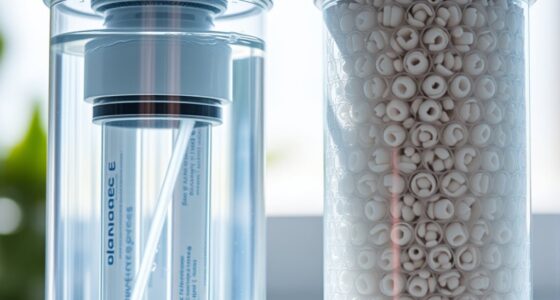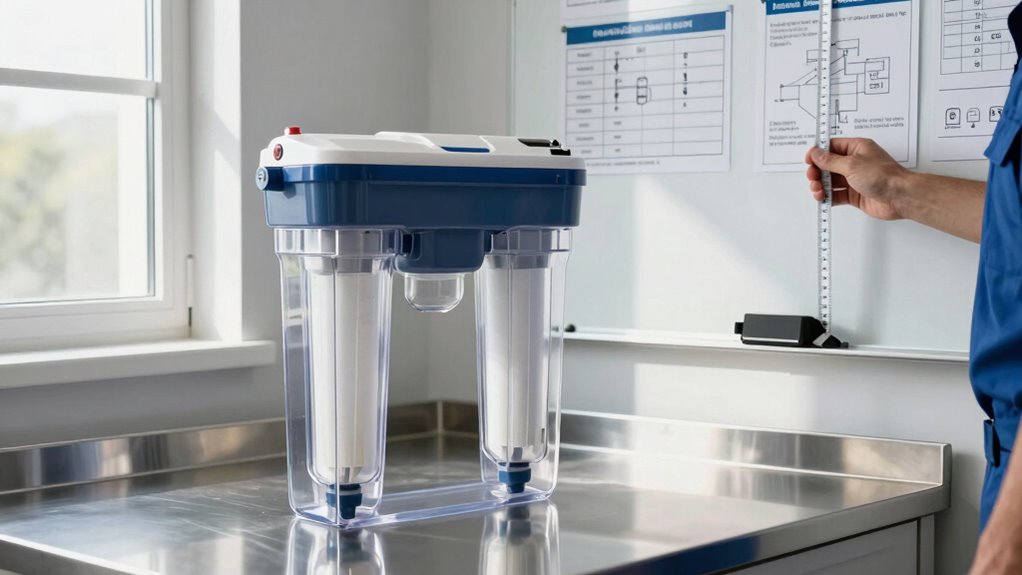
To choose the right whole-house filter size, start by evaluating your water quality and household water demand. Consider contamination levels like sediment, chlorine, or heavy metals, and how many people use your water daily. Bigger filters are needed for higher demand and more pollutants, ensuring consistent flow and longer lifespan. Proper sizing prevents pressure drops and reduces maintenance costs. If you keep these factors in mind, you’ll find selecting the right filter easier—and there’s more to discover if you keep exploring.
Key Takeaways
- Assess your household’s water quality and impurity levels to determine the appropriate filter capacity.
- Calculate your household’s water demand to select a filter that supports your usage without pressure loss.
- Match filter size to specific contaminants targeted, such as sediment, chlorine, or heavy metals.
- Consider the number of residents and daily water consumption to ensure sufficient filter lifespan.
- Regularly review water quality reports to adjust filter size or type as needed for optimal performance.

Choosing the right size for your whole-house filter is essential to guarantee your entire plumbing system receives clean, filtered water without sacrificing flow rate or pressure. When considering filter sizing, your primary focus should be on water quality—how contaminated your water is and what specific impurities you want to remove. If your water source has high levels of sediment, chlorine, or heavy metals, you’ll need a larger filter capacity to handle the volume effectively and maintain consistent water quality. Proper sizing also helps prevent premature filter failure caused by overloading, which can lead to costly repairs and replacements. On the other hand, if your water is relatively clean, a smaller filter might suffice, saving you money and reducing the need for frequent filter replacements.
Choosing the right filter size depends on water quality and impurities to ensure consistent flow and clean water.
Understanding your household water usage is fundamental. The more people in your home and the higher your water demand, the larger your filter needs to be. A bigger unit ensures that you don’t experience pressure drops or reduced flow rates, which can happen if the filter becomes clogged or is too small for your needs. Keep in mind that a properly sized filter supports not just water quality but also filter maintenance routines, ensuring your system runs smoothly. Choosing the correct size also reduces the risk of filter clogging, which can lead to increased maintenance and reduced lifespan of the unit. Larger filters tend to last longer between replacements, reducing inconvenience and ongoing costs. Conversely, smaller filters may require more frequent attention, which can be a hassle if you’re not diligent with maintenance. Additionally, understanding the contamination level of your water can guide you in selecting the most appropriate filter size and type.
When you start with the right size, you set yourself up for a smoother experience with your whole-house filtration system. Proper sizing minimizes pressure drops, extends filter lifespan, and keeps your water consistently clean. It’s also important to consider the water quality, since high contamination levels demand larger or more advanced filters. It also saves you money over time, since you avoid unnecessary replacements or upgrades caused by undersized units. Remember to periodically assess your water quality and usage, especially if there are changes in your household or water source. This proactive approach ensures your filter remains effective and your water stays safe and clear, making whole-house filter sizing a straightforward, manageable part of your home maintenance.

Express Water Whole House Water Filter System, Ultimate Protection, 3-Stage
- Whole House Water Filtration: 3-stage process for entire home
- Comprehensive Contaminant Reduction: Reduces chlorine, heavy metals, and scale
- Durable Deluxe Filter System: Includes stainless steel bracket and stand
As an affiliate, we earn on qualifying purchases.
As an affiliate, we earn on qualifying purchases.
Frequently Asked Questions
How Often Should I Replace My Whole-House Filter?
Think of water filtration like tending a garden—regular care keeps things thriving. You should replace your whole-house filter every 3 to 6 months, depending on water quality and usage. Regular filter maintenance guarantees your system runs efficiently and keeps contaminants at bay. Keep an eye on the filter’s condition, and if you notice a drop in water pressure or taste, it’s time for a change.
What Signs Indicate My Filter Needs Changing?
You’ll notice your filter needs changing when your water flow decreases or the filtration efficiency drops, indicating buildup or clogging. Signs like discoloration or a musty smell also suggest it’s time for filter maintenance. Regularly checking your filter helps maintain peak performance and guarantees clean water. Don’t wait for issues to worsen; proactive filter replacement keeps your whole-house system running smoothly and efficiently.
Can I Install a Filter Myself or Hire a Professional?
You can definitely tackle a DIY installation if you’re comfortable with basic plumbing skills and tools, but hiring professional assistance simplifies the process and guarantees everything’s done correctly. Coincidentally, many find that a professional helps avoid mistakes and saves time, especially with complex systems. If you’re confident in your abilities, give it a try; otherwise, hiring an expert guarantees a smooth, safe setup.
Are There Eco-Friendly Filter Options Available?
Yes, eco-friendly options for whole-house filters exist. Look for eco-friendly alternatives like filters made from sustainable materials or those with recyclable components. These options support sustainable filtration practices and reduce environmental impact. You can find filters with biodegradable media or those that use less plastic. Choosing these environmentally conscious filters helps you maintain clean water while minimizing your carbon footprint, making your home both safer and greener.
How Do I Know if My Water Quality Requires a Larger Filter?
Ever wondered if your water needs a bigger filter? You can find out through water testing and measuring your flow rate. If tests reveal high levels of contaminants or you have a large household with increased water usage, a larger filter might be necessary. Monitoring your flow rate helps determine if your current filter can handle your demand. When in doubt, consult a professional to guarantee your water quality and filter size match perfectly.
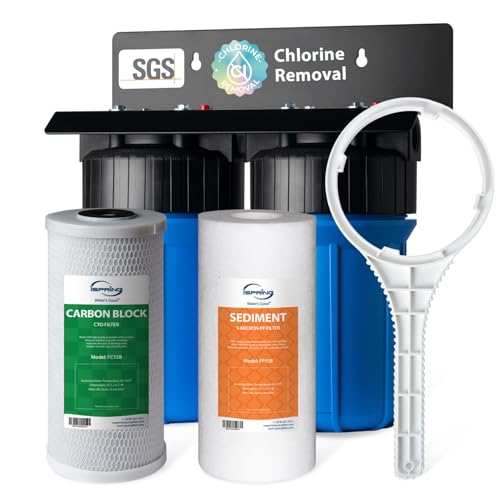
iSpring WGB21B 2-Stage Whole House Water Filtration System, with 10" x 4.5" Sediment CTO(Chlorine, Taste, and Odor) Filter, 1" Inlet/Outlet
- Two-Stage Filtration: Removes sediments, chlorine, odors, and VOCs
- High Capacity: Filters up to 50,000 gallons for a family of four
- Fast Water Flow: 1-inch inlet/outlet for reduced pressure loss
As an affiliate, we earn on qualifying purchases.
As an affiliate, we earn on qualifying purchases.
Conclusion
By starting with these simple steps, you’re gently guiding yourself toward better water quality without feeling overwhelmed. Think of filter sizing as a dance—once you understand the rhythm, it flows effortlessly. Remember, taking the time to choose the right size now can lead to smoother, more satisfying results later. With a little patience and attention, you’ll find yourself comfortably on your way to cleaner, clearer water, making every sip a small but meaningful victory.

iSpring WGB32BM Iron, Manganese Whole House Water Filter System
- Whole House Iron and Manganese Filter: Removes iron, manganese, sediment, chlorine, and more
- Long-lasting Catalytic Media: Up to 3 times longer than greensand
- Easy DIY Installation: Includes manual and YouTube guides
As an affiliate, we earn on qualifying purchases.
As an affiliate, we earn on qualifying purchases.
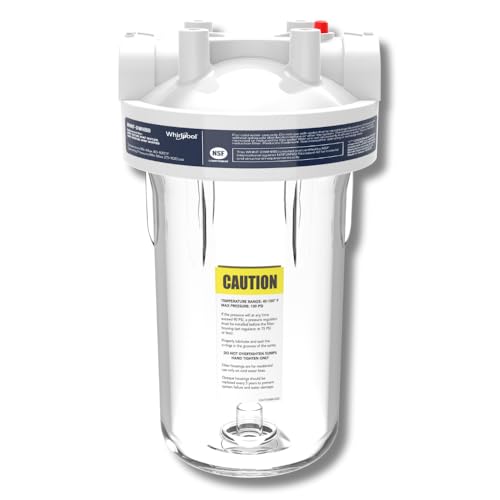
Whirlpool 10" x 4.5" Large Capacity Whole House Water Filter System WHKF-DWHBB, 1" Metal Port, Home Water Pre-Filtration for Well and City Water, Clear Housing, Timer Included for Replacement Filter
- Whole House Water Filtration: Provides clean water for entire home
- Durable Metal Ports: 1-inch stainless steel inlets for longevity
- Compatible with Filter Cartridges: Works with WHKF-GD25BB, WHWCBB, WHPLBB
As an affiliate, we earn on qualifying purchases.
As an affiliate, we earn on qualifying purchases.