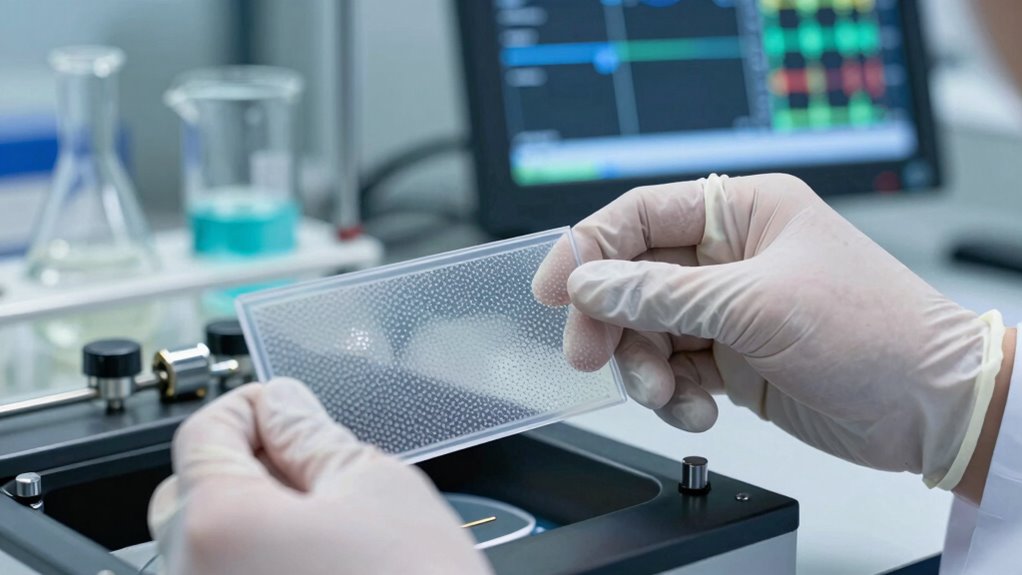

Contact time plays a hidden but essential role in improving filtration by allowing contaminants more interaction with the filter media. When you slow down flow or increase surface area, you give particles, bacteria, and pollutants more chances to be captured. Balancing flow rate and contact time guarantees that contaminants are thoroughly removed without sacrificing system efficiency. Keep exploring how optimizing contact time can reveal better filtration results and why it matters for your system’s performance.
Listen free for 30 days with Audible
Thousands of audiobooks and originals — cancel anytime.
As an affiliate, we earn on qualifying purchases.
Key Takeaways
- Contact time determines how long contaminants interact with filter media, directly affecting removal efficiency.
- Longer contact time improves adsorption and capture of particles, bacteria, and pollutants.
- Increasing flow rate reduces contact time, potentially lowering filtration effectiveness.
- Balancing flow rate and contact time is essential for optimal filtration performance.
- Enhancing contact time through media design or multi-stage systems boosts contaminant removal.
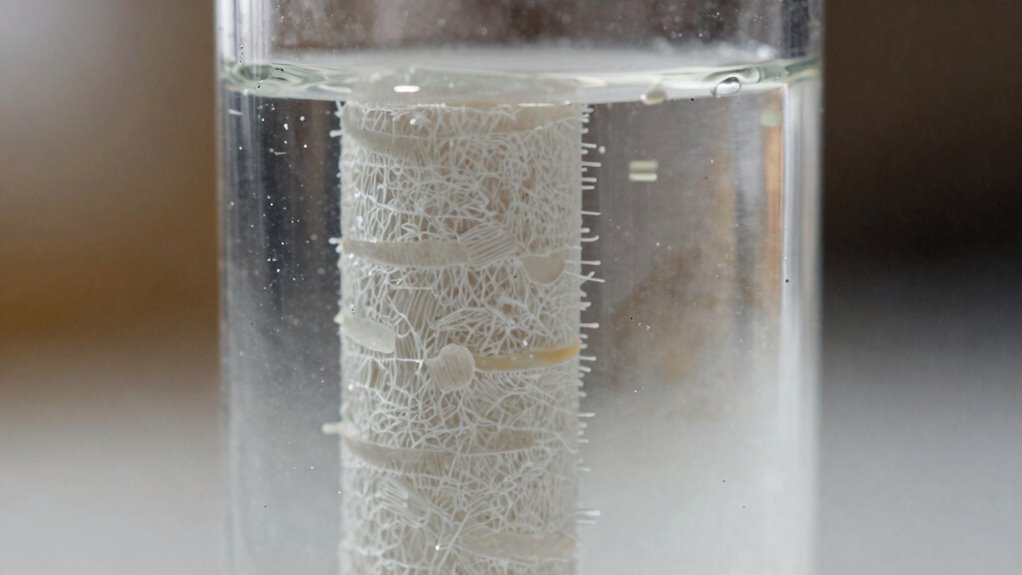
While many people focus on filter pore size or flow rate, they often overlook a critical factor: contact time. This is the period during which the contaminated fluid interacts with the filter media. It’s a subtle but powerful element that can *substantially* influence adsorption efficiency—the filter’s ability to remove contaminants effectively. When contact time is too short, even a well-designed filter with *ideal* pore size may underperform because contaminants don’t have enough opportunity to adhere to the media. Conversely, increasing contact time allows for more thorough interactions, boosting the filter’s capacity to trap particles, bacteria, or dissolved pollutants. Understanding flow rate dynamics is essential here. If fluid flows too quickly through the filter, the contact time diminishes, reducing adsorption efficiency. This means that contaminants might pass through unremoved, regardless of the filter’s pore size or material properties. On the other hand, slowing down the flow increases contact time, giving the media more opportunity to capture unwanted substances. However, there’s a practical balance: too slow, and the system becomes inefficient or impractical for everyday use. The key is *maximizing* flow rate to *guarantee* sufficient contact time without sacrificing throughput. Your goal should be to strike a balance that *maximizes* adsorption efficiency while maintaining an acceptable flow rate. This involves understanding the specific contaminants you’re targeting and selecting filters designed to hold contaminants longer during the filtration process. For example, some filters are engineered with increased surface area or specialized media to extend contact time without drastically decreasing flow rates. By doing this, you improve the chances for contaminants to interact with the filter media, making the filtration more effective overall. In real-world applications, controlling contact time may involve adjusting flow rates, increasing media surface area, or designing multi-stage filtration systems. Each approach enhances adsorption efficiency by giving contaminants ample opportunity to bind to the filter media. Recognizing the importance of filter media and its role in contact time can help optimize filtration performance. Additionally, incorporating appropriate filtration techniques can further enhance the overall process. An understanding of the flow rate and its impact on contact time is crucial for designing efficient filtration systems. Ultimately, recognizing the role contact time plays in filtration helps you make smarter choices, whether you’re designing a system or selecting a filter for personal use. It’s not just about pore size or flow rate; it’s about managing the interaction period to achieve cleaner, safer water or air. When you give your filter enough contact time, you *unlock* its full potential, *guaranteeing* contaminants are captured more thoroughly and your filtration system works at its best.
As an affiliate, we earn on qualifying purchases.
Frequently Asked Questions
How Does Contact Time Differ Across Various Filtration Media?
You’ll notice that contact time varies across filtration media because it depends on adsorption dynamics and flow rate. When flow rate is slow, contact time increases, allowing particles more opportunity to adhere to the media. Different materials have unique adsorption properties, affecting how long contaminants stay in contact. Faster flow rates reduce contact time, which can decrease filtration efficiency, especially with media that rely heavily on adsorption dynamics for capturing pollutants.
Can Adjusting Contact Time Improve Filtration Efficiency Without Changing Filter Media?
You can improve filtration efficiency by adjusting contact time without changing filter media. Increasing contact time, which depends on filter design and flow rate, allows particles more time to be captured. Did you know that a slight reduction in flow rate can boost filtration efficiency by up to 15%? By optimizing flow rate and filter design, you guarantee contaminants have enough contact time, leading to cleaner air or water without needing new media.
What Are Common Misconceptions About Contact Time in Filtration Systems?
Many believe longer contact time always improves filtration, but that’s a misconception. Excessively long contact can lead to filter saturation, reducing efficiency, and promote microbial growth, which can compromise water quality. You should aim for a suitable contact time tailored to your system, balancing filtration and preventing issues like microbial buildup. Proper maintenance and monitoring ensure you avoid these common pitfalls, keeping your filtration system effective and safe.
How Does Contact Time Influence the Lifespan of a Filter?
Contact time influences your filter’s lifespan by enhancing filtration dynamics and ensuring media compatibility. When contact time is optimized, particles are captured more effectively, reducing clogging and strain on the system. This not only maintains filter efficiency but also extends its life. Conversely, insufficient contact time accelerates media degradation, causing the filter to need replacement sooner. So, controlling contact time is key to maximizing filter durability and performance.
Are There Industry Standards for Optimal Contact Time in Filtration Processes?
Yes, industry standards exist for ideal contact time in filtration processes. You should consider filtration chemistry and system optimization to determine the optimal contact time, ensuring efficient contaminant removal without overburdening the filter. These standards vary depending on the application and filter type, but generally, adjusting contact time improves filtration performance and lifespan. Consulting manufacturer guidelines and industry protocols helps you achieve the best balance for your system.
As an affiliate, we earn on qualifying purchases.
Conclusion
Understanding contact time is like giving your filter a chance to truly work its magic. When you allow enough time for filtration, particles settle out more effectively, much like a busy bee taking the time to gather nectar. By paying attention to this hidden factor, you boost your filtration’s performance and enjoy cleaner, healthier water or air. So, don’t rush the process—think of contact time as the secret ingredient to better filtration results.
activated carbon filter with increased surface area
As an affiliate, we earn on qualifying purchases.
As an affiliate, we earn on qualifying purchases.
industrial water filtration media
As an affiliate, we earn on qualifying purchases.
As an affiliate, we earn on qualifying purchases.
NFL season / tailgating Picks
team gear
As an affiliate, we earn on qualifying purchases.