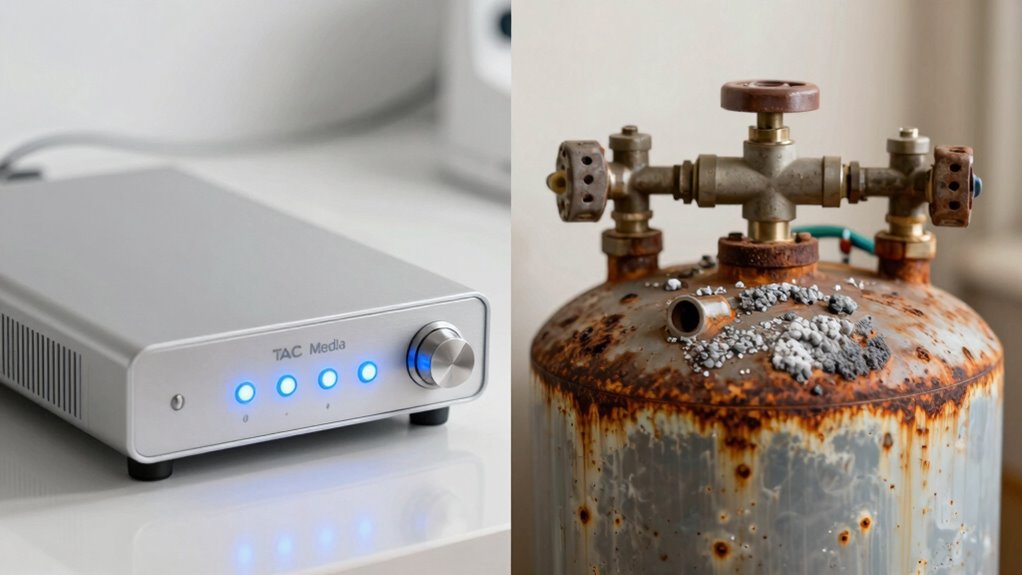

TAC media and traditional softening systems all tackle water problems differently. Traditional softeners mainly remove calcium and magnesium to prevent scale, making them ideal for residential use. In contrast, TAC media reduces reliance on salt, lowers environmental impact, and improves operational efficiency, especially in industrial settings. They address different priorities—cost, sustainability, or water quality. If you want to explore how each technology fits your needs and their future trends, keep exploring further.
Listen free for 30 days with Audible
Thousands of audiobooks and originals — cancel anytime.
As an affiliate, we earn on qualifying purchases.
Key Takeaways
- TAC media uses a different regeneration process that reduces salt use, addressing environmental concerns traditional softening cannot.
- Traditional systems primarily remove hardness minerals, while TAC can incorporate advanced filtration for broader water treatment.
- TAC systems are designed for industrial or large-scale applications, offering cost savings and sustainability advantages over conventional softening.
- Conventional systems produce brine waste and require ongoing salt purchases, which TAC systems minimize or eliminate.
- Technological integration in TAC systems enhances water quality and operational efficiency, unlike traditional softening methods.
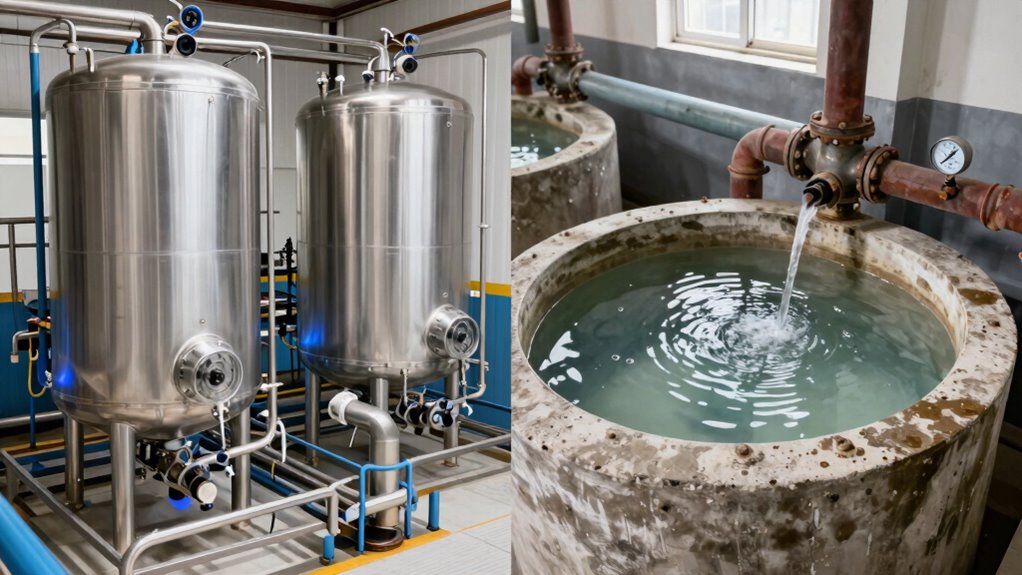
When it comes to water softening, TAC media offers a modern alternative to traditional softening methods, providing efficient and eco-friendly solutions. Unlike conventional systems that rely heavily on salt-based ion exchange, TAC media uses a different approach, which significantly impacts both environmental concerns and operational costs. You’ll find that TAC systems are designed to minimize the environmental impact by reducing or eliminating the need for salt, making them a greener choice overall. Traditional softening methods often produce brine waste, which can pose environmental challenges, especially when discharged into local water sources. In contrast, TAC media’s resin is regenerated using a simpler process, often involving just a cleaning solution that’s less harmful and more sustainable. This not only helps protect the environment but also aligns with increasingly strict regulations on waste disposal and water quality. Additionally, TAC media systems often incorporate advanced water treatment technologies that enhance overall system efficiency and water quality. These innovations contribute to sustainable water management, which is increasingly important in today’s environmentally conscious landscape. Water softening is a crucial process for many industries, and understanding the different methods helps in selecting the most suitable option. Cost efficiency is another key advantage that makes TAC media appealing for many applications. Conventional softening systems demand ongoing expenses for salt, water, and maintenance, which add up over time. You might find yourself consistently purchasing salt pellets, managing backwashing cycles, and dealing with the disposal of brine waste, all of which increase operational costs. TAC media reduces or eliminates these costs because it requires less frequent regeneration and fewer consumables. Over the long term, this translates into significant savings, especially in large-scale or industrial settings. Plus, since TAC systems are designed to be low-maintenance, you spend less time and money on upkeep and repairs. The initial investment may be comparable, but the ongoing savings in salt, water, and labor make TAC media a more cost-effective choice in many cases. Moreover, as water treatment technologies continue to evolve, TAC systems are increasingly integrating advanced filtration methods to further improve water quality and system longevity. Incorporating innovative technologies into TAC systems is also helping to optimize their performance and reduce environmental impact even further. However, it’s important to recognize that TAC media and traditional softening serve different purposes. Traditional systems excel at removing hardness-causing minerals like calcium and magnesium from water, making them ideal for residential use where water quality standards are high. TAC media, on the other hand, is better suited for situations where environmental impact and cost-efficiency are top priorities, such as in industrial or commercial settings that require water treatment on a larger scale. While traditional softening provides a straightforward solution for improving water quality, TAC media offers a sustainable and economical alternative that tackles the environmental and financial challenges associated with conventional systems. Understanding these differences helps you choose the right solution based on your specific needs, whether it’s for a home, business, or industrial operation.
TAC media water softening system
As an affiliate, we earn on qualifying purchases.
As an affiliate, we earn on qualifying purchases.
Frequently Asked Questions
How Do TAC Media and Traditional Softeners Impact Water Taste?
TAC media and traditional softeners both influence water taste, but in different ways. TAC media enhances taste by selectively removing chlorine and organic compounds, offering better taste enhancement. It also retains beneficial minerals, maintaining water’s natural mineral profile. Traditional softeners primarily remove calcium and magnesium, which can sometimes lead to a flatter taste. So, TAC media generally provides a more balanced, better-tasting water experience by focusing on taste and mineral retention.
Are TAC Media Systems More Environmentally Friendly Than Traditional Softening Methods?
Yes, TAC media systems are more environmentally friendly than traditional softening methods. They serve as eco-friendly alternatives by providing chemical-free solutions, reducing the need for salt or chemicals that can harm the environment. With TAC media, you avoid chemical discharge and minimize waste, making it a sustainable choice. If you’re looking for a greener option that still effectively softens water, TAC media systems are an excellent, eco-conscious choice.
Can TAC Media Be Used for Industrial Water Treatment Applications?
Yes, you can use TAC media for industrial water treatment applications. It offers excellent industrial scalability, handling large volumes efficiently. Additionally, TAC media is chemically compatible with various water chemistries, making it versatile for different industries. You’ll find it effective in removing dissolved solids and contaminants, providing a sustainable and reliable solution for your water treatment needs. Its adaptability guarantees it meets the demands of complex industrial water treatment systems.
What Maintenance Is Required for TAC Media Compared to Traditional Softeners?
Imagine your water system running smoothly like a well-oiled machine—that’s what TAC media offers. You’ll enjoy a longer media lifespan and less frequent regeneration compared to traditional softeners. With TAC, you’ll only need to regenerate occasionally, saving time and effort. Traditional softeners demand constant attention, with frequent regeneration that feels like chasing your tail. Choose TAC media for low-maintenance, long-lasting water treatment that keeps your system performing at peak levels.
How Do Costs Compare Between TAC Media and Traditional Water Softening Options?
You’ll find TAC media often offers better cost efficiency over traditional softening options, mainly due to its longer lifespan and lower maintenance needs. While the upfront costs might be higher, its system durability means fewer replacements and repairs, saving you money in the long run. This makes TAC media a smarter investment if you’re seeking a cost-effective, reliable water softening solution that minimizes ongoing expenses.
salt-free water softener for industrial use
As an affiliate, we earn on qualifying purchases.
As an affiliate, we earn on qualifying purchases.
Conclusion
Remember, different tools solve different problems. TAC media and traditional softening each have their own strengths and best uses, so don’t try to fit a square peg into a round hole. As the saying goes, “You can’t use a sledgehammer to crack a nut.” By understanding their unique roles, you’ll make smarter choices, ensuring your solutions are effective and efficient. Choose wisely, and you’ll always hit the mark.
advanced water filtration system
As an affiliate, we earn on qualifying purchases.
As an affiliate, we earn on qualifying purchases.
eco-friendly water treatment system
As an affiliate, we earn on qualifying purchases.
As an affiliate, we earn on qualifying purchases.
NFL season / tailgating Picks
team gear
As an affiliate, we earn on qualifying purchases.