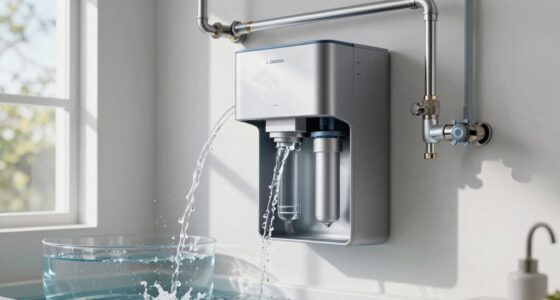

Micron ratings often mislead buyers because they only indicate the size of particles a filter can trap, not how well it performs over time or its overall effectiveness. They don’t account for filtration efficiency, material quality, or design features that impact real-world performance. A lower micron rating isn’t always better, and higher ratings can still be effective with the right materials. To truly understand a filter’s performance, you need to take into account manufacturing standards, certifications, and design elements—more details uncover what’s truly important.

Get home appliances delivered free with Prime
- Fast, free delivery on millions of items
- Prime Video, Amazon Music and more included
- Member-only deals all year
Key Takeaways
- Micron ratings only indicate particle size, not overall filtration efficiency or performance over time.
- Higher micron ratings can still provide effective filtration when combined with layered or specialized materials.
- Manufacturing quality and standards significantly impact a filter’s reliability, regardless of micron rating.
- Certifications and industry standards better reflect a filter’s true performance than micron size alone.
- Overall filtration effectiveness depends on design, materials, and durability, not just the micron rating.
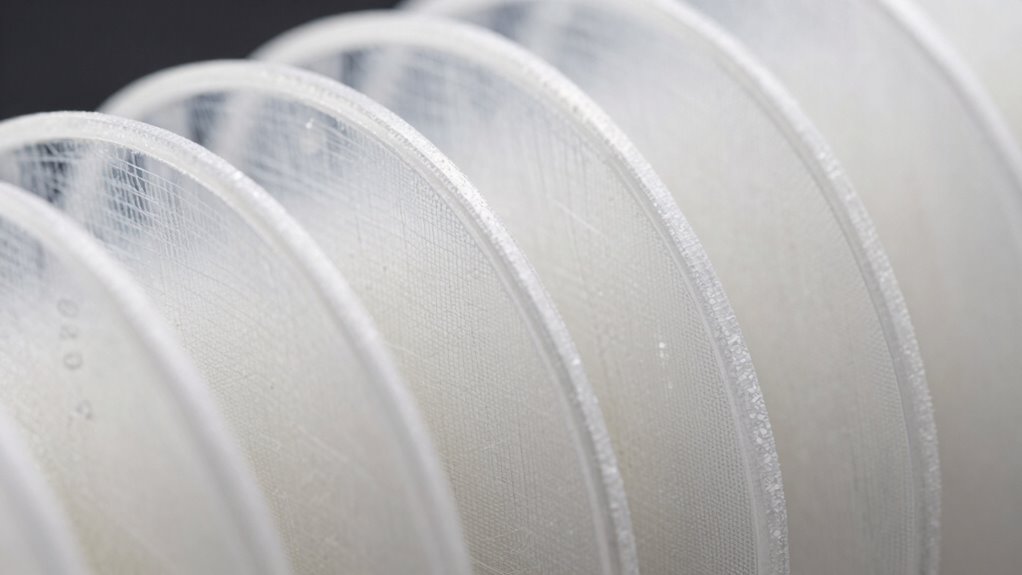
Many buyers assume that a lower micron rating means better filtration, but in reality, this can be misleading. The micron rating simply indicates the size of particles a filter can trap, but it doesn’t tell you everything about how well the filter performs. Filtration efficiency depends on more than just particle size; it involves how effectively the filter captures contaminants across its entire lifespan. A filter with a very low micron rating might seem superior because it promises to block tiny particles, but if it’s poorly manufactured or doesn’t meet certain standards, it may not deliver the level of protection you expect. Manufacturing standards play a vital role here. When filters are produced to high standards, they’re designed to maintain consistent pore sizes, ensuring the filtration efficiency remains steady over time. Conversely, filters made with lower quality materials or lax manufacturing processes can have fluctuating pore sizes, which means their actual filtering ability can be much less reliable than the micron rating suggests. This discrepancy often leads buyers to believe they’re getting a superior product when, in fact, they’re not. It’s also essential to realize that micron ratings are only part of the story. Some filters with higher micron ratings can still provide excellent filtration if they incorporate multiple layers or specialized materials that trap particles more effectively. Conversely, a filter with a low micron rating isn’t automatically better if it’s not designed or manufactured properly. The key is to look beyond the number and consider the overall filtration efficiency, which depends heavily on the quality of materials and adherence to manufacturing standards. Additionally, understanding the manufacturing process behind filters can help buyers make more informed choices, as it influences the consistency and reliability of the filtration performance over time. Manufacturing quality and adherence to standards can significantly impact the actual effectiveness of a filter. When shopping for filters, don’t be seduced solely by the micron rating. Instead, investigate the manufacturer’s reputation and whether the filter meets industry standards. Certifications from reputable organizations can give you confidence that the product has been tested for performance and safety. Keep in mind that a filter’s effectiveness isn’t just about the size of particles it can block; it’s about how well it maintains its performance over time and under different conditions. Evaluating filter materials and their durability can also provide insight into how well a filter will perform in real-world scenarios. Recognizing the importance of Manufacturing standards can help you choose filters that are both reliable and effective in the long run.
high quality air purifier filters
As an affiliate, we earn on qualifying purchases.
As an affiliate, we earn on qualifying purchases.
Frequently Asked Questions
How Do Micron Ratings Compare Across Different Filter Brands?
You’ll find that micron ratings vary across filter brands because of differences in filter material and pore size. One brand’s 5-micron filter might be more effective than another’s, depending on the filter’s construction. Always check the pore size and filter material, as these factors determine how well the filter captures particles. Don’t depend solely on micron ratings; compare the actual filter specifications to make sure you get the performance you need.
Can a Lower Micron Rating Guarantee Better Filtration?
In the age of filtration myths, a lower micron rating doesn’t always guarantee better filtration. You might think it’s a foolproof rule, but micron misconceptions can be misleading. A filter with a very low rating may clog faster or miss larger particles, so it’s not just about size. Focus on the filter’s design and application to make sure it meets your needs, rather than just chasing the smallest micron rating.
What Factors Influence a Filter’s Actual Performance?
Your filter’s actual performance depends on several factors rooted in filtration science and particle size. While micron ratings matter, the filter’s material, pore structure, and construction also play essential roles. Smaller particles require more precise filtration media, but if the filter isn’t properly maintained or if it has weak construction, its effectiveness drops. So, it’s important to take these factors into account, not just micron ratings, for reliable filtration results.
Are There Alternative Metrics to Micron Ratings?
Yes, there are alternative metrics to micron ratings that improve filtration accuracy and boost consumer awareness. You should look for data on filter efficiency, such as MERV ratings, which measure a filter’s ability to trap particles of different sizes. Additionally, check for statements about real-world testing results and manufacturer transparency. These metrics give you a clearer picture of a filter’s actual performance, helping you make smarter buying decisions.
How Do Real-World Conditions Affect Filter Efficiency?
Real-world conditions turn filter efficiency into a wild ride, like a boat on choppy waters. Particle aggregation clumps particles together, making filters work differently than in lab tests. Flow dynamics also change as debris blocks pathways or clogs develop, reducing filtration effectiveness. So, even if a filter has a great micron rating, these factors can cause it to underperform, proving that real-world performance depends on natural conditions, not just specs.
As an affiliate, we earn on qualifying purchases.
Conclusion
So, next time you’re choosing a filter, don’t just rely on the micron rating alone. Remember, over 60% of consumers are misled by these numbers, thinking smaller is always better. But filtration efficiency depends on many factors, like flow rate and filter material, not just micron size. By understanding this, you’ll make smarter choices and avoid unnecessary costs. Ultimately, informed decisions keep your systems running smoothly and save you money in the long run.
As an affiliate, we earn on qualifying purchases.
As an affiliate, we earn on qualifying purchases.
Fall yard work Picks
leaf blowers
As an affiliate, we earn on qualifying purchases.