

If nitrate levels are high and persistent, simple filters like activated carbon or ion exchange often won’t cut it, especially when contamination comes from deeply rooted aquifer issues. These methods may temporarily improve taste or reduce some contaminants but don’t fully eliminate nitrates. In such cases, reverse osmosis (RO) is your best choice because it uses membranes to thoroughly remove nitrates and solids. To understand why RO is essential for complex contamination, keep exploring the details ahead.
Get ready for Prime Big Deal Days — try Prime free
Exclusive member deals on October 6–7, plus fast free delivery. Cancel anytime.
As an affiliate, we earn on qualifying purchases.
Key Takeaways
- Elevated nitrate levels from persistent aquifer contamination often exceed the capacity of simple filtration methods.
- Simple filters only temporarily reduce nitrates and fail to address ongoing nitrate cycling in groundwater sources.
- Reverse osmosis effectively removes high nitrate concentrations, ensuring safe, potable water in contaminated areas.
- Widespread or deep-rooted aquifer contamination requires comprehensive treatment systems like RO for reliable removal.
- When health risks persist despite basic filtration, implementing RO is necessary for thorough nitrate reduction.
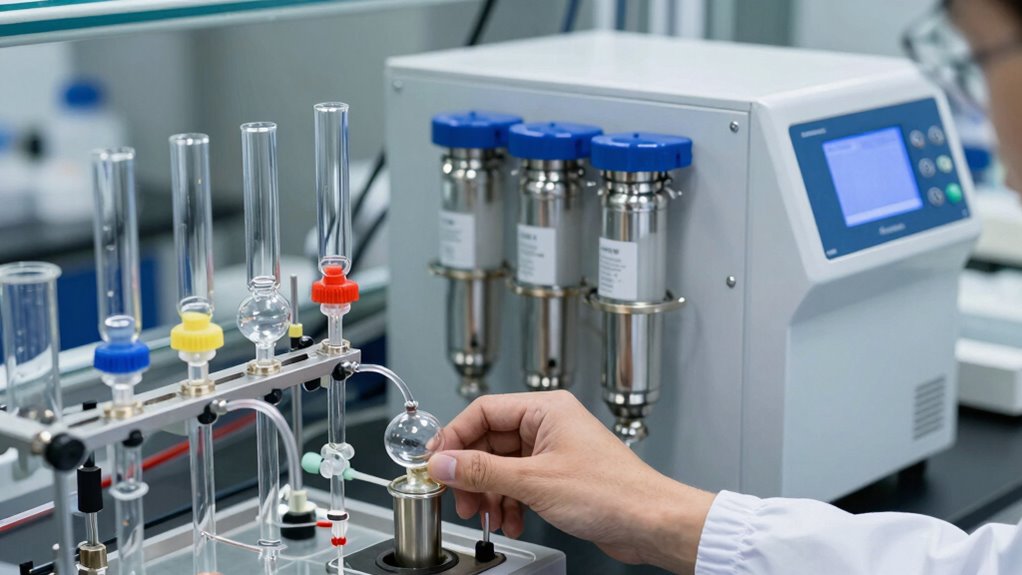
Nitrate contamination in water sources poses significant health risks, prompting the need for effective removal methods. When testing your water, you might notice elevated nitrate levels, which often indicate deeper issues like aquifer contamination. This contamination is usually the result of agricultural runoff, sewage leaks, or improper waste disposal, all of which introduce nitrates into underground water sources. Understanding the process of nitrate cycling helps clarify why these nitrates persist in aquifers, making simple filtration inadequate. Nitrates are highly soluble and can travel long distances through groundwater, gradually accumulating over time. Once they reach your water supply, they can pose serious health risks, especially for infants and pregnant women.
Nitrate contamination in water poses health risks; simple filters often fail to address persistent aquifer pollution effectively.
If you’re considering nitrate reduction, you might initially think of simpler fixes like activated carbon filters or ion exchange systems. While these methods can help reduce nitrates to some degree, they often fall short in addressing the root cause—namely, aquifer contamination. These systems may improve water taste and reduce some contaminants, but they rarely eliminate nitrates completely when the source remains active. In cases where nitrate levels are high due to ongoing nitrate cycling in the environment, a more robust solution becomes necessary. That’s where reverse osmosis (RO) comes into play.
Reverse osmosis offers a highly effective way to remove nitrates, especially when contamination is widespread and persistent. Unlike simpler methods, RO membranes force water through a semi-permeable barrier, leaving nitrates, along with other dissolved solids, behind. This process effectively reduces nitrate concentrations to safe levels, making your water potable again. Additionally, aquifer contamination can be difficult to remediate once it has spread extensively, emphasizing the importance of choosing a comprehensive filtration system. Because aquifer contamination can be extensive and deeply rooted, relying solely on basic filters can be insufficient. Instead, you’ll need a properly designed RO system that can handle the high nitrate load and prevent the contaminated water from bypassing filtration.
Moreover, if contamination stems from ongoing nitrate cycling—where nitrates are continuously released from soil or waste sources into the groundwater—your water treatment needs to be both thorough and sustainable. Reverse osmosis systems are capable of doing just that, capturing the nitrates before they reach your tap. Keep in mind that while RO systems are more complex and costly than simpler filters, they are often the most reliable solution when dealing with aquifer contamination. They provide peace of mind, knowing that your water has undergone rigorous purification, effectively breaking the cycle of nitrate persistence in your water supply. Additionally, understanding groundwater contamination can help you better assess the necessity of advanced filtration solutions like RO. Properly addressing nitrate cycling requires a comprehensive approach that considers both treatment and source control.
reverse osmosis water filter system
As an affiliate, we earn on qualifying purchases.
As an affiliate, we earn on qualifying purchases.
Frequently Asked Questions
How Long Does Nitrate Reduction Typically Take With RO Systems?
Nitrate reduction with RO systems usually takes a few hours to a day, depending on water volume and system size. You should start by identifying nitrate sources and conducting water testing to confirm levels. Once the system runs, it continuously removes nitrates, but regular testing guarantees peak performance. Keep in mind, maintenance and filter replacement are key to effective nitrate reduction over time.
Can Nitrate Reduction Be Achieved Without Installing a Reverse Osmosis System?
Yes, you can achieve nitrate reduction without installing an RO system by using alternative filtration and chemical treatment methods. Activated carbon filters can reduce some nitrates, but their effectiveness is limited. Chemical treatments, like adding certain reducing agents, can help lower nitrate levels. However, these methods may not be as reliable or thorough as RO, so consider testing your water regularly to guarantee safety and compliance with health standards.
What Are the Long-Term Maintenance Costs for Nitrate-Reducing RO Units?
You’ll find that long-term costs for nitrate-reducing RO units include regular expenses for chemical filtration and water softening maintenance. Over time, expect to replace filters, membranes, and add chemicals to keep the system efficient. Though these costs can add up, investing in proper upkeep guarantees your water remains safe and pure. Staying proactive with maintenance helps avoid more costly repairs and keeps your water quality consistently high.
Are There Specific Water Conditions That Favor Nitrate Reduction Over Other Methods?
Water chemistry and nitrate sources influence whether nitrate reduction favors RO systems over simpler methods. If your water has high nitrate levels combined with specific chemistry, like low pH or high TDS, reverse osmosis becomes more effective. Conversely, if nitrate sources are sporadic or chemistry is ideal, simpler approaches might suffice. Always analyze your water chemistry first to determine the most suitable nitrate reduction method for your situation.
How Does Nitrate Reduction Impact Overall Water Taste and Quality?
Nitrate reduction acts like a filter in your water’s symphony, improving taste and quality. It balances water pH and mineral content, making your water crisper and more invigorating. If left unchecked, excess nitrates can cause a metallic or salty taste, affecting overall quality. Proper reduction ensures your water remains clean, safe, and enjoyable, maintaining the perfect harmony of mineral balance and pH that keeps your water tasting its best.
As an affiliate, we earn on qualifying purchases.
Conclusion
In steering nitrate reduction, remember that sometimes, seeking simpler solutions isn’t sufficient; instead, shift your focus to more robust, resilient RO systems. Recognize when to revisit and refine your approach, rather than settle for shortcuts. By embracing better barriers and bold backups, you build a balanced, buoyant boundary against contaminants. Stay strategic, stay steadfast—success stems from smart, sustained solutions that serve your system well beyond the surface.
whole house RO water filtration system
As an affiliate, we earn on qualifying purchases.
As an affiliate, we earn on qualifying purchases.
aquifer contamination water filter
As an affiliate, we earn on qualifying purchases.
As an affiliate, we earn on qualifying purchases.
NFL season / tailgating Picks
team gear
As an affiliate, we earn on qualifying purchases.