
If you’re experiencing low water pressure after installing a filter, start by checking that the filter housing is installed correctly and all fittings are tight and aligned. Make sure the filter isn’t clogged or dirty, and verify that all valves are fully open. Inspect for any blockages in the plumbing lines and ensure the pressure regulator is functioning properly. Small adjustments or proper maintenance can often restore flow, so continue exploring these steps for a solution.

Get home appliances delivered free — and shop member deals
- Fast, free delivery on millions of items
- Access to Prime Big Deal Days deals on October 6–7
- Prime Video, Amazon Music and more included
Key Takeaways
- Check that the filter housing and fittings are properly installed, tightened, and aligned without leaks.
- Inspect the filter cartridge for clogs or dirt and replace or clean it as needed.
- Verify all valves are fully open and no blockages exist in pipes or connections.
- Ensure the pressure regulator is functioning correctly and adjust it if necessary.
- Consider installing a booster pump if low water pressure persists after maintenance.
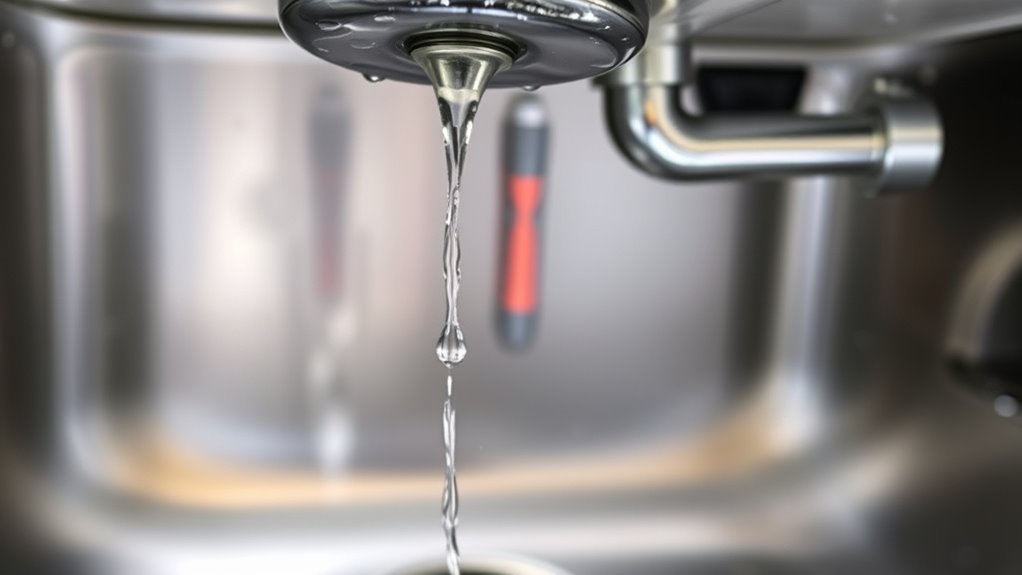
If you’ve just installed a water filter and notice a drop in water pressure, you’re not alone. Many people experience this issue right after filter installation. It’s a common problem caused by changes in the plumbing system that can affect water flow. The good news is, most of the time, it’s fixable with a few simple steps. The key is understanding how filter installation impacts pressure regulation and what adjustments you can make to restore normal flow.
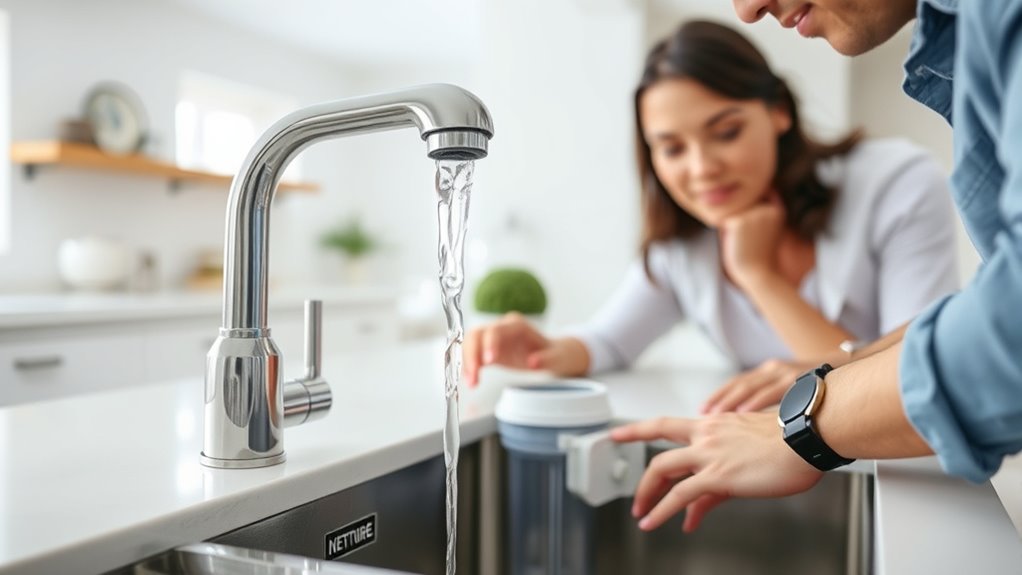
First, check if the filter housing is installed correctly. Sometimes, during filter installation, parts aren’t tightened properly or are misaligned, causing restrictions that reduce water pressure. Turn off your water supply before inspecting the connection points, and ensure that all fittings are secure and free of leaks. If the filter cartridge isn’t seated properly, it could also impede flow. Remove and reseat the filter cartridge, making sure it fits snugly and correctly according to the manufacturer’s instructions. Proper installation is vital for pressure regulation; any gaps or misalignments can considerably affect water flow.
Next, consider the possibility that the filter itself might be clogged or dirty. Over time, filters trap debris and sediments, which can restrict water flow even after a fresh installation. If you’re installing a new filter, double-check that the cartridge is clean and free of obstructions. For existing filters, replacing the cartridge with a new one often restores pressure. Regular maintenance of your filter system helps prevent pressure drops caused by buildup inside the filter media.
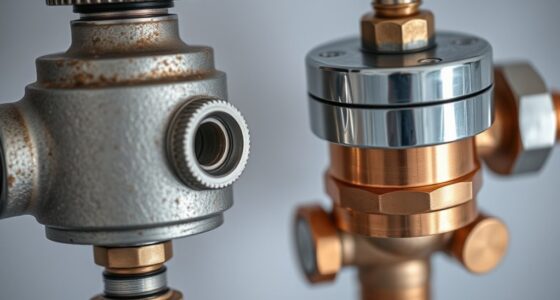
Sometimes, the issue isn’t with the filter but with the overall plumbing setup. Installing a new filter can increase resistance in the system, especially if your home’s water pressure is already low. To address this, you might need to adjust pressure regulation devices or install a booster pump to increase flow. If your home has a pressure regulator, verify that it’s functioning correctly. A malfunctioning regulator can cause low pressure downstream, which becomes more noticeable after filter installation due to additional resistance.
Additionally, understanding the importance of pressure regulation can help you diagnose and resolve flow issues more effectively. Lastly, check for any blockages or closed valves in your plumbing line. Sometimes, during filter installation, a valve may be accidentally turned off or partially closed, restricting water flow. Ensure that all valves are fully open and that there are no obstructions in the pipes leading to your filter. Proper pressure regulation is essential for smooth water flow, and small adjustments can often fix the problem.
water filter housing replacement
As an affiliate, we earn on qualifying purchases.
As an affiliate, we earn on qualifying purchases.
Frequently Asked Questions
Can a Water Softener Cause Low Water Pressure?
A water softener can cause pressure reduction, leading to low water pressure. When the softener’s resin tank or mineral tank becomes clogged or overfilled, it restricts water flow. Additionally, if the system isn’t properly maintained or if the flow rate exceeds the softener’s capacity, you may notice decreased pressure. Regular maintenance and checking for blockages guarantee your water softener doesn’t negatively impact your water pressure.
How Long Does It Take for Pressures to Stabilize After Filter Installation?
Imagine water flowing smoothly through your pipes again—pressure stabilization usually happens within 24 to 48 hours after filter installation. During this filter installation time, you might notice fluctuating pressure as air and debris clear out. Keep an eye on your water pressure during this period, and if it doesn’t stabilize after a couple of days, check for additional blockages or leaks. Patience guarantees your system settles into ideal flow.
Are Certain Filter Types More Likely to Reduce Water Pressure?
Yes, certain filter materials and designs are more likely to reduce water pressure. For example, filters with dense or multi-layer filter media can restrict flow more than those with simpler or larger-pored materials. Additionally, complex filter designs with multiple stages may cause more pressure drop. To minimize this, choose filters with appropriate materials and streamlined designs, ensuring they effectively clean your water without compromising flow.
Does Pipe Size Affect Water Pressure After Installing a Filter?
Imagine you’re in a vintage movie scene, and pipe size definitely impacts water pressure after installing a filter. Smaller pipe diameters restrict flow, causing pressure drops, while larger ones maintain better flow. Both pipe diameter and pipe material influence this; rigid pipes like copper keep pressure steady, whereas flexible plastic might cause slight reductions. Ensuring your pipe diameter matches your system’s needs helps restore ideal water pressure efficiently.
Is It Normal to Experience Pressure Fluctuations During Filter Maintenance?
Yes, it’s normal to experience pressure fluctuations during filter maintenance. When you clean or replace the filter, debris gets disturbed, temporarily reducing flow and causing fluctuations. As the filter clears, pressure should stabilize. During maintenance, verify valves are correctly opened and closed to avoid sudden pressure drops. If fluctuations persist long after maintenance, check for blockages or issues with your plumbing system to prevent ongoing pressure problems.
As an affiliate, we earn on qualifying purchases.
Conclusion
Think of your plumbing like a garden hose: when a filter is added, it’s like narrowing the nozzle—sometimes, water struggles to flow freely. But with a little adjustment, you can clear the path and restore the flow. Just as a gardener clears debris for a healthy bloom, you’ll clear your filter’s restrictions. Soon, your water will flow strong and steady again, turning your home’s plumbing into a thriving, well-nourished stream.
pressure regulator for home plumbing
As an affiliate, we earn on qualifying purchases.
As an affiliate, we earn on qualifying purchases.
water filter cartridge replacement
As an affiliate, we earn on qualifying purchases.
As an affiliate, we earn on qualifying purchases.
Fall yard work Picks
leaf blowers
As an affiliate, we earn on qualifying purchases.