
To quickly clear trapped air from your faucet, first turn off your main water supply. Open all faucets to drain remaining water, then close them. Carefully turn the water back on, starting with the faucet in question, to let air escape. If sputtering persists, remove the aerator and flush out debris or air pockets. For more effective tips and solutions, explore the detailed steps that follow to restore steady water flow easily.
Key Takeaways
- Turn off the water supply, open faucets to drain residual water, then slowly reopen to release trapped air.
- Remove and clean faucet aerators or screens to eliminate debris and mineral buildup causing airflow issues.
- Attach a pressure gauge to an outdoor faucet or nearby sink to verify water pressure and adjust if needed.
- Install or adjust a pressure regulator to maintain steady water pressure and prevent air entrapment.
- Flush pipes by opening all faucets to dislodge trapped air and clear mineral deposits quickly.
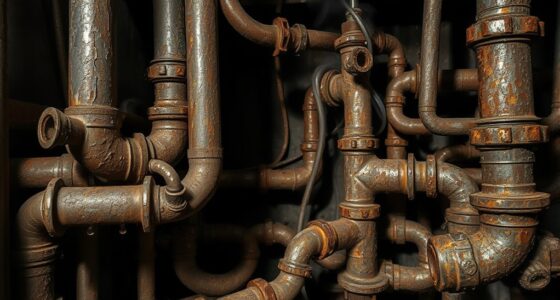
If your faucet starts sputtering, it can be both annoying and concerning. You might notice inconsistent water flow, strange noises, or sudden bursts of air disrupting your usual water stream. This issue often stems from trapped air in your plumbing system, which can cause water to sputter or spurt unexpectedly. The good news is that it’s usually a quick fix, and understanding the root causes can help you prevent future problems. One common reason for sputtering is fluctuations in water pressure, especially if your home’s water pressure is inconsistent or too high. When water pressure spikes or drops suddenly, it can cause air to become trapped in the pipes, leading to these sputtering episodes. Additionally, pipe corrosion can contribute to the problem. Over time, pipes—particularly those made of metal—may corrode from mineral buildup or chemical reactions, creating rough or uneven surfaces inside the pipe walls. These rough surfaces can trap air pockets or cause turbulence in the flow, which results in sputtering at your faucet.
To address this issue, the first step is to identify if water pressure is the culprit. You can do this by attaching a pressure gauge to your outdoor faucet or a nearby sink. If the pressure exceeds recommended levels—generally around 60 psi—it’s worth installing a pressure regulator or adjusting your existing one to maintain a steady, safe pressure. Doing so reduces the chances of air getting trapped and minimizes stress on your pipes, helping prevent further corrosion. If pipe corrosion is suspected, especially if you notice discoloration, leaks, or reduced water flow, it’s essential to consider replacing affected pipes. Corrosion not only causes sputtering but also weakens your plumbing system over time, risking leaks or bursts.
Another quick fix involves flushing your pipes. Turn off your main water supply, open your faucets to drain residual water, and then turn the supply back on slowly. This process can help dislodge trapped air and clear out mineral buildup that might interfere with water flow. If sputtering persists, try removing and cleaning your aerator or faucet screen, as debris or mineral deposits can trap air or obstruct flow paths. Regular maintenance, like replacing corroded pipes and installing pressure regulators, can go a long way in preventing ongoing sputtering issues. Moreover, considering the use of home theater projectors for entertainment spaces can improve your overall home environment, making it more enjoyable while you troubleshoot plumbing problems. Remember, if you’re unsure about inspecting your plumbing or tackling corrosion, consulting a professional plumber can save you time and prevent further damage. Addressing water pressure issues and pipe corrosion promptly will help restore a steady, quiet flow to your faucets, making your daily routines smoother and more comfortable.
Frequently Asked Questions
Can Trapped Air Cause Permanent Damage to My Faucet?
Trapped air in your faucet usually won’t cause permanent damage, but it can lead to corrosion over time if not addressed. Proper plumbing maintenance helps prevent issues like faucet corrosion, which can weaken parts and cause leaks. If you notice persistent sputtering or corrosion, consider inspecting your plumbing system and flushing out trapped air regularly. Addressing these issues early can extend your faucet’s life and avoid costly repairs.
How Often Should I Flush My Faucet to Prevent Sputtering?
Think of your faucet as a garden hose that needs regular flushing to prevent air accumulation from causing sputtering. You should flush your faucet every few months, especially if you notice inconsistent flow or noise. Regular faucet maintenance helps keep water flowing smoothly and prevents trapped air from building up. By staying proactive, you ensure your faucet remains in good shape, free of sputtering and ready for use whenever you need it.
Is There a Specific Tool to Remove Trapped Air?
You don’t need a special tool to remove trapped air from your faucet. Instead, try using air release valves or faucet depressurization tools, which help release air pockets quickly. These devices connect to your faucet and allow air to escape, stopping sputtering. If you don’t have them, simply turning off the water, opening the faucet to release pressure, and then turning it back on can also do the trick effectively.
Does Water Pressure Affect How Quickly Air Gets Trapped?
Ever wonder if water pressure secretly conspired to trap air? Well, it does! Higher water pressure can actually push more air into your faucet, making air entrapment worse. So, next time your sink sputters like a broken record, remember: cranking up the pressure might be part of the problem. Lowering it slightly can help air escape faster, giving you that smooth, drip-free flow you crave.
Are Certain Faucet Brands More Prone to Sputtering?
Some faucet brands are more prone to sputtering due to manufacturing defects or lower reliability standards. You might notice cheaper or less reputable brands often have more issues with trapped air, causing sputtering. To reduce this, choose brands known for quality and durability. Investing in reliable brands minimizes the chances of manufacturing defects, which can lead to air getting trapped and causing sputtering. Always read reviews before purchasing to guarantee your faucet’s brand reliability.
Conclusion
When your faucet sputters like a trapped ghost, remember it’s just air trying to find its way out. Clearing it is like releasing a bottled storm, allowing clear water to flow freely again. Don’t ignore the signs—they symbolize your home’s quiet need for attention and care. Once the air escapes, your faucet’s voice will be steady and true, symbolizing harmony restored. Embrace the process, and let your plumbing be a mirror of balance within your home.