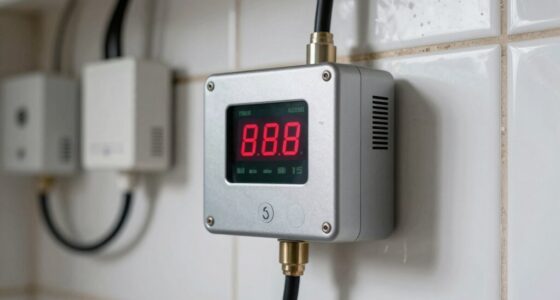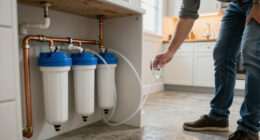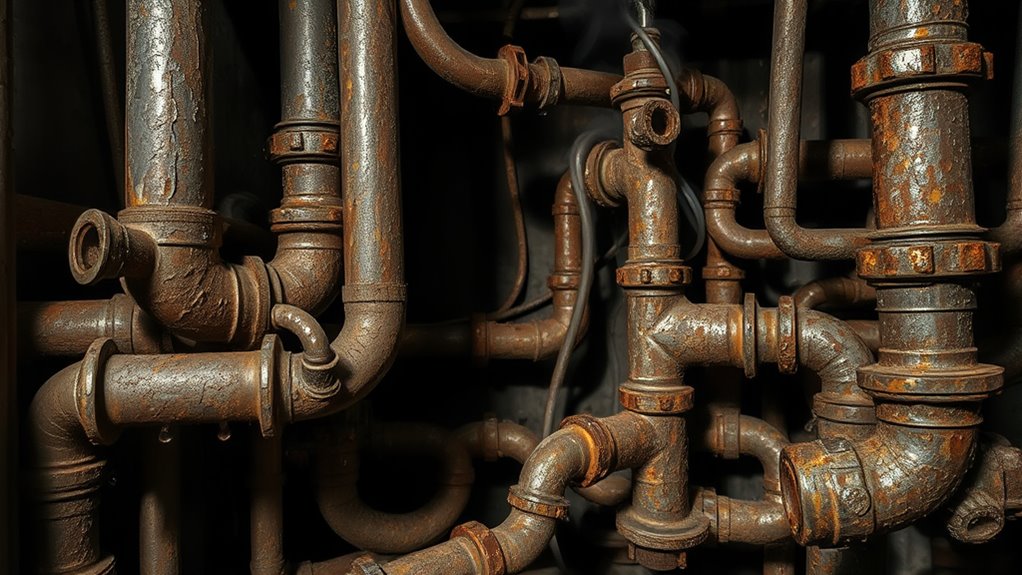

If your pipes stay noisy after recent adjustments, don’t skip diagnosing the root cause. First, check if the noise happens during water flow or when pipes are idle, and secure loose pipes with clamps or insulation. Avoid random valve tweaks—these can cause turbulence. Instead, install pipe collars or mounts, add insulation, and consider water hammer arrestors. For persistent issues, explore professional help to prevent future problems, and learn more about effective solutions ahead.

Get home appliances delivered free — and shop member deals
- Fast, free delivery on millions of items
- Access to Prime Big Deal Days deals on October 6–7
- Prime Video, Amazon Music and more included
Key Takeaways
- Do verify water pressure and install a pressure-reducing valve if it’s too high.
- Do secure loose pipes with clamps or brackets to prevent movement and rattling.
- Do install water hammer arrestors to absorb shockwaves from rapid flow changes.
- Not that—skip insulation or neglect to inspect fittings, which can worsen noise issues.
- Not that—adjusting valves without understanding system dynamics may cause turbulence and more noise.
As an affiliate, we earn on qualifying purchases.
Identifying the Root Cause of the Noise
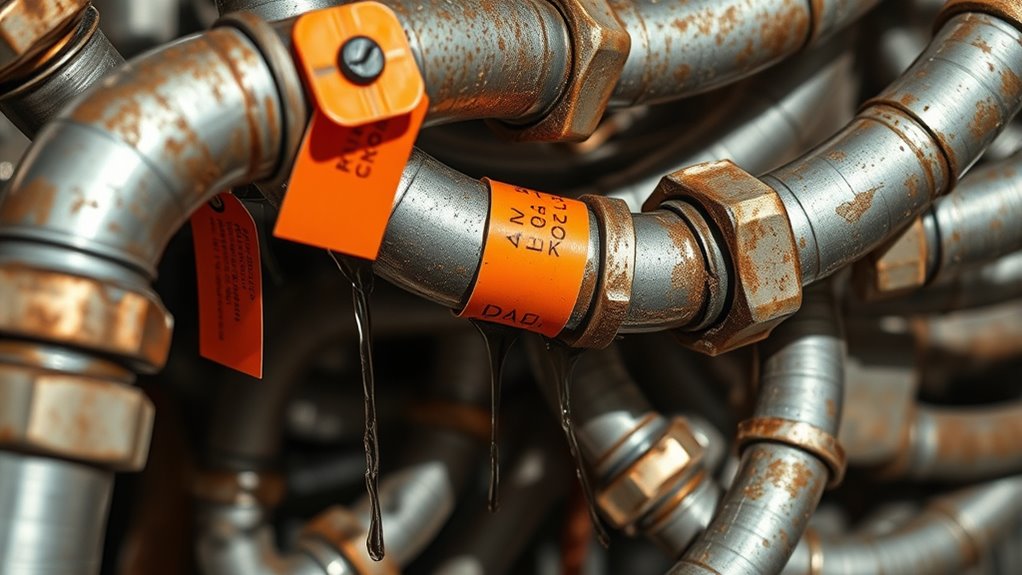
When you hear noisy pipes after recent changes, the first step is to determine the source of the sound. Start by inspecting whether the noise occurs when water is running or when pipes are idle. Loose or improperly secured pipes often rattle, indicating the need for better pipe insulation or securing brackets. Check if the noise correlates with specific fixtures; this can help identify if a valve needs adjustment. Sometimes, high water pressure causes vibrations, which can be reduced by adjusting the valve. Eliminating these common issues helps you pinpoint whether the problem stems from inadequate insulation, loose fittings, or pressure irregularities. Additionally, reviewing the history of pinball machines can provide insights into how technology and design advancements might inspire innovative solutions for your plumbing issues. Once you identify the source, you can proceed with targeted solutions to quiet your pipes effectively.
As an affiliate, we earn on qualifying purchases.
Essential Tools and Techniques for Quieting Pipes
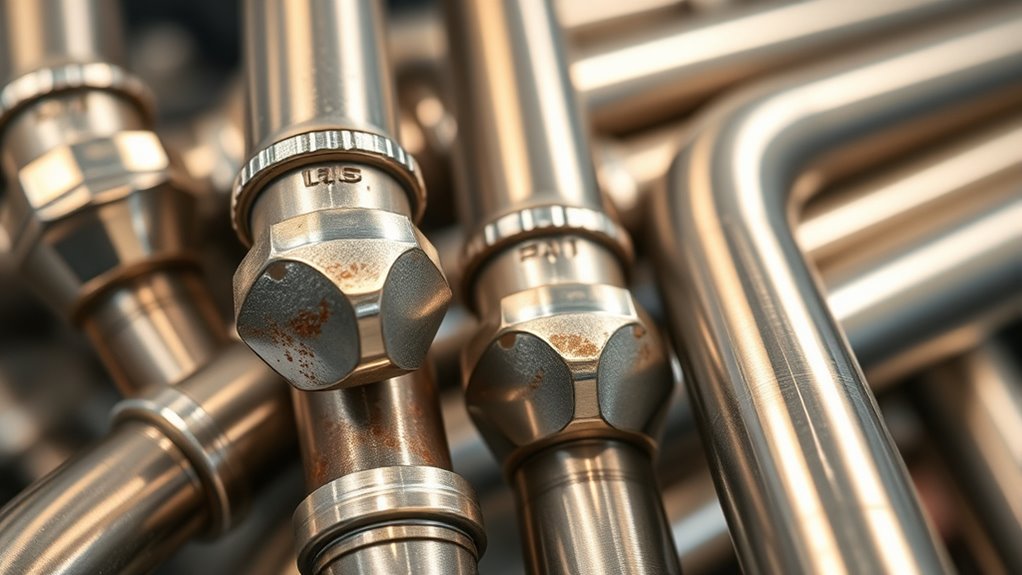
To effectively quiet noisy pipes, you’ll need a selection of essential tools and techniques designed to address common issues. Pipe insulation is vital; wrapping foam or rubber insulation around pipes reduces vibrations and dampens noise. Use soundproofing techniques like installing pipe collars or mounts to secure pipes firmly, minimizing movement and knocking sounds. A staple gun, insulation tape, or pipe insulation sleeves help create a barrier that absorbs sound. For louder noises, applying mass-loaded vinyl or acoustic panels nearby can further dampen sound transmission. Always inspect for loose fittings or vibrations, tightening or securing them as needed. Additionally, understanding the importance of contrast ratio can help you choose quieter, more efficient projectors for home theaters, making your space both visually impressive and acoustically comfortable. These tools and techniques form a practical approach to reducing pipe noise, making your plumbing quieter and more comfortable without extensive repairs.
As an affiliate, we earn on qualifying purchases.
Common Mistakes That Worsen Noisy Pipe Issues

Ignoring small pipe issues or rushing into repairs without proper diagnosis can make noise problems worse. One common mistake is skipping proper assessments, which leads to ineffective fixes. Second, neglecting to insulate pipes can cause vibrations and banging sounds, especially after changes. Third, attempting valve adjustments without understanding the system can increase noise, as improper tweaks may cause pressure fluctuations. Failing to properly insulate pipes allows sound transmission and temperature-related expansion noises. Likewise, incorrect valve adjustments can create turbulence and rattling. To avoid worsening the issue, always identify the root cause before acting, use pipe insulation where needed, and seek expert guidance for valve adjustments. These mistakes often escalate noise problems and complicate future repairs. Additionally, aura visualization techniques can help diagnose underlying emotional or energetic causes that might be subtly influencing physical issues, highlighting the importance of comprehensive assessment.
pressure reducing valve for home plumbing
As an affiliate, we earn on qualifying purchases.
As an affiliate, we earn on qualifying purchases.
When to Seek Professional Plumbing Assistance
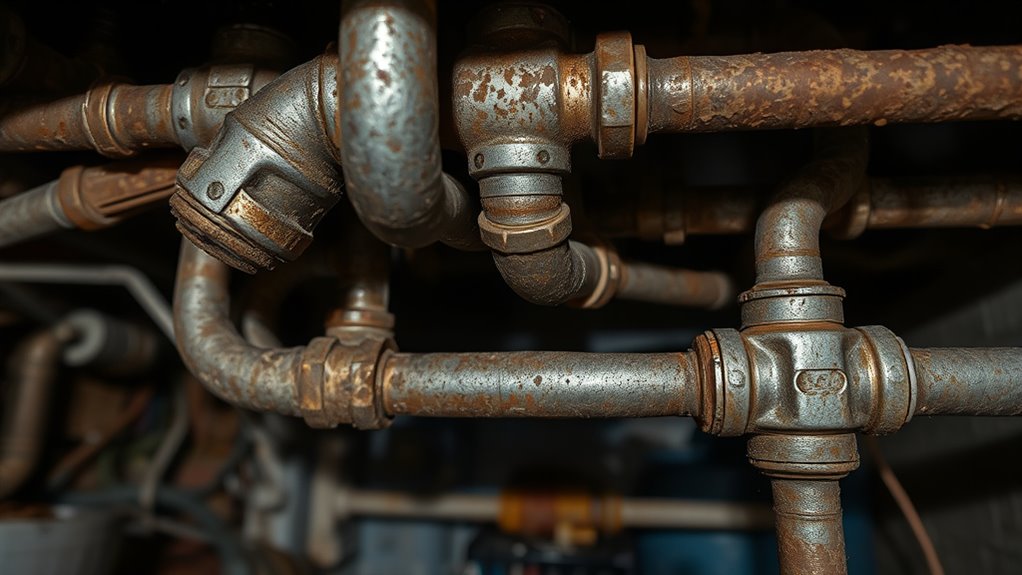
While diagnosing and fixing noisy pipes can often be straightforward, there are times when you need professional help. If adjusting water pressure doesn’t reduce the noise or if the pipes rattle despite insulation, it’s time to call in a pro. Persistent noises after changes may indicate underlying issues like loose fittings or hidden pipe damage. Additionally, if you notice increased water pressure that causes pipes to vibrate or rattle, a plumber can evaluate and fix the problem safely. Proper pipe insulation can help minimize noise, but improper installation or damage calls for expert assessment. Recognizing signs of pipe damage or leaks can help prevent costly repairs later. Don’t ignore ongoing noise or pressure issues—professional plumbing assistance ensures thorough diagnosis and effective solutions, preventing further damage and maintaining your plumbing system’s integrity.
Preventative Measures to Keep Pipes Silent After Changes
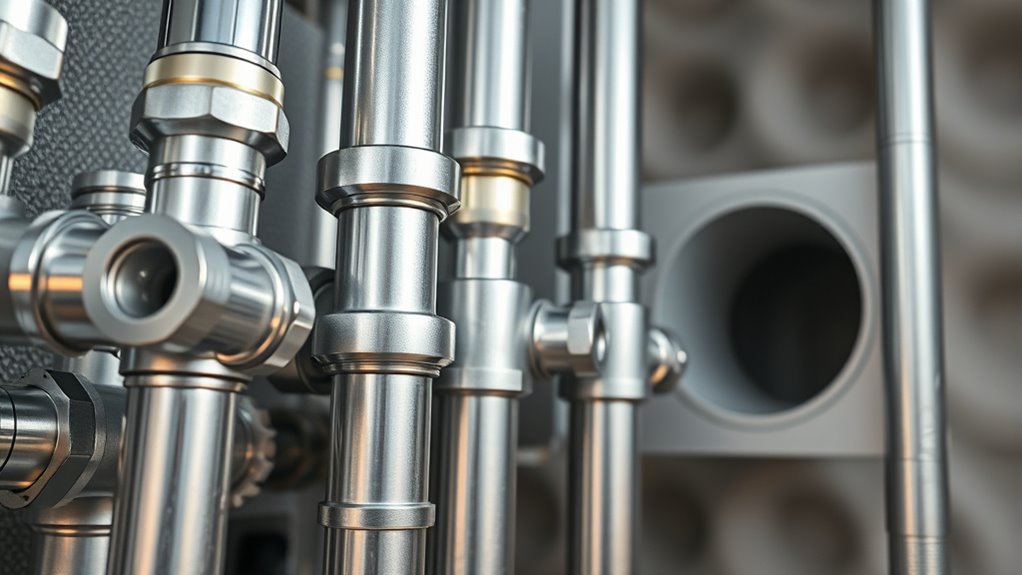
Taking proactive steps can considerably reduce the chances of noisy pipes after making changes to your plumbing system. First, install pipe insulation around vulnerable sections to dampen sound and prevent water hammer, which causes loud banging. Second, secure loose pipes with clamps or brackets to avoid movement that amplifies noise. Third, consider installing water hammer arrestors, especially if you experience sudden pipe banging after fixtures are turned off. These arrestors absorb shockwaves caused by rapid water flow changes. Regularly inspecting and maintaining your plumbing system helps identify loose fittings or leaks that can lead to noise. Additionally, understanding plumbing vibrations can help you apply targeted solutions to reduce noise effectively. By implementing these measures, you can keep your pipes quiet and prevent future issues caused by water hammer or vibrations, ensuring a peaceful, quiet plumbing environment.
Frequently Asked Questions
Can Pipe Noise Indicate Hidden Plumbing Leaks?
Yes, pipe noise can indicate hidden leak detection issues. When you hear banging or hissing sounds, it might mean there’s a leak or pressure problem behind the walls. To confirm, consider inspecting with pipe insulation methods that can help pinpoint the leak’s location. Addressing these noises early prevents further damage and helps you locate hidden leaks before they worsen, ensuring your plumbing stays in good shape.
How Long Does It Typically Take to Fix Noisy Pipes?
Fixing noisy pipes usually takes a few hours to a full day, depending on installation delays and material durability. If your plumber can access the pipes easily, the repair might be quick. However, delays can extend the process, especially if durable materials are needed or if unexpected issues arise. To speed things up, guarantee your plumber has everything ready and choose high-quality materials for long-lasting results.
Are Certain Pipe Materials More Prone to Noise Issues?
Certain pipe materials, like metal pipes such as copper and galvanized steel, are more prone to noise due to their noise propensity. They tend to transmit sound more easily than plastic pipes like PVC or PEX, which dampen noise better. If you notice increased noise, it’s likely because of the pipe material’s inherent properties. Switching to or insulating plastic pipes can markedly reduce noise issues in your plumbing system.
What Are the Costs Associated With Professional Pipe Noise Repairs?
The cost analysis for professional pipe noise repairs varies based on the severity and type of issue, but you can generally expect repair expenses to range from $150 to $450. Factors influencing costs include labor, materials, and the complexity of the fix. To avoid unexpected expenses, get a detailed estimate upfront. Investing in proper repairs guarantees your plumbing operates quietly and efficiently, saving you money in the long run.
Can Noise From Noisy Pipes Cause Damage Over Time?
Yes, noisy pipes can cause damage over time by aggravating wear, weakening joints, and increasing pressure fluctuations. When pipes rattle or vibrate, it’s essential to install proper pipe insulation to reduce noise and prevent thermal expansion. Additionally, pressure regulation helps maintain consistent flow, minimizing stress on pipe walls. Ignoring these issues can lead to leaks, bursts, or costly repairs, so addressing noise early protects your plumbing system’s longevity.
Conclusion
By pinpointing the root cause, using the right tools, and avoiding common mistakes, you can restore peace to your plumbing system. Remember, tackling noisy pipes is like calming a restless river—you need patience and the right approach. When in doubt, don’t hesitate to call a professional; sometimes, seeking expert help is the key to silencing the chaos. With these tips, you’ll keep your pipes whisper-quiet and your home serene.
Evergreen bestsellers Picks
bestsellers
As an affiliate, we earn on qualifying purchases.