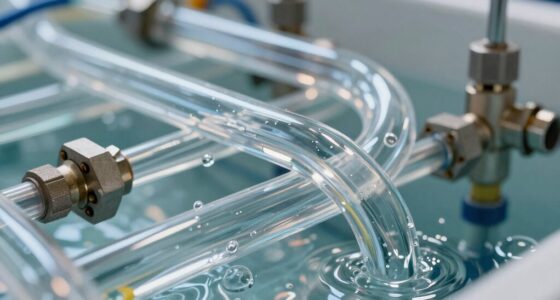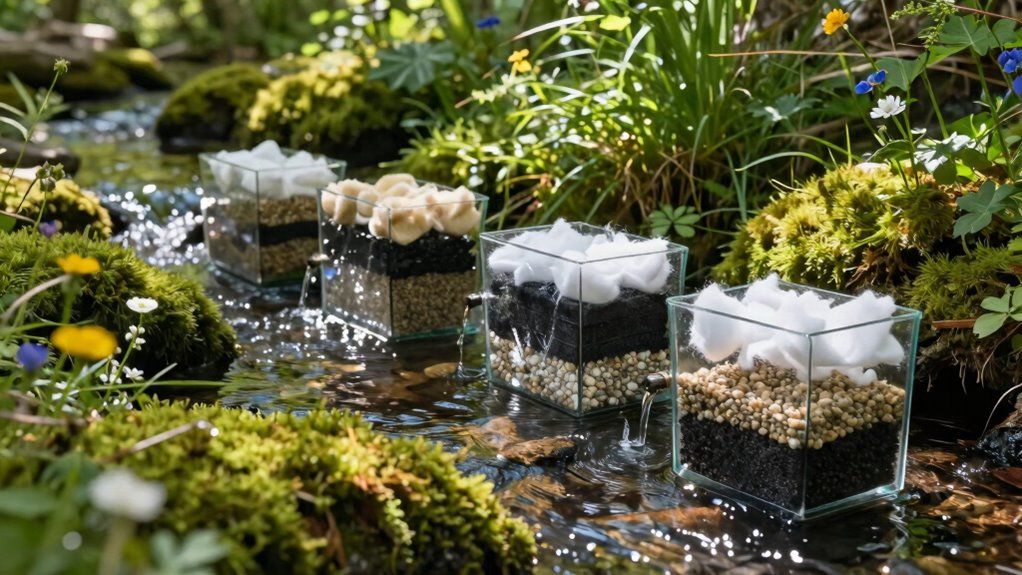

Adding more filtration stages doesn’t automatically mean better water. Each stage targets specific contaminants, so extra layers won’t improve water quality unless they’re effective for what’s actually in your water. Too many stages can slow flow, increase costs, and cause filters to clog if not maintained properly. Proper system design and matching filters to your water’s needs are key. Want to see how to optimize your setup for better results? Keep exploring to find out more.

Get home appliances delivered free — and shop member deals
- Fast, free delivery on millions of items
- Access to Prime Big Deal Days deals on October 6–7
- Prime Video, Amazon Music and more included
Key Takeaways
- Additional filtration stages don’t guarantee improved water quality without proper design and maintenance.
- Each stage should target specific contaminants; more stages don’t necessarily address diverse pollutants effectively.
- Overly complex systems can clog or slow down flow, reducing filtration efficiency.
- Proper system design matches filters to water contaminants, not just increasing stages.
- More stages can increase cost and complexity without significant purity or taste improvements.
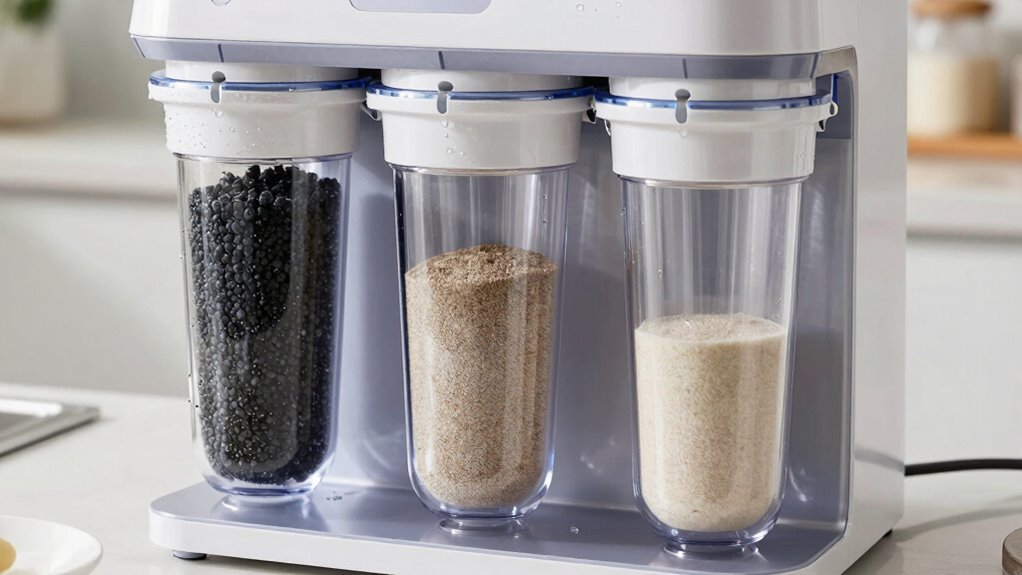
Many people assume that adding more stages to a water filtration system automatically results in better-tasting, purer water. However, that’s not always the case. While it might seem logical that extra layers of filtration would remove more impurities, it’s essential to understand the limits of filtration efficiency and how water contamination can vary. Simply stacking filters doesn’t guarantee cleaner water; in fact, it can sometimes lead to unnecessary complexity and cost without significant improvements in quality.
Each filtration stage is designed to target specific contaminants. For example, one stage might remove sediment and particles, while another tackles chemicals like chlorine or heavy metals. But adding more stages doesn’t necessarily mean each stage will work effectively or that the system will perform better overall. If a stage isn’t properly designed or maintained, it can become a bottleneck, reducing the overall filtration efficiency. This means that even with multiple layers, water might still contain certain contaminants if the system isn’t optimized or if the filters aren’t replaced regularly.
Water contamination isn’t always straightforward. Some pollutants are present in very low concentrations but can still pose health risks, especially if the filtration process isn’t capable of removing them. When you add more stages, you might think you’re increasing safety, but if those stages aren’t suited to the specific contaminants in your water, they won’t improve water quality. For instance, a filter designed for sediment won’t necessarily remove chemical pollutants or microbial pathogens. So, the key isn’t just the number of stages but whether those stages are appropriate for the water you’re treating.
Furthermore, more stages can sometimes reduce filtration efficiency, especially if the system becomes overly complicated or if filters are not properly maintained. Clogged or exhausted filters in a multi-stage system can cause water to bypass certain stages or flow at a slower rate, compromising the quality of the output. This can also lead to reduced system performance, and in some cases, even reintroduce contaminants. Proper filter maintenance is crucial to prevent such issues and ensure each stage functions optimally. Additionally, understanding the specific contaminants in your water helps in selecting the most effective filtration stages rather than relying solely on the number of layers.
Choosing the right filtration system design tailored to your water’s unique needs plays a vital role in achieving truly clean water.
water filtration system with specific contaminant removal
As an affiliate, we earn on qualifying purchases.
As an affiliate, we earn on qualifying purchases.
Frequently Asked Questions
How Do I Know the Right Number of Stages for My Water Filter?
You can determine the right number of stages by considering your water quality and filtration needs. More stages can improve filtration efficiency, but too many make the system complex and harder to maintain. Usually, 3 to 5 stages strike a good balance, removing most contaminants without overcomplicating your setup. Assess your water’s specific impurities and choose a system that offers effective filtration without unnecessary complexity.
Are Multi-Stage Filters Always More Cost-Effective Long-Term?
Multi-stage filters aren’t always more cost-effective long-term because of higher upfront costs and increased system complexity. A detailed cost comparison shows that while they may filter water better initially, maintenance and replacement parts can add up over time. If you prefer simplicity and lower ongoing expenses, a less complex system might be more economical, saving you money while still providing quality water.
Can Additional Stages Remove Beneficial Minerals From Water?
Think of your water like a garden; additional filter stages are like extra layers of mulch. While they can shield your plants, they might also block essential nutrients. Extra stages can reduce beneficial minerals, impacting mineral preservation. Though they might boost filter efficiency, they risk stripping away minerals that your water needs. So, more isn’t always better—balance is key to maintaining healthy, mineral-rich water.
Do More Stages Significantly Improve Taste and Odor?
Adding more stages can improve taste enhancement and odor reduction, but the results often depend on your water’s initial quality. While extra stages might remove more contaminants, they don’t always translate to noticeably better taste or smell. Sometimes, too many stages can strip essential minerals or introduce complexity without significant benefits. Focus on addressing specific issues first, rather than assuming more stages automatically mean better taste and odor control.
What Maintenance Challenges Come With Multi-Stage Filtration Systems?
While multi-stage systems promise pristine water, they come with their own set of subtle hurdles. You’ll need to stay vigilant for pre-filter clogging, which can reduce flow and efficiency, and watch for membrane degradation over time. Regular maintenance, like timely filter replacements and system checks, keeps everything running smoothly. Neglecting these tasks can compromise water quality, turning your advanced setup into a hassle rather than a benefit.
multi-stage water filter for chlorine and heavy metals
As an affiliate, we earn on qualifying purchases.
As an affiliate, we earn on qualifying purchases.
Conclusion
You might think that adding more stages to a water filter guarantees purer water, but that’s not always true. Sometimes, extra stages can introduce complexity and potential contamination without markedly improving quality. It’s essential to understand what each stage does and whether it’s necessary for your specific needs. Don’t assume more is better—you’ll get cleaner, healthier water by choosing a system tailored to your situation rather than just adding layers for the sake of it.
best water filter replacement cartridges for sediment and chemicals
As an affiliate, we earn on qualifying purchases.
As an affiliate, we earn on qualifying purchases.
water filter system designed for low flow and clog prevention
As an affiliate, we earn on qualifying purchases.
As an affiliate, we earn on qualifying purchases.
Fall Picks
fall essentials
As an affiliate, we earn on qualifying purchases.