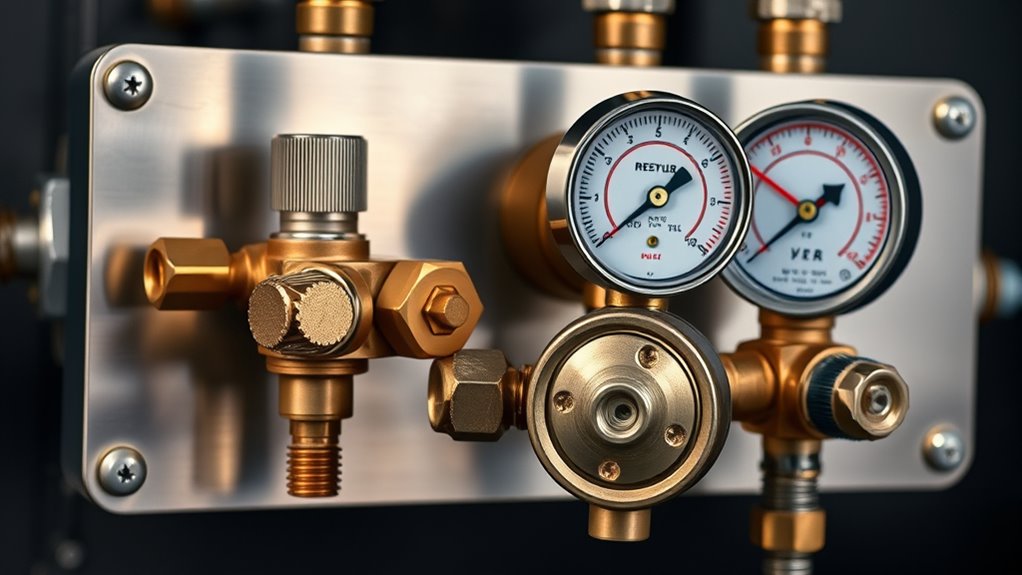

To properly size and place pressure regulators and gauges, first identify your system’s pressure needs and flow capacity. Select a regulator that matches these requirements without being oversized or undersized, and install gauges where they can accurately reflect pressure without vibrations or temperature extremes. Place gauges downstream for reliable readings and ensure all fittings are secure. Correct sizing and placement prevent issues and enhance system safety. Continue exploring to discover detailed tips for ideal setup and maintenance.
Key Takeaways
- Select regulator size based on system pressure requirements, flow capacity, and inlet/outlet pressure specifications.
- Install gauges close to regulators to accurately monitor regulated pressure and system performance.
- Ensure gauges are placed away from vibration, extreme temperatures, or corrosive environments for durability.
- Properly secure fittings and mounts to prevent leaks, damage, and maintain accurate readings over time.
- Regularly inspect and maintain regulator and gauge placement to detect issues early and ensure safe operation.
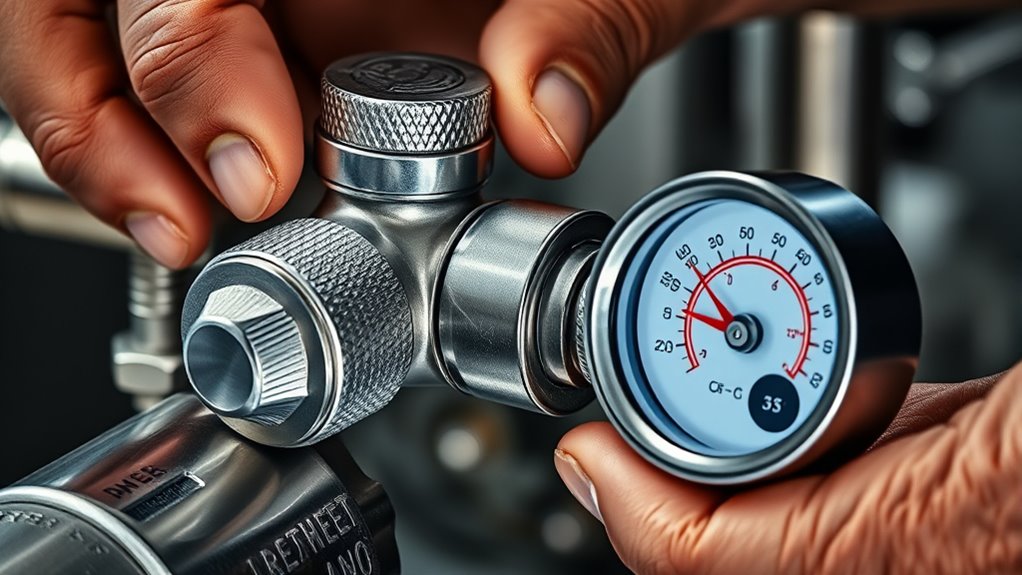
Choosing the right pressure regulators and gauges is fundamental to guarantee your system operates safely and efficiently. When it comes to pressure regulation, selecting the correct size and type of regulator ensures your system maintains consistent pressure levels without overworking components or risking failures. Proper gauge placement plays an indispensable role here; you want your gauges positioned where they can provide accurate readings and be easily accessible for monitoring. If gauges are placed too far from the regulator or in hard-to-reach locations, you might miss critical pressure fluctuations, leading to potential system damage or safety hazards. Always position gauges close enough to the regulator to reflect the true operating conditions, but also in spots that allow for easy reading and maintenance. Ensuring your gauges are durable and resistant to environmental factors is equally important for maintaining accuracy over time.
Proper gauge placement ensures accurate readings and system safety.
Sizing your pressure regulators properly begins with understanding your system’s specific pressure requirements. Oversized regulators may cause instability, while undersized ones can struggle to maintain consistent pressure, leading to fluctuations that impact performance. To get this right, measure your system’s maximum inlet pressure and the desired outlet pressure, then select a regulator that can handle those ranges comfortably. Be mindful of flow rates too—if your system demands high flow rates, choose a regulator designed for such loads to prevent pressure drops or lag. Proper sizing prevents unnecessary wear on your components and ensures your system stays within safe operating limits.
Gauge placement should be strategic. You want gauges installed where they can give you a clear, real-time picture of the system’s pressure without interference. Typically, place gauges downstream of the regulator for monitoring the regulated pressure, or at critical points where pressure stability is vital. Avoid installing gauges in locations prone to vibration, extreme temperatures, or exposure to corrosive elements, as these conditions can impair accuracy and longevity. Use durable fittings and secure mounting to prevent leaks or damage. Regularly inspecting gauge placement and condition helps you catch issues early, maintaining system safety and efficiency. Proper placement of gauges is essential for accurate monitoring and long-term system health.
In essence, correct pressure regulation and thoughtful gauge placement are about precision and accessibility. When you size your regulators correctly, you prevent pressure fluctuations and equipment stress. Proper gauge placement enables you to monitor system performance easily and respond swiftly to any irregularities. By paying attention to these details, you ensure your system operates smoothly, safely, and efficiently over the long term.
Frequently Asked Questions
How Often Should Pressure Regulators and Gauges Be Recalibrated?
You should recalibrate pressure regulators and gauges based on your maintenance schedule and calibration intervals, typically every 12 months. Regular calibration ensures accurate readings and safe operation. Check the manufacturer’s recommendations and your industry standards, as some environments or usage conditions may require more frequent recalibration. Consistent maintenance helps prevent inaccuracies, reduces downtime, and prolongs the lifespan of your equipment, keeping your system running smoothly and safely.
Can Pressure Regulators Be Used for Different Gases Simultaneously?
You can’t use a single pressure regulator for different gases simultaneously because of gas compatibility issues. Mixing gases can cause dangerous reactions or damage the regulator, making it as risky as a wildfire. To guarantee safety, choose a regulator with high versatility designed for multiple gases, and always verify compatibility. This way, you maintain safe operations and prevent accidents, keeping your system protected like a fortress.
What Are Signs of a Failing Pressure Regulator?
If your pressure regulator is failing, you’ll notice pressure fluctuation and increased regulator noise. You might see inconsistent pressure levels or sudden drops, indicating it can’t maintain steady output. Also, listen for hissing or banging sounds, which suggest internal issues. These signs mean it’s time to inspect or replace your regulator to guarantee safe and reliable operation. Regular checks can prevent unexpected failures and maintain system performance.
How Do Environmental Factors Affect Gauge Accuracy?
Environmental factors can be like a sneaky wind, subtly shifting gauge accuracy. Temperature effects cause the metal in gauges to expand or contract, leading to misreads. Vibration impact can jostle internal components, resulting in fluctuating readings or damage. You need to take into account these factors, especially in harsh environments, to ensure your gauges provide precise data. Proper installation and protective measures help keep your measurements reliable, no matter the weather or machinery noise.
Are There Portable Pressure Regulation Systems for Mobile Applications?
Yes, there are portable pressure regulation systems designed specifically for mobile applications. These systems are compact, lightweight, and easy to carry, allowing you to control pressure on the go. They’re ideal for tasks like outdoor maintenance, field repairs, or industrial site work. With these portable systems, you can guarantee accurate pressure management wherever your work takes you, improving safety and efficiency in various mobile environments.
Conclusion
By carefully sizing and placing pressure regulators and gauges, you guarantee safe, efficient system operation. For example, imagine a brewery that installed the wrong regulator, causing inconsistent beer pressure. After proper sizing and placement, they achieved stable pressure, improved product quality, and reduced downtime. Always assess your system’s needs and follow best practices—your attention to detail can prevent costly issues and keep everything running smoothly. Proper regulation truly makes all the difference.