
Understanding the hidden costs of UV disinfection involves more than just the initial equipment price. You need to take into account longer-lasting bulbs, energy efficiency, proper system sizing, and quality components to avoid costly replacements and energy waste. Regular maintenance, calibration, and safety compliance also impact expenses over time. Planning installations carefully and choosing reputable suppliers help prevent unexpected labor or repair costs. Keep these factors in mind to save money and ensure system effectiveness as you explore further.
Key Takeaways
- Neglecting proper system sizing can lead to increased energy and maintenance costs.
- Using low-quality components may cause premature failures and higher replacement expenses.
- Inadequate maintenance schedules result in reduced system efficiency and costly repairs.
- Overlooking safety protocols can lead to fines, legal issues, and health risks.
- Failing to select certified, reliable parts increases the risk of system failure and long-term expenses.

GIOTOHUN Cat Water Fountain Filter: 12 Cat Fountain Filter Replacement - 12 Pet Fountains Filters Replacement - 6 Filters & 6 Sponges - Suitable for ATMZIQXR GIOTOHUN KOOGMOON UMOCUOY IHOUONE HOOISE
【Correct match】This filter is matched with GIOTOHUN ATMZIQXR KOOGMOON UMOCUOY IHOUONE HOOISE stainless steel cat water fountain.
As an affiliate, we earn on qualifying purchases.
Understanding the True Cost of UV Bulbs
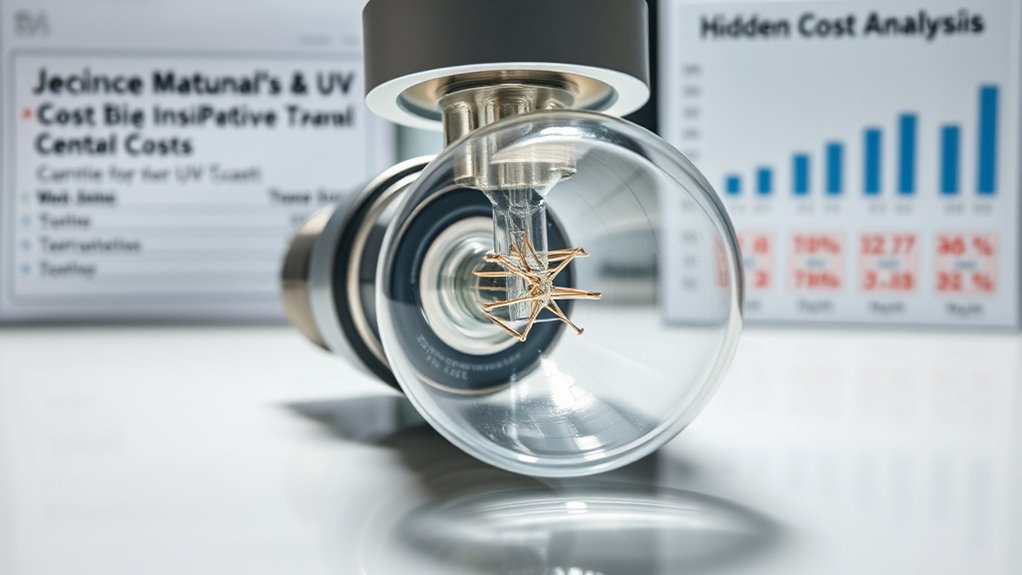
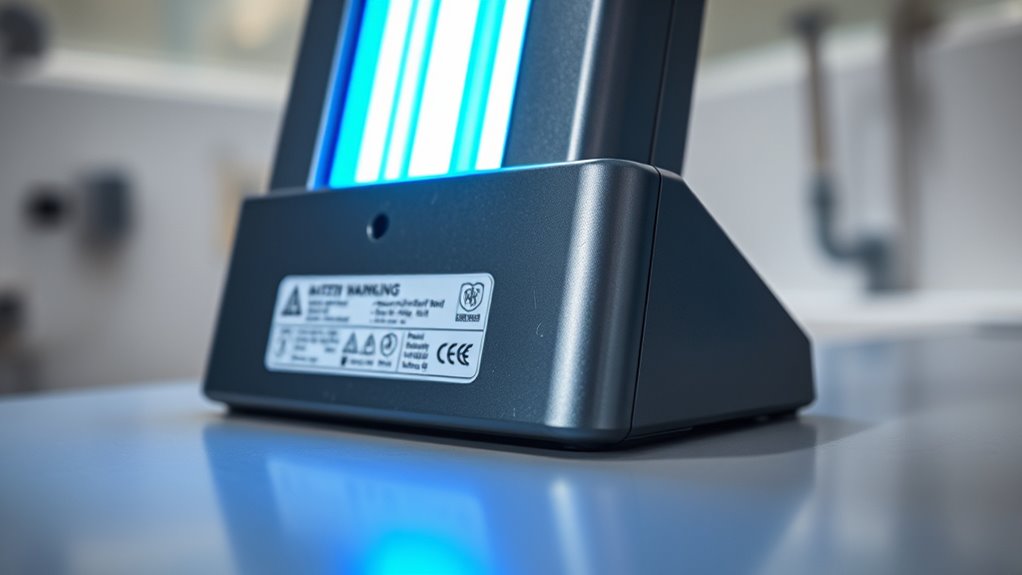
While UV bulbs may seem inexpensive upfront, understanding their true cost involves more than just the purchase price. One key factor is bulb lifespan; some bulbs last longer than others, reducing how often you need replacements. Longer-lasting bulbs can save you money over time, even if their initial cost is higher. Additionally, energy efficiency plays an essential role. More efficient bulbs use less power to produce the same germicidal effect, lowering your energy bills. Investing in a bulb with a longer lifespan and better energy efficiency can considerably decrease ongoing expenses. Furthermore, technological advancements in UV disinfection are improving automation and efficiency, which can impact the overall cost and performance of your setup. By considering these factors, you get a clearer picture of the true cost, helping you make smarter choices that balance upfront costs with long-term savings.

Bluevua Official RO100ROPOT 4-Pack Replacement Filter Set, Pack of 1 PP Filter and 1 CTO Filter and 1 RO Filter and 1 PCF Filter
COMPREHENSIVE FILTRATION KIT: The 4-Pack Replacement Filter Set for the RO100ROPOT consists of a Polypropylene (PP) filter, Coconut...
As an affiliate, we earn on qualifying purchases.
The Hidden Expenses of Power Consumption

Even if you choose UV bulbs with longer lifespans and higher energy efficiency, power consumption can still quietly add up over time. Small, continuous energy use from your UV system impacts your operating costs. Poor power management can lead to unnecessary energy waste, increasing expenses without improving disinfection effectiveness. To avoid this, optimize your system’s energy efficiency by scheduling operation times and using timers to run the UV disinfection only when needed. Regularly monitoring energy consumption helps identify inefficiencies early. Understanding flushing mechanisms and selecting energy-efficient components can considerably reduce hidden expenses. Remember, even minor improvements in power management can lead to substantial savings over the lifespan of your UV system. Staying vigilant about energy use ensures you keep costs in check while maintaining effective disinfection.

Bluevua Official Reverse Osmosis System Countertop RO100ROPOT-Lite Replacement Filter
Replacement Filter
As an affiliate, we earn on qualifying purchases.
Maintenance and Replacement Challenges
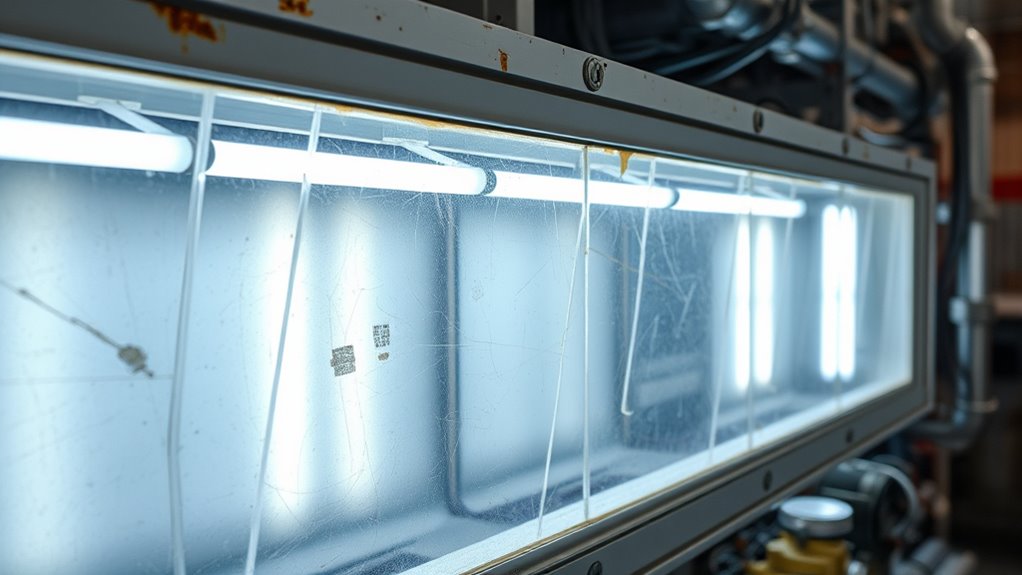
Maintenance and replacement of UV disinfection systems present ongoing challenges that can disrupt your operations and increase costs. Regular filter replacement is essential to prevent blockages and guarantee ideal performance. System maintenance involves cleaning, checking for lamp degradation, and monitoring UV intensity, which can be time-consuming and costly if neglected. Proper planning minimizes downtime and unexpected expenses. To better understand these challenges, consider this table:
| Maintenance Task | Frequency | Impact |
|---|---|---|
| Filter Replacement | Every 6-12 months | Ensures flow and UV efficacy |
| Lamp Replacement | Annually | Maintains UV output |
| System Inspection | Quarterly | Prevents failures, prolongs life |
Neglecting these aspects leads to decreased system efficiency and increased operational costs. Additionally, understanding the system components involved can help in planning effective maintenance routines.

Blink Outdoor 4 – Wireless smart security camera, two-year battery life, 1080p HD day and infrared night live view, two-way talk. Sync Module Core included – 5 camera system
Outdoor 4 is our most affordable wireless smart security camera yet, offering up to two-year battery life for...
As an affiliate, we earn on qualifying purchases.
The Importance of Proper System Sizing
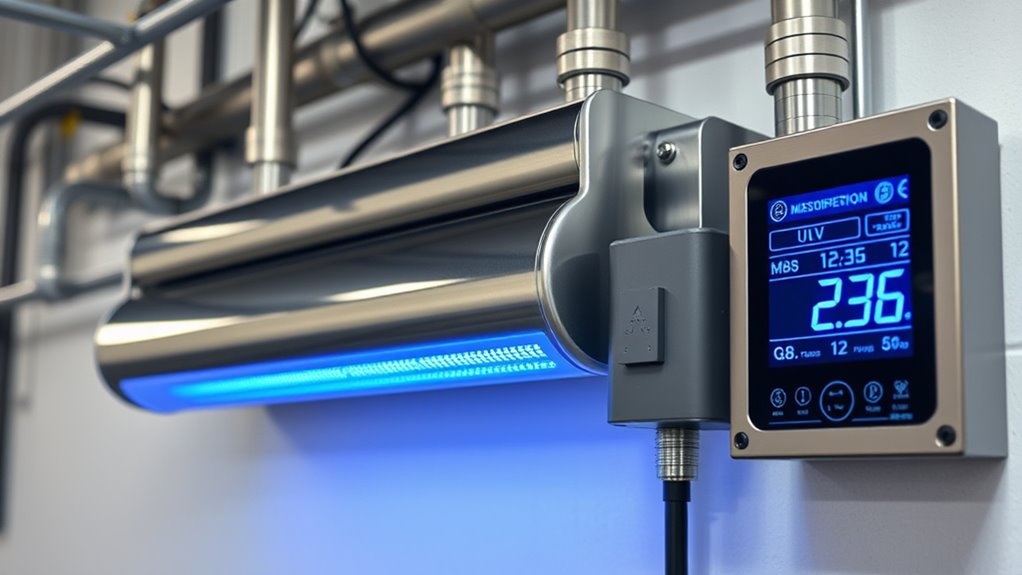
Choosing the right size for your UV disinfection system is vital to guarantee effective treatment. If the system is too small, it won’t eliminate all contaminants; if it’s too large, you’ll waste resources. Matching the system to your specific needs helps you achieve reliable results without unnecessary expense. Additionally, understanding the proper sizing process ensures your disinfection solution is both efficient and effective.
Avoid Over or Under Sizing
Properly sizing your UV disinfection system is essential because both over- and under-sizing can compromise its effectiveness and efficiency. An oversized system wastes money on unnecessary components and consumes excess energy, increasing operational costs. Conversely, an undersized system may not deliver adequate water treatment, risking safety and compliance issues. To avoid these pitfalls, choose cost-effective materials that balance durability with affordability, ensuring your system remains sustainable over time. Additionally, prioritize energy-efficient technology to reduce ongoing power consumption, saving you money and lowering environmental impact. Accurate sizing guarantees your UV system operates at peak performance without unnecessary expense or compromised disinfection. Taking the time to get this right helps you maximize your investment and maintain reliable water quality. Incorporating insights from eye patch benefits can remind you of the importance of proper fit and function, ensuring your system performs optimally over its lifespan.
Match System to Needs
Matching your UV disinfection system to your specific needs is crucial for ensuring effective water treatment. Proper sizing guarantees system compatibility with your water volume, flow rate, and pathogen types. An undersized system risks inadequate disinfection, while an oversized one wastes resources. To optimize performance, consider factors like flow rate, water quality, and maintenance requirements. Additionally, investing in user training ensures your team operates the system correctly, reducing operational errors. Use the following guide to assess your needs:
| Water Volume | System Compatibility | User Training Required |
|---|---|---|
| Low | Smaller units | Basic |
| Moderate | Medium capacity | Moderate |
| High | Larger units | Advanced |
| Variable | Adjustable systems | Ongoing |
Choosing the right system promotes efficiency and safety, avoiding hidden costs. It is also important to understand website performance metrics that help monitor and improve your water treatment system’s effectiveness over time.
Quality Versus Cost: Selecting Reliable Components

When choosing UV disinfection components, you need to ensure their durability, lifespan, and how well they meet industry standards. It’s tempting to go for the cheapest options, but reliable parts backed by reputable manufacturers often save you money in the long run. Prioritizing quality ensures your system performs effectively and stays dependable over time. Additionally, understanding and avoiding common myths about UV disinfection can help you make more informed decisions about component selection.
Component Durability and Lifespan
Choosing reliable components for UV disinfection systems often involves balancing initial costs with long-term durability. Your focus should be on selecting parts with a proven component lifespan that can withstand durability challenges over time. Cheaper components may seem attractive initially but often fail prematurely, resulting in higher replacement costs and system downtime. To avoid these hidden expenses, evaluate the quality of materials and construction. Look for components designed with durability in mind, such as corrosion-resistant materials and robust electrical parts. Regular maintenance and proper installation can extend lifespan, but choosing inherently durable components is key. By prioritizing quality over cost at the outset, you ensure your UV system remains effective, reliable, and cost-efficient over its entire operational life. Additionally, understanding the importance of component durability helps in making informed decisions that prevent frequent replacements and system failures.
Certification and Standards Compliance
Selecting components based on certification and standards compliance guarantees your UV disinfection system delivers reliable performance over time. Certification standards, such as those from UL or NSF, ensure components meet rigorous safety and performance benchmarks. Compliance requirements specify the necessary criteria for your system’s intended use, reducing the risk of failure or ineffective disinfection. When choosing parts, prioritize those with recognized certifications to avoid hidden costs associated with subpar performance or premature replacement. Reliable components that meet established standards often come at a higher initial cost but save money long-term by maintaining consistent operation and preventing costly repairs. Ensuring conformity with relevant certification standards helps you stay compliant with industry regulations and guarantees your system’s safety, efficiency, and overall effectiveness. Additionally, selecting educational toys that adhere to safety standards can help prevent accidents and ensure a safe play environment.
Manufacturer Reputation and Support
A manufacturer’s reputation and support are critical factors in ensuring your UV disinfection system performs reliably over time. Reliable manufacturer support means quick access to technical assistance, replacement parts, and troubleshooting guidance, reducing downtime and unexpected costs. A strong reputation indicates consistent quality and customer satisfaction, lowering reputation risks that come with choosing lesser-known brands. Poor support or a questionable reputation can lead to delays, costly repairs, or even system failures. When selecting components, prioritize manufacturers known for their commitment to service and quality. Investing in reputable brands may have a higher upfront cost, but it helps avoid hidden costs associated with poor support or unreliable products, ultimately ensuring your UV system remains effective and dependable over its lifespan. Additionally, understanding the state-specific tax laws on IRA withdrawals can help you plan more effectively for retirement income and avoid unexpected tax liabilities.
Safety Measures and Regulatory Compliance
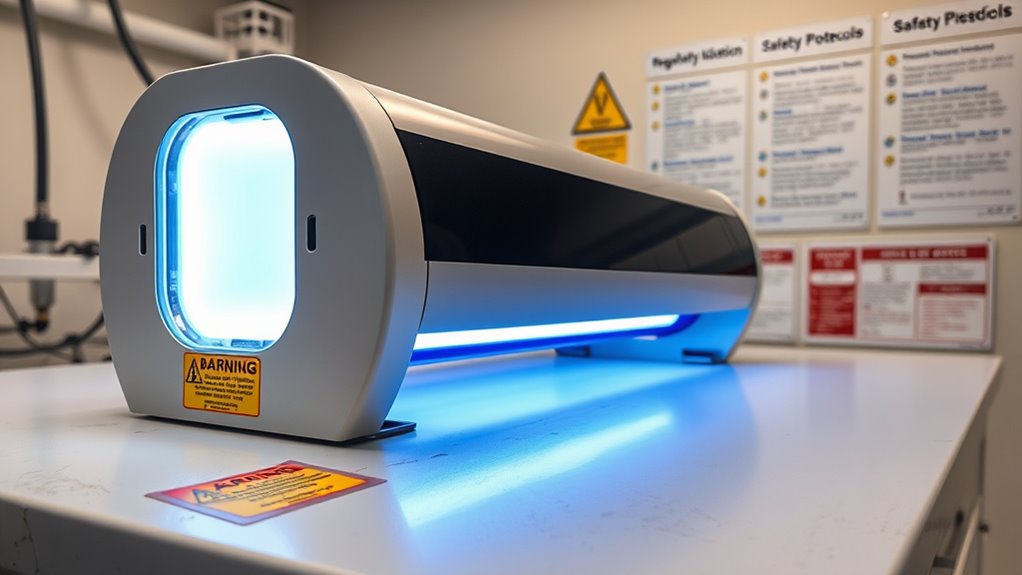
To guarantee safe and effective UV disinfection, it’s essential to follow established safety measures and comply with relevant regulations. Conduct a thorough risk assessment to identify potential hazards, such as UV exposure or equipment malfunction. Implement strict safety protocols, including protective gear and restricted access during operation. Ensure your team is trained on handling UV devices safely and understands regulatory standards. Staying compliant helps prevent legal issues and health risks. Remember, neglecting safety measures can lead to costly accidents or fines. Regularly review your safety procedures and stay updated on industry regulations. Prioritizing safety not only protects personnel but also secures optimal disinfection results without hidden liabilities. Proper risk assessment and adherence to safety protocols are indispensable for responsible UV system management.
- Conduct comprehensive risk assessments
- Enforce strict safety protocols
- Provide ongoing staff training
- Stay current with regulations
Calibration and Monitoring for Optimal Performance

Regular calibration and continuous monitoring are essential to guarantee your UV disinfection system performs at its best. Sensor calibration ensures your UV sensors provide accurate readings, preventing under- or over-irradiation. By regularly checking and adjusting sensors, you maintain reliable performance and avoid hidden costs caused by incorrect dosing. Performance monitoring involves tracking UV intensity, flow rates, and system status to identify potential issues early. Implementing a routine calibration schedule and real-time monitoring helps you detect deviations promptly, ensuring the system stays efficient and compliant with safety standards. This proactive approach minimizes downtime and costly repairs, ultimately extending your equipment’s lifespan. Consistent calibration and vigilant performance monitoring are vital for reliable, cost-effective UV disinfection.
Installation Pitfalls and Hidden Labor Costs

Installing a UV disinfection system might seem straightforward, but overlooking common pitfalls can lead to unexpected labor costs and delays. Poor planning, underestimating the complexity, or neglecting site-specific issues can inflate installation costs and create labor inefficiencies. These issues often result in extended project timelines and increased expenses you didn’t anticipate. To minimize risks, consider these key points:
- Failing to assess space constraints beforehand
- Underestimating wiring and plumbing requirements
- Overlooking access for maintenance during setup
- Ignoring vendor recommendations for proper installation procedures
Addressing these pitfalls early helps avoid costly rework and delays, ensuring your installation proceeds smoothly. Being proactive reduces hidden labor costs and keeps your project on track.
Long-term Cost Savings Through Proper Planning

Proper planning is essential for maximizing long-term cost savings with your UV disinfection system. By focusing on cost-effective planning from the start, you guarantee the system operates efficiently and reduces ongoing expenses. Choosing the right equipment, considering future expansion, and integrating maintenance needs help avoid costly upgrades or replacements later. Investing in sustainable systems also lowers energy consumption and prolongs equipment lifespan, making your investment more durable over time. Properly evaluating your facility’s needs and consulting experts can prevent overspending on unnecessary features or inadequate solutions. Ultimately, thoughtful planning leads to smarter, more affordable investments that pay off over years, rather than just the initial installation. This approach helps you achieve consistent disinfection performance while keeping long-term costs manageable.
Frequently Asked Questions
How Can I Identify Early Signs of UV System Inefficiency?
You can identify early signs of UV system inefficiency through regular UV system monitoring. Pay attention to efficiency indicators like decreased UV intensity, longer startup times, or inconsistent disinfection results. If you notice these signs, it’s time to inspect the lamps and sensors. Consistent monitoring helps catch issues early, preventing costly repairs and ensuring your UV system operates at peak performance.
What Are Common Mistakes in UV System Installation?
You should watch out for installation pitfalls like incorrect positioning or poor sealing, which reduce UV effectiveness. Avoid maintenance misconceptions such as neglecting regular lamp replacements or ignoring system calibration, which can cause inefficiencies. Guarantee proper setup by following manufacturer instructions precisely, and schedule routine maintenance to keep your UV system running smoothly. Proper installation and ongoing care prevent hidden costs and maximize the system’s lifespan and performance.
Are There Eco-Friendly Alternatives to Traditional UV Disinfection?
Eco-friendly options exist, offering greener disinfection choices. You can opt for eco-friendly UV systems that utilize energy-efficient bulbs and eco-conscious materials, reducing environmental impact. Green disinfection methods, like natural biocides or advanced filtration, can supplement UV technology, ensuring safer, sustainable sanitation. By blending biological barriers with innovative innovations, you create a thorough, clean solution that’s both conscientious and cost-effective, championing a cleaner, greener future.
How Does Ambient Temperature Affect UV Bulb Performance?
Ambient temperature critically impacts UV bulb performance. When temperatures are too high or too low, it can shorten the UV bulb lifespan and reduce its effectiveness. You should guarantee proper temperature regulation around the bulb to maintain ideal output. By managing ambient temperature, you help preserve bulb longevity and ensure consistent disinfection, saving you money and avoiding unexpected replacement costs. Proper temperature control is essential for reliable UV disinfection performance.
What Training Is Necessary for Proper UV System Maintenance?
You need UV system certification to guarantee you understand proper maintenance procedures. Training should cover bulb replacement, cleaning, and system calibration to maintain efficiency. Regularly review manufacturer guidelines and attend certified courses to stay updated. Proper maintenance prevents hidden costs and system failures. By staying knowledgeable and following certified procedures, you’ll keep your UV system running effectively, saving money and ensuring ideal disinfection.
Conclusion
By understanding these hidden costs, you can navigate the UV disinfection landscape with a clear eye, avoiding pitfalls like a seasoned sailor steering clear of storms. Proper planning and maintenance aren’t just expenses—they’re investments in the system’s longevity and your peace of mind. Think of it as planting a seed; with the right care, your system will flourish, saving you money and headaches down the road. Stay vigilant, and your UV system will serve you well.