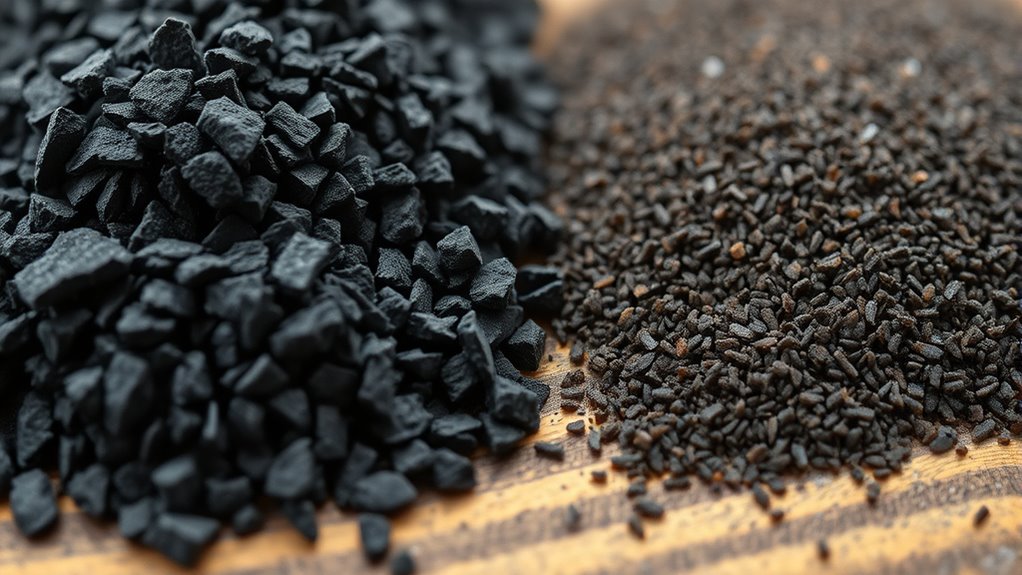

When choosing between advanced and catalytic carbon, consider your specific water needs. Advanced carbon offers high adsorption capacity for impurities, making it great for removing chemicals, odors, and toxins. Catalytic carbon excels at breaking down items like chloramines and volatile chemicals, often lasting longer with less regeneration. Both can work well, but your choice depends on your contaminant profile. Stay tuned to learn more about which option might suit your situation best.
Key Takeaways
- Advanced carbon excels at broad impurity adsorption and is regenerable, suitable for organic removal and taste improvements.
- Catalytic carbon promotes chemical reactions, effectively breaking down chloramines and volatile compounds.
- Field tests show both filters improve water quality; advanced carbon is better for organic contaminants, catalytic for disinfectants.
- Advanced carbon generally offers longer lifespan through regeneration, while catalytic carbon may need more frequent replacement.
- Choice depends on specific contaminants, budget, and maintenance preferences, with catalytic often providing enhanced reactive performance.

Waterdrop PT-09W 10-Cup Large Glass Water Filter Pitcher, Eco-Friendly, NSF/ANSI 53, 42 & 372 Certified Filter, Reduces PFOA/PFOS, Chlorine, Cadmium, Copper & Mercury, BPA-Free, Easy to Clean, White
[Glass Materials, Green Choice] This glass water filter pitcher is made from high-quality glass which is non-toxic and…
As an affiliate, we earn on qualifying purchases.
As an affiliate, we earn on qualifying purchases.
Defining Advanced Carbon and Catalytic Carbon: Key Differences
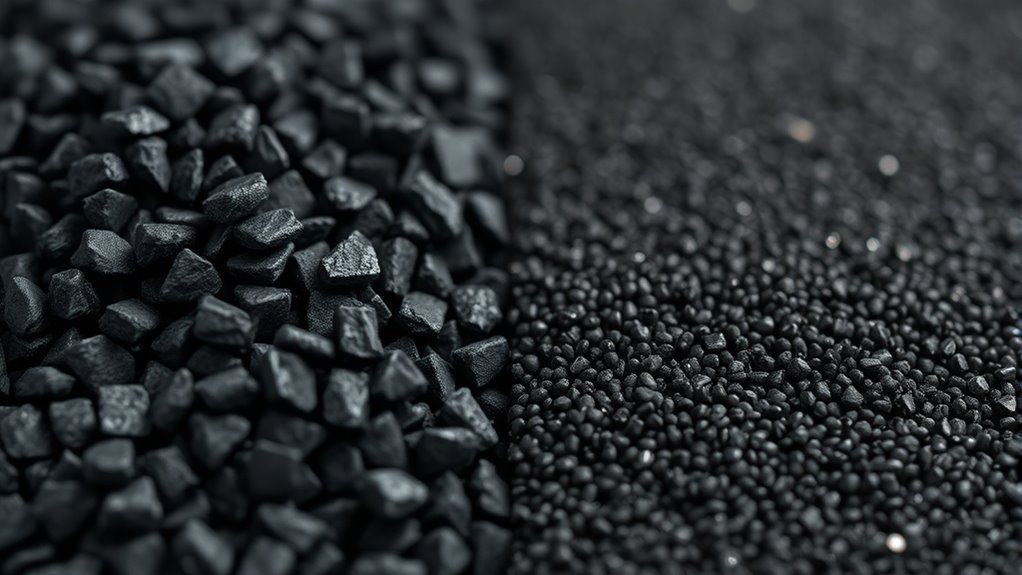
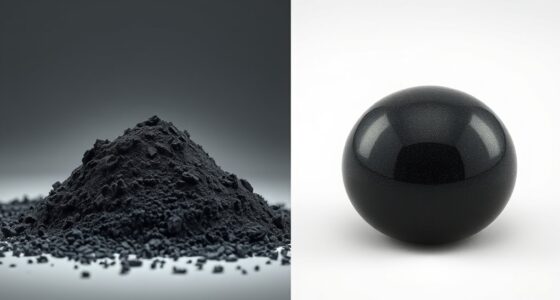
While both advanced carbon and catalytic carbon serve crucial roles in various industrial processes, they differ markedly in composition and application. Advanced carbon is highly processed to enhance its adsorption capacity, making it excellent for trapping impurities from gases and liquids. Its regeneration methods typically involve thermal or chemical treatments to restore its effectiveness after saturation. Catalytic carbon, on the other hand, contains active metals or coatings that promote chemical reactions, such as breaking down pollutants rather than just trapping them. Its primary purpose isn’t adsorption but catalytic activity, which can reduce the need for frequent regeneration. Understanding these core differences helps you select the right type for your specific needs, whether you’re aiming for maximum adsorption or catalytic efficiency. Additionally, the contrast ratio of a material can influence its effectiveness in specific applications, especially in scenarios requiring precise control over chemical reactions or impurity removal.

Home Master CFKDF85GCC-20BB Replacement Filter, Fits Big Blue, 20" x 4.5" Heavy duty Up-Flow Catalytic Carbon & KDF 85, Filters Chloramines, Chlorine, Chemicals, Heavy Metals, Sediment, more
Fits Home Master whole house filter systems
As an affiliate, we earn on qualifying purchases.
As an affiliate, we earn on qualifying purchases.
Performance Benchmarks: How Each Filter Type Handles Contaminants
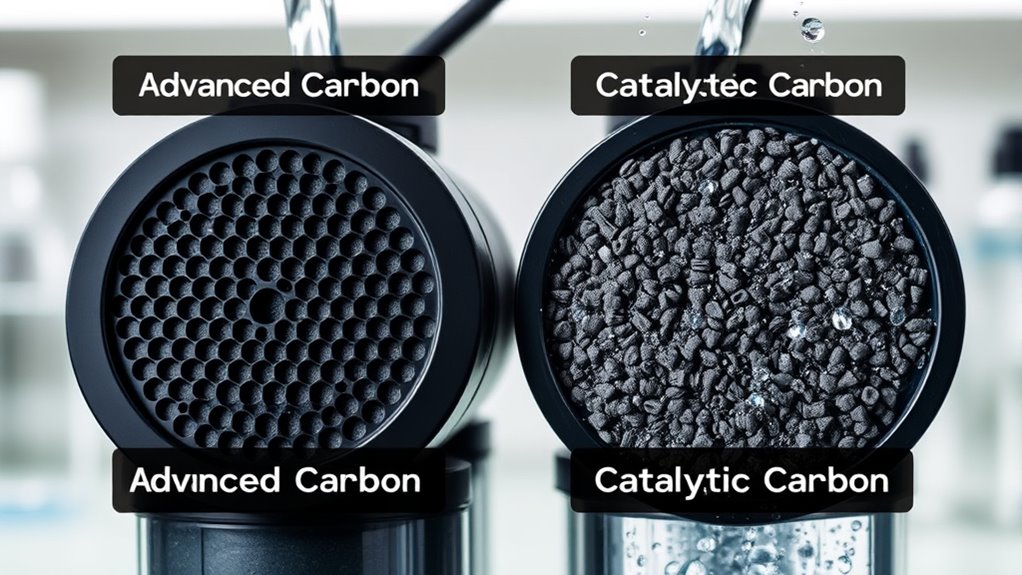
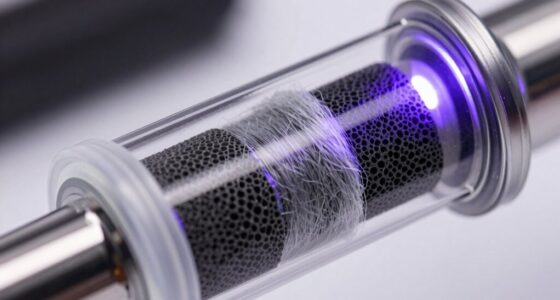
Advanced carbon typically excels at capturing a wide range of impurities due to its high surface area and tailored pore structure, making it highly effective for adsorption-based contaminant removal. Its superior adsorption capacity allows it to trap chemicals, odors, and toxins more efficiently than standard filters. Catalytic carbon, on the other hand, enhances contaminant breakdown through chemical reactions, often providing better performance against chloramines and certain volatile compounds. When evaluating performance, consider how each filter handles specific contaminants and their ability to regenerate. Advanced carbon can often be regenerated through appropriate treatment, restoring its adsorption capacity for repeated use. Catalytic carbon’s reactive properties may reduce the need for regeneration, but it’s essential to assess how each filter maintains efficiency over time for ideal performance. Additionally, understanding the filter lifespan and maintenance requirements can help determine which option offers more sustainable and cost-effective contaminant control.

Envig Catalytic Carbon KDF Inline Garden Hose Filter Removes Chloramine, Chlorine, VOCs & Chemicals for Hydroponics, Microgreens, Organic Gardening, Pet, and Healthy Outdoor Living (1)
[Effective Filtration] It effectively removes chloramine,chlorine and organic compounds up to 80% in field testing (flow rate >…
As an affiliate, we earn on qualifying purchases.
As an affiliate, we earn on qualifying purchases.
Real-World Effectiveness: Case Studies and Field Testing Results

Field testing demonstrates how advanced and catalytic carbon filters perform outside controlled environments, revealing their strengths and limitations in real-world applications. In water purification efforts, these filter media are tested against diverse contaminants and varying water qualities. Case studies show that advanced carbon excels at removing organic compounds and improving taste, while catalytic carbon is more effective against chloramines and certain disinfectants. Field results highlight that both types substantially improve water clarity and safety, but their effectiveness depends on specific contaminant profiles. For example, in municipal water systems, catalytic carbon often outperforms traditional filters, offering better chemical breakdown. Additionally, tuning strategies can optimize filter performance specific to different water conditions. These real-world tests confirm that choosing the right filter media depends on the targeted contaminants and usage context, ensuring ideal water purification performance in everyday situations.

Purewell 3-Stage 0.01μm Ultra-Filtration Gravity Water Filter System, NSF/ANSI 42&372 Certification, 304 Stainless Steel Countertop System with 2 Filters and Stand, Reduce 99% Chlorine, 2.25G, PW-OB
3-Stage Filtration – The Purewell gravity water filter system adopts a composite filter technology, can reduce most contaminants….
As an affiliate, we earn on qualifying purchases.
As an affiliate, we earn on qualifying purchases.
Longevity and Maintenance: Which Carbon Type Lasts Longer and Why

Choosing between advanced carbon and catalytic carbon often depends on their lifespan and maintenance needs, as these factors directly impact ongoing filter performance. Advanced carbon tends to last longer because it can undergo carbon regeneration, restoring its adsorption capacity without frequent filter replacement. This process extends its usability and reduces long-term costs. Catalytic carbon, however, may require more frequent filter replacement because it actively transforms contaminants but can become saturated faster. While catalytic carbon may need less regeneration, its overall lifespan is generally shorter. You should consider how often you’re willing to perform maintenance and the cost of replacing filters. Additionally, filter regeneration can help extend the life of advanced carbon, making it a more cost-effective option over time. Ultimately, the durability of each type affects your ongoing filtration efficiency and maintenance schedule, making longevity a key factor in your decision.
Making the Choice: Factors to Consider for Optimal Filtration
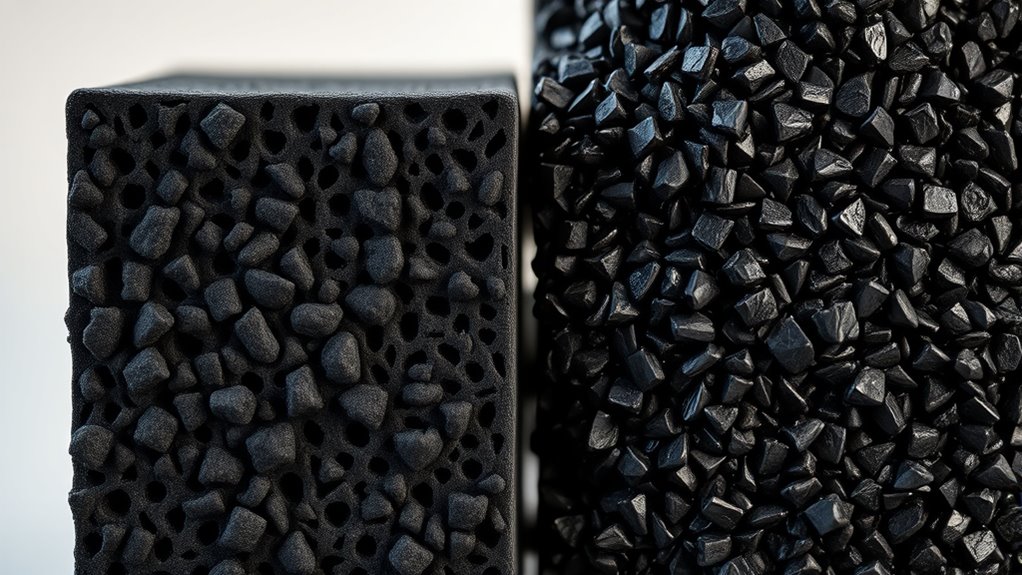
When deciding between advanced carbon and catalytic carbon, it’s important to take into account several key factors to guarantee you select the best option for your needs. Your decision should consider cost analysis, installation considerations, and specific filtration goals. Advanced carbon typically offers lower initial costs but may require more frequent replacement, impacting long-term expenses. Catalytic carbon, while often pricier upfront, can provide enhanced performance and longer lifespan. Additionally, understanding the self-watering plant pots mechanism can help inform your choice if you are integrating filtration systems into plant care setups.
Frequently Asked Questions
What Environmental Impacts Do Advanced and Catalytic Carbons Have During Production?
During production, advanced and catalytic carbons can cause environmental impacts like manufacturing emissions and resource depletion. You might not realize that extracting raw materials and processing them releases greenhouse gases and pollutants. Additionally, resource depletion occurs as they require significant energy and raw material inputs, which can strain ecosystems. Being aware of these impacts helps you choose more sustainable options and supports efforts to reduce environmental harm during carbon production.
Are There Specific Contaminants That One Carbon Type Can Eliminate More Effectively?
Did you know that catalytic carbon can remove up to 99% of chlorinated VOCs, outperforming advanced carbon? If you’re targeting specific contaminants, catalytic carbon offers better contaminant specificity, especially for chlorinated compounds. Its filtration efficiency is higher for these pollutants, making it ideal for certain industrial applications. Advanced carbon, however, excels at adsorbing a broader range of organic compounds but may struggle with specific chlorinated contaminants.
How Do Cost Differences Influence Long-Term Savings With Each Carbon Type?
You’ll find that cost differences considerably impact long-term savings when choosing between advanced and catalytic carbon. Advanced carbon often has higher initial costs but offers better cost efficiency due to longer lifespan and lower maintenance costs. Catalytic carbon, being cheaper upfront, may seem cost-effective initially but can incur higher maintenance costs over time. Consider your specific needs and contaminant levels to determine which option provides better overall savings.
Can Combining Advanced and Catalytic Carbons Improve Overall Filtration Performance?
Combining advanced and catalytic carbons is like blending two powerful forces for better results. You can achieve hybrid filtration that enhances overall performance by leveraging carbon synergy. This approach targets a broader range of contaminants, improving efficiency and longevity. With both types working together, you get cleaner air or water, making it a smart choice for long-term savings and superior filtration outcomes.
What Are the Safety Considerations When Handling and Disposing of These Carbon Filters?
When handling and disposing of these carbon filters, you should follow safety precautions like wearing gloves and masks to avoid inhaling dust or particles. Handle filters gently to prevent releasing contaminants. For disposal, follow local disposal guidelines—usually sealing filters in plastic bags and labeling them as hazardous waste if needed. Always wash your hands afterward to prevent any potential exposure. Proper precautions guarantee your safety and environmental protection.
Conclusion
Choosing between advanced carbon and catalytic carbon is like picking the right key for a lock—you want it to fit perfectly and open maximum performance. While both have their strengths, catalytic carbon often proves to be the steadfast hero, working tirelessly behind the scenes. Trust your needs, weigh the longevity, and select the filter that will serve as your unwavering shield against contaminants, turning your filtration system into a fortress of purity.