
TL;DR

Get home appliances delivered free with Prime
- Fast, free delivery on millions of items
- Prime Video, Amazon Music and more included
- Member-only deals all year
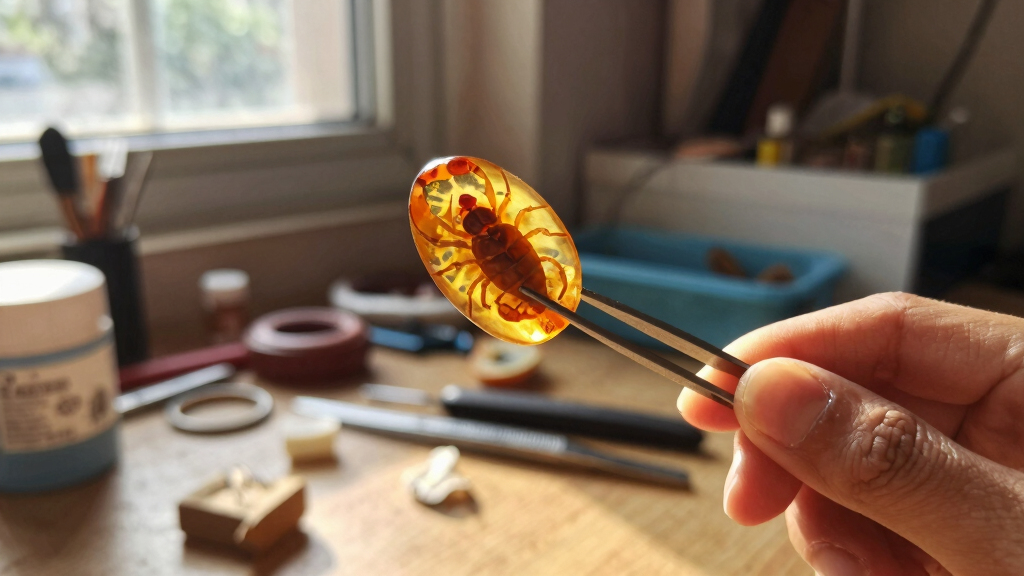
Scientists have identified a scorpion encased in 100 million-year-old Burmese amber. This discovery offers valuable information about ancient arachnids and their environment. Details about the specimen’s significance are still emerging.
A fossilized scorpion encased in 100 million-year-old Burmese amber has been confirmed by scientists, offering a rare glimpse into prehistoric arachnids and their ecosystem.
The specimen was discovered in Burmese amber, which is known for its exceptional preservation of ancient organisms. Researchers confirmed that the amber contains a well-preserved scorpion, providing valuable data on ancient arachnids. The discovery was announced in October 2023 by a team of paleontologists, who described the specimen as remarkably intact, with detailed features visible through microscopy. The amber dates back approximately 100 million years, during the Cretaceous period, and the find adds to a growing collection of prehistoric insects and small creatures preserved in this amber source.
Why It Matters
This discovery is significant because it enhances understanding of ancient arachnid diversity and ecology. The preservation quality allows scientists to study the morphology of prehistoric scorpions in detail, which can inform evolutionary studies. Additionally, such findings contribute to broader knowledge about the biodiversity of the Cretaceous period and the environment in which these creatures lived, potentially influencing theories about ancient ecosystems and climate conditions.
As an affiliate, we earn on qualifying purchases.
Background
Burmese amber has been a rich source of well-preserved fossils dating back to the Cretaceous period. Over recent years, numerous insects, small vertebrates, and other organisms have been retrieved from this amber, shedding light on prehistoric life. The recent discovery of a scorpion adds to this body of evidence, which has already provided insights into the diversity of life during that era. Previous amber findings have included insects, feathers, and small reptiles, but complete arachnids are relatively rare. The amber deposits are primarily mined in Myanmar, and ongoing excavations continue to yield significant fossils.
“The preservation of this scorpion is extraordinary; we can see fine details of its exoskeleton, which helps us understand its anatomy and how it might have lived.”
— Dr. Emily Carter, Paleontologist
“This find provides a rare snapshot of prehistoric life, offering clues about the biodiversity and ecological dynamics of the Cretaceous period.”
— Lead researcher Dr. Lin Wei
prehistoric insect amber replica
As an affiliate, we earn on qualifying purchases.
As an affiliate, we earn on qualifying purchases.
What Remains Unclear
It is not yet clear how common such well-preserved arachnids are in Burmese amber or what specific ecological role this scorpion played during the Cretaceous period. Further analysis is ongoing to determine its exact species and its place within prehistoric ecosystems.
As an affiliate, we earn on qualifying purchases.
What’s Next
Researchers plan to conduct detailed morphological and genetic analyses of the specimen. Additional excavations in Burmese amber deposits are expected to continue, potentially uncovering more preserved prehistoric creatures. Future studies may also focus on understanding the environment and climate of the period based on this and other fossils.
As an affiliate, we earn on qualifying purchases.
Key Questions
What makes this scorpion discovery so important?
The preservation quality allows scientists to study its anatomy in detail, providing insights into prehistoric arachnids and their ecosystems.
How old is the amber in which the scorpion was found?
The amber is approximately 100 million years old, dating back to the Cretaceous period.
Are similar fossils common in Burmese amber?
While Burmese amber has yielded many fossils, complete and well-preserved arachnids like this scorpion are relatively rare.
What will scientists do next with this discovery?
Further morphological and possibly genetic analyses are planned, along with continued excavations in Burmese amber deposits.
Source: reddit
Halloween Picks
halloween
As an affiliate, we earn on qualifying purchases.