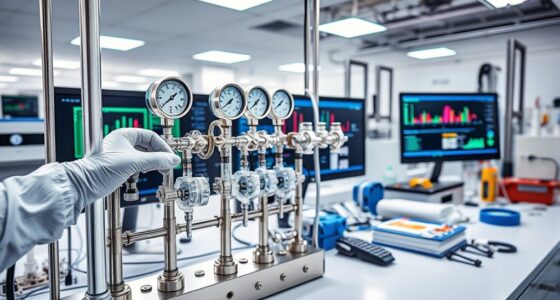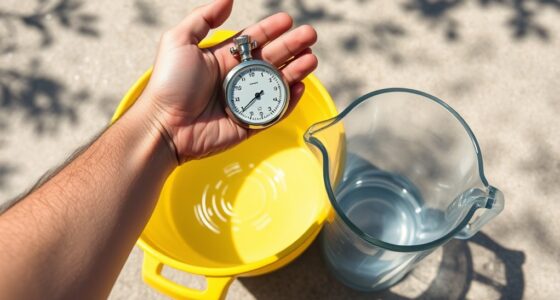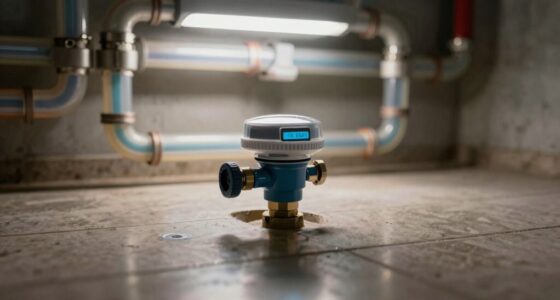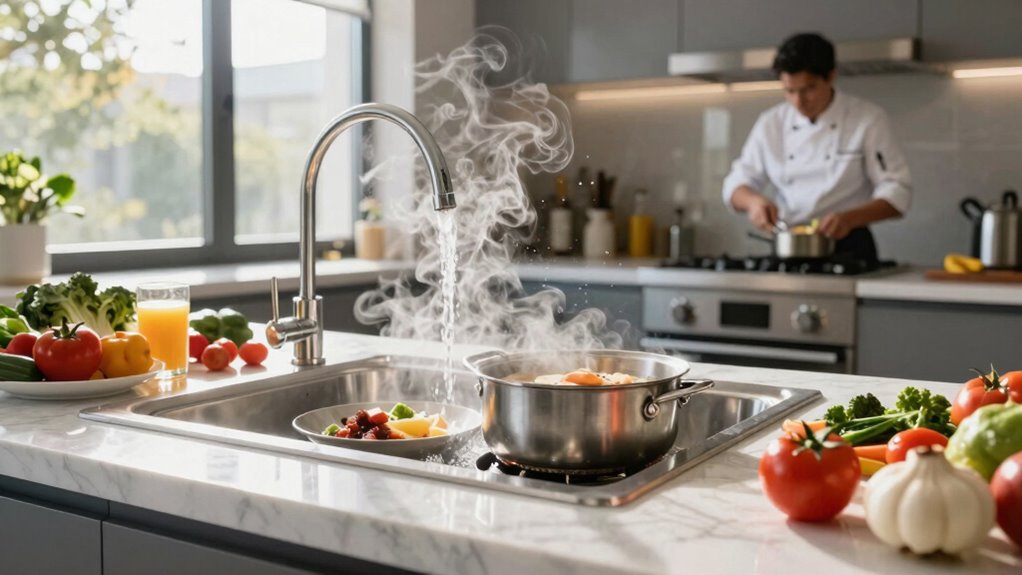
High flow in your household means delivering water quickly and consistently to meet your daily needs without pressure drops or delays. It involves providing an adequate volume of water that keeps up with multiple fixtures running simultaneously, even when you’re using showers, sinks, or appliances. Achieving this requires your plumbing system to match pump capacity, pipe size, and pressure levels perfectly. To make sure your system runs smoothly and efficiently, there’s more to reflect on about optimizing high flow in real house demands.

Get home appliances delivered free with Prime
- Fast, free delivery on millions of items
- Prime Video, Amazon Music and more included
- Member-only deals all year
Key Takeaways
- High flow means delivering sufficient water volume quickly to meet multiple household needs simultaneously.
- Real house demands require balancing pump capacity with plumbing system capacity for consistent flow.
- Adequate pipe sizing and minimal restrictions are essential for maintaining high flow under real usage conditions.
- System components must be properly matched and optimized to handle peak water demand efficiently.
- High flow ensures reliable water pressure and volume during all household activities without delays or weak points.

Have you ever wondered what “high flow” really means? It’s a term you’ve probably heard tossed around when discussing water systems or pumps, but understanding the true significance becomes clearer once you consider real house demands. High flow isn’t just about moving water quickly; it’s about meeting the specific needs of your household, ensuring water is available when you need it, without delay or drop in pressure.
High flow means delivering the right water volume at consistent pressure for your household needs.
At its core, high flow relates closely to water pressure and pump capacity. Water pressure, measured in pounds per square inch (PSI), reflects how forcefully water moves through your pipes. When you have high flow, the goal is to maintain that pressure even when multiple fixtures—like showers, dishwashers, or outdoor hoses—are in use simultaneously. If your water pressure drops too much during peak usage, it indicates your system isn’t delivering high flow effectively. That’s where pump capacity comes into play.
Pump capacity refers to the maximum volume of water a pump can move within a given time, often measured in gallons per minute (GPM). A pump with high capacity can push larger amounts of water faster, helping to sustain high flow rates across your household. When your pump’s capacity aligns with your house’s demands, you experience steady water pressure regardless of how many fixtures are active. This balance prevents frustrating situations like weak showers or inconsistent tap flow.
However, having a powerful pump isn’t enough if your water pressure isn’t adequate or if your plumbing system can’t handle the increased flow. The entire system needs to work in harmony. For example, if your pipes are narrow or clogged, even the best pump with the highest capacity won’t achieve true high flow because physical restrictions limit water movement. It’s also important to consider system efficiency to maximize performance and prevent energy waste. Properly sizing pipes and pumps based on household water demand is essential for achieving optimal high flow. Additionally, understanding the components of water systems helps in diagnosing and improving flow issues. Recognizing the impact of plumbing design can further help optimize water movement and pressure.
Understanding the relationship between water pressure, pump capacity, and your house’s water demands helps you make informed decisions. If you’re upgrading or replacing a pump, focus on matching its capacity to your peak usage needs. This way, you’ll enjoy reliable high flow, where water arrives with enough force and volume, no matter how many fixtures are in use. Properly managing water system components is essential for achieving optimal high flow. Ultimately, high flow isn’t just about moving water quickly—it’s about delivering the right amount of water at the right pressure, every time you turn on the tap.
high flow water pump for household
As an affiliate, we earn on qualifying purchases.
As an affiliate, we earn on qualifying purchases.
Frequently Asked Questions
How Does High Flow Impact Energy Efficiency?
High flow affects energy efficiency by increasing the demand on your system, which can lead to higher energy consumption. Proper flow regulation helps you control this, ensuring your system runs most effectively without overexerting. When you focus on efficiency enhancement through managing flow rates, you reduce unnecessary energy use, saving money and extending equipment lifespan. Therefore, maintaining balanced flow is key to achieving better energy efficiency in your household.
What Industries Benefit Most From High Flow Systems?
You’ll find industries like manufacturing and chemical processing benefit most from high flow systems because they require rapid, large-volume fluid transfer. Agricultural irrigation also gains considerably, as high flow enables efficient watering over extensive fields. These systems improve productivity by reducing wait times and ensuring consistent performance, making them ideal for industrial applications and large-scale farming where fast, reliable fluid movement is essential.
Are There Safety Concerns With High Flow Applications?
Yes, there are safety concerns with high flow applications. Excessive water pressure can cause leaks or damage if flow regulation isn’t properly maintained. You need to guarantee your system is equipped with reliable flow regulation devices to prevent sudden pressure surges. Always monitor water pressure levels and install pressure relief valves where necessary. Proper installation and regular inspections help mitigate risks, keeping your high flow system safe and efficient.
How Is High Flow Measured in Real House Demands?
You measure high flow in real house demands by checking water pressure and pump capacity. Water pressure indicates how forcefully water moves through your system, while pump capacity shows how much water the pump can deliver per minute. When your system consistently delivers high water pressure with a capable pump, you’re experiencing high flow. Monitoring these factors helps guarantee your plumbing meets the demands of your household without causing issues.
What Maintenance Is Required for High Flow Setups?
Oh, the joy of high flow setups—easy to forget they need TLC! You should regularly inspect system durability components and clean filters to prevent buildup. Maintenance frequency varies, but expect to check valves, pipes, and pumps every few months. Neglecting this could lead to costly repairs. So, stay proactive, keep everything in top shape, and your high flow system will keep performing smoothly without turning into a nightmare.
As an affiliate, we earn on qualifying purchases.
Conclusion
So, don’t let the term “high flow” scare you into thinking it’s just about fancy equipment. Once you understand real house demands, it’s clear that high flow simply means meeting your household’s water needs efficiently and comfortably. You might worry about increased costs or complexity, but the right system actually saves you money and hassle in the long run by preventing pressure drops and ensuring consistent water flow. It’s all about making your home more functional and comfortable.
As an affiliate, we earn on qualifying purchases.
As an affiliate, we earn on qualifying purchases.
Halloween Picks
halloween
As an affiliate, we earn on qualifying purchases.