
To comply with flow rate and pressure drop codes, you need to understand relevant industry standards, regulations, and safety margins. Use accurate calculations for flow and pressure drops, considering factors like friction and fittings, and incorporate safety buffers for system reliability. Stay consistent in documentation, testing, and using compliant tools and certifications. Keep up with evolving standards by monitoring industry updates and engaging with experts—this guide will help you navigate the essentials smoothly.
Open a free Amazon Business account
Business pricing, bulk buying and tax-exempt orders.
As an affiliate, we earn on qualifying purchases.
Key Takeaways
- Understand industry standards and regulations that specify acceptable flow rates and pressure drops for your system.
- Use precise calculations and safety margins to ensure compliance and system reliability under operational variations.
- Maintain thorough documentation of design decisions, calculations, and testing to demonstrate adherence to codes.
- Utilize specialized software and certification programs to verify standards compliance early in the design process.
- Stay updated on evolving standards through industry engagement, official sources, and continuous training to ensure ongoing compliance.
As an affiliate, we earn on qualifying purchases.
Understanding Key Industry Standards and Regulations

Understanding key industry standards and regulations is essential for ensuring that flow rate and pressure drop systems meet safety, efficiency, and legal requirements. You need to be familiar with material specifications to guarantee that components are suitable for your application, withstand operating conditions, and comply with quality standards. Certification processes verify that products meet these standards through testing and documentation, giving you confidence in their reliability. Regulatory bodies often specify material requirements to prevent failures and hazards. Staying updated on these standards helps you avoid legal issues and ensures your systems are safe and compliant. By understanding and adhering to material specifications and certification processes, you can design and operate flow systems that meet all industry demands effectively. Additionally, understanding the offensive security techniques used by ethical hackers can help you develop more resilient systems against cyber threats.
As an affiliate, we earn on qualifying purchases.
Essential Calculations for Flow Rate and Pressure Drop

Calculating flow rate and pressure drop accurately is essential for designing efficient and safe piping systems. You need to master flow calculations to determine the correct flow rate for your system, ensuring it meets operational needs without overloading components. Pressure analysis helps identify potential pressure drops along the pipeline, which can affect system performance. To perform these calculations, start by understanding the fluid properties and pipe characteristics. Use established formulas and industry standards to estimate flow rates, considering factors like velocity and cross-sectional area. For pressure drops, account for friction losses and fittings. Precise flow calculations and pressure analysis allow you to optimize system design, minimize energy consumption, and ensure compliance with relevant codes. This foundational knowledge keeps your system safe, efficient, and compliant. Additionally, selecting the appropriate dog names can reflect the personality traits of your pet, contributing to a well-rounded and harmonious environment.
As an affiliate, we earn on qualifying purchases.
Common Challenges in Achieving Compliance
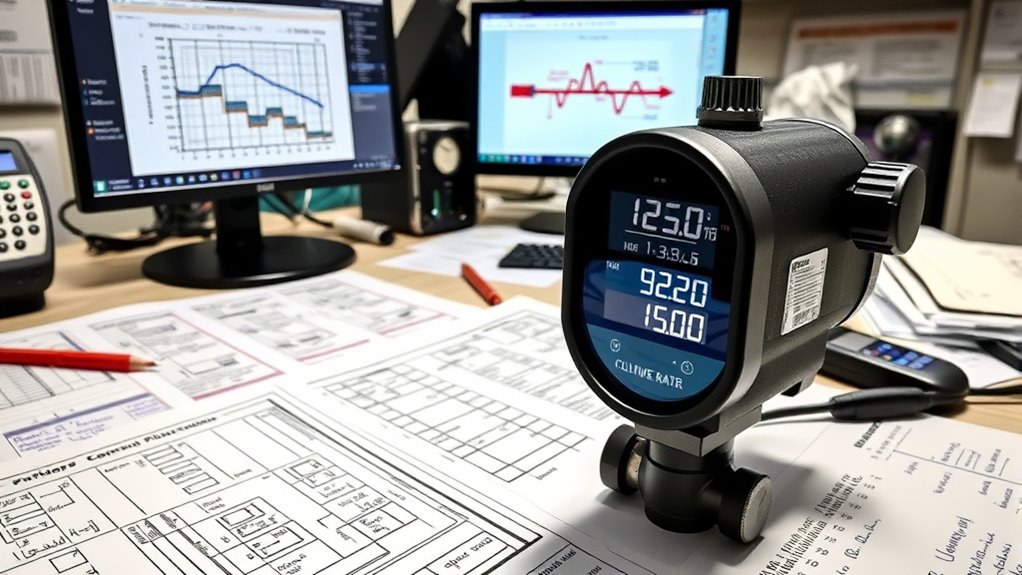
You may find that ambiguous regulatory language makes it hard to determine exact compliance requirements. Complex testing procedures can also slow down your progress and increase the risk of errors. Additionally, inconsistent enforcement practices can leave you uncertain about how strict compliance really needs to be. Implementing risk assessment strategies can help you better navigate these challenges and ensure adherence to regulations.
Ambiguous Regulatory Language
Ambiguous regulatory language often poses significant hurdles for compliance efforts, as unclear definitions and vague requirements leave you uncertain about how to meet standards. This lack of clarity increases compliance challenges, forcing you to interpret vague guidelines without a clear roadmap. You may struggle with:
- Understanding precise measurement criteria
- Determining acceptable testing methods
- Charting inconsistent terminology
- Identifying applicable standards
- Ensuring documentation aligns with vague directives
These uncertainties can lead to costly delays or non-compliance penalties. To overcome this, you need to stay informed, consult with experts, and seek clarification whenever possible. Clear communication from regulators and detailed guidance can help reduce ambiguity, making compliance more straightforward and minimizing risks associated with misinterpretation of regulatory language. Additionally, referencing regulatory standards and understanding regional variations can provide further clarity to streamline your compliance process.
Complex Testing Procedures
Navigating complex testing procedures often presents significant challenges in achieving compliance, as intricate protocols and detailed requirements can be difficult to interpret and execute correctly. Material specifications must be strictly followed to ensure accurate results, but variations can lead to discrepancies. Testing methodologies require precise setup, calibration, and documentation, which can be time-consuming and prone to error if not properly understood. You might encounter conflicting instructions or ambiguous criteria that complicate the process further. Ensuring consistent adherence to these procedures demands thorough training and attention to detail. Without a clear grasp of material specifications and testing methodologies, your efforts to meet flow rate and pressure drop standards risk failure, delays, or non-compliance notices, emphasizing the importance of clarity and precision in testing protocols. Developing a methodical approach helps to systematically address these complexities and improve overall compliance efforts.
Inconsistent Enforcement Practices
Inconsistent enforcement practices often create significant hurdles in achieving compliance with flow rate and pressure drop standards. Enforcement inconsistencies and regulatory variability mean you might face different expectations depending on location or inspector. This inconsistency can lead to confusion, delays, and potential non-compliance risks. To navigate this, consider these challenges:
- Varying interpretation of regulations
- Differing inspection standards
- Unequal penalties for violations
- Lack of clear enforcement guidelines
- Fluctuating oversight levels
- Recognizing that regulatory enforcement is not always uniformly applied can help you better anticipate and address compliance issues.
Understanding that enforcement practices aren’t uniform helps you prepare better. Staying informed about local regulatory variability and documenting your compliance efforts can mitigate risks. Recognizing these challenges allows you to adapt your approach, ensuring your systems meet standards regardless of enforcement inconsistencies.
As an affiliate, we earn on qualifying purchases.
Best Practices for Designing to Code

To design effectively to code, you need to understand the relevant standards that apply to your project. Incorporating safety margins guarantees your system remains compliant under real-world conditions, preventing costly adjustments later. Additionally, documenting your design decisions clearly helps demonstrate compliance and facilitates smooth inspections.
Understand Relevant Standards
Understanding relevant standards is essential for designing flow rate and pressure drop systems that are both safe and compliant. By knowing the standards, you ensure your designs meet legal requirements and perform reliably. Key aspects include reviewing flow simulation guidelines to optimize system performance and verifying material compatibility to prevent corrosion or degradation. Staying current with standards helps you select appropriate components and avoid costly redesigns. Additionally, incorporating AI security techniques can enhance the detection of system anomalies and improve overall safety.
Incorporate Safety Margins
When designing flow rate and pressure drop systems, incorporating safety margins guarantees your setup can handle unexpected conditions and variations without failure. Safety margins act as buffers, accommodating fluctuations in demand, supply inconsistencies, or system wear over time. They are essential for effective risk management, preventing system overloads or failures that could lead to costly downtime or safety hazards. By proactively including these margins in your design, you ensure compliance with codes and standards while increasing system reliability. Remember, safety margins aren’t about excessive overdesign but strategic buffers that account for real-world uncertainties. This approach helps you maintain peak performance under varying conditions and reduces the likelihood of unexpected issues, ultimately safeguarding your system and ensuring long-term operational safety. Incorporating industry standards and best practices further supports the robustness of your design.
Document Design Decisions
Documenting your design decisions is a critical step in guaranteeing compliance with flow rate and pressure drop codes. Clear documentation helps validate your choices, especially regarding material selection and system layout. To improve documentation clarity, keep detailed records of why you selected specific materials, considering their impact on flow and pressure. Proper documentation also includes calculations, assumptions, and testing results that support your design.
Consider these best practices:
- Record reasons for material choices and their compliance benefits
- Include detailed schematics and flow calculations
- Note safety margins and how they influence decisions
- Maintain version control for updates or changes
- Use consistent terminology to avoid confusion
This approach ensures your design remains compliant and easy to review or audit later.
Tools and Resources for Simplifying Compliance

To streamline compliance with flow rate and pressure drop codes, leveraging the right tools and resources can make a significant difference. Design software tailored for fluid systems helps you model and analyze setups quickly, ensuring designs meet standards before installation. These programs often include built-in compliance checks, saving you time and reducing errors. Certification programs provide formal recognition of your understanding and adherence to regulations, giving you confidence and credibility. They often offer practical training, guidance, and validation to ensure you’re up-to-date with industry requirements. Combining these resources simplifies the compliance process, minimizes revisions, and accelerates project timelines. Using dedicated design tools alongside certification programs empowers you to navigate complex codes efficiently and confidently, ensuring your systems meet all necessary flow rate and pressure drop standards. Additionally, understanding Ford Tuning techniques can help optimize fluid flow and pressure management in automotive applications, making your compliance efforts more effective and tailored to specific vehicle systems.
Keeping Up-To-Date With Evolving Standards
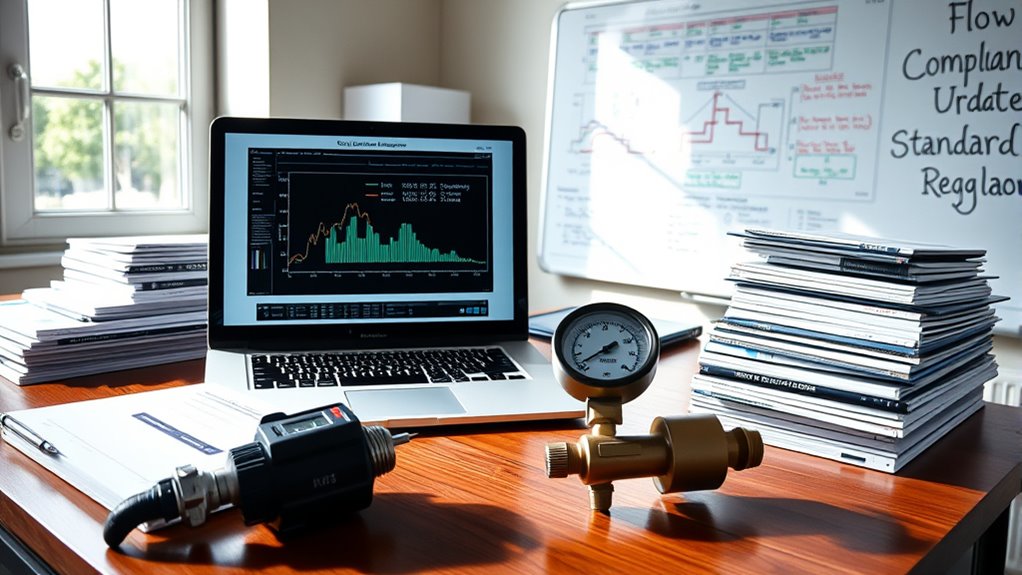
Staying current with evolving standards is vital for maintaining compliance and guaranteeing your systems operate efficiently. To do this, keep an eye on technology updates that impact flow rate and pressure drop regulations. Engage in stakeholder collaboration to share insights and stay informed about industry shifts. Regularly review updates from relevant authorities and industry groups to adapt your practices promptly. Consider subscribing to newsletters or joining professional networks focused on compliance standards. Attend conferences or webinars to deepen your understanding and network with experts. By actively tracking these developments, you’ll reduce risks and improve system performance while staying aligned with the latest regulations. Incorporating continuous education into your routine ensures you’re always prepared for changes, making compliance smoother and operationally sound.
Frequently Asked Questions
How Often Do Industry Standards for Flow Rate and Pressure Drop Change?
Industry standards for flow rate and pressure drop typically evolve every few years, driven by industry updates and technological advances. You should stay proactive to address compliance challenges, as these changes can impact your projects. Regularly monitoring updates from regulatory bodies guarantees you’re aligned with current requirements. By doing so, you avoid penalties, enhance efficiency, and maintain safety standards, keeping your operations compliant and ahead of potential compliance challenges.
Are There Specific Certifications Required for Compliance Professionals?
You might think compliance professionals need specific certifications, but it varies by industry and region. Some require certifications like ASHRAE or OSHA, while others prioritize experience and ongoing training. Keep in mind that regulatory updates often influence certification requirements, so staying current is essential. By obtaining relevant certifications, you demonstrate your expertise, ensuring you meet industry standards and adapt to evolving codes and regulations effectively.
Can Existing Systems Be Retrofitted to Meet New Codes?
Yes, you can retrofit existing systems to meet new codes, but you’ll face retrofit challenges like compatibility issues and system downtime. Consider cost considerations carefully, as upgrades can be expensive and may require significant modifications. Planning thoroughly, consulting professionals, and prioritizing essential updates can help you navigate these challenges efficiently. Always assess whether the benefits outweigh the costs to ensure your retrofit aligns with compliance goals.
What Are the Penalties for Non-Compliance With Flow and Pressure Standards?
If you don’t comply with flow rate and pressure standards, you risk regulatory penalties, which can include hefty fines or legal actions. Non-compliance also leads to increased scrutiny through compliance enforcement, possibly resulting in operational delays or shutdowns. To avoid these issues, guarantee your system meets all current regulations and standards, and stay updated on any changes to prevent costly penalties and maintain smooth operations.
How Can Smaller Companies Effectively Stay Updated on Evolving Regulations?
You should regularly review industry websites and subscribe to regulatory updates to stay informed about evolving regulations. Attending compliance training sessions can also keep you current with new standards and best practices. Networking with industry peers and joining trade associations provides valuable insights. By actively seeking out regulatory updates and investing in ongoing compliance training, you can guarantee your company stays compliant and avoids penalties.
Conclusion
Managing flow rate and pressure drop codes is like steering through a complex maze, but with the right knowledge, you can chart a clear course. Stay vigilant, adapt to evolving standards, and arm yourself with reliable tools—think of them as your compass and map. Mastering these regulations transforms challenges into stepping stones, guiding you smoothly through compliance’s intricate dance. With confidence as your anchor, you’ll turn technical hurdles into opportunities for precision and excellence.
Flea & tick season Picks
flea and tick prevention
As an affiliate, we earn on qualifying purchases.