To calculate flow rate with a bucket test, start by filling a known-volume bucket (like 5 gallons) while timing how long it takes from start to stop. Divide the volume by the measured time to get flow rate in gallons per second, then multiply by 60 for gallons per minute. Maintaining accuracy and repeating the process helps guarantee reliable results. Keep going to learn more precise steps to perfect your test.

Get home appliances delivered free — and shop member deals
- Fast, free delivery on millions of items
- Access to Prime Big Deal Days deals on October 6–7
- Prime Video, Amazon Music and more included
Key Takeaways
- Use a clean, known-capacity bucket and start the water flow, timing from when water begins to when it stops.
- Record the exact time in seconds for the bucket to fill completely during each test.
- Calculate flow rate by dividing the bucket volume by the elapsed time, then convert to desired units like gallons per minute.
- Repeat the test multiple times to obtain an average flow rate for accuracy.
- Ensure steady water flow and precise timing to improve measurement reliability.
Ever wondered how to determine the flow rate of a faucet or pipe quickly and accurately? If so, a bucket test is one of the simplest and most effective methods you can use. This approach relies on straightforward measurement techniques to give you a clear understanding of water flow. It’s especially handy when you need a quick assessment without complicated tools or equipment.
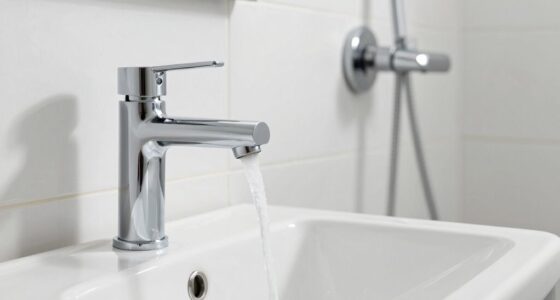
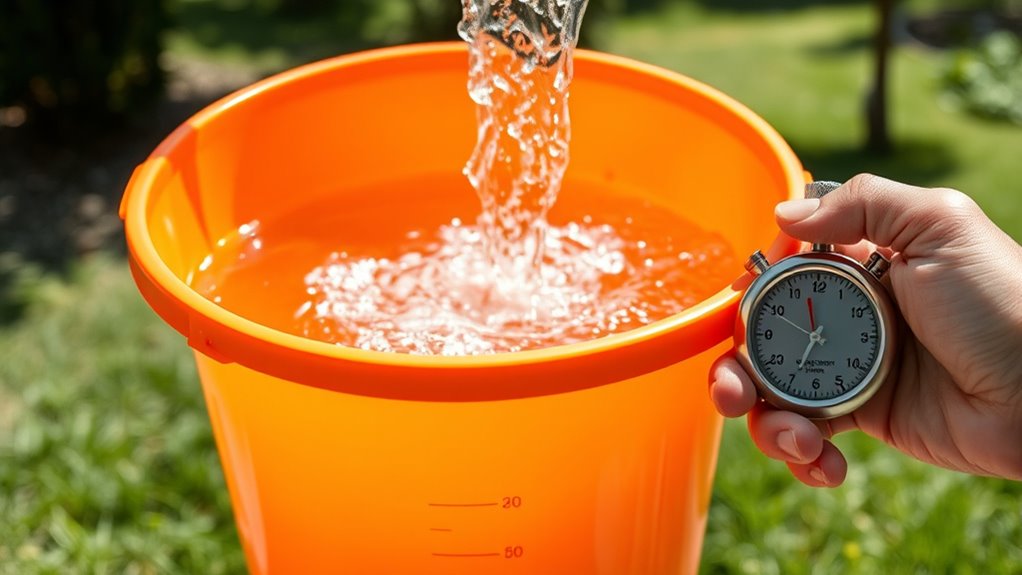
To start, you’ll need a clean, empty bucket with a known capacity—preferably a 5-gallon or 10-liter bucket. Make sure the area around the faucet or pipe is clear and that you have a stopwatch or timer handy. Turn on the water fully, allowing it to flow into the bucket. As the water fills, keep a close eye on the timer and note the exact moment you turn the faucet on and off. Timing how long it takes to fill the bucket helps you determine the water flow rate.
Use a clean 5-gallon bucket and a stopwatch to measure your faucet’s flow rate quickly and accurately.
Once you’ve filled the bucket, stop the timer and record the elapsed seconds. To calculate the flow rate, you’ll use the basic formula: water flow equals the volume divided by the time. For example, if you’re using a 5-gallon bucket and it fills in 30 seconds, you divide 5 gallons by 30 seconds to get gallons per second. To convert this to gallons per minute, multiply the result by 60. This measurement technique provides a direct, real-world assessment of how much water flows through your pipe or faucet in a given time frame.
Accuracy depends on precise timing and ensuring the bucket is filled to its full capacity without overflows or spills. Avoid rushing the process; start and stop the timer exactly when the water begins and ceases flowing. It’s also wise to repeat the test a few times and average the results for a more reliable measurement. Doing so helps account for any minor variations caused by fluctuating water pressure or other factors.
This bucket test method is especially useful for troubleshooting plumbing issues, estimating water usage, or verifying flow rates when installing fixtures. The key is understanding the water flow and employing simple measurement techniques to gather accurate data. By mastering this straightforward approach, you can get quick, reliable insights into your water system’s performance without the need for specialized tools. Additionally, understanding digital literacy can help you better manage and troubleshoot modern plumbing systems that incorporate smart technology. It’s an easy, practical way to measure flow rate and ensure your plumbing operates efficiently.
As an affiliate, we earn on qualifying purchases.
Frequently Asked Questions
Can a Bucket Test Measure Flow Rate for All Types of Liquids?
A bucket test can’t measure flow rate accurately for all liquids because liquid viscosity affects flow, making some liquids flow slower or unevenly. Also, container shape influences how you measure, as irregular shapes can cause inconsistent results. For precise measurements, consider these factors, and use specialized tools for liquids with high viscosity or unusual container shapes. A bucket test works best for straightforward, low-viscosity liquids in simple containers.
How Accurate Is a Bucket Test Compared to Professional Flow Measurement Tools?
A bucket test offers a rough estimate of flow rate but has precision limitations compared to professional tools. You might face calibration challenges, which can lead to inaccuracies, especially with varying liquid viscosities or flow conditions. While it’s simple and cost-effective, it’s less reliable for precise measurements. For critical applications, using calibrated flow meters is recommended, as they ensure higher accuracy and account for potential calibration issues.
What Are Common Mistakes to Avoid During a Bucket Test?
You should avoid measurement errors by ensuring your container is stable and markings are clear. Be careful with timing inaccuracies—use a reliable stopwatch and start timing exactly when the flow begins. Don’t rush the process or estimate the start and end points, as these mistakes can skew results. Consistent technique and attention to detail help improve accuracy, reducing errors and giving you a more reliable flow rate measurement.
How Do Temperature Variations Affect Flow Rate Calculations?
Temperature fluctuations can markedly affect your flow rate calculations because they cause viscosity changes in the fluid. As temperature increases, viscosity decreases, making the fluid flow faster, which may lead you to overestimate the flow rate. Conversely, cooler temperatures increase viscosity, slowing flow and possibly causing underestimation. To guarantee accuracy, you should measure temperature and adjust your calculations accordingly or conduct tests under consistent temperature conditions.
Is It Possible to Automate the Bucket Test Process?
Yes, you can automate the bucket test process by leveraging sensor integration and exploring automation potential. Installing flow sensors or level detectors allows real-time data collection, reducing manual effort and increasing accuracy. With programmable controllers or IoT devices, you can automatically record flow rates, analyze data, and even generate reports. This approach streamlines the process, makes it more reliable, and saves you time in monitoring and managing flow rates effectively.
digital stopwatch for water flow testing
As an affiliate, we earn on qualifying purchases.
As an affiliate, we earn on qualifying purchases.
Conclusion
Now that you’ve learned how to calculate flow rate with a simple bucket test, you’re ready to take control of your water management. Think of this test as a tiny window into a world of efficiency—each drop counts! With just a few easy steps, you can turn basic tools into powerful insights. So go ahead, embrace this practical skill and watch your understanding of water flow flow seamlessly into smarter decisions—you hold the key!
water flow rate measurement tools
As an affiliate, we earn on qualifying purchases.
As an affiliate, we earn on qualifying purchases.
As an affiliate, we earn on qualifying purchases.
Fall Picks
fall essentials
As an affiliate, we earn on qualifying purchases.