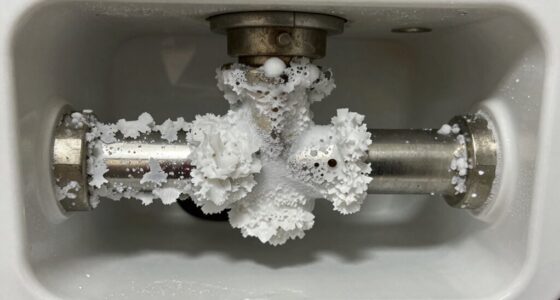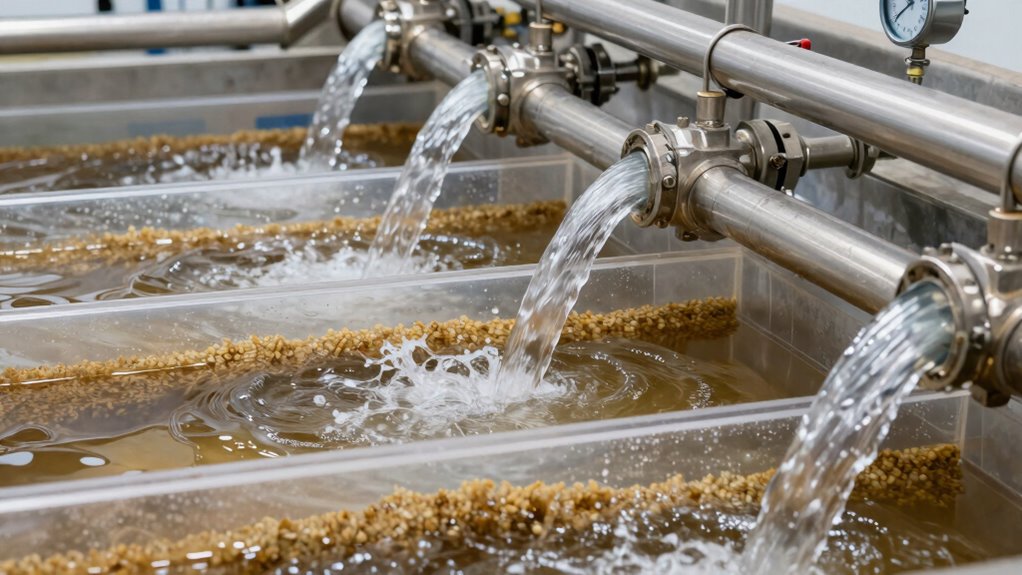
To stop grit without killing flow, start with gravity-based sedimentation to let heavier particles settle naturally. Use mechanical devices like screens or grit chambers for larger debris, ensuring flow stays steady during operation. Chemical treatments with coagulants can help clump fine sediments, making them easier to remove without disrupting flow. Regular monitoring and balancing of flow rates are essential — if you want to discover more about combining methods effectively, keep exploring.
Open a free Amazon Business account
Business pricing, bulk buying and tax-exempt orders.
As an affiliate, we earn on qualifying purchases.
Key Takeaways
- Use gravity settling as a first stage to remove heavy grit without disrupting flow.
- Incorporate mechanical screens or grit chambers to trap larger particles early.
- Apply chemical coagulants to agglomerate fine sediments, facilitating easier removal without flow interference.
- Monitor flow rates continuously and adjust sediment removal methods to prevent turbulence.
- Combine physical and chemical treatments with proper flow control to ensure effective grit removal while maintaining smooth flow.
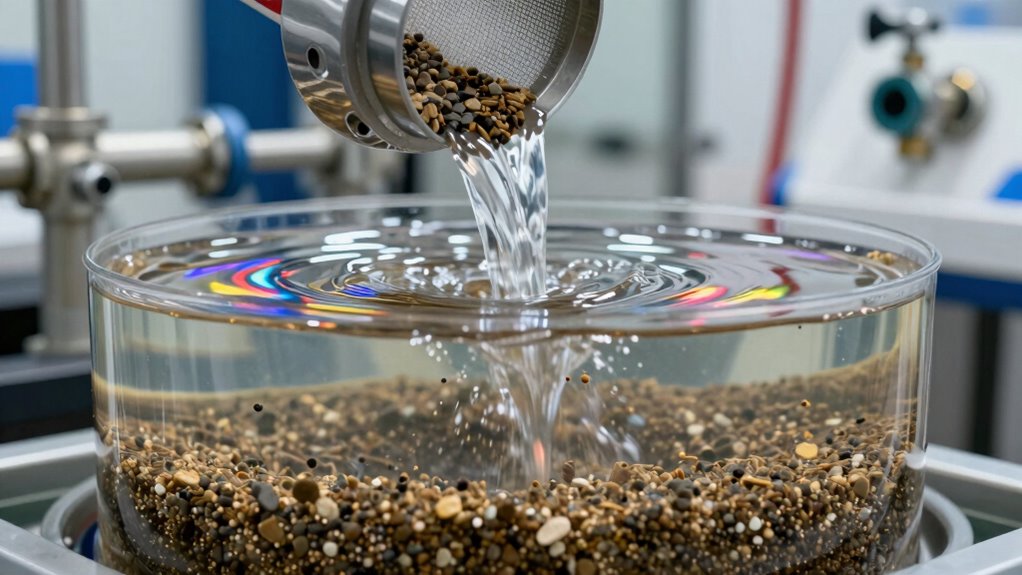
Sediment treatment stages are fundamental processes that remove pollutants and improve water quality before discharge or reuse. When tackling sediment buildup, understanding how to effectively carry out sediment removal without disrupting the flow is key. The treatment process begins with identifying the nature and volume of sediment present. This step helps determine the most suitable removal methods, whether it’s gravity-based settling, mechanical extraction, or chemical conditioning. The goal is to eliminate grit and fine particles that can clog pipes, damage equipment, or compromise water quality.
Sediment treatment removes pollutants while maintaining flow efficiency through gravity, mechanical, and chemical methods.
In the initial phase of sediment removal, gravity settling is often the simplest and most cost-effective approach. As water slows down in a designated basin or clarifier, heavier sediments settle at the bottom. Here, you need to guarantee the flow rate is carefully controlled so that the process isn’t overwhelmed, which could lead to resuspension of settled particles. This stage acts as a natural filter, allowing the majority of grit to drop out of suspension without harming the overall flow. Regular maintenance of these basins is indispensable to prevent buildup that might interfere with the process, ensuring that flow remains uninterrupted and efficient.
Mechanical methods, such as screens or grit chambers, come into play when gravity alone isn’t enough. These devices trap larger debris and grit, preventing them from moving further into the system. When implementing these, you want to keep the flow steady and avoid sudden surges that could push sediment back into the water or cause blockages. Mechanical removal is especially useful for handling heavier grit that settles quickly, but it must be paired with ongoing cleaning routines to prevent clogging and maintain ideal flow.
Chemical treatment can also be part of the process, especially when dealing with fine sediments or pollutants that resist physical removal. Coagulants or flocculants are added to help particles clump together, making sediment easier to separate. This step requires careful dosage and mixing to avoid over-treatment, which could lead to excessive sludge or hinder water flow. Proper chemical application enhances sediment removal efficiency without causing flow restrictions. Additionally, implementing proper flow management ensures that these treatment methods do not hinder water movement or cause turbulence.
Throughout the entire treatment process, it’s imperative to monitor flow rates and sediment levels continuously. You want to strike a balance: removing grit thoroughly while maintaining a smooth, unimpeded flow. Overly aggressive removal methods risk damaging the system or causing turbulence that re-suspends settled particles. A well-planned sediment treatment strategy combines these methods, ensuring effective sediment removal without killing the flow, ultimately resulting in cleaner water ready for safe discharge or reuse.
As an affiliate, we earn on qualifying purchases.
Frequently Asked Questions
How Can Flow Rates Be Maintained During Sediment Removal?
To maintain flow rates during sediment removal, you should focus on flow optimization and sediment management techniques. Use adjustable gates or bypass channels to control flow, ensuring sediment removal doesn’t disrupt overall flow. Regularly monitor flow conditions and adjust operations accordingly. Implementing these methods helps you keep consistent flow rates, prevents blockages, and maintains system efficiency while effectively managing sediment and grit buildup.
What Are the Environmental Impacts of Grit Removal Methods?
You should consider that grit removal methods can lead to environmental impacts like chemical pollution from chemicals used in treatment, which can harm aquatic life. Habitat disruption is also a concern, as equipment or processes disturb local ecosystems. To minimize these effects, you can opt for eco-friendly techniques, carefully manage chemical use, and implement habitat restoration efforts, ensuring your grit removal process remains sustainable and environmentally conscious.
Which Equipment Is Most Effective for Small-Scale Sediment Treatment?
For small-scale sediment treatment, you’ll find that using a filter media like sand or gravel is most effective. It captures grit efficiently without clogging easily, maintaining flow. Regular maintenance guarantees ideal performance. After sediment collection, focus on proper sludge disposal to prevent environmental issues. This approach keeps the system running smoothly, minimizes downtime, and reduces the need for complex equipment, making it suitable for smaller setups.
How Often Should Sediment Treatment Systems Be Inspected?
You should inspect your sediment treatment system at least quarterly to guarantee peak performance. Regular inspection frequency helps catch potential issues early, preventing clogging or flow disruption. Incorporate maintenance scheduling based on manufacturer guidelines and observed system conditions. Consistent inspections allow you to identify wear, sediment buildup, or equipment malfunctions, ensuring your system runs smoothly and efficiently, ultimately extending its lifespan and maintaining effective sediment management.
What Are Cost-Effective Options for Upgrading Existing Sediment Treatment?
You should consider cost-effective upgrades like installing lamella plates or enhanced filters, which offer a good balance of cost analysis and materials durability. These options improve sediment removal efficiency without substantially impacting flow rates. By choosing durable materials and evaluating long-term maintenance costs, you ensure your system stays efficient and reliable, saving money over time. Prioritize upgrades that deliver high performance while remaining budget-friendly and resilient.
chemical coagulants for water treatment
As an affiliate, we earn on qualifying purchases.
As an affiliate, we earn on qualifying purchases.
Conclusion
By carefully managing sediment treatment stages, you prevent grit from choking your flow while preserving the vibrancy of your system. It’s a delicate balance—like filtering out debris without starving the stream of life. You don’t want to kill the flow with harsh measures, nor let it drown in grit. Instead, you fine-tune your approach, maintaining the dance between cleanliness and vitality, ensuring your system stays healthy and efficient, flowing freely yet free of unwanted sediment.
mechanical water sediment screens
As an affiliate, we earn on qualifying purchases.
As an affiliate, we earn on qualifying purchases.
As an affiliate, we earn on qualifying purchases.
Fall Picks
fall essentials
As an affiliate, we earn on qualifying purchases.