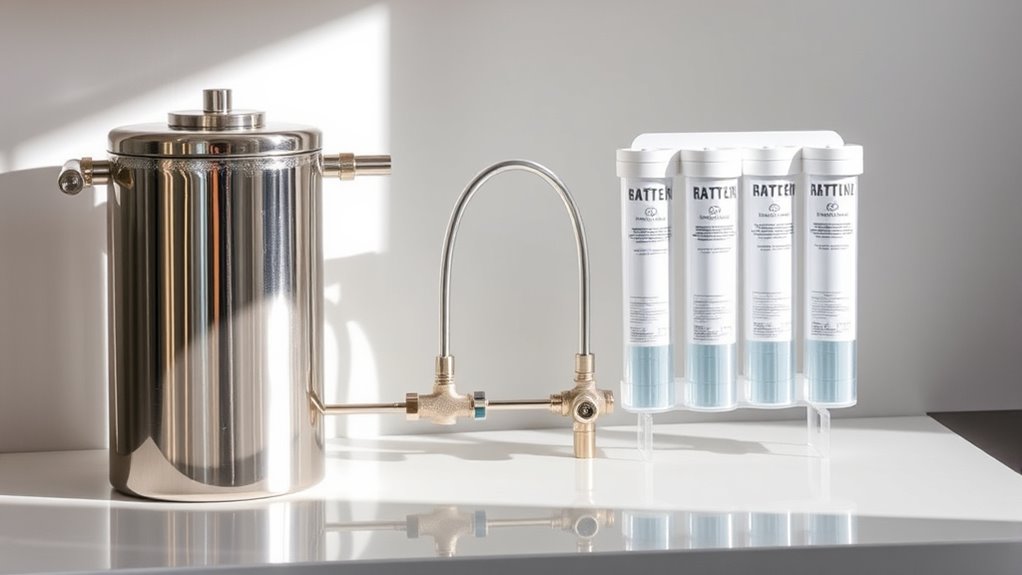

Combining water softeners with filtration systems offers a powerful way to improve your water quality. Softeners target hard minerals like calcium and magnesium, preventing scale buildup and extending appliance life. Filtration systems remove chlorine, sediment, and other harmful chemicals, improving taste and safety. Together, they provide an all-encompassing approach that protects your plumbing, enhances water’s flavor, and guarantees cleaner, better-tasting water for your family. Keep exploring to learn how this combo can benefit your home even more.

Get home appliances delivered free — and shop member deals
- Fast, free delivery on millions of items
- Access to Prime Big Deal Days deals on October 6–7
- Prime Video, Amazon Music and more included
Key Takeaways
- Combining water softeners with filtration systems addresses both mineral buildup and chemical contaminants, providing comprehensive water quality improvement.
- Filtration systems remove chlorine, sediment, and organic compounds that softeners alone cannot eliminate.
- Integrated systems reduce maintenance and filter replacement costs by streamlining treatment processes.
- Using both enhances water taste, clarity, and safety, benefiting cooking, drinking, and appliance longevity.
- A combined approach creates a multi-layered defense against a wide range of water quality issues for healthier, cleaner water.

Have you ever wondered how to improve the quality of your home’s water? Combining water softeners with filtration systems offers a thorough approach that tackles multiple water quality issues. Water softeners primarily target hard water minerals like calcium and magnesium, which cause scale buildup in pipes and appliances. But they don’t remove other contaminants, such as chlorine, sediment, or organic compounds. That’s where filtration systems come in. When you pair these two, you get a solution that not only softens your water but also enhances its overall quality, making it safer and better tasting.
Mineral removal is a key benefit of using a water softener. Hard water contains minerals that can leave deposits on your fixtures and reduce the lifespan of appliances. A softener exchanges these minerals for sodium or potassium ions, effectively eliminating scale issues. However, some people notice a metallic or briny taste in softened water, which can be off-putting. A filtration system can address this by removing these residual tastes and odors, ensuring your water tastes clean and fresh. This taste improvement encourages you to drink more water and use it confidently for cooking and brewing beverages.
Beyond taste, filtration systems also remove a broader range of impurities. Chlorine, often added to municipal water supplies for disinfection, can give water a harsh smell and taste, and it can also be harmful over long-term exposure. Sediment filters trap dirt, sand, and rust particles that can clog pipes or damage appliances. Activated carbon filters are excellent at reducing volatile organic compounds (VOCs), pesticides, and other chemicals that affect water quality and safety. When you combine these with a water softener, you’re not just addressing hardness—you’re creating a multi-layered barrier that ensures your water is clearer, tastier, and healthier.
Additionally, incorporating a filtration system can help remove spoiled lemon juice or pineapple juice contaminants, ensuring that your drinking water remains fresh and free of unwanted flavors. The integration of a water softener with a filtration system also simplifies maintenance and saves you money over time. Instead of purchasing separate units and managing multiple filters, a combined system can be designed to work seamlessly. This setup reduces the need for frequent filter replacements and minimizes the chances of contaminants bypassing your treatment process. Plus, with cleaner, softer water, you’ll notice fewer mineral deposits on your fixtures and appliances, which means less cleaning and repairs.
In essence, combining water softeners with filtration systems provides an all-in-one solution. It improves taste, removes mineral buildup, and ensures your water is free from harmful chemicals and particles. This not only enhances your daily water experience but also prolongs the life of your plumbing and appliances. If you’re looking for a way to upgrade your home’s water quality thoroughly, pairing these systems is a smart, effective choice.
water softener and filtration system combo
As an affiliate, we earn on qualifying purchases.
As an affiliate, we earn on qualifying purchases.
Frequently Asked Questions
How Do I Know if I Need Both Systems?
You might need both systems if your water has high mineral content and impurities. Low water pressure after installing a softener or filtration unit can signal issues, and installation challenges could make combining systems tricky. To decide, get a water test to check for hardness and contaminants. If both are present, installing both systems guarantees your water is clean, soft, and free of harmful substances, improving overall water quality.
Can Water Softeners Remove Bacteria or Viruses?
Water softeners can’t remove bacteria or viruses because they focus on mineral ions like calcium and magnesium. For microbial removal, you need a system specifically designed for that purpose, such as UV or reverse osmosis filters. Check system compatibility before combining treatments to guarantee effective microbial removal. Relying solely on a water softener leaves you vulnerable to harmful microbes, so consider adding a dedicated filtration system for complete water safety.
What Is the Maintenance Cost for Combined Systems?
Imagine your water system as a high-maintenance diva demanding constant attention—your combined system’s maintenance cost isn’t a bargain. Expect a cost analysis that includes routine upkeep like filter replacements and softener resin refills, which can add up over time. While it’s not as glamorous as a spa day, budgeting for these expenses guarantees your water stays pure and your system runs smoothly without unexpected diva tantrums.
Are There Any Health Risks With Using Both?
There are minimal health concerns when using both systems together, but you should stay aware of potential chemical exposure from certain filters or softening agents. Regular maintenance ensures that harmful chemicals don’t accumulate, reducing risk. If you’re concerned about chemical exposure, choose filters certified for safety and avoid overly aggressive softening agents. Proper installation and upkeep help ensure safe, clean water without health risks.
How Much Space Is Required for Installation?
You’ll need enough installation space to comfortably fit both the water softener and filtration system, considering their equipment footprint. Typically, allocate at least 2 to 3 feet of clearance around each unit for maintenance and easy access. Measure your available area carefully, ensuring there’s enough room for the equipment and service needs. This setup prevents overcrowding and makes future upgrades or repairs more manageable.
whole house water filtration and softening unit
As an affiliate, we earn on qualifying purchases.
As an affiliate, we earn on qualifying purchases.
Conclusion
By thoughtfully combining water softeners with filtration systems, you create a gentle yet effective partnership that enhances your water quality. This seamless blend guarantees your water remains kind to your appliances and your skin, all while subtly addressing potential issues. Embracing this approach allows you to enjoy the benefits of cleaner, softer water without the fuss, bringing a quiet confidence to your daily routine. Ultimately, it’s a smart way to nurture your home and well-being with grace.
best water softener with built-in filtration
As an affiliate, we earn on qualifying purchases.
As an affiliate, we earn on qualifying purchases.
sediment and chlorine removal water filter
As an affiliate, we earn on qualifying purchases.
As an affiliate, we earn on qualifying purchases.
NFL season / tailgating Picks
team gear
As an affiliate, we earn on qualifying purchases.