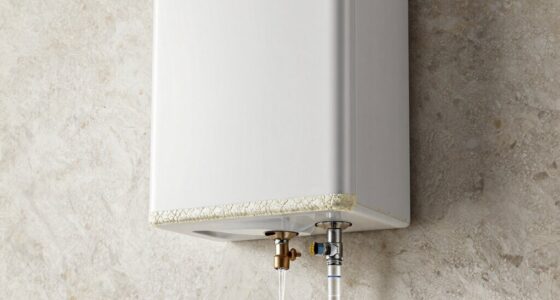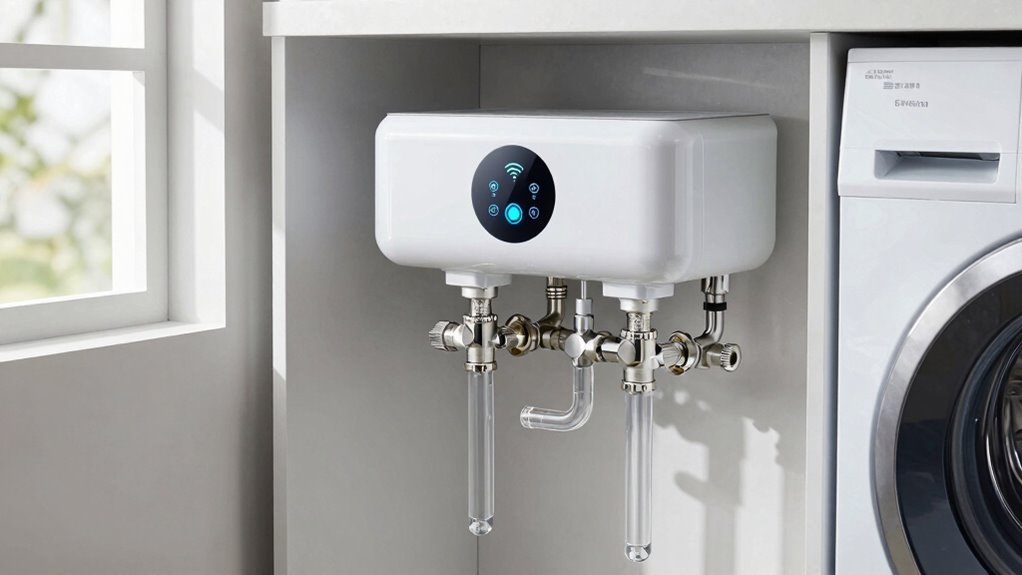

Your WiFi-enabled water softener’s features only work well if your plumbing is in good shape. Outdated, clogged, or corroded pipes hinder proper water flow, making smart controls and efficiency benefits less effective. No matter how advanced the device is, poor infrastructure limits its performance. Maintaining your plumbing guarantees ideal water flow, pressure, and device operation. To discover how to get the most from your smart softener, keep exploring why good plumbing is essential.
Key Takeaways
- WiFi features assist with monitoring but can’t fix underlying plumbing issues that affect water flow.
- Proper plumbing ensures optimal water softener performance, making WiFi data meaningful.
- Poor infrastructure like leaks or clogs limits the device’s efficiency, regardless of smart features.
- Infrastructure quality directly impacts water quality, pressure, and overall device effectiveness.
- Upgrading plumbing is essential to fully realize the benefits of WiFi-enabled water softeners.
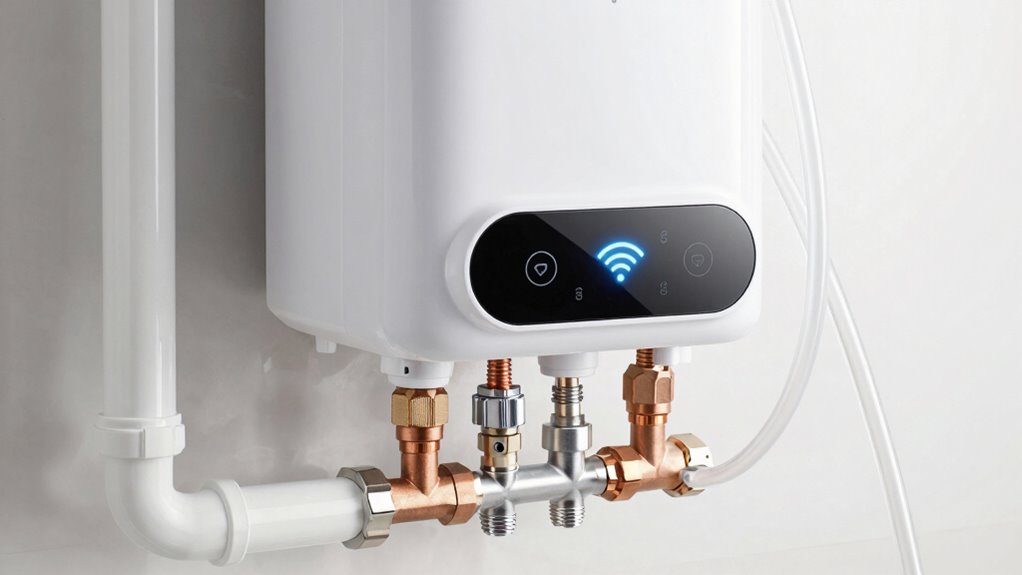
You might think that advanced WiFi features automatically improve your internet experience, but that’s only true if your home’s plumbing—or the foundational wiring and infrastructure—is up to par. When it comes to smart home devices, like WiFi-enabled water softeners, their benefits hinge on the quality of your plumbing system. Without proper plumbing, even the most sophisticated WiFi features won’t deliver the water efficiency or convenience you’re expecting.
Smart home water softeners rely on your home’s plumbing to function correctly. If your pipes are clogged, corroded, or poorly maintained, these devices can’t optimize water flow or reduce mineral buildup effectively. No matter how advanced the WiFi capabilities are, they can’t compensate for infrastructure issues. The device needs clean, unobstructed water pathways to work as intended. Otherwise, you risk wasting energy, water, and money, despite having the latest tech.
Smart water softeners need clean, unobstructed pipes to work effectively; infrastructure issues limit their benefits.
Moreover, water efficiency is a critical aspect of modern smart homes. These devices monitor water usage and adjust operations to minimize waste. However, their ability to improve efficiency is directly tied to the plumbing’s condition. If your pipes are leaky or outdated, the device’s efforts are undermined. You might see the WiFi features showing usage data or remote control options, but if the water isn’t flowing smoothly through your plumbing, those features don’t translate into real savings or environmental benefits. Ensuring proper plumbing maintenance can significantly enhance device performance and longevity. Additionally, maintaining good water pressure is essential for these systems to operate optimally. Regular inspections and system upgrades can prevent many common issues that hinder performance. Proper system installation is also crucial to ensure all components work together seamlessly.
Having a smart home setup with WiFi-enabled water softeners can be convenient, but only if your infrastructure supports it. Upgrading your plumbing system—fixing leaks, replacing old pipes, ensuring proper water pressure—becomes essential. These foundational improvements allow your smart devices to perform at their best, providing water that’s not only soft and clean but also more water-efficient.
In essence, the value of WiFi features in water softeners and other smart devices depends heavily on the plumbing. If your home’s infrastructure is in good shape, you’ll enjoy seamless control, better water quality, and increased water efficiency. If not, then no matter how advanced your WiFi connection is, the benefits will be limited. So, before investing in smart home tech, prioritize your plumbing. It’s the true foundation that makes all those high-tech features genuinely effective. Additionally, proper plumbing maintenance is crucial for ensuring your smart devices can operate as intended.
water softener plumbing upgrade kit
As an affiliate, we earn on qualifying purchases.
As an affiliate, we earn on qualifying purchases.
Frequently Asked Questions
Can a Softener Work Without Wifi Connectivity?
Yes, a softener can work without WiFi connectivity. Without WiFi, you rely on manual controls instead of smart controls and remote monitoring. While you won’t get the convenience of adjusting settings remotely or receiving alerts, the softener still performs its basic functions. WiFi features enhance convenience and efficiency, but they aren’t essential for the softener to operate. Your system will work fine, even offline.
What Plumbing Issues Affect Softener Performance?
A stitch in time saves nine. Poor plumbing, like low water pressure and pipe corrosion, directly impacts your softener’s performance. If water pressure drops, your system can’t operate efficiently, leading to hard water issues. Corroded pipes clog the system, reducing flow and damaging components. Ensuring your plumbing is in good shape keeps your softener working at its best, so you get soft, clean water without surprises. Proper plumbing is the foundation of effective water treatment.
Do Wifi Features Improve Water Quality?
WiFi features don’t directly improve water quality, but they enhance your smart home experience by enabling water monitoring and control. With these features, you can track water usage, detect issues early, and optimize softener performance. While they don’t change the water itself, they help you maintain better water quality by ensuring your softener operates efficiently. This proactive approach keeps your water cleaner and your system running smoothly.
How Often Should Plumbing Be Inspected for Softener Efficiency?
You should inspect your plumbing at least once a year to guarantee your softener’s efficiency. Regular maintenance routines help catch issues early, preventing system breakdowns. If you notice performance declines, consider system upgrades or repairs promptly. Proper plumbing ensures the WiFi features can accurately monitor and control water softening. Staying proactive with inspections and upgrades guarantees your softener runs smoothly, saving you money and maintaining water quality.
Are Wifi Features Necessary for Basic Softener Operation?
WiFi features aren’t necessary for basic softener operation, but they can substantially enhance your smart home experience. With tech integration, you can monitor and control your water softener remotely, receive alerts, and optimize performance effortlessly. If you value convenience and want to keep tabs on your system’s efficiency, WiFi-enabled softeners are a smart addition. However, for simple functionality, traditional models without WiFi still work perfectly.
smart water softener WiFi monitor
As an affiliate, we earn on qualifying purchases.
As an affiliate, we earn on qualifying purchases.
Conclusion
Remember, WiFi features are like shiny accessories—they only shine if your plumbing is solid. Without a proper setup, all the smart tech in the world can’t fix underlying issues. Think of your softener as the heart of your water system; no matter how fancy the features, if the plumbing’s flawed, the benefits fade like a mirage. So, focus on the fundamentals first—because without a sturdy base, all the bells and whistles are just noise.
As an affiliate, we earn on qualifying purchases.
As an affiliate, we earn on qualifying purchases.