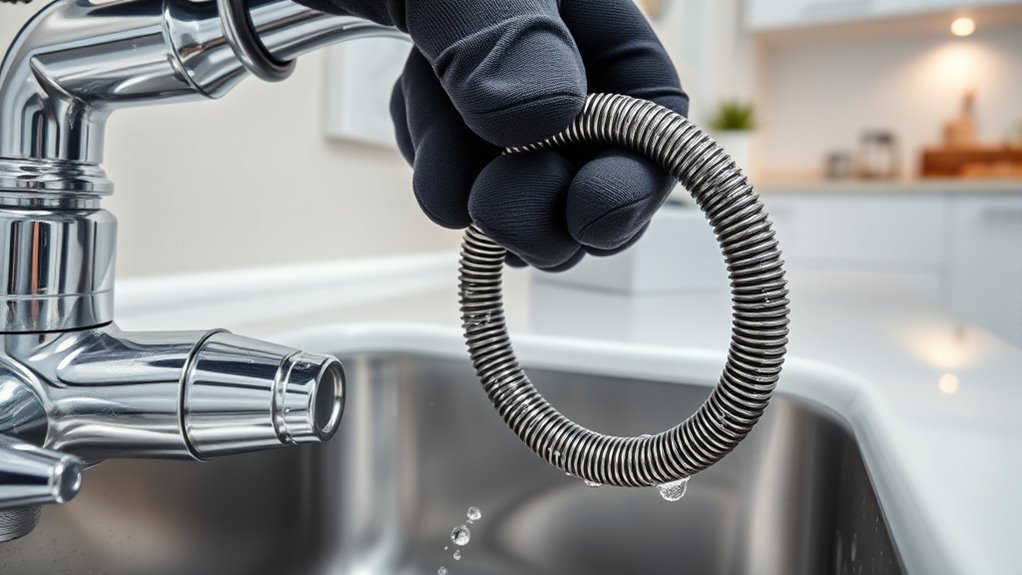
To confidently tackle drain line blockages, start by recognizing early signs like slow drains or gurgling sounds. Gather essential tools such as a plunger and drain snake, then try simple DIY fixes like boiling water or a baking soda-vinegar mix. If the clog persists, using a drain snake can save time and prevent damage. Prevent future issues with regular maintenance, but if problems continue, knowing when to call a professional keeps your plumbing in top shape. Keep going to discover more helpful tips.
Key Takeaways
- Recognize early signs of drain blockages like slow draining, gurgling sounds, and foul odors to prevent severe issues.
- Gather essential tools such as a plunger, drain snake, gloves, and safety gear for effective DIY clearing.
- Start with simple remedies like boiling water or baking soda and vinegar before resorting to mechanical tools.
- Use a drain snake to target stubborn clogs deep within pipes, avoiding harsh chemicals and pipe damage.
- When DIY methods fail, consult a professional plumber to inspect, diagnose, and resolve persistent or complex drain issues.
Understanding What Causes Drain Blockages
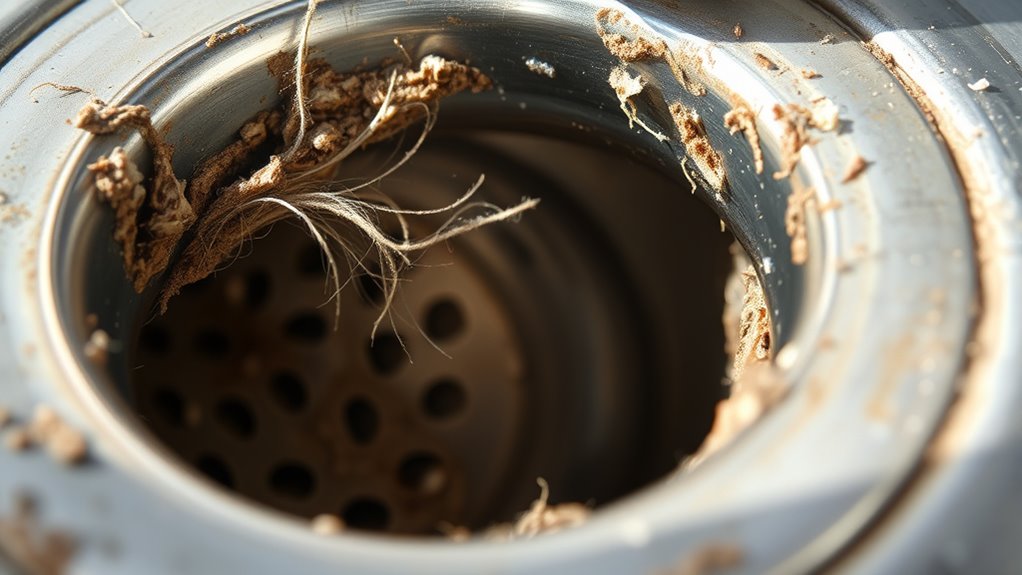
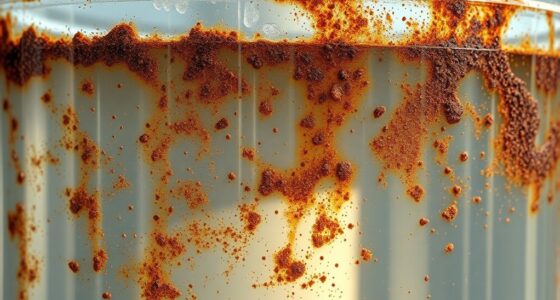
Drain blockages often happen when debris, grease, or hair accumulate in your pipes, restricting water flow. Over time, pipe corrosion can weaken pipe walls, leading to rust buildup that narrows pathways and causes blockages. Additionally, root intrusion is a common culprit; tree roots seek out moisture and can penetrate tiny cracks or joints in your pipes, growing inside and obstructing flow. These intrusions not only block water but can also cause further damage, worsening the situation. Regularly inspecting your pipes for signs of corrosion or root intrusion can help prevent severe blockages. Understanding these causes helps you take proactive steps to maintain clear drains, avoiding costly repairs and ensuring your plumbing functions smoothly.
Recognizing the Signs of a Clogged Drain
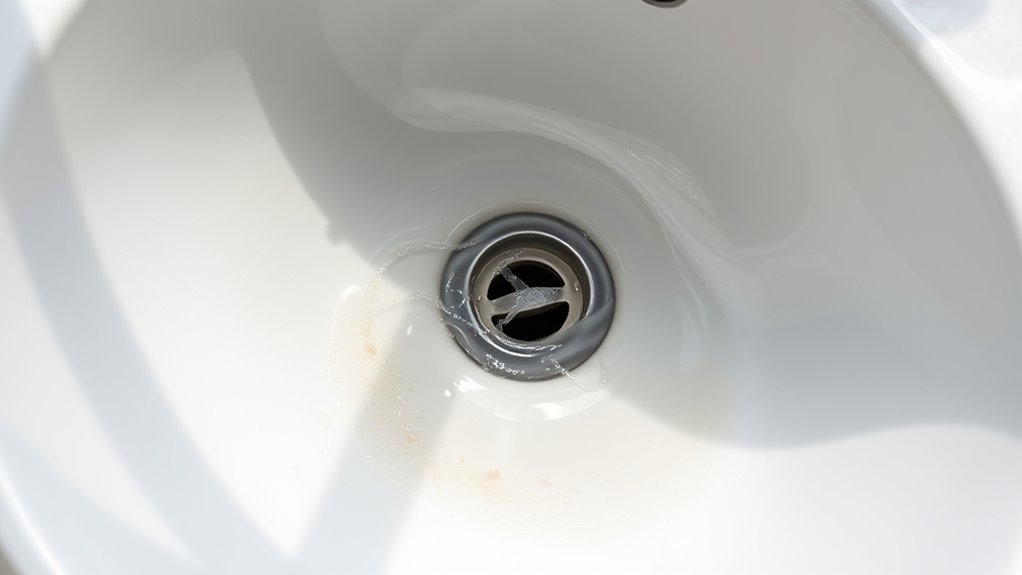
You might notice your drain making unusual noises or gurgling when you use it. Additionally, water may start to drain more slowly than usual, signaling a potential clog. Recognizing these signs early can help you address the problem before it worsens. Being aware of proper maintenance techniques can prevent future drain issues.
Unusual Drain Noises
Unusual noises coming from your plumbing can often signal a clogged drain lurking somewhere in the system. These strange sounds, like gurgling or banging, are common drain noise causes that indicate a blockage. When water struggles to flow freely, air gets trapped, creating those unsettling noises. Unusual plumbing sounds, such as bubbling or whining, can also point to partial blockages or venting issues. Ignoring these signs might lead to more serious problems down the line. Recognizing the early warning signs of a clog helps you address issues before they worsen. If you notice persistent noises that don’t match normal operation, it’s time to investigate further or call a professional to prevent costly repairs. Don’t dismiss these signs—they’re your drain’s way of signaling trouble. Proper maintenance and timely detection of these noises can help prevent costly repairs and keep your plumbing running smoothly.
Slow Water Drainage
When noises from your plumbing suggest a blockage, slow water drainage often follows as a clear warning sign. You may notice water taking longer than usual to empty from sinks, tubs, or toilets. This sluggish flow indicates a partial clog, often caused by buildup or debris. Biological treatments can help break down organic matter in drain fluid, improving flow without harsh chemicals. Keep an eye out for these signs:
- Water pooling around drains
- Gurgling sounds during drainage
- Foul odors from your drain
- Slow emptying even after cleaning
- Frequent backups or clogs
Addressing slow drainage early can prevent more serious blockages. Using biological treatments with drain fluid is a safe, eco-friendly way to maintain clear pipes and keep your plumbing running smoothly. Proper maintenance can also extend the life of your plumbing system by preventing clog formation and improving overall drainage efficiency.
Gathering the Right Tools and Supplies

Before you start clearing a drain blockage, you need to gather the right tools and supplies. Make sure you have essential drain cleaning tools, safety gear, and a checklist of necessary supplies. Being prepared will help you work efficiently and stay safe throughout the process. Additionally, understanding the benefits of certain cleaning agents, like glycolic acid, can be helpful for specific skin-related concerns that may arise during the process. Glycolic acid benefits
Essential Drain Cleaning Tools
Having the right tools is essential for effectively clearing drain line blockages. Proper pipe maintenance and drain inspection depend on quality equipment. With the right tools, you can diagnose issues and remove blockages efficiently. Here are key items you should have:
- Plunger: Basic but essential for dislodging minor clogs
- Drain snake or auger: Reaches deep blockages and clears debris
- Pipe wrench: Loosens fittings during pipe maintenance
- Flashlight: Improves drain inspection visibility
- Container or bucket: Catches water or debris during cleaning
Investing in these tools makes your drain cleaning tasks easier and more effective. Being prepared ensures you can handle most drain line issues confidently and safely, saving time and potential damage. Proper Honda Tuning techniques can also help in maintaining optimal performance of related vehicle systems.
Safety Gear Requirements
Equipping yourself with the proper safety gear is essential to protect against potential hazards during drain cleaning. Personal protective equipment (PPE) like gloves, goggles, and a mask helps shield your skin, eyes, and respiratory system from harmful chemicals, debris, and bacteria. It also increases hazard awareness, making you more mindful of risks involved. Wear sturdy gloves to prevent cuts from sharp objects or chemical exposure. Safety goggles protect your eyes from splashes, while a mask prevents inhaling foul odors or fumes. Long sleeves and pants add an extra layer of defense. By prioritizing the right PPE, you ensure your safety, stay alert to potential dangers, and make the drain cleaning process safer and more effective. Always inspect your gear before starting to work. Additionally, understanding city dynamics can help you identify potential environmental hazards in your surroundings.
Necessary Supplies Checklist
To effectively clear drain line blockages, gather all the necessary tools and supplies beforehand. Being familiar with plumbing terminologies helps you understand each tool’s purpose in drain maintenance. Essential supplies include a plunger, drain snake or auger, bucket, gloves, and a flashlight. These items are vital for diagnosing and resolving clogs efficiently. Using the right tools prevents further damage and guarantees safety during the process. Here’s a quick checklist:
- Plunger (cup or flange type)
- Drain snake or auger
- Bucket for water or debris
- Heavy-duty gloves
- Flashlight for visibility
Having these supplies ready allows you to approach drain maintenance confidently, saving time and avoiding unnecessary trips to the hardware store. Proper preparation is key to successfully managing drain line blockages. Sound healing science highlights how understanding the effects of vibrations can enhance your approach to problem-solving and stress management during home repairs.
Initial Steps to Clear a Minor Blockage
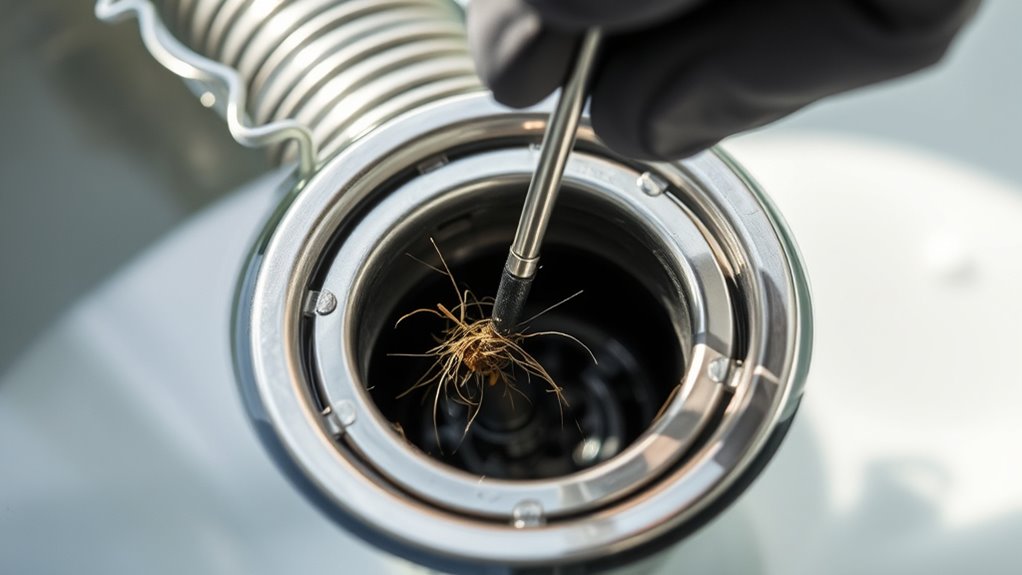
When you notice a drain line is slow or partially blocked, starting with simple, hands-on steps can often resolve the issue. DIY tips like pouring hot water or using baking soda and vinegar can break down minor clogs. Be careful to avoid common mistakes, such as using harsh chemicals that damage pipes or over-tightening fittings. Here’s a quick overview:
| Step | Action |
|---|---|
| 1 | Boil water and pour slowly into drain |
| 2 | Mix baking soda and vinegar, then add to drain |
| 3 | Let it sit for 15-30 minutes |
| 4 | Flush with hot water again |
| 5 | Repeat if necessary |
These initial steps are effective for minor blockages, but avoid rushing into aggressive methods that can cause damage. Recognizing the importance of contrast ratio in visual quality can help in troubleshooting issues with image clarity during inspections of your plumbing or home systems.
How to Use a Plunger Effectively

Using a plunger effectively can often clear stubborn drain clogs without the need for chemicals or professional help. To maximize your success, focus on proper plunger techniques and effective plunging. First, verify there’s enough water in the basin to cover the cup of the plunger. Create a tight seal around the drain, then push and pull with steady, consistent pressure. Avoid using excessive force, which can damage pipes. For best results, try these tips:
- Use a flange or cup-shaped plunger for better seal
- Maintain steady, controlled pressure during plunging
- Keep the handle upright and straight
- Cover all openings around the drain for a tight seal
- Repeat the process several times before checking progress
- Proper technique ensures the best chance of clearing the clog effectively and safely.
Mastering effective plunging boosts your chances of clearing clogs quickly and safely.
When to Try Homemade Drain Cleaners
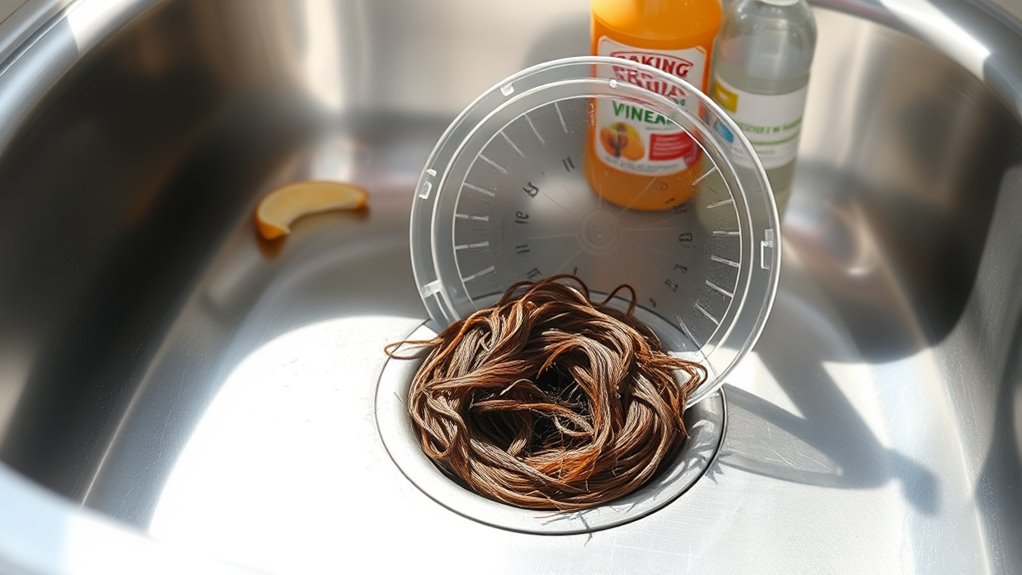
If you notice your drain is slowly clogging or emitting unpleasant odors, homemade drain cleaners can be an effective first step before calling in professionals. Use them when clogs are minor or recent, and you’re seeking a chemical alternative. Homemade solutions like baking soda and vinegar often work well for organic buildup, but aren’t suited for severe blockages. Additionally, eye patches can be used to improve appearance and provide relief for tired eyes, similar to how homemade drain cleaners serve as a simple initial remedy for minor plumbing issues.
The Benefits of Using a Drain Snake or Auger
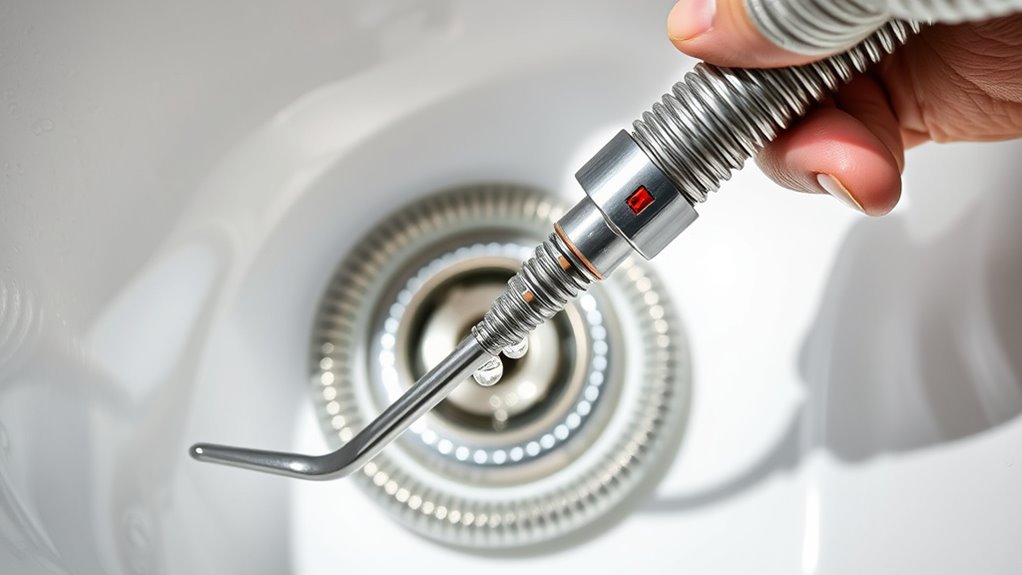
A drain snake or auger offers a powerful, hands-on solution for stubborn clogs that resist chemical or homemade remedies. Using a drain snake benefits you by directly targeting blockages deep within your pipes, saving time and money. The auger advantages include its ability to clear tough obstructions without harsh chemicals, reducing potential pipe damage. Plus, it’s reusable and easy to operate with minimal skill. Here are some key benefits:
A drain snake efficiently clears stubborn clogs without harsh chemicals, saving time and protecting pipes.
- Precise removal of stubborn clogs
- No need for harsh chemicals
- Cost-effective in the long run
- Quick and efficient results
- Suitable for various pipe sizes and types
Preventative Measures to Keep Drains Clear
Regular maintenance and preventative strategies can considerably reduce the likelihood of drain clogs, saving you time and costly repairs. To keep your drains clear, avoid pouring kitchen grease down the sink, as it solidifies and traps debris. Use a hair catcher in bathroom drains to prevent hair accumulation from causing blockages. Regularly flush drains with hot water or a mixture of baking soda and vinegar to break down buildup. Be mindful of what goes into your drain—limit fibrous foods and avoid flushing non-degradable items. Here’s a quick guide:
| Action | Benefit | Frequency |
|---|---|---|
| Use hair catchers | Prevent hair accumulation | Every time you shower |
| Avoid pouring grease | Reduce grease buildup | Each time you cook |
| Flush with hot water | Clear minor debris | Weekly |
| Regular cleaning | Prevent stubborn blockages | Monthly |
When to Call a Professional Plumber
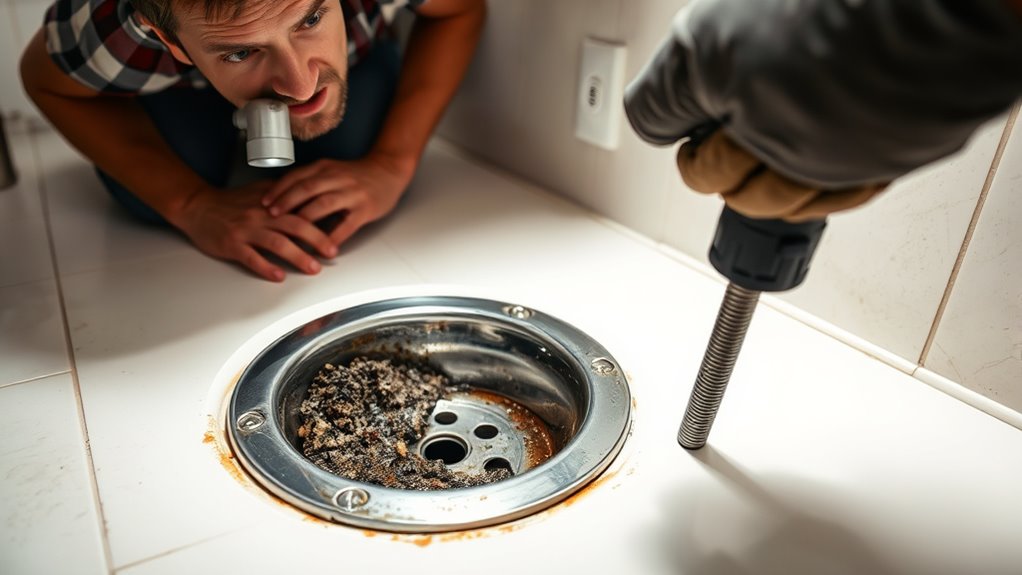
Knowing when to call a professional plumber can save you time, money, and frustration. While DIY tips can often fix minor drain issues, there are times when expert help is essential. If your efforts to clear a clog fail after attempting basic methods—like plunging or using a drain snake—it’s time to call in the pros. Avoid falling for common myths, such as harsh chemical drain cleaners, which can damage pipes. Consider calling a plumber if you notice recurring clogs, slow drainage, or foul odors that don’t go away.
Remember, DIY tips aren’t a substitute for professional diagnosis when problems persist. Don’t delay if you experience:
- Persistent clogs
- Multiple drain issues
- Unusual odors
- Gurgling sounds
- Water backing up unexpectedly
Maintaining Your Drain System for Long-Term Health
To keep your drain system healthy over the long term, you need to stay on top of regular cleaning and watch what you flush. Proper waste disposal is key—avoiding grease, hair, and food scraps helps prevent clogs. By maintaining good habits, you can reduce the risk of blockages and avoid costly repairs.
Regular Cleaning Practices
Consistent cleaning is essential for keeping your drain system functioning smoothly and preventing blockages. Regular maintenance helps avoid buildup and minimizes the risk of chemical reactions that can damage your drain material. To keep your drains in top shape, consider these practices:
- Use enzyme-based cleaners monthly to break down organic buildup
- Avoid pouring grease or oils down the drain
- Flush with hot water after heavy use
- Remove debris manually when visible
- Schedule professional inspections annually
These steps help maintain proper flow, reduce clog formation, and extend the lifespan of your drain system. Regular cleaning not only prevents blockages but also preserves the integrity of your drain material, ensuring it remains durable and functional over time. Stay proactive for a healthy, clog-free drain system.
Proper Waste Disposal
Proper waste disposal is essential for maintaining your drain system’s long-term health and preventing costly clogs. When you practice proper disposal, you reduce the strain on your pipes and avoid introducing materials that can cause buildup. Avoid pouring fats, oils, and grease down the drain, as they solidify and trap debris. Instead, dispose of them in a sealed container and throw them away. Be mindful of waste management; don’t flush non-degradable items like wipes, hygiene products, or food scraps. These can quickly accumulate and block your drain. By sticking to proper disposal methods, you help keep your drain system clear and reduce the need for frequent cleaning or repairs. Good waste management habits play a vital role in maintaining smooth, clog-free drainage.
Frequently Asked Questions
How Often Should I Schedule Professional Drain Inspections?
You should schedule professional drain inspections every couple of years or if you notice slow draining, foul odors, or recurring clogs. During these inspections, drain camera inspections and pipe condition assessments reveal potential issues early. Regular check-ups help prevent costly repairs and keep your plumbing system running smoothly. If your home is older or has a history of problems, consider annual inspections for added peace of mind.
Can Certain Household Products Damage My Drain Pipes?
You might think household products are harmless, but some can cause pipe corrosion over time, damaging your drain pipes. Products with harsh chemicals like drain cleaners or grease-cutting agents often aren’t as safe as you believe. Always check product safety labels and avoid corrosive substances. Using mild, eco-friendly cleaners helps prevent damage, ensuring your pipes stay healthy longer. Remember, what seems like a quick fix could lead to costly repairs down the line.
Are Enzyme-Based Drain Cleaners Safe for All Plumbing Systems?
Enzyme-based drain cleaners are generally safe for most plumbing systems because they use biodegradable formulas that break down organic matter naturally. However, you should be cautious because some formulations may pose corrosion risks to older or delicate pipes. Always read the label carefully, follow the instructions, and avoid overusing them to protect your plumbing. When in doubt, consult a professional to confirm compatibility with your specific system.
What Are the Environmental Impacts of Chemical Drain Cleaners?
Did you know that over 50% of chemical drain cleaners contain hazardous ingredients? Chemical drain cleaners can cause significant environmental impacts, such as water pollution and harm to aquatic life. Chemical hazards from these products threaten ecosystems and human health alike. That’s why eco-friendly solutions are gaining popularity—they’re safer for the environment and still effective at clearing blockages. Switching to green alternatives helps protect our planet and keeps your plumbing safe.
How Can I Prevent Future Drain Blockages Effectively?
You can prevent future drain blockages by practicing regular plumbing maintenance and adopting good household habits. Avoid pouring grease or food scraps down the drain, and use a drain strainer to catch debris. Schedule routine inspections and cleanings to keep pipes clear. Being mindful of what goes into your drains helps prevent buildup, reducing the need for repairs and keeping your plumbing system running smoothly.
Conclusion
Remember, a stitch in time saves nine—tackle drain issues early before they worsen. With the right tools and knowledge, you can confidently clear minor blockages and keep your drains flowing smoothly. Regular maintenance and awareness are your best defenses against costly repairs. Don’t wait until it’s too late; taking action now guarantees your plumbing stays in top shape. Stay proactive, and your drains will thank you for it!