To understand pressure loss like a pro, you need to learn how to use pressure gauges and differential pressure transmitters accurately at key points in your system. Watch for abnormal drops that may signal blockages or wear, and use fluid dynamics principles like Bernoulli’s equation to interpret your data. Keep an eye on system components like valves and filters, as they influence pressure loss. Staying consistent with measurements and analyzing patterns will boost your troubleshooting skills—continue exploring to master this essential skill.
Get ready for Prime Big Deal Days — try Prime free
Exclusive member deals on October 6–7, plus fast free delivery. Cancel anytime.
As an affiliate, we earn on qualifying purchases.
Key Takeaways
- Understand the role of pressure loss in system efficiency and identify abnormal drops indicating issues.
- Use pressure gauges and differential transmitters to accurately measure pressure at different system points.
- Apply fluid dynamics principles, like Bernoulli’s equation, to interpret pressure data effectively.
- Recognize how system components and fluid properties influence pressure loss patterns.
- Develop consistent measurement routines and analyze data within system context for early problem detection.
Understanding pressure loss is essential for anyone working with fluid systems, as it directly impacts efficiency and performance. When you grasp how pressure drops occur within pipes, pumps, and valves, you can troubleshoot issues, optimize system design, and ensure smooth operation. This understanding stems from fluid dynamics—the science that explains how liquids and gases behave under different conditions. Fluid dynamics helps you interpret how flow rates, velocities, and pressures interact, giving you the foundation to analyze pressure loss accurately. To do this effectively, you need to familiarize yourself with measurement techniques. These methods allow you to quantify pressure differences across various system components, providing the data necessary to evaluate system performance.
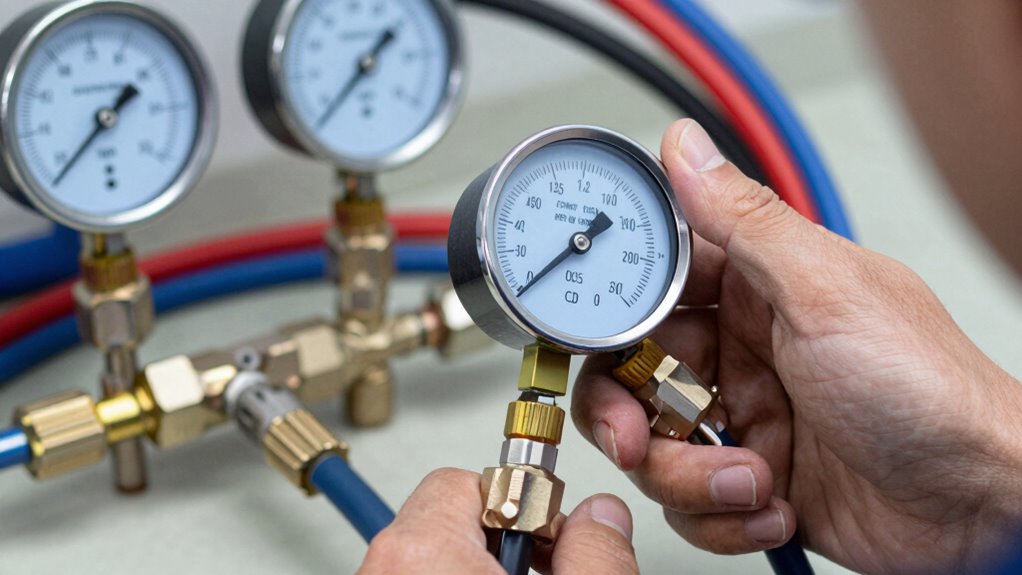
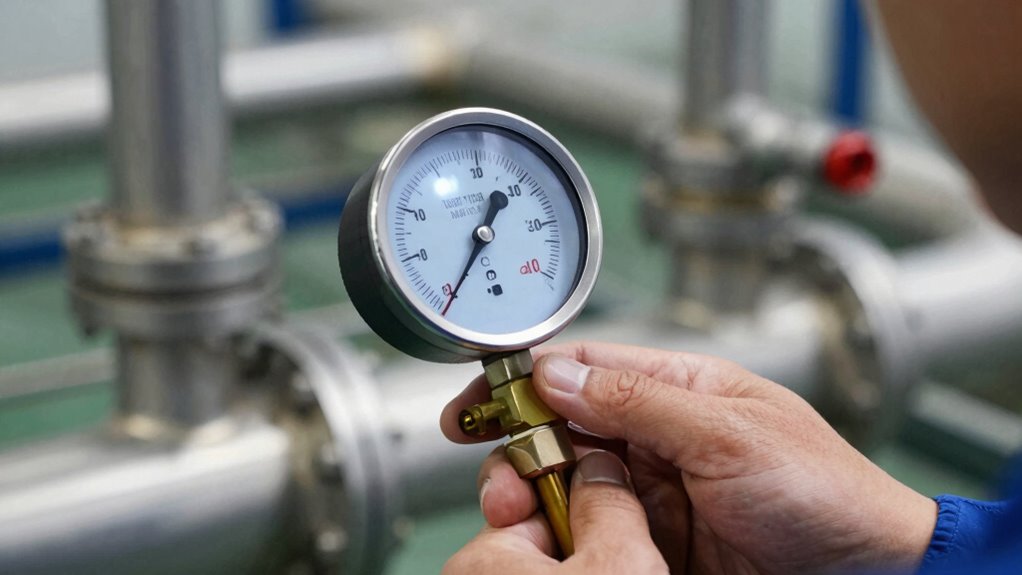
One of the most common measurement techniques involves using pressure gauges placed at strategic points in the system. These gauges help you monitor pressure before and after specific elements, such as filters or valves, so you can determine how much pressure drops across each component. When reading these gauges, pay attention to the units and verify they’re calibrated correctly. Precise pressure readings are crucial because they form the basis for calculating pressure loss. Sometimes, you might need to use differential pressure transmitters, especially in more complex or high-accuracy setups. These devices measure the pressure difference directly and transmit the data to a control system or display, making it easier to track pressure loss in real-time.
Another technique involves the use of flow meters combined with pressure measurements. By measuring flow rates alongside pressure data, you can better understand how changes in flow impact pressure loss. For example, if you notice a sudden increase in pressure drop at a certain flow rate, it might indicate a blockage or a worn-out component. To interpret this data correctly, you need to understand the principles of fluid dynamics—such as Bernoulli’s equation—which relate pressure, velocity, and height in a flowing system. Applying these principles helps you identify whether the pressure loss is typical or abnormal, and guides you toward appropriate actions. Additionally, understanding pressure measurement techniques is fundamental to improving your ability to analyze and respond to system performance issues. Developing a solid grasp of pressure loss factors can also help you anticipate potential problems before they escalate. Recognizing how system design influences pressure loss allows for more proactive maintenance and optimization strategies. Moreover, considering how fluid properties change under different conditions can further refine your troubleshooting skills and system management.
Through consistent measurement and understanding of fluid dynamics, you’ll become more adept at reading pressure loss like a pro. The key is to gather accurate data, interpret it within the context of your system, and recognize patterns that signal issues or inefficiencies. With time and practice, these measurement techniques will become second nature, empowering you to maintain ideal system performance and troubleshoot problems swiftly. Ultimately, mastering pressure loss readings enables you to enhance system reliability, reduce energy consumption, and improve overall operational efficiency.
digital pressure gauge for fluid systems
As an affiliate, we earn on qualifying purchases.
As an affiliate, we earn on qualifying purchases.
Frequently Asked Questions
What Tools Are Best for Measuring Pressure Loss Accurately?
You should use calibrated pressure gauges or digital manometers for accurate measurement. Instrument selection is essential, so choose devices with high precision and proper range for your application. Calibration techniques, like regular zeroing and comparison with known standards, guarantee reliability. Always verify your tools’ calibration before testing, and consider using differential pressure sensors for detailed insights. These steps help you measure pressure loss accurately and confidently.
How Does Temperature Affect Pressure Loss Readings?
Temperature effects can substantially influence pressure loss readings because as temperature rises, air expands, causing pressure fluctuations that can lead to inaccurate measurements. Conversely, colder temperatures may increase pressure readings due to contraction. You should always account for temperature changes when measuring pressure loss, as they can distort your data. Using temperature-compensated gauges or adjusting your readings based on ambient temperature helps guarantee accuracy and reliable pressure loss analysis.
Can Pressure Loss Indicate Equipment Malfunction?
Yes, pressure loss can indicate equipment malfunction. When readings deviate from expected values, it often points to issues like clogged filters or leaks. Regular equipment calibration and system diagnostics help you identify these problems early, ensuring accurate readings. By monitoring pressure loss closely, you can catch malfunctions before they cause system failure, maintaining efficiency and preventing costly repairs. Always stay vigilant and perform routine checks to keep your system running smoothly.
What Safety Precautions Should I Take When Measuring Pressure?
When measuring pressure, think of it like handling delicate glassware—you need safety gear to protect yourself. Always wear safety goggles and gloves, and make certain calibration procedures are followed precisely to avoid errors. I once overlooked calibration, and it led to inaccurate readings, risking equipment damage. Taking these precautions ensures your safety and the accuracy of your measurements. Stay vigilant, and treat pressure testing with the same care.
How Often Should Pressure Loss Be Monitored in a System?
You should monitor pressure loss regularly, ideally daily or weekly, depending on your system’s criticality. Consistent data logging helps track trends, and periodic system calibration guarantees accuracy. By frequently checking, you catch issues early and maintain excellent performance. Establish a routine based on your system’s complexity and usage, and adjust your monitoring frequency as needed to prevent downtime or damage, ensuring reliable operation.
differential pressure transmitter
As an affiliate, we earn on qualifying purchases.
As an affiliate, we earn on qualifying purchases.
Conclusion
Congrats, you’re now a pressure loss pro—at least in theory. Soon, you’ll be confidently diagnosing issues, impressing your friends, and secretly dreaming of fluid dynamics. Just remember, the real challenge isn’t reading the gauges—it’s resisting the urge to brag about it at every BBQ. So go forth, analyze those pressure drops, and pretend you’re the mastermind behind every perfectly functioning system. Who knew reading pressure loss could make you feel so powerful?
As an affiliate, we earn on qualifying purchases.
pressure measurement tools for plumbing
As an affiliate, we earn on qualifying purchases.
As an affiliate, we earn on qualifying purchases.
NFL season / tailgating Picks
team gear
As an affiliate, we earn on qualifying purchases.