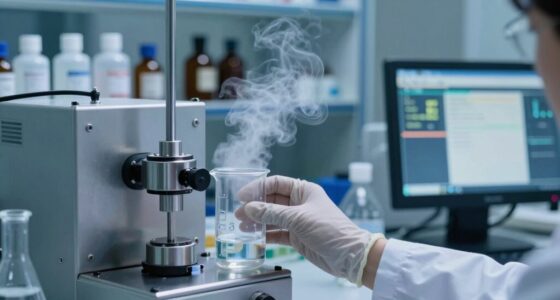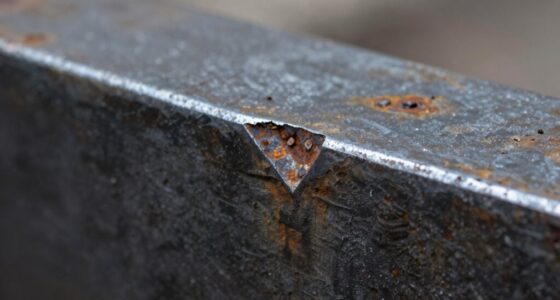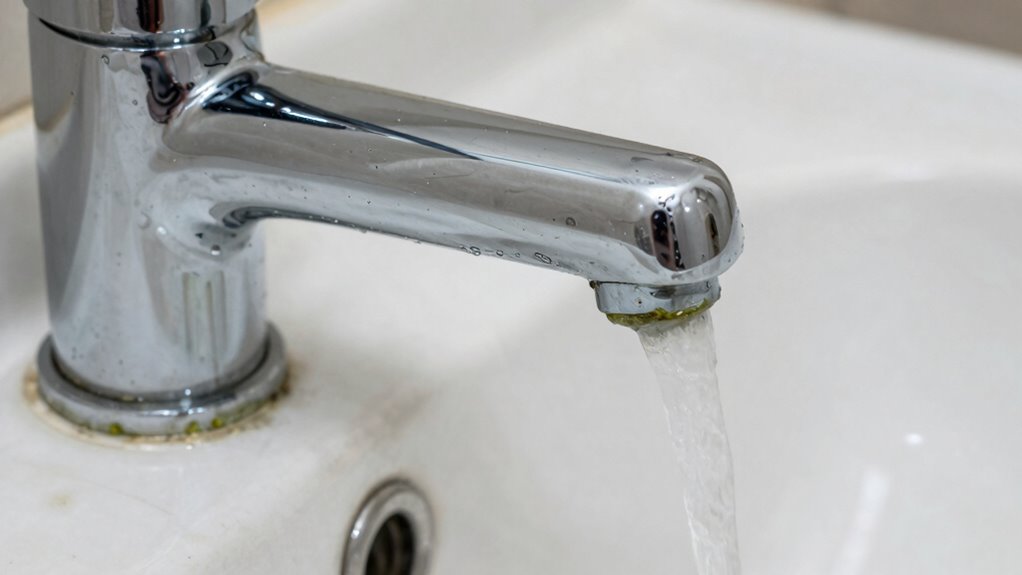
When acidic water flows through your pipes and fixtures, it speeds up corrosion, causing damage and costly repairs. The low pH eats away at metal surfaces, weakening them over time. To prevent this, maintaining a neutral pH through proper neutralization is essential. By adjusting the pH level before water reaches your fixtures, you protect your infrastructure. Keep exploring to discover more about how pH control can save you money and safeguard your systems.
Open a free Amazon Business account
Business pricing, bulk buying and tax-exempt orders.
As an affiliate, we earn on qualifying purchases.
Key Takeaways
- Acidic water accelerates corrosion of pipes, fixtures, and equipment, leading to leaks and costly repairs.
- Proper pH neutralization prevents acid-induced damage by raising the water’s pH to safe, neutral levels.
- Chemicals like lime or sodium hydroxide are used to neutralize acidity before water reaches fixtures.
- Continuous pH monitoring ensures acidic water is adjusted promptly, protecting infrastructure.
- Maintaining proper pH levels reduces fixture deterioration and extends the lifespan of plumbing systems.
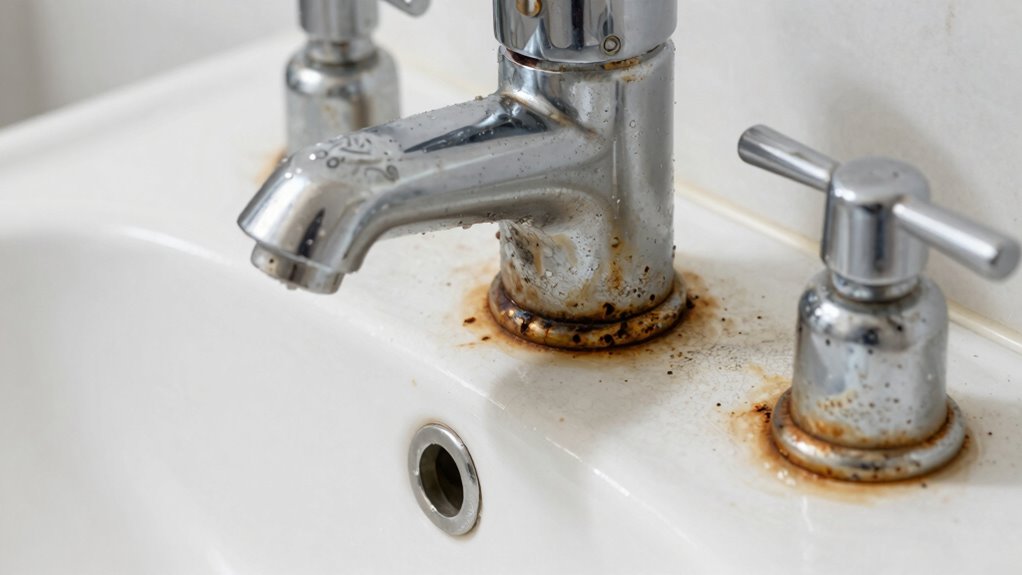
Have you ever wondered how industries manage wastewater to prevent environmental damage? pH neutralization is a vital process that guarantees acidic or alkaline effluents are adjusted to a safe, neutral pH before being released into the environment. This step is crucial in the water treatment process, ensuring that harmful substances don’t harm ecosystems or infrastructure. When wastewater is too acidic or alkaline, it can cause significant damage to pipes, equipment, and natural water bodies. That’s where pH neutralization comes in, balancing the pH level to protect both the environment and the integrity of industrial systems.
In the water treatment process, controlling pH is essential to prevent corrosion. Acidic waters tend to eat away at metal fixtures, pipes, and machinery, leading to costly repairs and replacements. Conversely, highly alkaline water can cause scaling and deposits that impair flow and efficiency. By adjusting the pH to a neutral level, industries reduce the risk of corrosion prevention issues considerably. Neutralization typically involves adding specific chemicals—such as lime, sodium hydroxide, or sulfuric acid—to either raise or lower the pH as needed. This precise control ensures that the effluent’s pH level falls within safe limits, often around 6.5 to 8.5, depending on regulatory standards.
Implementing pH neutralization as part of the water treatment process isn’t just about environmental compliance; it’s about safeguarding infrastructure and reducing maintenance costs. When wastewater is properly neutralized, it’s less corrosive, meaning pipes and fixtures last longer and require less frequent repairs. This process also minimizes the release of toxic substances that can harm aquatic life. Industries that handle chemicals, mining, or manufacturing often generate wastewater with extreme pH levels, so they rely heavily on neutralization systems to mitigate potential damage.
Moreover, pH neutralization is a flexible and adaptable step in wastewater management. It can be scaled to fit the size of a facility, from small industrial plants to large manufacturing complexes. Automated control systems monitor pH levels continuously, adjusting chemical addition in real-time to keep effluent within safe ranges. This not only improves safety and compliance but also enhances operational efficiency. Additionally, understanding the contrast ratio of a system can help optimize visual clarity and effectiveness. In conclusion, pH neutralization is an essential component of the water treatment process that protects industrial infrastructure, prevents corrosion, and ensures environmental safety. It’s a straightforward yet powerful way to manage wastewater responsibly and sustainably.
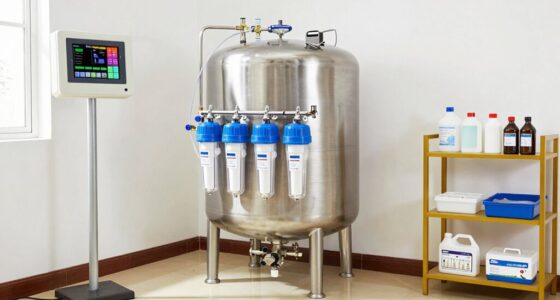
pH neutralization water treatment system
As an affiliate, we earn on qualifying purchases.
As an affiliate, we earn on qualifying purchases.
Frequently Asked Questions
How Does pH Neutralization Affect Water Taste?
When you neutralize pH levels in water, it can improve the water’s flavor by balancing acidity. Acidic water often tastes sour or metallic, but pH neutralization eliminates these unpleasant flavors. By maintaining proper pH balance, your water becomes more palatable and invigorating. You’ll notice a cleaner, crisper taste, making your drinking water more enjoyable and ensuring it’s safe and pleasant for everyday use.
Can pH Neutralization Prevent Pipe Corrosion?
Yes, pH neutralization can prevent pipe corrosion through effective pH balancing. When you maintain the water’s pH level within a neutral range, it reduces the acidity that causes corrosion. This process acts as a crucial part of corrosion control, protecting your pipes from damage and extending their lifespan. By regularly neutralizing acidic water, you guarantee a safer, more durable plumbing system, preventing costly repairs and leaks.
Is pH Neutralization Suitable for All Water Sources?
Yes, pH neutralization suits most water sources, especially when Water pH levels are too acidic. It helps balance Mineral Content and prevent corrosion. However, you should test your water first because highly mineralized or contaminated sources might need different treatment. Properly designed neutralization systems guarantee your water’s pH stays within safe, non-corrosive levels, protecting fixtures and pipes efficiently.
What Maintenance Is Required for pH Neutralization Systems?
You need to regularly inspect your pH neutralization system components, including tanks, pumps, and sensors, to make certain they’re functioning correctly. Maintain your chemical dosing system by refilling reagents as needed and checking for clogs or leaks. Schedule routine calibrations and system cleanings to prevent buildup and ensure accurate pH adjustments. Proper maintenance keeps your system effective, prolongs its lifespan, and prevents acidic water from damaging fixtures.
How Long Does It Take to See Results After Installation?
You’ll typically see results within a few days to a week after installation, depending on your water’s initial pH and system setup. The installation timeline varies, but most systems start effectively neutralizing acidic water quickly. Keep in mind, the effectiveness duration hinges on ongoing maintenance and water quality; regular checks ensure your system continues to work efficiently and prevents corrosion of fixtures.
industrial pH neutralizer chemicals
As an affiliate, we earn on qualifying purchases.
As an affiliate, we earn on qualifying purchases.
Conclusion
Now that you know how acidic water can corrode fixtures, it’s clear why pH neutralization matters. Did you know that over 40% of plumbing system failures are related to acid corrosion? By properly neutralizing acidic water, you can protect your fixtures and extend their lifespan. Don’t wait until damage occurs—taking action now not only saves money but also keeps your water system running smoothly for years to come.
water pH monitor with calibration
As an affiliate, we earn on qualifying purchases.
As an affiliate, we earn on qualifying purchases.
acid neutralizing lime for water
As an affiliate, we earn on qualifying purchases.
As an affiliate, we earn on qualifying purchases.
Flea & tick season Picks
flea and tick prevention
As an affiliate, we earn on qualifying purchases.