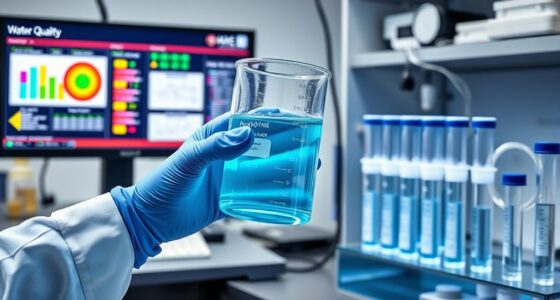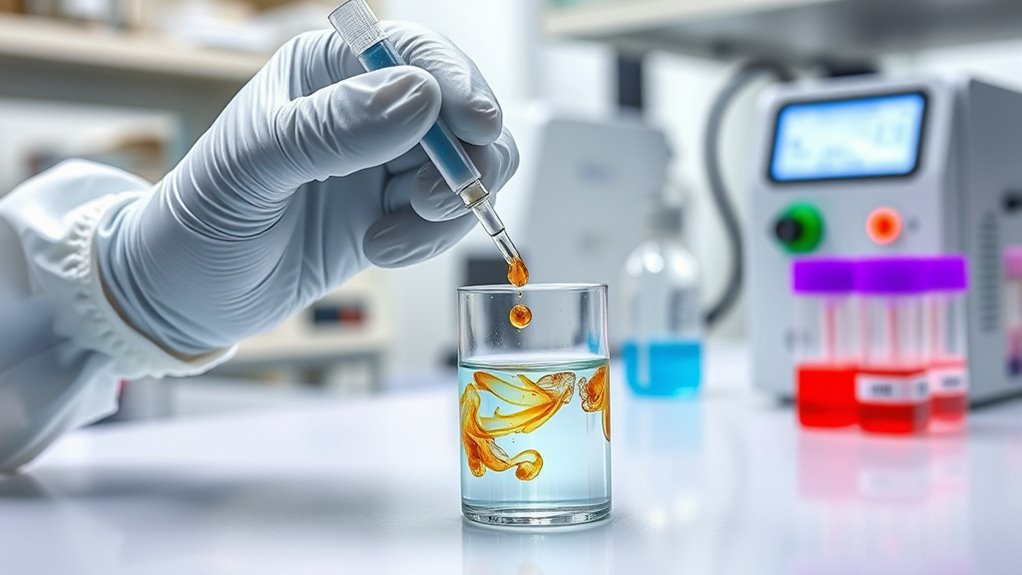

To test your well water for pesticides and industrial chemicals, start with professional laboratory analysis, as home test kits often don’t detect these contaminants reliably. Regular testing is essential, especially if your property is near farms or industries, since chemicals can seep into groundwater unnoticed. Proper testing identifies potential health risks early and helps you choose effective filtration or alternative water sources. Keep exploring to find out more about safeguarding your water supply from chemical contamination.
Key Takeaways
- Conduct professional laboratory tests to accurately detect pesticides and industrial chemicals in well water.
- Regular testing, especially near agricultural or industrial areas, helps identify contamination early.
- Use certified testing services that analyze for specific pesticides, solvents, heavy metals, and other industrial pollutants.
- Be aware of water changes like unusual taste, smell, or color as signs to prompt comprehensive testing.
- Implement appropriate filtration systems or switch to bottled water if contaminant levels exceed safety standards.
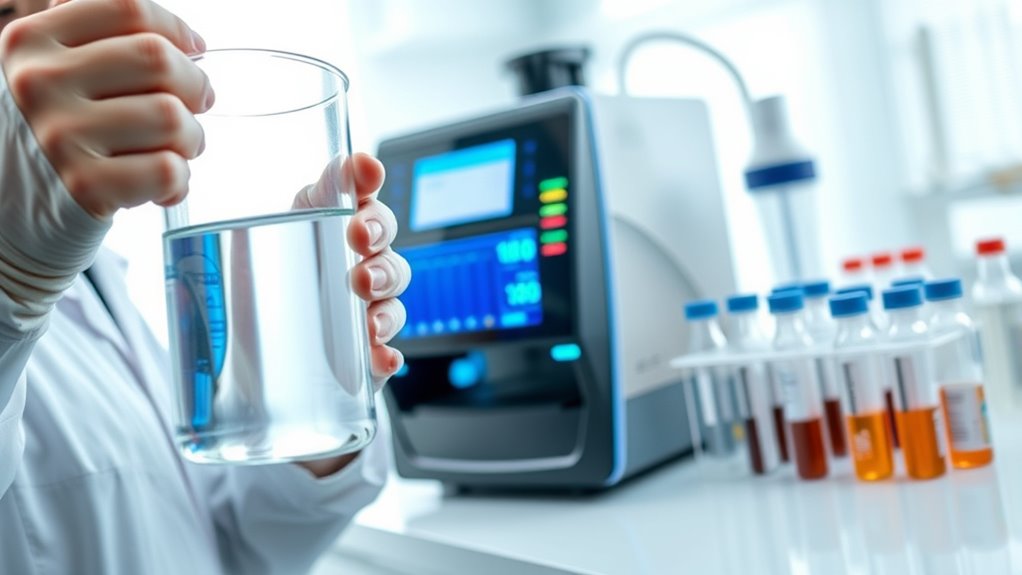
Have you ever wondered if your well water contains harmful pesticides or industrial chemicals? It’s a valid concern, especially if your property is near farming areas or industrial sites. Agricultural runoff is a common source of chemical contamination, where rain and irrigation wash pesticides, fertilizers, and other chemicals from fields into nearby water supplies. These substances can seep through the soil and reach your well, introducing toxins that pose serious health risks. Knowing whether your water has been contaminated is essential, but it can be tricky without proper testing. Many contaminants are invisible and odorless, making routine use or taste insufficient indicators of pollution.
Concerned about pesticides or chemicals in your well water? Regular testing is key to ensuring safe, clean drinking water.
The first step is understanding the risks associated with agricultural runoff and chemical contamination. Pesticides used in farming, such as herbicides and insecticides, don’t stay confined to crop fields. Heavy rains can carry these chemicals into underground aquifers that supply your well. Once in the water, they may persist for long periods, especially if the soil and geological formations around your property are conducive to slow filtration. Industrial chemicals, including solvents, heavy metals, and byproducts, can also infiltrate groundwater through improper disposal or leaks from nearby facilities. These substances often have serious health effects, ranging from acute poisoning to long-term issues like cancer or neurological problems.
To protect yourself, you should consider testing your well water regularly for pesticides and industrial chemicals. Many testing kits are available, but for thorough analysis, professional laboratory testing is recommended. These labs can detect trace levels of various chemicals, including those that traditional home tests might miss. It’s particularly important to test if you notice changes in water color, taste, or smell, or if there are known nearby agricultural or industrial activities. Testing can reveal chemical contamination early, so you can take steps to mitigate risks—such as installing filtration systems or switching to bottled water if needed.
Keep in mind that contamination doesn’t always come from obvious sources. Even if your well isn’t directly adjacent to farmland or factories, groundwater can still carry pollutants over long distances through natural underground channels. That’s why understanding the history of land use around your property and conducting periodic tests are essential. Whole-house water filtration systems can be effective in removing many types of industrial chemicals and pesticides, providing an extra layer of protection. It’s better to be proactive than reactive when it comes to your drinking water. Regular testing not only helps guarantee your water is safe but also provides peace of mind. If contamination is detected, you can work with water treatment specialists to remove harmful chemicals, safeguarding your health and that of your family.
Frequently Asked Questions
How Often Should Well Water Be Tested for Contaminants?
You should test your well water at least once a year for contamination risk, especially pesticides and industrial chemicals. If you notice changes in taste, smell, or appearance, test immediately. Additionally, after any flooding or nearby chemical spills, conduct testing to guarantee safety. Regular testing helps identify potential issues early, so you can take action before contaminants threaten your health. Prioritize consistent testing to keep your water safe.
Are DIY Testing Kits Reliable for Pesticide Detection?
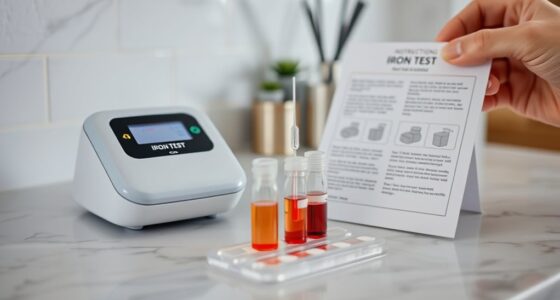
DIY testing kits can give you a basic idea of pesticide presence, but their accuracy is constrained. You might get false negatives or positives, so don’t rely solely on them for pesticide detection. For reliable results, it’s best to send samples to a certified lab. While DIY testing is convenient, it’s not as precise, and professional testing ensures your well water is safe and accurately screened for pesticides.
What Symptoms Indicate Pesticide Contamination in Drinking Water?
You might notice symptoms like nausea, headaches, or stomach upset if your water quality is compromised by pesticide contamination. Other signs include unexplained dizziness or skin rashes. Keep in mind, these symptoms aren’t definitive, so it’s essential to get your water tested for pesticide detection if you suspect contamination. Regular symptom detection helps identify potential issues early, but proper testing provides conclusive evidence of water quality and safety.
How Do Pesticides in Well Water Affect Long-Term Health?
Pesticides in your well water can lead to serious long-term health impacts, including increased risks of cancer, hormonal disruptions, and neurological issues. Regulatory standards aim to limit these chemicals, but prolonged exposure may still cause health problems. To protect yourself, stay informed about local water quality reports and consider regular testing. Reducing exposure helps safeguard your health and minimizes potential long-term effects from contaminated well water.
Can Natural Filtration Methods Remove Industrial Chemicals Effectively?
Imagine a quiet stream winding through a forest, naturally filtering impurities. Natural filtration methods, like biological filtration, can effectively remove some industrial chemicals from well water. They target chemical removal by encouraging beneficial bacteria that break down contaminants. However, while some chemicals diminish, others may persist, so it’s essential to test your water regularly and consider advanced treatments for all-encompassing safety.
Conclusion
Testing your well water for pesticides and industrial chemicals is essential to protect your health. Did you know that about 20% of private wells in the U.S. contain detectable levels of harmful contaminants? Regular testing helps catch these issues early, ensuring your water is safe to drink. Stay proactive by scheduling tests annually and staying informed about potential risks. Your health and peace of mind depend on keeping those contaminants at bay.