Your filter media’s lifespan varies by type: mechanical media typically lasts a few weeks before clogging, requiring regular cleaning or replacement. Chemical media generally lasts between a few weeks to two months, and should be replaced once saturated to prevent toxins from building up. Biological media can last several months to a year if maintained properly and rinsed in tank water. Factors like tank size, water flow, and maintenance routines influence these timeframes. Continue exploring to find out how to extend your media’s effectiveness.
Key Takeaways
- Mechanical media typically last a few weeks before needing replacement or cleaning to prevent clogging and maintain flow.
- Chemical media generally last between 2 to 4 weeks, depending on usage and water quality, and should be replaced when saturated.
- Biological media can last several months to a year if properly maintained and rinsed in tank water during routine cleaning.
- Factors like water flow rate, tank size, and maintenance frequency significantly influence media lifespan.
- Regular inspection and timely replacement of media components are essential to ensure optimal filtration and water quality.

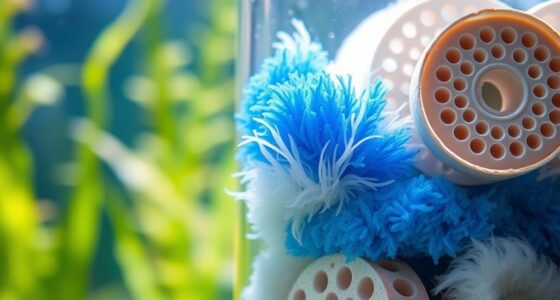
Have you ever wondered how long your filter media actually lasts? It’s a common question for anyone invested in maintaining a healthy aquatic environment. The lifespan of your filter media directly influences water quality, so understanding how long different types last can save you both time and money. Regularly inspecting and replacing your filter media according to recommended maintenance schedules ensures peak performance and keeps your water crystal clear. Proper maintenance of your filter media also extends its lifespan and helps prevent equipment failure. Most filter media types have a general lifespan that depends on several factors, including the type of media, the size of your tank or pond, and how often you perform maintenance. For example, mechanical media like sponges or filter pads usually need replacing every few weeks. They trap debris and particles, but over time, they become clogged and less effective. If you neglect to clean or replace them regularly, water quality can decline, leading to cloudy water or increased waste buildup. Mechanical media’s quick replacement cycle means sticking to a routine maintenance schedule is essential for keeping your filtration system functioning properly.
Chemical filter media, such as activated carbon or phosphate removers, typically last between a few weeks to a couple of months. These media work by adsorbing impurities, odors, and toxins from the water. Once saturated, they lose their effectiveness and need to be replaced. If you don’t follow recommended maintenance schedules, toxins can accumulate, harming fish or aquatic plants. Regular testing of water parameters can help you determine when it’s time to swap out chemical media, guaranteeing water quality remains high.
Biological media, which host beneficial bacteria that break down harmful waste, tend to last much longer—often several months to a year—if properly maintained. These bacteria colonies are essential for maintaining a stable, healthy environment. However, they require oxygen and a stable environment to thrive. Over time, biological media can become less effective if neglected or if water conditions change drastically. Regularly rinsing biological media in tank water during routine maintenance helps preserve bacterial colonies and prolongs their lifespan. Additionally, choosing the right filter media type and ensuring proper water flow can significantly impact their longevity and effectiveness.
Frequently Asked Questions
How Can I Tell if My Filter Media Needs Replacing Sooner?
You can tell if your filter media needs replacing sooner by watching for filter discoloration, which indicates dirt buildup, and noticing flow rate changes, like reduced water flow. If the water flow slows down or the filter looks noticeably dirty or stained, it’s a sign to replace it. Regular inspections help catch these signs early, ensuring your filter works efficiently and protects your system effectively.
Are There Environmental Factors That Shorten Filter Media Lifespan?
Environmental factors like pollution effects and temperature fluctuations can dramatically shorten your filter media’s lifespan. Pollution introduces harmful particles that clog filters faster, while temperature swings cause expansion and contraction, weakening filter materials over time. Think of your filter as a delicate shield, vulnerable to nature’s assault. To keep it working at its best, protect it from extreme conditions and change it when you notice reduced efficiency, ensuring your system stays clean and healthy.
Can I Extend Filter Media Life With Regular Maintenance?
Yes, you can extend filter media life with regular maintenance. By routinely cleaning or replacing filters as recommended, you prevent clogging and guarantee ideal performance. Proper filter maintenance reduces strain on the system, which helps improve media longevity. Keep an eye on filter condition, and don’t delay maintenance tasks—doing so maximizes filter lifespan and maintains efficient operation. Regular upkeep is key to getting the most from your filter media.
Do Different Water Qualities Affect Filter Media Longevity?
Think of your filter media as a delicate dance partner; water quality sets the rhythm. Poor water quality, laden with sediments or chemicals, can wear out your filter quicker, reducing its durability. Conversely, cleaner water allows your filter to perform a graceful, longer-lasting routine. So yes, water quality directly impacts filter durability, meaning you may need to replace or service your filter more often if the water’s rougher or more contaminated.
Is It Safe to Reuse or Clean Disposable Filter Media?
It’s generally not safe to reuse or clean disposable filter media. Reusing can compromise water quality and safety, as contaminants may remain or reintroduce bacteria. Instead, you should handle filter disposal properly and avoid media cleaning unless specified by the manufacturer. If cleaning is recommended, follow their guidelines carefully. Remember, maintaining filter integrity guarantees your water stays safe and clean.
Conclusion
So, knowing when to replace your filters, knowing how long each filter type lasts, and knowing why regular changes matter—these are your keys to better air quality, longer-lasting equipment, and healthier living. Stay vigilant, stay proactive, and stay informed. Replace when needed, clean when possible, and upgrade when necessary. Keep your filters fresh, your environment clean, and your health protected. Because, in the end, proper maintenance is the best way to guarantee peak performance.