
When installing UV disinfection units, you should guarantee your electrical system matches the unit’s power requirements, using a dedicated, grounded outlet and following wiring instructions carefully. For plumbing, align inlet and outlet ports with your piping, using compatible fittings, and install shut-off valves for maintenance. Proper placement, secure mounting, and adherence to local codes are essential for safety and efficiency. To learn detailed tips on electrical and plumbing setup, keep exploring these key considerations.

Get home appliances delivered free — and shop member deals
- Fast, free delivery on millions of items
- Access to Prime Big Deal Days deals on October 6–7
- Prime Video, Amazon Music and more included
Key Takeaways
- Ensure the UV chamber is properly aligned with plumbing, with flow direction indicators for correct installation.
- Verify electrical supply matches unit specifications, using grounded outlets and surge protectors for safety.
- Follow manufacturer’s wiring instructions, ensuring secure, insulated connections compliant with local electrical codes.
- Connect inlet and outlet fittings securely, including shut-off valves for maintenance and system flushing.
- Install the unit in an accessible location to facilitate maintenance, cleaning, and system longevity.
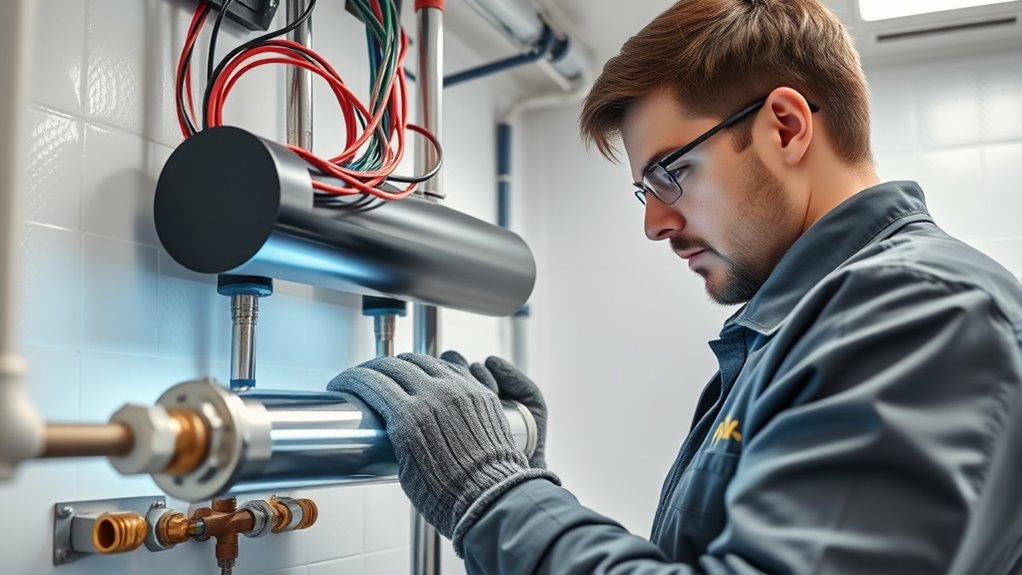
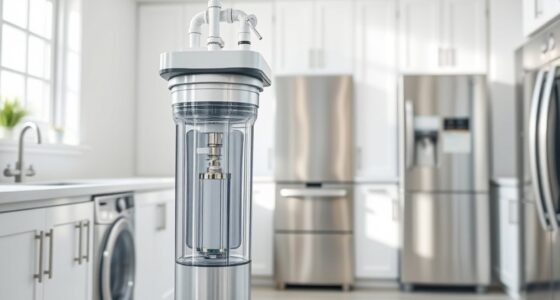
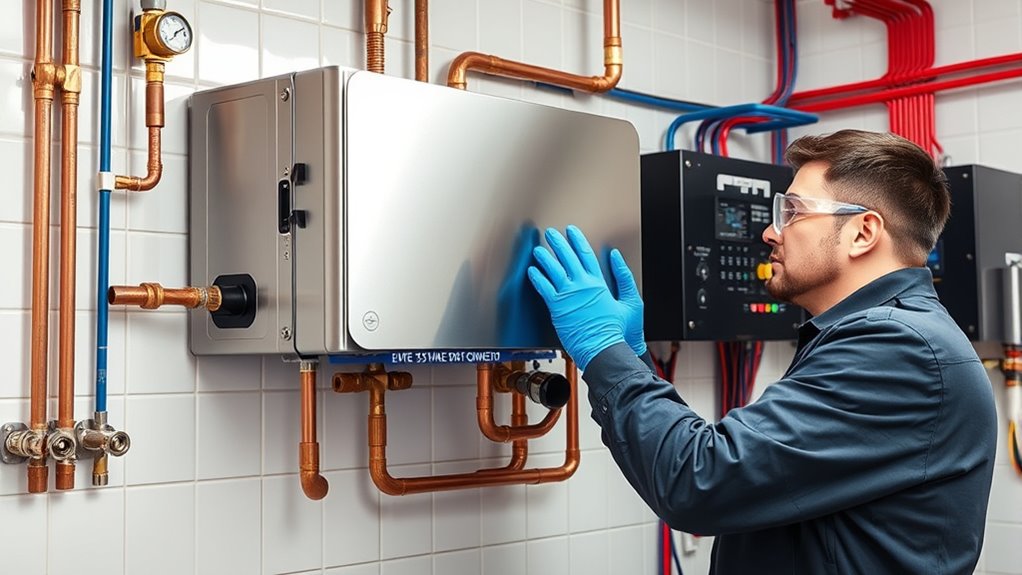
Installing UV disinfection units is a straightforward process that can substantially enhance your water treatment system. One of the key components you’ll work with is the UV chamber, which houses the UV lamp responsible for disinfecting the water. Guaranteeing proper placement and secure mounting of the UV chamber is essential for peak performance. When selecting a location, choose a spot that’s easily accessible for maintenance, yet protected from direct sunlight and extreme temperatures. Proper alignment within your plumbing system guarantees maximum exposure of water to the UV light, so pay close attention to flow direction indicators on the chamber. Additionally, ensuring that the UV system has a high contrast ratio can improve visibility of indicator lights and operational status, which is vital for effective monitoring. Power requirements are a critical aspect of installation. Before connecting your UV unit, verify that your electrical supply meets the specified voltage and current ratings outlined by the manufacturer. Most UV systems operate on standard household power, but some commercial units may need dedicated circuits. Using the correct power source assures the UV lamp functions reliably and prevents electrical issues, such as overloads or short circuits. It’s advisable to install a dedicated, grounded outlet close to your UV chamber to minimize wiring complexity and enhance safety. Also, consider incorporating a surge protector to guard against voltage spikes that could damage the UV lamp or electronic components. When wiring the UV system, follow the manufacturer’s instructions precisely. Typically, this involves connecting the power supply to the UV unit’s control box, which manages operation and safety features. Make sure all connections are tight, insulated, and compliant with local electrical codes. Proper grounding is essential to prevent electrical shocks and ensure system stability. If you’re uncertain about handling electrical work, it’s wise to consult a licensed electrician. Remember, the power requirements not only influence the unit’s operation but also affect the longevity of the UV lamp. Running the system at the correct voltage prevents undue stress on the components, extending the lifespan of your UV disinfection unit. Alongside electrical considerations, plumbing connections must be carefully planned. The inlet and outlet ports on the UV chamber should align with your existing piping, and fittings need to be secure to prevent leaks. Use appropriate materials compatible with your water chemistry, and consider installing shut-off valves upstream and downstream of the UV unit for easier maintenance. Flushing and cleaning the UV chamber periodically ensures consistent performance, so plan for easy access during installation. Proper installation of both electrical and plumbing elements not only guarantees effective water disinfection but also prolongs the lifespan of your UV system, making your investment worthwhile.
Frequently Asked Questions
What Safety Precautions Are Necessary During Installation?
During installation, you should prioritize safety by turning off power and water supplies to prevent electrical shock and leaks. Wear protective gear like gloves and goggles to guard against UV exposure and electrical hazards. Confirm proper wiring and plumbing connections to avoid hazards, and follow manufacturer instructions carefully. Regularly check for leaks or electrical issues to maintain hazard prevention. Staying vigilant during installation is key to safety and effective UV disinfection.
How Often Should UV Bulbs Be Replaced?
UV bulbs typically need replacing every 9 to 12 months, as their lifespan diminishes faster than a shooting star. You should follow the recommended replacement schedule to guarantee maximum disinfection. Regularly check for reduced UV intensity, as decreased effectiveness signals it’s time for a new bulb. Staying proactive with replacements keeps your system working at peak performance, protecting your water quality like a shield of invincibility.
Can Existing Plumbing Be Modified for UV Unit Installation?
Yes, you can modify your existing plumbing for UV unit installation. You’ll need to plan for plumbing modifications that guarantee proper system integration, such as rerouting pipes or installing new fittings. Make sure your modifications maintain water flow and prevent leaks. Consulting a professional plumber helps ensure the integration is seamless, safe, and compliant with local codes, optimizing your UV disinfection system’s performance.
What Power Supply Requirements Are Needed for UV Units?
You need to guarantee your power supply meets the specifications for UV units, typically requiring a dedicated circuit with the correct voltage and amperage. Check the manufacturer’s electrical wiring instructions to match the unit’s power supply needs precisely. It is crucial to use properly rated circuit breakers and grounding to prevent electrical hazards. Consulting a professional electrician helps you verify that your setup complies with local codes and ensures safe, reliable operation.
Are There Specific Certifications Required for UV Disinfection Systems?
You need to guarantee your UV disinfection system meets specific certification requirements, such as NSF/ANSI standards or UL listing, depending on your region. Regulatory standards often mandate these certifications to guarantee safety, effectiveness, and compliance. Always check local regulations to verify which certifications are necessary. By doing so, you ensure your system operates legally, safely, and efficiently, giving peace of mind and reliable water treatment.
Conclusion
By carefully considering both electrical and plumbing needs, you guarantee your UV disinfection unit operates safely and effectively. Proper installation prevents issues like electrical faults or water leaks, saving you time and money down the line. Are you ready to prioritize safety and efficiency in your setup? Remember, a well-installed UV system not only protects your water but also gives you peace of mind. Don’t overlook these vital factors—they make all the difference.
NFL season / tailgating Picks
team gear
As an affiliate, we earn on qualifying purchases.