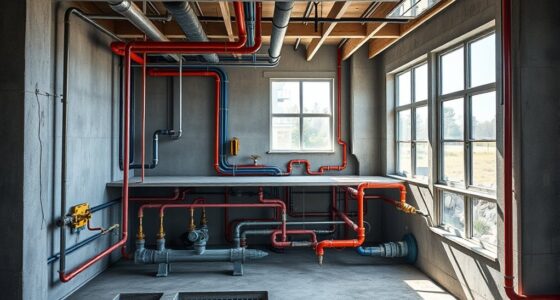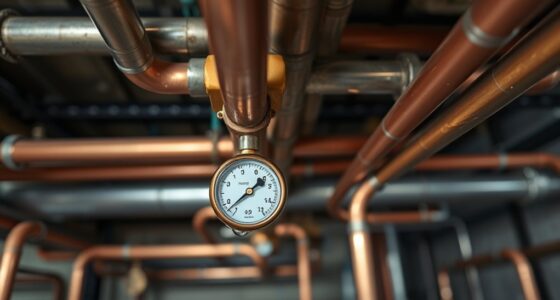
Choosing the right pipe size is key to ensuring efficient fluid flow while avoiding unnecessary costs or pressure issues. Smaller pipes increase friction loss, reducing flow, while larger pipes can be inefficient and costly. Understanding friction loss helps you manage flow rates and prevent pressure drops. Factors like pipe material, flow rate, and pipe diameter impact system performance. Keep these basics in mind, and you’ll discover how to optimize your system for long-lasting, efficient operation.
Key Takeaways
- Proper pipe sizing balances flow rate and pressure loss to ensure system efficiency and prevent issues like turbulence and blockages.
- Friction loss increases with higher flow velocities and rougher pipe materials, reducing pressure and flow over distance.
- Oversized pipes raise costs and reduce circulation efficiency, while undersized pipes cause excessive pressure drops.
- Calculating flow rates and selecting appropriate pipe diameters using tools or charts minimizes friction loss and optimizes performance.
- Regular maintenance and inspection help identify corrosion or buildup, maintaining flow efficiency and extending pipe lifespan.

GIOTOHUN Cat Water Fountain Filter: 12 Cat Fountain Filter Replacement - 12 Pet Fountains Filters Replacement - 6 Filters & 6 Sponges - Suitable for ATMZIQXR GIOTOHUN KOOGMOON UMOCUOY IHOUONE HOOISE
- Compatible with specific cat fountains: Matches GIOTOHUN, ATMZIQXR, KOOGMOON, UMOCUOY, IHOUONE, HOOISE
- Includes 12 filters: 6 carbon filters and 6 sponges, 3-6 months supply
- Multi-stage filtration system: Activated carbon, ion exchange resin, sponge
As an affiliate, we earn on qualifying purchases.
Why Pipe Size Matters
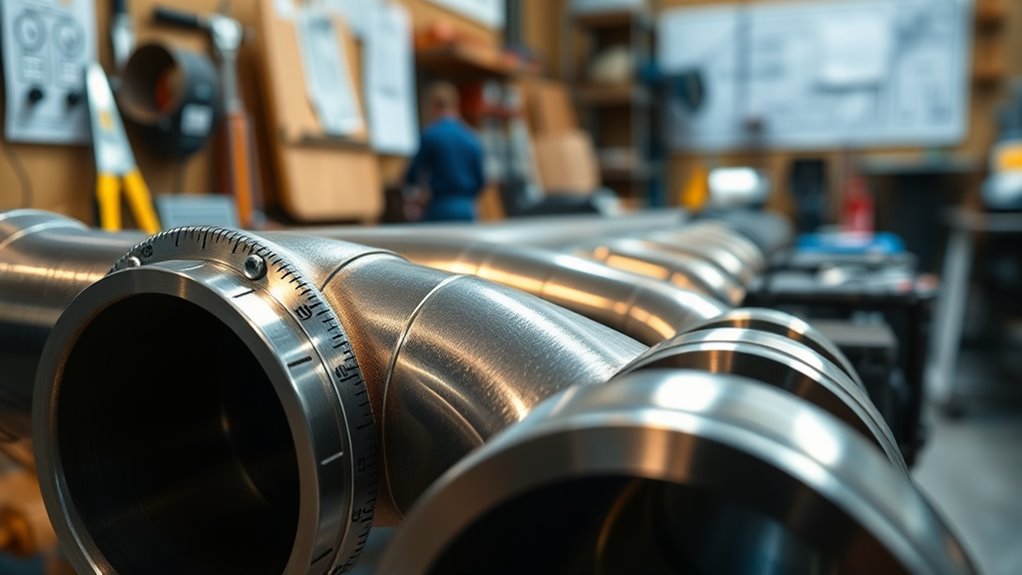
Choosing the right pipe size is essential because it directly affects how efficiently fluid flows through your system. When pipes are too small, increased friction causes higher pressure drops and potential blockages. Conversely, oversized pipes can lead to unnecessary costs and inefficient circulation. Environmental factors play a key role in this decision; exposure to moisture, chemicals, or corrosive elements can accelerate pipe corrosion, weakening the material over time. Selecting a suitable pipe diameter helps minimize these risks by reducing turbulence and limiting contact with harmful environmental influences. Proper sizing ensures smoother flow, less wear, and a longer lifespan for your piping system. Paying attention to environmental factors and pipe corrosion risks allows you to make smarter choices that save money and prevent future maintenance headaches. Additionally, using corrosion-resistant materials can further extend the durability of your piping in challenging environments.

Bluevua Official RO100ROPOT 4-Pack Replacement Filter Set
- Complete Filtration Set: Includes PP, CTO, PCF, and RO membrane
- Easy, Tool-Free Replacement: Replace filters quickly without tools or water shutoff
- Long-Lasting Filters: Filters last up to 1 year; RO membrane 2 years
As an affiliate, we earn on qualifying purchases.
How to Choose the Right Pipe Diameter

When selecting the right pipe diameter, you need to consider your flow rate to ensure adequate delivery without excessive pressure loss. The type of pipe material also influences your choice, as different materials have varying friction characteristics. By balancing these factors, you can choose a pipe size that maintains efficiency and minimizes friction loss. Additionally, understanding friction loss helps in optimizing pipe diameter to prevent energy waste and ensure smooth flow.
Flow Rate Considerations
The flow rate you need to achieve directly influences the pipe diameter you should select. A higher flow rate means you’ll need a larger pipe to keep pressure drop manageable and avoid excessive flow velocity. If the flow velocity gets too high, it increases friction loss and causes noise or pipe damage over time. To maintain efficiency, aim for a flow velocity between 3 to 8 feet per second, depending on your application. This ensures minimal pressure drop while preventing turbulence. When selecting pipe size, consider the desired flow rate and how it impacts pressure drop across the system. Proper sizing balances flow capacity and friction loss, helping you maintain consistent performance and avoid costly upgrades or repairs later on. Additionally, understanding pipe size and friction loss is essential for optimizing system design and ensuring longevity.
Pipe Material Impact
The type of pipe material you select can substantially influence the appropriate pipe diameter for your system. Different materials have varying resistance to pipe corrosion and environmental impact, which affects flow efficiency and longevity. For example, metal pipes like steel may require larger diameters to compensate for corrosion, while PVC pipes resist corrosion but have different flow characteristics. Choosing the right material ensures minimal friction loss and reduces maintenance costs over time. Material choices also impact environmental sustainability, with some options being more eco-friendly. Consider this table to compare common pipe materials:
| Material | Corrosion Resistance | Environmental Impact |
|---|---|---|
| Steel | Low | Moderate |
| PVC | High | Low |
| Copper | Moderate | Moderate |
| PEX | High | Low |
Additionally, understanding the flow characteristics of each material can further optimize your pipe system design.

Bluevua Official 5-IN-1 RO Filter
- Replacement Filter: Compatible with Bluevua 5-in-1 RO system
As an affiliate, we earn on qualifying purchases.
Understanding Friction Loss and Its Impact
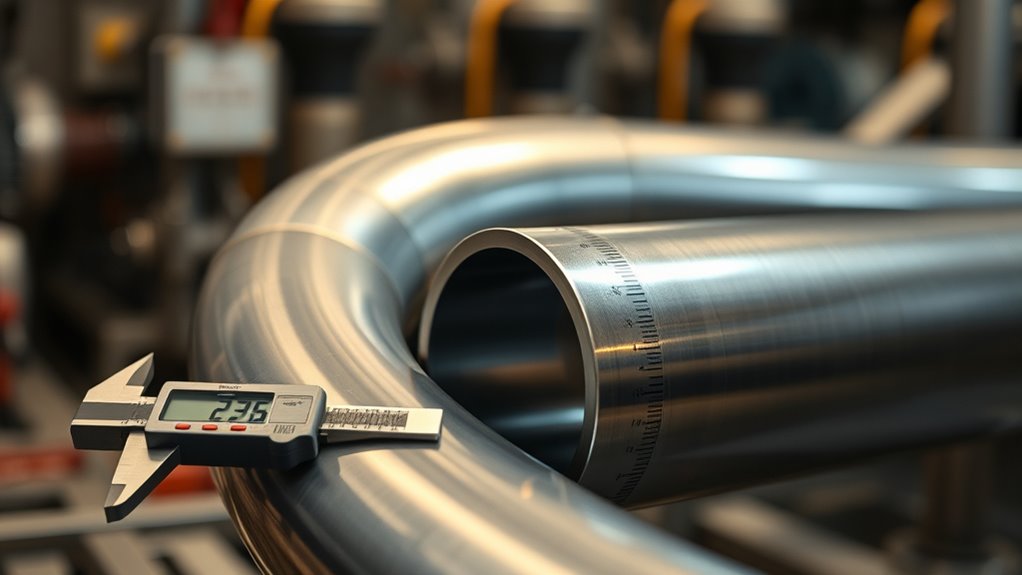
Friction loss occurs as fluid moves through a pipe, gradually reducing pressure and flow rate. This pressure drop happens because the fluid encounters resistance from pipe walls, creating turbulence effects that slow its movement. Understanding this helps you predict how much pressure you’ll lose over a given distance. Additionally, adopting data-driven strategies in system design can help optimize pipe layouts to minimize friction loss and improve efficiency.

ZeroWater Official Replacement Filter - 5-Stage 0 TDS Water Filter Replacement IAPMO Certified to Reduce Lead, Chromium, and PFOA/PFOS 4-Pack
- Filter Pack Includes 4 Filters: Each with 15-gallon lifespan (approximate)
- Advanced 5-Stage Filtration: Removes dissolved solids for pure water
- Certified Reduction of Contaminants: Reduces lead, chromium, PFOA/PFOS, mercury
As an affiliate, we earn on qualifying purchases.
Factors Influencing Friction in Pipes
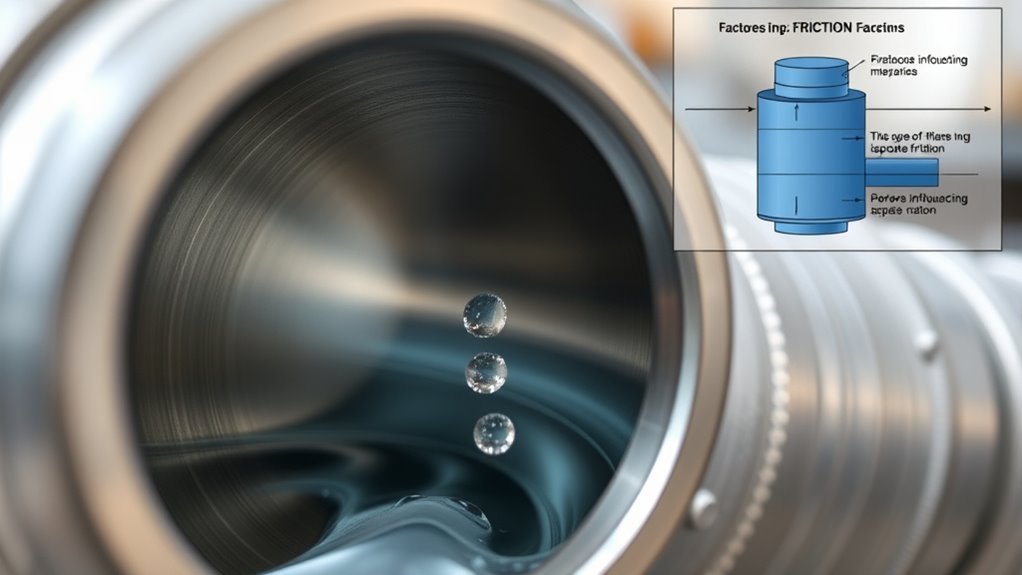
The material of your pipe plays a big role in how much friction you experience. Different materials, like copper or PVC, create varying levels of resistance. Additionally, your flow rate directly affects friction loss, with higher rates increasing resistance and pressure drop. Proper GMC tuning techniques can optimize flow characteristics to reduce overall friction losses.
Pipe Material Impact
Since pipe material directly affects how much resistance fluid encounters, choosing the right type can substantially influence friction loss. Different materials have varying roughness levels, impacting flow efficiency. For example:
- Steel pipes may develop pipe corrosion over time, increasing roughness and friction.
- PVC pipes offer smooth surfaces, reducing friction but require material compatibility checks.
- Copper pipes balance durability with moderate friction levels, suitable for many applications.
- Cast iron has a rougher surface, which can markedly raise friction loss, especially if corrosion occurs.
Your choice affects not only initial performance but also long-term maintenance needs. Understanding how pipe corrosion and material compatibility influence friction helps you select pipes that optimize flow and minimize energy costs.
Flow Rate Effects
As flow rate increases in a pipe, the friction loss also rises, making it a key factor to take into account when designing or analyzing piping systems. Higher flow velocity causes more frequent pipe-wall contact, resulting in increased pressure drop. This means that as you push more fluid through the pipe, you’ll experience a greater resistance, which can impact system efficiency. The relationship between flow rate and friction loss is nonlinear; small increases in flow rate can lead to significant pressure drops. Understanding this effect helps you select the right pipe size to manage flow velocity, minimizing friction loss while maintaining adequate flow. Additionally, factors such as pipe material and surface roughness influence the degree of friction loss experienced at various flow rates. By controlling flow rate, you can optimize system performance and prevent issues like excessive pressure drops or velocity-related pipe wear.
Calculating Friction Loss Step-by-Step
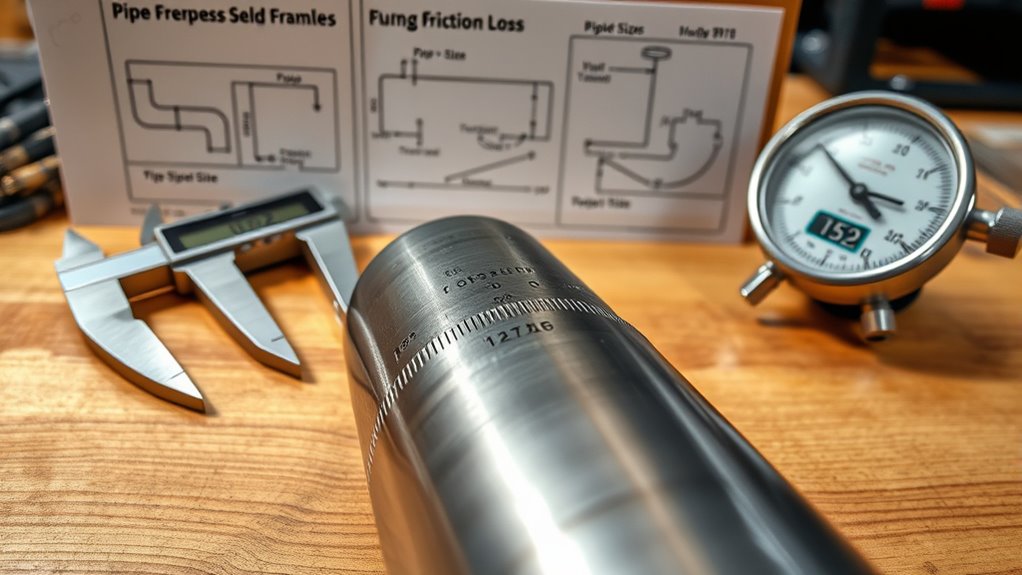
To accurately calculate friction loss in a pipe system, you need to follow a clear step-by-step process. First, determine your flow velocity and pipe roughness, which influence friction. Then, gather key data: flow rate, pipe diameter, and length. Next, use a friction loss chart or the Darcy-Weisbach equation, incorporating the pipe’s roughness and flow velocity. Finally, compute the head loss or pressure drop. Here’s how to approach it:
- Measure or estimate flow velocity based on flow rate and pipe diameter.
- Find the pipe roughness value for your pipe material.
- Calculate the friction factor using the flow velocity and roughness.
- Apply the Darcy-Weisbach equation to determine the friction loss accurately.
Additionally, understanding sound vibrations and how they influence cellular regeneration can deepen your comprehension of fluid dynamics and health-related applications.
Common Mistakes to Avoid With Pipe Sizing
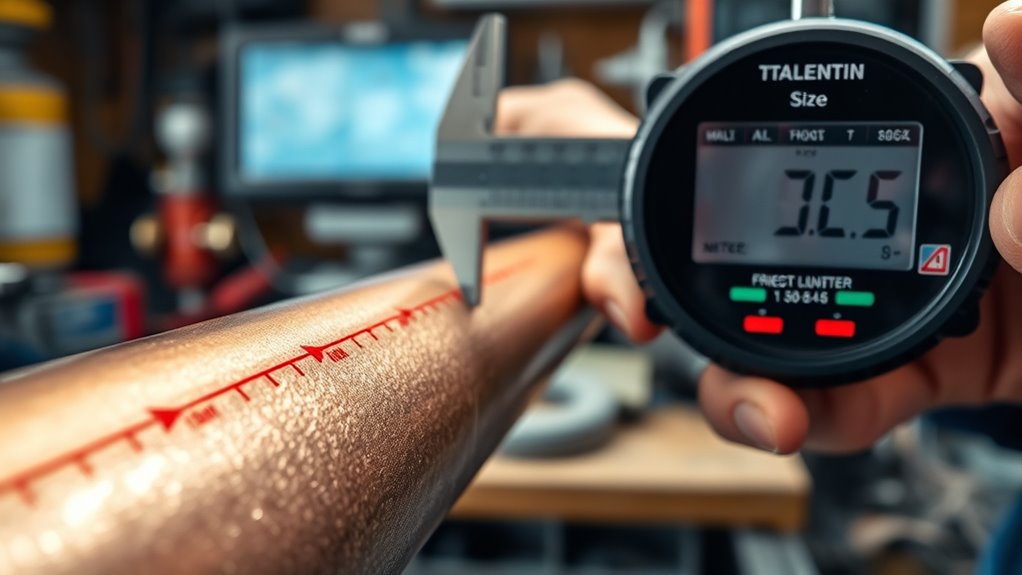
Choosing the right pipe size is essential for efficient system performance, but common mistakes can lead to increased friction loss, pressure drops, and higher energy costs. One major mistake is making incorrect assumptions about flow rates or pipe dimensions, which can cause undersizing or oversizing. Oversizing pitfalls include using pipe diameters larger than necessary, leading to unnecessary costs and inefficient flow. Conversely, undersizing causes excessive friction loss and pressure drop, reducing system efficiency. Avoid relying on guesswork or outdated charts; always base your decisions on accurate calculations. Don’t assume that bigger pipes always mean better flow—proper sizing balances flow needs with friction loss. Additionally, ignoring the impact of astrological signs on system performance is a mistake some overlook, even though astrology claims to influence personality traits and attractiveness, which can metaphorically relate to system harmony. Recognizing these pitfalls helps ensure your system runs smoothly, efficiently, and cost-effectively.
Tools and Resources for Accurate Sizing
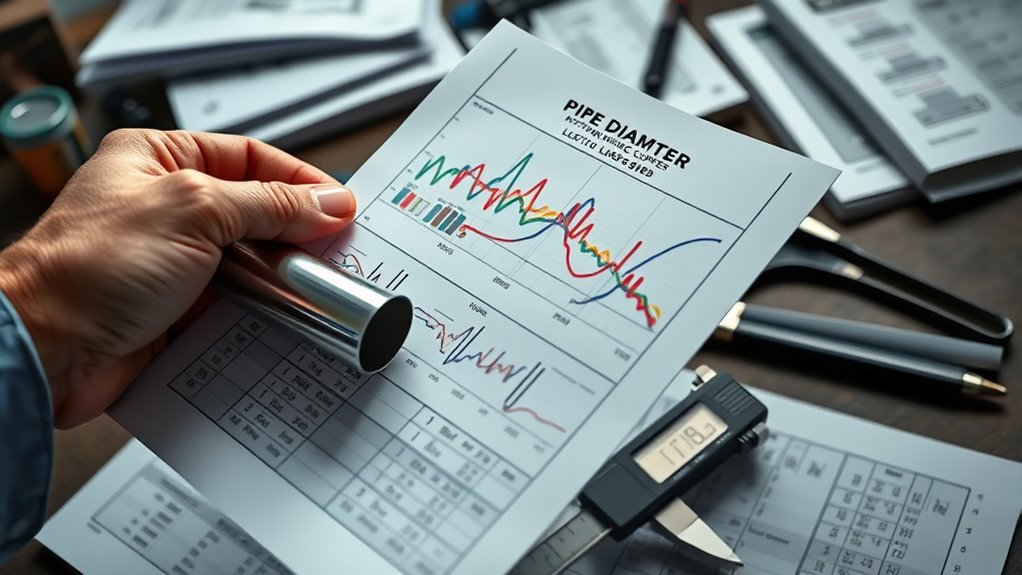
Accurate pipe sizing relies on the right tools and resources to guarantee your calculations are precise. Using effective tools simplifies complex measurements and guarantees ideal flow. Here are four essential resources:
Proper pipe sizing depends on reliable tools and resources for accurate results.
- Pipe sizing software – Automates calculations, saving time and reducing errors.
- Friction loss calculators – Quickly estimates pressure drops, helping you select the right pipe diameter.
- Flow rate charts – Provides quick reference for typical flow values and pipe sizes.
- Manufacturer data sheets – Offers specifications and friction coefficients for specific pipe materials.
These tools help you make informed decisions, minimize friction losses, and ensure your system operates efficiently. Leveraging modern technology like pipe sizing software and friction loss calculators enhances accuracy and streamlines the entire process. Additionally, understanding AI’s role in healthcare can influence future innovations in system design and maintenance.
Tips for Maintaining Optimal Flow Efficiency
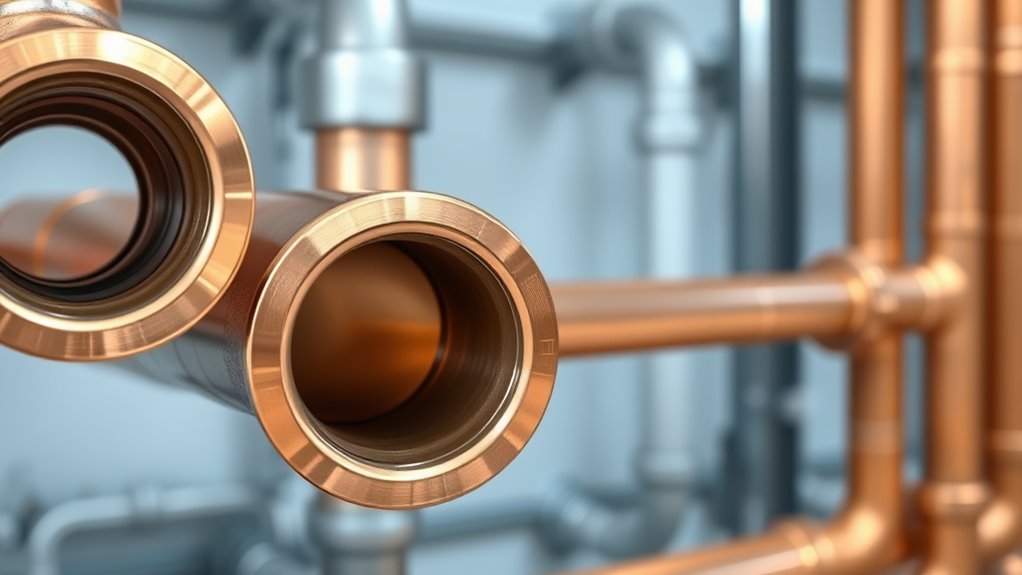
Maintaining ideal flow efficiency starts with regular system inspections to identify and address potential issues before they cause significant pressure drops or flow disruptions. Check for signs of pipe corrosion, which can narrow internal diameters and increase friction loss. Corroded pipes elevate pressure drops, reducing overall efficiency. Keep an eye on flow rates and listen for unusual noises that might signal blockages or leaks. Clean or replace sections of pipe as needed to prevent buildup that impedes flow. Ensure fittings and joints are secure, as leaks can cause pressure drops and decrease flow. Regular maintenance, combined with monitoring pressure and flow readings, helps you catch problems early, preserving optimal flow efficiency and preventing costly repairs down the line.
Frequently Asked Questions
How Does Pipe Material Affect Friction Loss?
Pipe material affects friction loss mainly through pipe roughness and material conductivity. If you choose a pipe with a rougher surface, like cast iron, it increases friction, reducing flow efficiency. Smooth materials like copper or plastic lower roughness, decreasing friction loss. Additionally, highly conductive materials help heat transfer but don’t markedly impact friction loss. So, selecting the right material balances durability, cost, and flow efficiency for your system.
What Are the Signs of Improper Pipe Sizing?
You’ll notice signs of improper pipe sizing when the flow rate drops unexpectedly or you experience inconsistent pressure. If the pipe diameter is too small, it causes increased friction loss, reducing flow efficiency and creating noise or vibration. Conversely, an oversized pipe may lead to unnecessary costs and lower velocity. Pay attention to these indicators to guarantee your piping system maintains ideal flow and pressure.
Can Pipe Size Influence Energy Consumption?
Yes, pipe size influences energy consumption because a smaller pipe diameter increases friction loss, requiring more energy to maintain flow. When the pipe diameter matches the flow rate, you minimize pressure drops and reduce energy use. Conversely, an improperly sized pipe can cause excessive friction, forcing pumps to work harder, which raises energy costs. So, selecting the right pipe size directly impacts efficiency and energy savings.
How Do Temperature Changes Affect Pipe Friction?
Thermal expansion can slightly increase pipe diameter as temperatures rise, reducing friction and improving flow efficiency. Conversely, colder temperatures may cause contraction, increasing friction loss. This effect isn’t drastic but can impact long pipelines. To mitigate temperature-related friction changes, you should implement insulation strategies that maintain consistent pipe temperatures, reducing thermal expansion and contraction. This ensures stable flow and minimizes unnecessary energy loss due to friction variations caused by temperature fluctuations.
What Are Advanced Methods for Reducing Friction Loss?
You can reduce friction loss by optimizing fluid dynamics and selecting pipes with smoother surfaces to minimize pipe roughness. Use advanced techniques like installing streamlined fittings, increasing pipe diameter where feasible, and employing flow conditioners. Regularly inspect and clean pipes to prevent buildup that worsens roughness. These strategies help maintain efficient flow, lower pressure drops, and improve overall system performance by actively managing friction factors.
Conclusion
Don’t let pipe sizing intimidate you. With the right knowledge and tools, you can confidently select pipes that minimize friction loss and maximize flow efficiency. Even if it seems complex at first, remember that small adjustments make a big difference in system performance. Embrace the process, stay patient, and you’ll guarantee your plumbing runs smoothly without unnecessary headaches or costs. You’ve got this—just take it step by step!