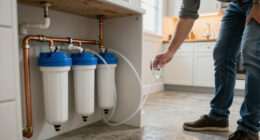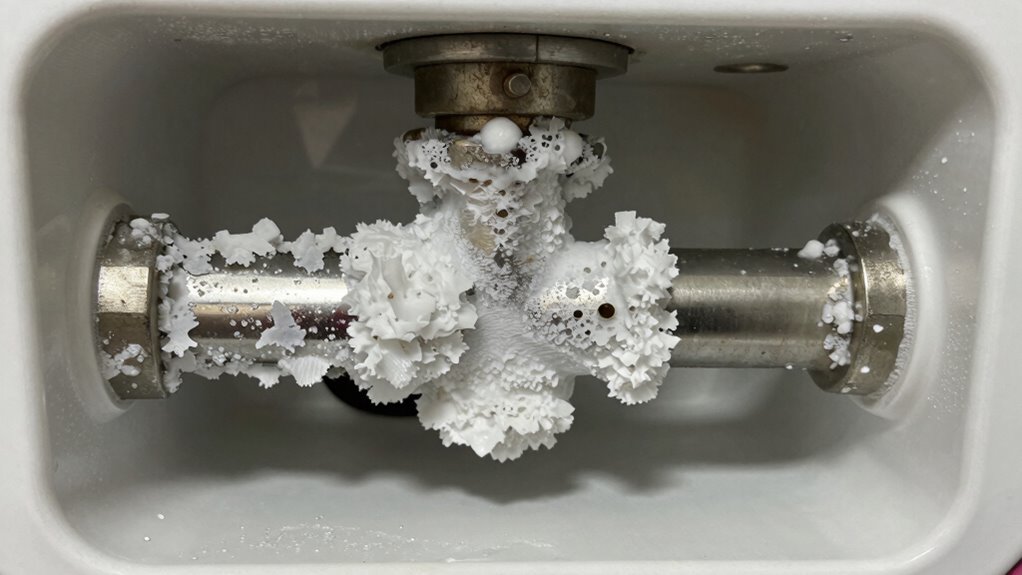
If you have hard water, your tankless water heater will scale faster because minerals like calcium and magnesium build up inside the unit, reducing efficiency and shortening its lifespan. This happens when mineral deposits insulate heat transfer surfaces, making the heater work harder and consume more energy. To prevent or slow this process, you can install water softeners or regularly flush the system with descaling solutions. Keep going to discover more ways to protect your heater effectively.

Get home appliances delivered free — and shop member deals
- Fast, free delivery on millions of items
- Access to Prime Big Deal Days deals on October 6–7
- Prime Video, Amazon Music and more included
Key Takeaways
- Hard water with high mineral content accelerates mineral deposit buildup inside the heater.
- Elevated temperatures inside tankless units promote mineral crystallization and faster scaling.
- Constant water flow causes mineral residues to accumulate quickly on heat transfer surfaces.
- Lack of regular descaling or water softening increases the rate of scale formation.
- Installing water softeners reduces mineral content, significantly slowing scaling and extending heater lifespan.
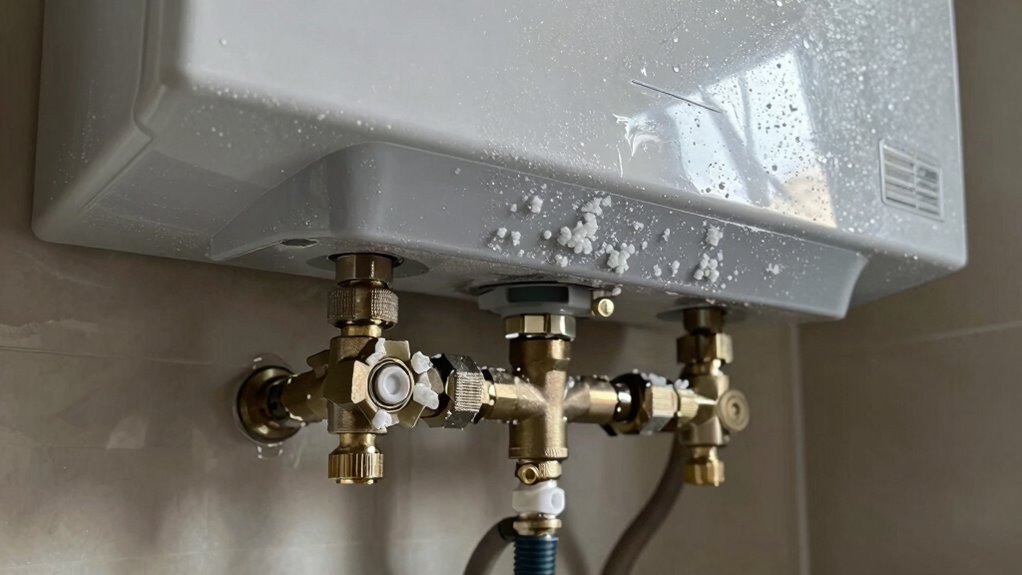
Tankless water heaters are a popular choice for endless hot water, but they can face a common issue: scaling. When mineral deposits, mainly calcium and magnesium, build up inside the unit, it hampers efficiency and shortens the lifespan of your heater. This scaling happens more rapidly in areas with hard water, which contains a high mineral content. Understanding why your tankless water heater scales faster and knowing effective descaling methods can save you time and money.
One reason your unit might be scaling faster is that hard water flows through it constantly, leaving behind mineral residues. The high temperatures inside the heater accelerate mineral crystallization, making buildup more aggressive. Over time, these deposits insulate heat transfer surfaces, reducing efficiency and causing the heater to work harder, which increases energy bills and wear. To combat this, water softening can be a game-changer. Installing a water softener before the heater can considerably reduce mineral content, helping prevent scale formation altogether.
Hard water causes faster scaling by leaving mineral residues and insulating heat transfer surfaces.
When scaling begins to affect your heater’s performance, descaling methods are essential. Regular descaling involves flushing the unit with a vinegar or commercial descaling solution to dissolve mineral deposits. You typically turn off the heater, disconnect the hoses, and run the solution through the system for about an hour. This process loosens and removes the buildup, restoring efficiency. For stubborn deposits, you might need to repeat the process or use a stronger descaling agent designed specifically for appliances.
Preemptively, water softening is one of the most effective strategies to prevent rapid scaling. By replacing calcium and magnesium ions with sodium or potassium ions, water softeners lessen mineral buildup inside your heater. This not only extends the lifespan of your unit but also improves its overall performance. If you live in an area with extremely hard water, investing in a water softening system can be well worth the upfront cost, as it minimizes the need for frequent descaling and maintenance. Additionally, choosing a high-quality electric water heater can influence how quickly it scales, as some models are more resistant to mineral buildup due to better heat transfer surfaces or self-cleaning features.
Frequently Asked Questions
Can Scaling in Tankless Heaters Be Completely Prevented?
Scaling in tankless heaters can’t be completely prevented, but you can substantially reduce it. You should use proper installation techniques, such as installing a water softener or filtration system, to minimize mineral buildup. Chemical treatments like descaling solutions also help break down existing scale. Regular maintenance and flushing the system ensure your heater functions efficiently and lasts longer, even with mineral-rich water.
How Often Should I Flush My Tankless Water Heater?
Think of your tankless water heater as a garden needing regular watering—neglect leads to buildup. You should flush your heater every 12 to 18 months to prevent scale. Use maintenance tips like descaling kits and water testing to monitor mineral levels. If you notice reduced flow or temperature fluctuations, it’s time to flush sooner. Regular maintenance keeps your heater running efficiently and extends its lifespan.
Does Water Hardness Affect All Types of Tankless Heaters Equally?
Water hardness impacts all types of tankless heaters, but some are more sensitive than others. Hard water creates mineral buildup that reduces heater efficiency, leading to faster scaling. If your water’s hard, you might notice your heater works harder and costs more to operate over time. To keep your heater running smoothly, consider installing a water softener or flushing it regularly to minimize mineral deposits and maintain peak efficiency.
Are There Specific Filters Recommended to Reduce Scaling?
Yes, specific filters can help mitigate scaling by removing minerals that cause hard water buildup. Water softening systems are highly effective, converting calcium and magnesium into soluble salts, which minimize scaling. Look for filtration systems designed for water softening or scaling prevention, such as ion exchange filters or whole-house water conditioners. Installing these filters ensures your tankless water heater operates efficiently and lasts longer by reducing mineral buildup.
What Are the Signs My Tankless Heater Is Scaling Prematurely?
You might notice your tankless water heater shows signs of water mineral buildup, like reduced flow rate or inconsistent hot water temperature. You may also hear banging or popping sounds during operation. These issues indicate scaling, which can decrease your appliance efficiency over time. Regular maintenance, such as flushing the system, helps prevent premature scaling and keeps your heater running smoothly, saving you money and extending its lifespan.
Conclusion
Since tankless water heaters heat water on demand, they tend to scale up 50% faster than traditional tanks, especially in hard water areas. To keep yours running smoothly, consider installing a water softener or descaling regularly. Ignoring scaling can reduce efficiency by up to 30%, costing you more in energy and repairs. Taking proactive steps now can extend your heater’s lifespan and save you money in the long run. Don’t wait—protect your investment today!
NFL season / tailgating Picks
team gear
As an affiliate, we earn on qualifying purchases.