
VOCs, or Volatile Organic Compounds, are chemicals that easily evaporate into the air and can contaminate your water supply. They can enter your water through industrial emissions, groundwater leaching from manufacturing or household products like paints and cleaners, and natural geological processes. These sources often release VOCs into the environment, eventually reaching your water sources. To better understand how these compounds affect you and how to protect yourself, keep exploring the details below.
Key Takeaways
- VOCs are chemicals that easily evaporate into the air and can contaminate water sources.
- They originate from industrial activities, such as manufacturing and chemical processing.
- Household products like paints, cleaning agents, and pesticides release VOCs that can leach into water.
- Natural sources, including geological formations and volcanic activity, can also introduce VOCs into water.
- VOCs enter water supplies through air deposition, leaching from contaminated soil, or improper disposal of hazardous waste.
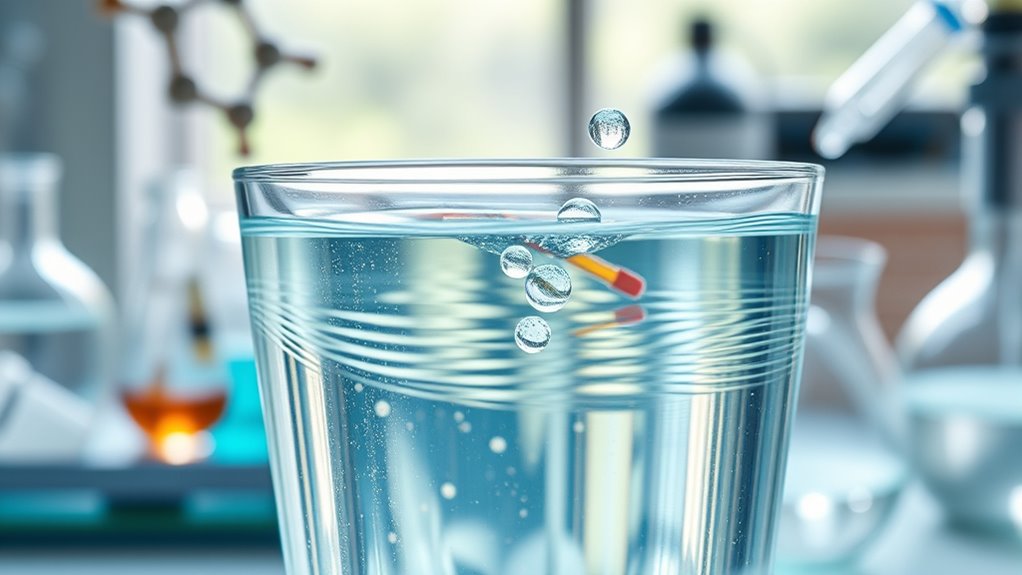
Volatile Organic Compounds (VOCs) in water are chemicals that can easily evaporate into the air and pose health risks when present in drinking water. Understanding where these compounds come from and how they enter your water supply is essential for protecting your health. VOC sources are varied and often linked to human activities, making water contamination a common concern in many communities. These chemicals originate from a range of sources, both natural and man-made, but industrial and household activities are the primary contributors.
VOCs in water come from natural sources and human activities, mainly industrial and household, affecting your drinking water safety.
Industrial processes are a significant source of VOCs. Manufacturing plants, chemical factories, and refineries release these compounds into the environment, sometimes directly into water bodies or through air deposition that eventually contaminates water sources. For example, solvents, paints, and cleaning agents used in industries contain VOCs that can leach into groundwater or run off into lakes and rivers. Similarly, improper disposal of hazardous waste can result in VOCs seeping into the soil and water, contaminating wells and aquifers. This process can happen gradually over time, making it difficult to detect until health issues arise.
Household activities also contribute to water contamination by VOCs. When you use products such as paints, varnishes, cleaning agents, or pesticides, VOCs are released into the air and can settle into water supplies. If you’re not careful with storage or disposal, these chemicals can leach into groundwater or be flushed into local water systems during rainfalls. Additionally, some household appliances, like dry cleaners or degreasers, emit VOCs that eventually contaminate water sources through seepage or runoff.
Another important aspect to think about is water contamination from natural sources. Certain geological formations naturally contain VOCs or their precursors, which can dissolve into groundwater. Although these natural sources are less common than human-related ones, they still pose risks, especially in areas with specific mineral deposits or volcanic activity. Furthermore, advances in water treatment technologies are improving our ability to detect and remove these compounds, but gaps in infrastructure can still leave some communities vulnerable.
Understanding VOC sources helps you recognize the risks associated with water contamination. If your water comes from private wells, you’re more directly exposed to these chemicals, especially if the surrounding land use involves industrial activity or agriculture. Municipal water supplies are typically monitored and treated to remove VOCs, but occasional contamination events can still occur. Being aware of your water source and potential VOC sources in your environment enables you to take steps to test and treat your water, reducing your exposure to these hazardous compounds.
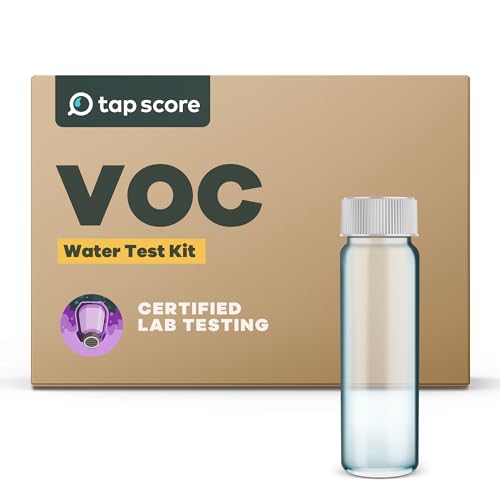
Tap Score Total Trihalomethanes and VOC Water Test Kit | Specialized EPA Certified Drinking Water Labs | #1 Best Home Water Test 2021-24 NYT Wirecutter | 100% Unbiased
- Recommended for VOC testing: Targeted testing of common VOCs in water
- Understanding VOCs: VOCs are common in city water supplies
- Fast, accurate testing: Reliable results used by millions
As an affiliate, we earn on qualifying purchases.
As an affiliate, we earn on qualifying purchases.
Frequently Asked Questions
How Do VOC Levels Vary Seasonally in Water Supplies?
You’ll notice VOC levels in your water supply fluctuate seasonally due to temperature impacts and seasonal fluctuations. Warmer temperatures in summer can increase VOC evaporation from sources like industrial discharge or groundwater, raising concentrations. Conversely, cooler seasons often see reduced VOC levels. These variations depend on environmental factors, industrial activity, and water usage patterns, so it’s prudent to monitor regularly, especially during temperature shifts, to verify water safety year-round.
Can Household Products Contribute to VOC Contamination?
Yes, household products can contribute to VOC contamination. When you use household chemicals like cleaners, paints, or air fresheners, they release VOCs into the indoor air. These compounds can then seep into your water supply through ventilation systems or household plumbing. To minimize your exposure, guarantee proper ventilation when using such products, and avoid mixing chemicals that can release higher VOC levels, protecting both your indoor air and water quality.
Are Certain Water Sources More Prone to VOC Contamination?
Water sources near busy urban areas often face higher VOC contamination. Urban runoff from streets and industrial discharge from factories carry VOCs into lakes, rivers, and wells. These sources are more prone to VOC pollution because of ongoing human activities and industrial processes. If you rely on these water sources, you’re more likely to encounter volatile organic compounds, so regular testing and treatment are vital to keep your water safe and clean.
What Long-Term Health Effects Are Linked to VOC Exposure?
Long-term VOC exposure can pose serious health risks, including increased chances of chronic illness such as liver or kidney damage, respiratory issues, and certain cancers. You might not notice symptoms right away, but prolonged contact with contaminated water raises your risk for these health problems. It’s important to monitor your water quality and take action if VOC levels are high, protecting your health and preventing future chronic illnesses.
How Effective Are Common Water Filtration Systems Against VOCS?
Ironically, your typical home water filters excel at removing many contaminants, but when it comes to VOCs, their filtration efficiency varies. Activated carbon filters generally do a decent job of contaminant removal, reducing VOC levels considerably. However, not all systems are equal—some may only partially filter out these compounds. To guarantee safe water, choose filters specifically designed for VOC removal and regularly maintain them for maximum effectiveness.
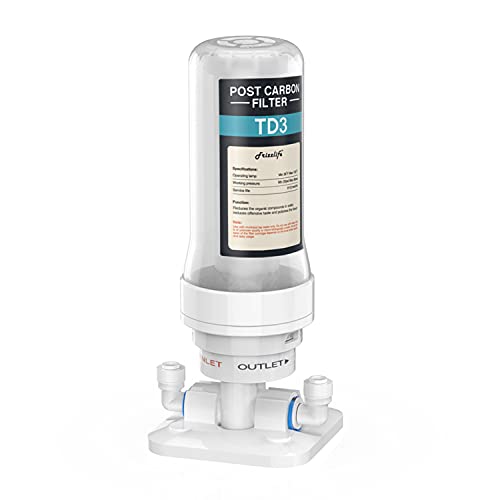
Frizzlife TD-3 Inline Water Filter, Fast Replacement Post Water Filter Removes Chlorine, VOCs & Odor, Adjust Taste, 1/4" and 3/8" Quick Connect
- 【Premium Activated Carbon Block】Frizzlife TD-3 under sink post-carbon…
- 【Quick Post Filter】The under sink inline water filter…
- 【Super Easy Installation】Compatible with both inline 1/4” and…
As an affiliate, we earn on qualifying purchases.
As an affiliate, we earn on qualifying purchases.
Conclusion
Remember, prevention is better than cure. VOC compounds can sneak into your water supply through industrial runoff, leaking underground tanks, or contaminated sources, posing health risks. Staying informed and testing your water regularly helps catch problems early. Don’t wait until it’s too late—by being proactive, you protect yourself and your loved ones. As the saying goes, “A stitch in time saves nine,” so take action now to guarantee your water stays clean and safe.

iSpring RCC7AK-BN NSF Certified, 75 GPD, Alkaline 6-Stage Reverse Osmosis System, pH+ Remineralization RO Water Filter System Under Sink Patented Top-Mounted Faucet Design for Easy Installation
- Patented Top-Mounted Faucet Design: Easy above-sink installation
- Mineral Boost Stage: Adds essential minerals and balanced pH
- Transparent Filter Housing: Monitor contaminant buildup easily
As an affiliate, we earn on qualifying purchases.
As an affiliate, we earn on qualifying purchases.

Bestprod All-New 21 in 1 Drinking Water Testing Kit Strips, Home Tap and Well Water Test Kit for Hardness, Lead, Iron, Copper, Chlorine, Fluoride
- Clear, Easy-to-Read Results: Provides clear results for all substances
- Simple to Use: Add water, set timer, read results
- User-Friendly Guide: Includes clear instructions for interpretation
As an affiliate, we earn on qualifying purchases.
As an affiliate, we earn on qualifying purchases.