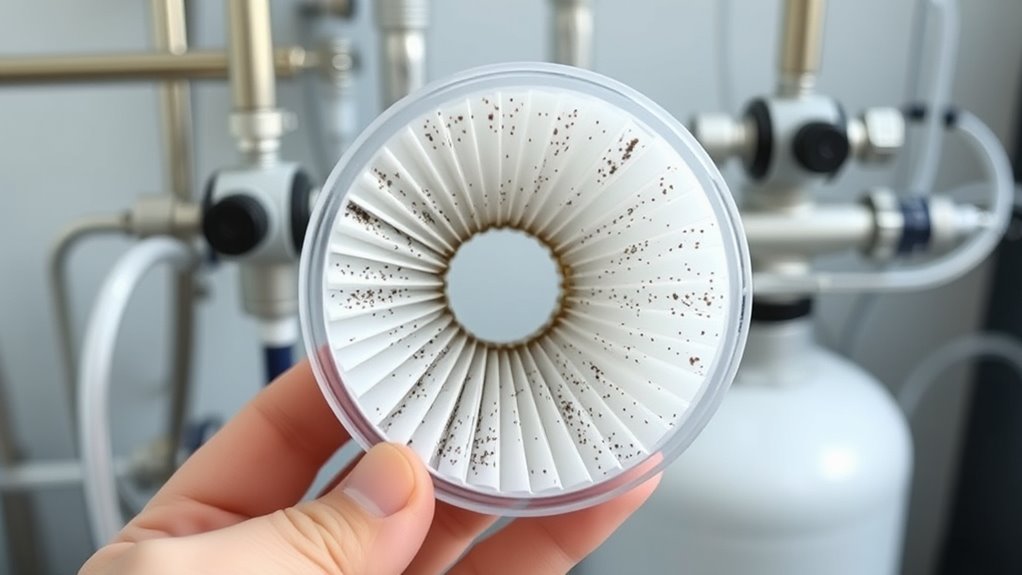

You should change your sediment filter every three to six months to keep your water clean and your system running smoothly. The exact timing depends on your water quality and how much water you use. If you notice a drop in water pressure, a change in taste, or cloudiness, it’s time to replace the filter sooner. Keep an eye on your system’s performance to learn the best schedule for your situation.
Key Takeaways
- Replace sediment filters every 3 to 6 months, depending on water quality and usage levels.
- Inspect filters monthly for dirt, clogging, and water pressure changes to determine if replacement is needed.
- Hard or sediment-rich water shortens filter lifespan; cleaner water may extend it beyond typical intervals.
- Signs like reduced flow, cloudy water, or taste changes indicate it’s time to replace the filter.
- Regular monitoring and system performance checks help establish an optimal replacement schedule.

Changing your sediment filter regularly is vital to guarantee your water stays clean and your plumbing remains protected. How often you should replace the filter depends on the installation frequency and the filter’s lifespan, which can vary based on water quality and usage. Typically, manufacturers recommend changing sediment filters every three to six months, but this timeline isn’t set in stone. If your water has high sediment levels or you notice changes in taste, clarity, or flow rate, you might need to replace the filter more frequently. Understanding your filter’s lifespan is fundamental in maintaining an effective filtration system. Most sediment filters are designed to last between 90 to 180 days under normal conditions. However, this lifespan can shorten if your water contains a lot of dirt, sand, or other debris. Regularly inspecting the filter can help you gauge when it’s time for a change. A clogged or overly dirty filter will reduce water pressure and may allow contaminants to bypass the filter, defeating its purpose. To keep things running smoothly, check your filter often—every month or so—and replace it when it appears dirty or clogged. Additionally, the presence of Volkswagen Tuning components or modifications can sometimes impact water use or maintenance routines if your vehicle is connected to your home water system. Your installation frequency plays a key role in determining when to switch filters. If you’ve just installed a new sediment filter, monitor your water quality and system performance over the next few weeks. As you gather data, you’ll get a better idea of how long your specific filter lasts in your environment. For households with particularly hard or sediment-rich water, more frequent replacements might be necessary. Conversely, if your water is relatively clean and your usage isn’t heavy, you might extend the interval slightly beyond the typical recommendation.
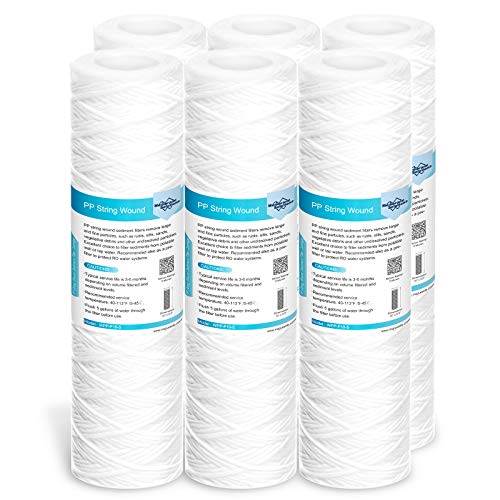
Membrane Solutions 5 Micron 10"x2.5" String Wound Whole House Water Filter Replacement Cartridge Universal Sediment Filters for Well Water – 6 Pack
- Material: Food-grade, BPA-Free Polypropylene
- Durability: Four times dirt capacity, double flow rate
- Compatibility: Universal 10×2.5-inch size
As an affiliate, we earn on qualifying purchases.
As an affiliate, we earn on qualifying purchases.
Frequently Asked Questions
Can I Reuse My Sediment Filter After Cleaning?
You shouldn’t reuse your sediment filter after cleaning because it can compromise the filter’s lifespan and effectiveness. While cleaning methods like rinsing might seem helpful, they often don’t restore the filter’s original performance fully. Over time, filters trap particles that can damage the material, so replacing it regularly ensures cleaner water and maintains filtration efficiency. Trust your filter’s lifespan and replace it when needed to keep your water safe.
How Do I Know if My Filter Is Clogged?
Your filter is clogged if water flow slows down like a sluggish stream, signaling poor water quality and reduced filter lifespan. Check for decreased water pressure and cloudy or muddy water, which indicate buildup. Regularly inspecting your filter helps you catch clogging early, ensuring clean water and prolonging filter life. If you notice these signs, it’s time to replace or clean your sediment filter for ideal performance.
Do Different Sediment Filters Require Different Change Intervals?
Yes, different sediment filters have varying filter lifespans and replacement schedules. Thinner filters typically need changing more often, around every 3 to 6 months, while thicker, higher-quality filters can last longer, up to a year. Always check your filter’s manufacturer guidelines for specific intervals. Regularly inspecting your filter helps you determine if it’s clogged or nearing the end of its lifespan, ensuring your water stays clean and clear.
What Are Signs of Filter Failure?
Think of your filter as a vigilant guardian; when it starts to weaken, signs become clear. You might notice reduced water flow, a strange taste or smell, or increased sediment in your water. These are the telltale signs of filter failure, signaling it’s time for maintenance. Keeping an eye on your filter lifespan and following simple maintenance tips guarantees it works efficiently, preventing costly repairs and ensuring clean water always flows.
Can Changing Filters Improve Water Pressure?
Changing filters can definitely improve water pressure because it restores ideal filter lifespan and prevents clogs that slow water flow. When filters become dirty or clogged, water struggles to pass through, reducing pressure. By replacing your sediment filter regularly, you guarantee unrestricted water flow, maintaining steady pressure and preventing unnecessary strain on your plumbing system. Regular maintenance helps keep your water pressure consistent and your filtration system working efficiently.

iSpring F3 6-Month Prefilter Water Filter for Standard Undersink/Reverse Osmosis RO Systems
- Filter Type: Prefilter for RO systems
- Duration: 6-month capacity per pack
- Packaging: Individually wrapped filters
As an affiliate, we earn on qualifying purchases.
As an affiliate, we earn on qualifying purchases.
Conclusion
So, it turns out that changing your sediment filter every 6 to 12 months isn’t just about maintenance—it’s a coincidence that keeps your water clean and your system running smoothly. When you stay on top of it, you might find that your water tastes better just when you least expect it, almost like a little surprise. Keep an eye on your filter, and you’ll enjoy fresh, clear water when you need it most, without any unexpected surprises.
Membrane Solutions 5 Micron 10"x2.5" String Wound Whole House Water Filter Replacement Cartridge Universal Sediment Filters for Well Water – 6 Pack
- Material: Food-grade, BPA-Free Polypropylene
- Durability: Four times dirt capacity, double flow rate
- Compatibility: Universal 10×2.5-inch size
As an affiliate, we earn on qualifying purchases.
As an affiliate, we earn on qualifying purchases.

GE Whole House Water Filtration System, Reduce Sediment, Rust & More, Install Kit & Accessories Included, Filter Not Included, Replace Filter (FXWTC, FXUSC, FXWPC, FXWSC) Every 3 Months, GXWH20T
- Sediment and impurity reduction: Reduces sediment, rust, and impurities
- Easy installation kit: Includes everything needed for installation
- Compatible with various filters: Uses FXWTC, FXUSC, FXWPC, FXWSC filters
As an affiliate, we earn on qualifying purchases.
As an affiliate, we earn on qualifying purchases.